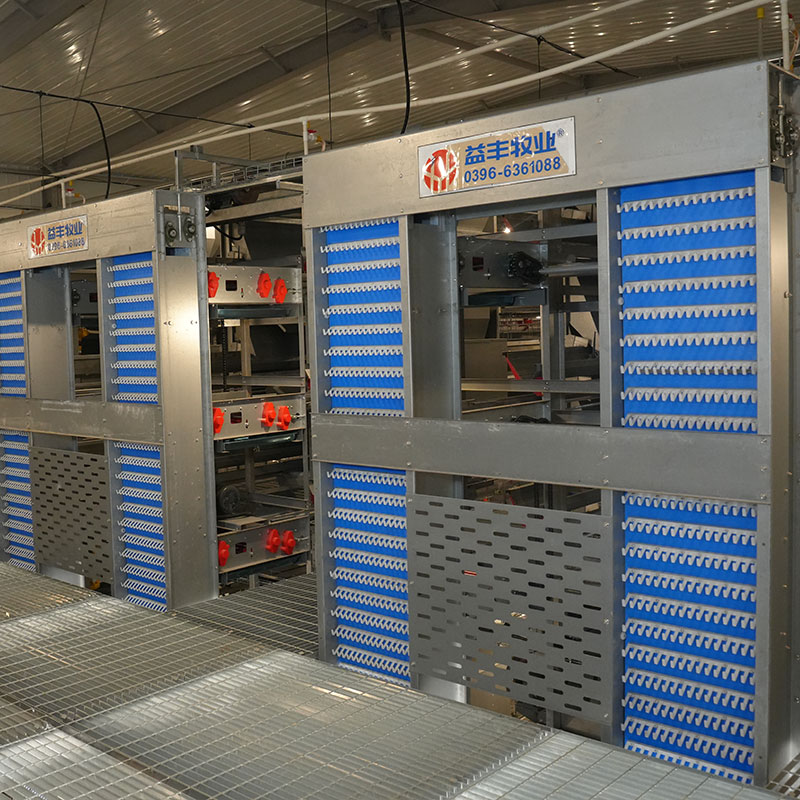
For poultry farmers walking their operations at dawn, the sight of damaged enclosures triggers immediate calculations. A torn section of galvanized wire mesh means more than just repair work—it’s a direct threat to flock security, a potential vector for disease from wild birds, and a recurring expense that chips away at profitability. The choice of housing infrastructure is not merely a purchasing decision; it is a long-term investment in the operational stability and biological security of the entire enterprise.
While traditional materials like galvanized steel have been the default for generations, a shift is occurring toward 316L stainless steel wire rope mesh. This material represents a fundamental rethinking of poultry enclosure, moving from a component that is expected to degrade and require replacement to one that is integrated for the life of the structure. Understanding its properties, not through technical datasheets but through on-farm performance, is critical for farmers considering this upgrade.
The Core Distinction: 316L Versus Other Metals
To appreciate the value of 316L stainless steel, it’s helpful to compare it to the materials it aims to replace. Galvanized steel wire employs a zinc coating to protect the underlying iron from rust. On a poultry farm, this coating faces a relentless assault. The high-ammonia environment created by manure, coupled with constant moisture from drinking systems and cleaning, begins to degrade the zinc. A farmer might first notice a white, powdery substance on the wire—this is the zinc corroding. Once this protective layer is compromised, the iron core is exposed, and the familiar red rust appears. This rust weakens the wire, making it brittle. A heavy bird landing on a roof panel or an employee pressure-washing a wall can suddenly snap a rust-thinned wire, creating a gap that would have been unthinkable when the mesh was new.
316L stainless steel is different at a metallurgical level. It is not a coated steel; it is a homogeneous alloy, primarily iron, with two key additions: chromium and molybdenum. The chromium reacts with oxygen to form an invisible, self-healing passive layer that prevents rust from forming. If this layer is scratched during installation or cleaning, it reforms almost instantly in the presence of oxygen. The molybdenum is the critical ingredient that defines the "L" grade and makes it suitable for agriculture. It provides enhanced resistance to pitting corrosion, which is the type of localized attack caused by chlorides. On a farm, chlorides are ever-present in manure, urine, and disinfectant solutions.
Consider the hinge point on a cage door. A galvanized hinge will eventually seize up as rust builds up in the pivot joint. An employee might have to spray it with lubricant, which can attract dust and contaminants, or force it open, risking injury to the bird or damage to the mechanism. A 316L stainless steel hinge, in the same environment, will not rust. It continues to operate smoothly, ensuring that doors latch securely every time, without maintenance. This simple example illustrates the fundamental difference: one material fights a losing battle against its environment, while the other is designed to exist in harmony with it.
Anatomy of a Wire Rope Mesh System
The term "mesh" can be misleading. Unlike the rigid, welded grids of traditional poultry netting, 316L wire rope mesh is a flexible, dynamic structure. It is constructed from individual cables, each made by twisting multiple 316L stainless steel wires together. These cables are then woven into a grid pattern, with every intersection secured by a solid 316L aluminum ferrule, pressed permanently in place.
This flexible construction offers distinct advantages in a live-anvironment setting. For pullet rearing or aviary systems, the mesh can be installed as a vertical curtain or a horizontal partition. When a bird flies into it, the mesh gives slightly, absorbing the impact energy. This dramatically reduces the risk of impact-related injuries like keel bone fractures, a common welfare and economic concern in cage-free and aviary systems. The rigid nature of welded mesh offers no such forgiveness; a bird striking it at speed meets an unyielding barrier.
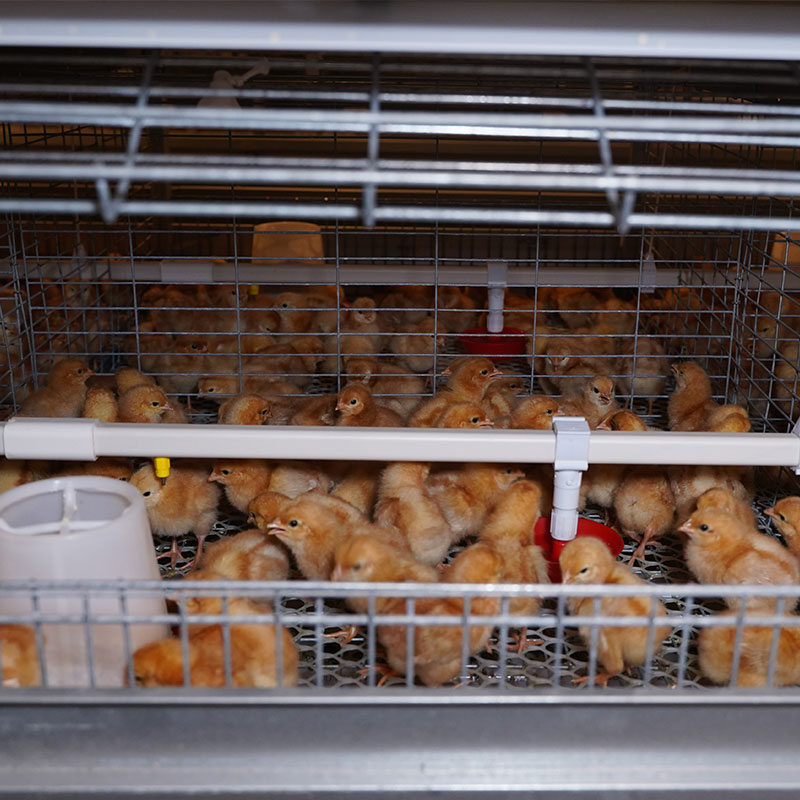
The size of the mesh openings is a critical design choice. For containing adult laying hens, a common mesh opening is 2" x 2". This is small enough to securely contain the birds while allowing for easy manure passage in multi-tier systems, preventing buildup on the mesh itself. For broiler breeders or larger fowl, a 3" x 3" opening might be used. For protecting chicks in a brooder area from smaller predators or containing bantams, a 1" x 1" mesh is available. The key is specifying a mesh size that aligns with the specific containment and manure management needs of the bird and the system design.
Economic Justification: Calculating Total Cost of Ownership
The initial price per square foot of 316L stainless steel mesh is undoubtedly higher than that of galvanized alternatives. Focusing solely on this upfront cost, however, paints an incomplete and ultimately misleading financial picture. The true metric for evaluation is Total Cost of Ownership (TCO), which factors in acquisition, installation, maintenance, and replacement costs over the asset's usable life.
A galvanized steel enclosure in a poultry house may have a functional lifespan of 5 to 8 years before corrosion compromises its integrity to the point of requiring a full, disruptive, and expensive replacement. The cost of that replacement must be calculated in today's dollars and added to the original purchase price. Furthermore, during its service life, that galvanized system requires ongoing costs: labor for scraping rust spots and applying touch-up paint, replacement of corroded latches or hinges, and downtime for repairs.
A 316L stainless steel system, by contrast, is engineered for a service life measured in decades, often exceeding 20 years with minimal intervention. Its TCO is essentially its installation cost, spread over that extended period. There are no significant maintenance costs for corrosion control. The labor saved on repairs and touch-ups can be redirected to more productive tasks like flock monitoring or facility cleaning. The elimination of a major capital replacement project in 8 years represents a massive future cost avoidance. When a farmer budgets for a new barn or a retrofit, comparing the 20-year TCO of a 316L system against the cumulative cost of two or three galvanized system replacements over the same period almost always reveals the stainless steel option to be the more prudent long-term investment.

Applications Tailored to Modern Poultry Production
The versatility of 316L wire rope mesh allows it to solve specific challenges across different poultry production models.
In cage-free aviary systems, the mesh is used for vertical panels, partitions, and sometimes as the flooring for elevated tiers. Its flexibility is paramount for bird welfare, reducing injury during flight and movement between levels. Its corrosion resistance ensures that the structural integrity of these complex, multi-level environments is maintained despite constant exposure to manure and moisture. The open mesh design also promotes excellent ventilation throughout the house, a critical factor in maintaining air quality and bird health in dense populations.
For pullet rearing facilities, creating a robust and safe environment is the foundation for a productive laying cycle. 316L mesh is ideal for constructing secure enclosures, partitions, and protective barriers around equipment. Its strength deters predators, and its durability means the pullet-rearing facility itself will not need structural renovation due to corroded enclosures, providing a consistent, high-quality environment for flock after flock.
In outdoor ranging areas or pastured poultry netting, the demands are different but no less severe. Here, the mesh acts as a physical and psychological barrier. Its high tensile strength makes it effective against predators like foxes, raccoons, and stray dogs. The visual openness of the mesh reduces wind load on the structure, preventing blow-overs, while also minimizing feelings of confinement for the birds, which can encourage them to utilize the full range area. Being non-corrosive, it can be moved regularly for rotational grazing without succumbing to rust from ground moisture and weather.
Installation and Handling Considerations
Working with 316L stainless steel mesh requires some specific techniques, different from handling rigid welded wire. Due to its flexibility, it is typically supplied in rolls. Unrolling and positioning the mesh requires care to avoid kinking the cables. It is not cut with standard wire cutters; instead, it requires cable cutters or an angle grinder with a cutting disc to achieve a clean, safe cut on the stainless steel strands.
The mesh is supported around its perimeter by a structural frame, usually made from galvanized or powder-coated steel tubing. The mesh is tensioned and attached to this frame using specialized hardware: 316L stainless steel tension bars, clamps, and bolts. Proper tensioning is crucial. It eliminates sagging, gives the panel a clean, professional appearance, and ensures the mesh performs as designed, with the right amount of flexibility. A poorly tensioned mesh will be loose, look unprofessional, and may not provide consistent containment.
Because the mesh is a series of individual cables, the cut ends will be exposed. To maintain a safe and finished installation, these ends are almost always capped with an aluminum end cap or a vinyl dip to prevent any sharp wire ends from protruding and to give the panel a clean, completed look.
The decision to invest in 316L stainless steel wire rope mesh is a strategic one. It moves the poultry housing infrastructure from a recurring cost center to a permanent, reliable asset. It directly supports bird welfare through its flexible, injury-reducing design and enhances biosecurity by providing a robust, long-lasting barrier against the elements and predators. The financial case becomes compelling when viewed through the lens of total cost of ownership, factoring in decades of service without the cycle of corrosion, repair, and replacement. For the forward-thinking poultry farmer, it is an investment not just in a product, but in the future resilience and efficiency of their operation.
1. Drinking system include the water pipes, water pressure adjuster, drinking nipples, Waterline front-end device, dosing system etc, choose them according to customer's needs.
2. High-quality water drinking pipes, pressure regulating valves and water drinking nipples can effectively prevent the water leakage. Drinking system adopt the closed piping system, which can minimize the water pollution.
3. 360-degree drinking nipples provide adequate drinking water for poultry at all stages.
4. The automatic drinking water system mainly adopts the steel ball drinking nipple. lt uses imported high-grad stainless steel, POM resin, and APS engineering material, which is wearing resistant, and the durability can be used for long time.



1. Automatic feeding machine can be chosen between gantry and ladder feeding machine. Gantry type feeding machine is a relatively economical and practical machine with simple operation, remote control walking character, easy to manage.
2. Mechanical transmission device running smoothly, low noise, long service life.
3. With the use of automatic control, the feeding system can adjust the amount of material.
4. Feeding with arched structure, high carrying capacity, not easily deformed.
5. Saving man power, saving feed, greatly improving the efficiency of Large-scale farming.
6. The walking speed of gantry feeding machine is 9--12 m/min.




1. Manure removing system included scraper type and conveyor belt type, Which can reduce the labor intensity and labor cost, keep the chicken shed dry and clean.
2. A type chicken cage can use scraper type or conveyor belt type.


3. The scraper type is suitable for A type cages, which can clean two or three rows. For the starters, this type is a good choice. lt can not only save some labor cost, but also save some investment in the whole project. The cleaning speed is 6-10 meters per minute.
4. Conveyor belt type is more suitable for large scale farming. The manure removing belt we use is high quality PP material (polypropylene). The walking speed is 2-4 meters per minute.



High Quality Pellets Made by Mobile Pellet Machine
1. It has professional designed angle of the blade. After the dynamic balance test one by one, the blade can operate smoothly.
2. The air volume is consistent in the whole life of the fan. Bearings has advantage of high strength, low noise, durable and so on.
1. The cooling pads uses high-quality wet curtain paper and adopts space cross-linking technology, which has the advantages of high water absorption, high water resistance, anti-toxicity and long service life.
2. The cooling efficiency is over 80%, without surfactant, natural water absorption, fast diffusion speed and long-lasting effect.
3. The product does not contain phenol and other chemical substances that are easy to cause skin allergies. It is non-toxic and harmless to the human body and chicken when installed and used. It is green, safe, energy-saving, environmentally friendly, economical, and easy to install.
4. The frame aluminum alloy has high strength, good corrosion resistance, durability and beautiful appearance.
5. Use a special filter for the cooling pad at the upper water to ensure clean water quality and support efficient water circulation components.
6. Combined with a negative pressure fan, it can effectively lower the indoor temperature.
The window is made of special selected high-quality engineering plastic, with high strength and long service life, together with superior anti-aging and anti-UV performance.
Function: Ventilation of the chicken house, usually used in the winter.
This system can adjust the wind speed and direction, thus the cold air will not reach chicken directly , which can effectively prevent the phenomenon of cold stress in chicken.
Environmental control system equipment is suitable for large-scale and intensive farming. According to customer requirements, we can provide various types of smart poultry equipment.
1. Our poultry management system is a modular system that manages all aspects of the chicken house, such as climate, temperature, humidity, ammonia, feeding, feed weighing, lighting and ventilation systems, and can monitor the situation of the chicken house in real time through a computer and mobile phone.
2. The management computer is the heart of the poultry farm, allowing you to easily monitor the entire poultry farm.

 WeChat:+8617838608255