The modern poultry operation runs on precision. Every square foot of floor space, every minute of labor, and every calorie of feed must be accounted for to maintain a viable business. For decades, farmers have sought ways to maximize their output without exponentially increasing their input costs or physical footprint. The single-layer floor pen, while simple, represents a significant underutilization of a barn’s most valuable asset: its vertical space. This is the fundamental problem the 4 tier poultry cage system is engineered to solve. It’s not merely a set of cages; it’s a complete rearing environment designed to transform the density and efficiency of your operation from the ground up.
Moving to a multi-tier system is a significant decision. Understanding the design, the operational shifts, and the tangible impact on your birds and your bottom line is crucial. This isn't about stacking chickens; it's about building a structured, controlled, and highly efficient ecosystem within your existing walls.
The Structural Blueprint: More Than Just Stacking Cages

At first glance, a 4 tier system looks imposing—a galvanized steel framework rising nearly seven feet tall, each level a self-contained living quarter. But the genius is in the components working in concert.
The framework is the skeleton. Made from hot-dipped galvanized steel, it’s built to withstand the corrosive atmosphere of a poultry house for decades. The vertical columns aren't just supports; they are often hollow, acting as conduits for watering lines, delivering fresh water directly to each tier's nipple drinkers. This integrated plumbing eliminates the tangled mess of external pipes and reduces potential leak points.
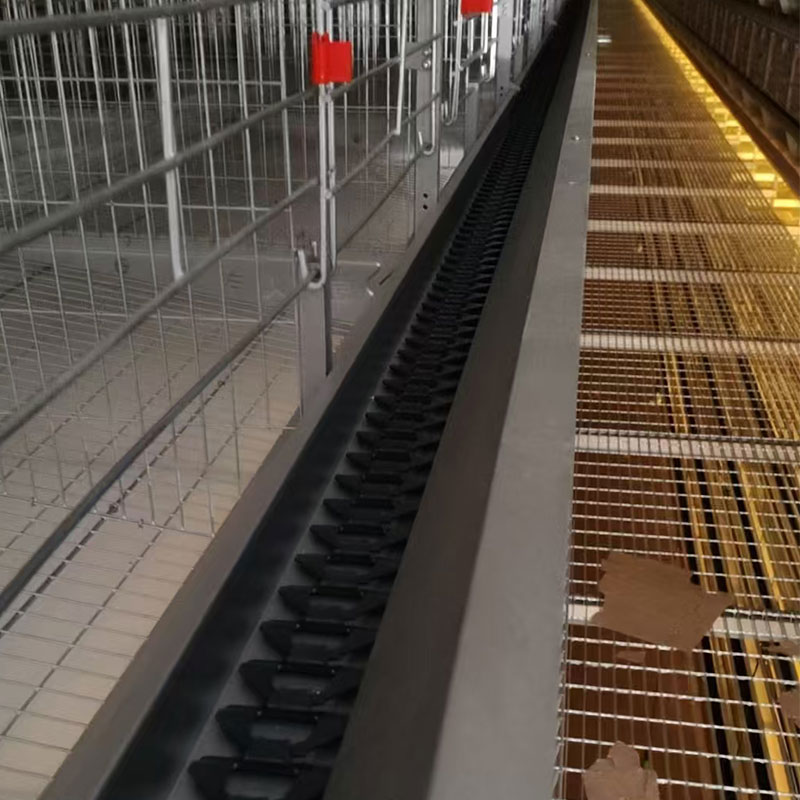
The cages themselves are typically constructed from heavy-gauge welded wire mesh. The floor is sloped, a critical feature often overlooked. A gentle, calculated slope of about 8-10 degrees guides every egg laid to roll gently out of the cage onto the egg collection belt the moment it is laid. This minimizes the number of birds that can trample or peck at the eggs, drastically reducing the percentage of cracked or dirty eggs you have to sort through later. The mesh size is precise: large enough for manure to fall through easily but small enough to provide secure footing for the birds, preventing foot and leg injuries.
Between each tier runs a continuous manure belt. This is the circulatory system of the unit. Instead of manure building up in a pit below the cages for the entire grow-out period, these belts are programmed to run on a timer, perhaps once every couple of days. They transport the waste directly to one end of the house where it can be deposited into a cart or a cross-conveyor for removal. This frequent evacuation is transformative for the barn's environment. It sharply reduces ammonia levels because the manure doesn't have time to break down and release gases inside the living space. For the birds, this means healthier respiratory systems. For you, it means less eye irritation during inspections and a lower risk of respiratory disease outbreaks that can decimate flock performance.
Accessibility is designed into the system. While the top tier may require a small platform or step for easy reach, the cages are arranged so that an operator can walk the entire length of the house and visually inspect every bird, check water lines, and monitor feed levels without excessive bending or straining. Feed troughs run along the front of each cage, filled by an automated chain or auger system that ensures a consistent supply of fresh feed is always available.
Operational Transformation: Changing the Day-to-Day Workflow
Adopting this technology changes the rhythm of farm work. The most immediate and labor-saving change is in egg collection. Forget sending workers down rows with trolleys to gather eggs by hand from floor nests. In a 4 tier system, the eggs are never touched by hand until they arrive at the packing station. As they roll out of the cage, they land on a soft, polyurethane collection belt that runs the length of each tier. These belts can be activated to move all eggs simultaneously to the main collection conveyor, which carries them directly to the washing and grading room. This process takes minutes instead of hours, reduces labor costs by up to 50%, and improves egg quality through minimal handling.

Manure management shifts from a major weekly chore to an automated process. The scheduled running of the manure belts means the waste is dealt with consistently before it can become a problem. This leads to a drier house overall. When you compare this to a high-rise house where manure packs down over months, the difference in air quality is night and day. The drier litter that falls onto the belts is also more valuable as fertilizer, as it has a higher nutrient concentration and is easier to handle and spread.
Bird management becomes more structured. While the birds have less free-range space, their world is more controlled. With feeders and drinkers always within beak’s reach, the energy they would have spent foraging is redirected into growth and egg production. This is a primary driver of the improved feed conversion ratios these systems are known for. Monitoring becomes easier. It’s simpler to spot a bird that is off its feed or showing signs of illness when it is one of a small group in a defined space rather than one of thousands on a litter floor. Sick birds can be identified and removed more quickly, potentially containing the spread of illness.
Vaccination and treatment procedures also evolve. Many modern systems are compatible with automated vaccination systems that can administer vaccines through the water lines or via spray misters that evenly coat each tier. For individual bird treatment, while accessing a middle-tier cage might require an extra step, the small group size makes catching a specific bird far less stressful for both the handler and the entire flock than chasing it through a crowded pen.
Flock Performance and Welfare Considerations
The conversation around cage systems is incomplete without addressing animal welfare, a concern both for the farmer’s ethics and the consumer’s perception. A well-managed 4 tier system is designed to meet the bird's core needs: ready access to fresh food and water, a comfortable environment, and protection from predators and the elements.
The controlled environment directly benefits bird health. The drastic reduction in ammonia burns the trachea and lungs, making birds less susceptible to pathogens like E. coli and Mycoplasma. The separation from manure eliminates contact with parasites like coccidia and worms, removing the need for in-feed anticoccidials and dewormers. This is a significant advantage for farms targeting antibiotic-free or organic markets. The wire floor keeps the birds dry and clean, preventing breast blisters and hock burns that can occur from constant contact with damp litter.
Behavioral needs are addressed through design features. The slight slope of the floor provides a more natural standing position than a perfectly flat surface. The cage size is designed for a specific number of birds to ensure each has adequate space to stand, sit, turn around, and preen comfortably. Feeders and drinkers are placed to prevent dominant birds from monopolizing resources, ensuring shy birds get their share.
The outcome of these conditions is a less stressed, healthier bird. This translates into key performance indicators any farmer will appreciate: higher peak lay percentages, better feed conversion (meaning it takes less feed to produce a dozen eggs), improved livability (lower mortality rates), and a more consistent egg size and shell quality throughout the laying cycle. The birds are protected from their own manure, which is the source of most disease challenges in poultry production. By breaking this cycle, the system creates a foundation of health that is difficult to achieve in a floor-based system.
Financial Implications: Calculating the Return on Investment
The upfront cost of a 4 tier poultry cage system is substantial. It is a capital-intensive investment that includes not only the cages but also the accompanying infrastructure: the manure belt systems, enhanced ventilation, feeding systems, and often, a new egg handling room. This can be a barrier for smaller operations and requires careful financial planning.
However, the investment is justified by the dramatic shift in operational capacity and efficiency. The most significant gain is in bird density. By stacking four layers, you are essentially placing four farms’ worth of birds under one roof without expanding your building’s footprint. This immediately multiplies your potential revenue from the same land and building asset.
The savings compound from there. Labor costs for egg collection and manure cleaning plummet. The automation embedded in the system means one worker can manage a flock size that would have previously required three or four. Feed savings from improved conversion ratios directly cut the largest variable cost of production. Reduced mortality means more saleable birds at the end of the cycle. Healthier birds mean lower veterinary bills and medication costs.
The math for the Return on Investment (ROI) typically works out over a medium-term horizon, often between three to five years for a well-utilized system. The calculation is based on the increased revenue from more birds and the decreased costs in labor, feed, and medication. Furthermore, the consistency and improved quality of the eggs can sometimes command a better market price, especially if the improved hygiene allows for marketing claims like “all-natural” or “raised without antibiotics.”
Making the Transition: Considerations for Implementation
Success with a 4 tier system isn’t automatic; it requires a shift in management philosophy. The first step is barn preparation. Your existing building must be evaluated. Is the roof high enough to accommodate nearly seven feet of cages while still allowing for a crucial air space above? This air buffer is essential for proper temperature and humidity control. Is the floor strong and level enough to support the immense weight of the system, the birds, the feed, and the equipment? Reinforcing the foundation may be necessary.
Ventilation is no longer a suggestion; it is the lifeline of the operation. The density of birds means their collective body heat and moisture output are immense. A traditional curtain-sided house might need to be upgraded to a tightly controlled tunnel-ventilation system with exhaust fans, cooling pads, and automated inlets to maintain a precise environment. Stagnant air pockets between tiers can become hot spots; properly designed air flow is non-negotiable.
Training yourself and your staff is critical. This is a more technical environment. You need to understand the mechanics of the belt systems, the electronics of the timers, and the nuances of reading bird behavior in this new setup. Troubleshooting a blocked nipple drinker or a misaligned manure belt becomes a necessary skill.
Finally, engage with a reputable supplier. Not all systems are created equal. The quality of the galvanization, the engineering of the framework, and the reliability of the automated systems vary widely. Look for a company with a strong track record that offers robust training and reliable after-sales service and parts support. They should help you design the layout for your specific barn dimensions to optimize workflow and bird welfare.
The 4 tier cage system represents a commitment to modern, precision poultry farming. It is a tool that, when implemented and managed with skill and attention, redefines the ceiling of what a poultry operation can achieve. It turns volume into efficiency and challenges into controlled variables, securing the productivity and sustainability of the farm for years to come.
1. Drinking system include the water pipes, water pressure adjuster, drinking nipples, Waterline front-end device, dosing system etc, choose them according to customer's needs.
2. High-quality water drinking pipes, pressure regulating valves and water drinking nipples can effectively prevent the water leakage. Drinking system adopt the closed piping system, which can minimize the water pollution.
3. 360-degree drinking nipples provide adequate drinking water for poultry at all stages.
4. The automatic drinking water system mainly adopts the steel ball drinking nipple. lt uses imported high-grad stainless steel, POM resin, and APS engineering material, which is wearing resistant, and the durability can be used for long time.



1. Automatic feeding machine can be chosen between gantry and ladder feeding machine. Gantry type feeding machine is a relatively economical and practical machine with simple operation, remote control walking character, easy to manage.
2. Mechanical transmission device running smoothly, low noise, long service life.
3. With the use of automatic control, the feeding system can adjust the amount of material.
4. Feeding with arched structure, high carrying capacity, not easily deformed.
5. Saving man power, saving feed, greatly improving the efficiency of Large-scale farming.
6. The walking speed of gantry feeding machine is 9--12 m/min.




1. Manure removing system included scraper type and conveyor belt type, Which can reduce the labor intensity and labor cost, keep the chicken shed dry and clean.
2. A type chicken cage can use scraper type or conveyor belt type.


3. The scraper type is suitable for A type cages, which can clean two or three rows. For the starters, this type is a good choice. lt can not only save some labor cost, but also save some investment in the whole project. The cleaning speed is 6-10 meters per minute.
4. Conveyor belt type is more suitable for large scale farming. The manure removing belt we use is high quality PP material (polypropylene). The walking speed is 2-4 meters per minute.



High Quality Pellets Made by Mobile Pellet Machine
1. It has professional designed angle of the blade. After the dynamic balance test one by one, the blade can operate smoothly.
2. The air volume is consistent in the whole life of the fan. Bearings has advantage of high strength, low noise, durable and so on.
1. The cooling pads uses high-quality wet curtain paper and adopts space cross-linking technology, which has the advantages of high water absorption, high water resistance, anti-toxicity and long service life.
2. The cooling efficiency is over 80%, without surfactant, natural water absorption, fast diffusion speed and long-lasting effect.
3. The product does not contain phenol and other chemical substances that are easy to cause skin allergies. It is non-toxic and harmless to the human body and chicken when installed and used. It is green, safe, energy-saving, environmentally friendly, economical, and easy to install.
4. The frame aluminum alloy has high strength, good corrosion resistance, durability and beautiful appearance.
5. Use a special filter for the cooling pad at the upper water to ensure clean water quality and support efficient water circulation components.
6. Combined with a negative pressure fan, it can effectively lower the indoor temperature.
The window is made of special selected high-quality engineering plastic, with high strength and long service life, together with superior anti-aging and anti-UV performance.
Function: Ventilation of the chicken house, usually used in the winter.
This system can adjust the wind speed and direction, thus the cold air will not reach chicken directly , which can effectively prevent the phenomenon of cold stress in chicken.
Environmental control system equipment is suitable for large-scale and intensive farming. According to customer requirements, we can provide various types of smart poultry equipment.
1. Our poultry management system is a modular system that manages all aspects of the chicken house, such as climate, temperature, humidity, ammonia, feeding, feed weighing, lighting and ventilation systems, and can monitor the situation of the chicken house in real time through a computer and mobile phone.
2. The management computer is the heart of the poultry farm, allowing you to easily monitor the entire poultry farm.

 WeChat:+8617838608255