Maximizing Layer Production with Multi-Tier Battery Cage Systems
For poultry farmers, the single greatest operational expense remains labor. The time spent collecting eggs, checking feeders, and monitoring bird health accumulates into a significant cost center that directly impacts profitability. The physical strain of managing floor-based flocks also limits the scale at which a single operator can work efficiently. The evolution of the battery cage system addresses these challenges head-on, transforming labor-intensive tasks into streamlined processes. Modern systems, such as those configured in 96, 120, 128, and 160-bird tier arrangements, represent not just a housing solution but an integrated approach to poultry management. These galvanized steel structures are engineered to maximize bird density per square meter of floor space while creating an environment that supports bird health and simplifies daily operations. The shift from traditional methods to a structured cage system is a strategic decision that hinges on understanding the nuances of cage design, bird welfare, and long-term durability.
Understanding Cage Configurations: Bird Capacity and Farm Layout
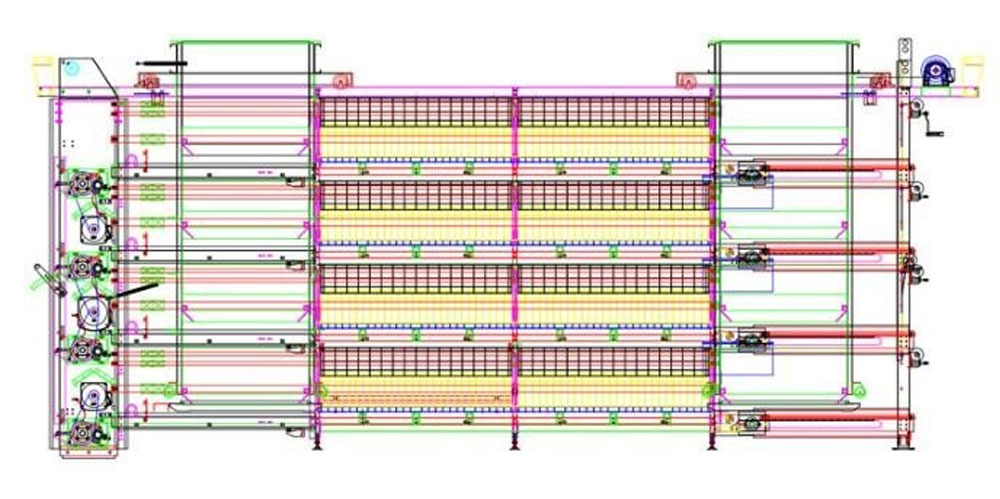
The numbers 96, 120, 128, and 160 are not arbitrary; they refer to the total number of birds a single cage unit is designed to hold. This capacity is achieved through a specific combination of tiers (vertical levels) and the number of compartments per tier. For instance, a 160-bird unit might be arranged in 4 tiers, with each tier containing a long, divided cage that holds 40 hens. This modular design is critical for farm planning. A farmer with a long, narrow poultry house might opt for 120-bird units (e.g., 3 tiers of 40 birds) to allow for better airflow and easier access along the length of the building. Conversely, a farmer aiming for maximum stock density in a wider building might choose the 160-bird, 4-tier system.
The terms "3 Tiers" or "4 Tiers" simply indicate the height of the unit. A 3-tier system is generally easier to manage for a farmer of average height, as the top tier remains within easy reach for bird inspection and retrieval of any stray eggs. A 4-tier system increases vertical capacity, allowing a farmer to house 33% more birds in the same floor footprint. However, this requires careful consideration of ceiling height and may necessitate a small platform or step ladder for routine checks of the upper level. The choice between three and four tiers is a balance between maximizing land use and ensuring practical, safe daily management. It is not about which is better, but which is better suited to the specific dimensions of the poultry house and the physical capabilities of the workforce.
The Critical Role of Dip Galvanization in Cage Longevity
The poultry environment is exceptionally corrosive. The constant presence of moisture from drinking systems, high levels of ammonia from manure, and the body heat of thousands of birds create a perfect storm for rust and metal degradation. A flaking, rusty cage is not just an eyesore; it poses a serious threat to bird safety through sharp edges and structural weakness, and it drastically shortens the equipment's usable life. This is where the specification "Dip Galvanized" becomes a paramount factor in the purchasing decision.
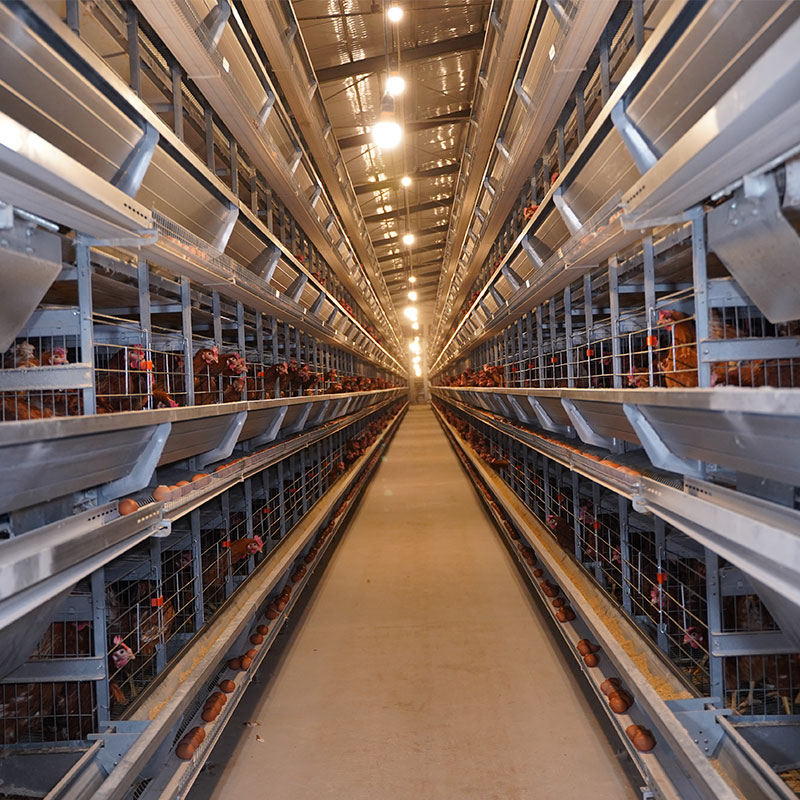
Dip galvanization is a process where the fabricated steel cage is fully immersed in a bath of molten zinc. The zinc bonds metallurgically to the steel, creating a coating that is integral to the base metal rather than simply painted on. This difference is crucial. A painted coating, no matter how thick, can be scratched or chipped during assembly or cleaning, exposing the steel underneath to corrosion that can spread beneath the paint. A dip-galvanized coating, however, is uniform across the entire structure, including hard-to-reach corners and weld points. Even if the surface is scratched, the zinc sacrificially protects the steel; it corrodes first, preventing rust from forming on the cage material itself.
For a farmer, this translates to a cage system that can withstand years of high-pressure washing between flocks, constant exposure to manure, and the general wear and tear of housing active animals. It eliminates the recurring cost and labor of touch-up painting and provides the peace of mind that the investment is protected for a decade or more. When comparing cages, the quality of galvanization is a key differentiator. A thick, uniform, silver-gray coating indicates a robust manufacturing process, whereas a thin, patchy coating is a sign of future problems.
Design Features for Efficient Bird Management and Egg Production
The design of a modern layer cage is a result of decades of refinement focused on both animal welfare and operational efficiency. features work in concert to create a system that minimizes stress on the birds and labor for the farmer.
The mesh floor is a primary example. It is typically sloped gently towards the front of the cage. When a hen lays an egg, it rolls away from the bird onto a dedicated egg collection tray. This simple mechanism is profoundly effective. It keeps the egg clean by separating it immediately from the manure, which falls through the mesh openings onto a manure belt or into a pit below. This directly improves egg quality and reduces the incidence of stained or cracked eggs, which are downgraded in value. The open mesh design also promotes excellent ventilation around the birds, preventing the buildup of dampness and ammonia at bird level, which is critical for respiratory health.
The feeding system is integrated into the front of the cage. A long trough runs the entire length of each tier, which can be filled manually by a feed cart or, more commonly in larger operations, automatically by an auger system. The design of the feeder includes a "lip" to prevent feed wastage. Hens can easily access the feed but are less likely to flick it out of the trough, a common cause of loss in poorly designed systems. Similarly, the watering system uses nipple drinkers positioned at an accessible height within the cage. These release water only when pecked by the hen, ensuring a constant supply of fresh, clean water while keeping the birds and the cage floor remarkably dry compared to open cup or trough waterers. Dry litter and manure are easier to manage and produce less ammonia.
Manure handling is a critical component. In a multi-tier system, manure from upper tiers would fall onto the birds below if not managed. Therefore, each tier is equipped with a manure deflector or, in more advanced systems, a scraper belt. A belt system runs beneath each tier, periodically moving to transport the dried manure to the end of the row for collection. This not only maintains hygiene but also allows for the manure to be collected as a valuable by-product for compost or fertilizer, turning a waste product into a potential revenue stream.
Stocking Density and Animal Welfare Considerations
A discussion of cage systems is incomplete without addressing stocking density and welfare. The battery cage system is designed to provide each hen with a specific amount of space, calculated to allow for natural behaviors like standing, sitting, turning around, and accessing feed and water without difficulty. The appropriate space allowance is a subject of much debate and is often regulated by local animal welfare codes.
A well-managed cage system provides a controlled environment that offers significant welfare advantages. It protects birds from predators and prevents cannibalism and feather pecking, common issues in large floor flocks. It allows for easy monitoring of individual bird health; a sick hen that is not eating or drinking is quickly spotted. However, the confinement does restrict behaviors like full wing-flapping, dust-bathing, and nesting in a secluded area. Many farmers address this by providing enrichment items within the cage.
The industry is increasingly moving toward "enriched" or "furnished" cage systems that include perches, a scratch area, and a enclosed nesting box to allow for more natural behaviors. When selecting a cage system, a forward-thinking farmer must consider not only current regulations but also likely future trends in consumer demand and welfare standards. Investing in a system that can be easily adapted or that already incorporates higher welfare features can future-proof the operation.
Implementing the System: From Delivery to Daily Routine
The successful integration of a new cage system begins long before delivery. Site preparation is essential. The poultry house floor must be level to ensure the cages stack correctly and the manure removal system functions properly. Access to electricity for ventilation, lighting, and automated systems, and a reliable water source are fundamental.
Assembly is a significant undertaking. While components are pre-fabricated, putting together a multi-tier system requires careful attention to instructions and, ideally, a small team. The reward for this initial effort is a system that simplifies daily chores. A typical day for a farmer using this system might involve a morning walk-through to check that the feed lines are full and the water pressure is correct, visually scanning each tier for any signs of distress or mortality, and collecting eggs from the roll-out trays. The afternoon might involve a more detailed inspection of a particular section. Tasks that once took hours, like feeding and manure cleaning, are reduced to monitoring automated systems.

Compared to a deep-litter system, where workers must walk among the birds to collect eggs from floor nests, the cage system centralizes the most labor-intensive tasks. Egg collection is faster and results in cleaner eggs. Bird handling during vaccination or health checks is also more efficient, as birds can be easily accessed without having to catch them in a large open space.
Conclusion
The decision to invest in a 96, 120, 128, or 160-bird tier battery cage system is a strategic one that impacts nearly every aspect of a poultry operation. It is a capital investment that pays dividends through reduced labor costs, improved feed conversion ratios, higher egg quality, and better bird health monitoring. The dip-galvanized construction ensures the investment is protected against the harsh farm environment for years. By carefully matching the cage configuration to the specific layout and goals of the farm, and by managing the system with a focus on both efficiency and animal welfare, poultry farmers can achieve a level of productivity and sustainability that is difficult to match with traditional methods. This technology represents a key tool for modern farmers aiming to run a competitive, profitable, and manageable layer operation.
1. Drinking system include the water pipes, water pressure adjuster, drinking nipples, Waterline front-end device, dosing system etc, choose them according to customer's needs.
2. High-quality water drinking pipes, pressure regulating valves and water drinking nipples can effectively prevent the water leakage. Drinking system adopt the closed piping system, which can minimize the water pollution.
3. 360-degree drinking nipples provide adequate drinking water for poultry at all stages.
4. The automatic drinking water system mainly adopts the steel ball drinking nipple. lt uses imported high-grad stainless steel, POM resin, and APS engineering material, which is wearing resistant, and the durability can be used for long time.



1. Automatic feeding machine can be chosen between gantry and ladder feeding machine. Gantry type feeding machine is a relatively economical and practical machine with simple operation, remote control walking character, easy to manage.
2. Mechanical transmission device running smoothly, low noise, long service life.
3. With the use of automatic control, the feeding system can adjust the amount of material.
4. Feeding with arched structure, high carrying capacity, not easily deformed.
5. Saving man power, saving feed, greatly improving the efficiency of Large-scale farming.
6. The walking speed of gantry feeding machine is 9--12 m/min.




1. Manure removing system included scraper type and conveyor belt type, Which can reduce the labor intensity and labor cost, keep the chicken shed dry and clean.
2. A type chicken cage can use scraper type or conveyor belt type.


3. The scraper type is suitable for A type cages, which can clean two or three rows. For the starters, this type is a good choice. lt can not only save some labor cost, but also save some investment in the whole project. The cleaning speed is 6-10 meters per minute.
4. Conveyor belt type is more suitable for large scale farming. The manure removing belt we use is high quality PP material (polypropylene). The walking speed is 2-4 meters per minute.



High Quality Pellets Made by Mobile Pellet Machine
1. It has professional designed angle of the blade. After the dynamic balance test one by one, the blade can operate smoothly.
2. The air volume is consistent in the whole life of the fan. Bearings has advantage of high strength, low noise, durable and so on.
1. The cooling pads uses high-quality wet curtain paper and adopts space cross-linking technology, which has the advantages of high water absorption, high water resistance, anti-toxicity and long service life.
2. The cooling efficiency is over 80%, without surfactant, natural water absorption, fast diffusion speed and long-lasting effect.
3. The product does not contain phenol and other chemical substances that are easy to cause skin allergies. It is non-toxic and harmless to the human body and chicken when installed and used. It is green, safe, energy-saving, environmentally friendly, economical, and easy to install.
4. The frame aluminum alloy has high strength, good corrosion resistance, durability and beautiful appearance.
5. Use a special filter for the cooling pad at the upper water to ensure clean water quality and support efficient water circulation components.
6. Combined with a negative pressure fan, it can effectively lower the indoor temperature.
The window is made of special selected high-quality engineering plastic, with high strength and long service life, together with superior anti-aging and anti-UV performance.
Function: Ventilation of the chicken house, usually used in the winter.
This system can adjust the wind speed and direction, thus the cold air will not reach chicken directly , which can effectively prevent the phenomenon of cold stress in chicken.
Environmental control system equipment is suitable for large-scale and intensive farming. According to customer requirements, we can provide various types of smart poultry equipment.
1. Our poultry management system is a modular system that manages all aspects of the chicken house, such as climate, temperature, humidity, ammonia, feeding, feed weighing, lighting and ventilation systems, and can monitor the situation of the chicken house in real time through a computer and mobile phone.
2. The management computer is the heart of the poultry farm, allowing you to easily monitor the entire poultry farm.

 WeChat:+8617838608255