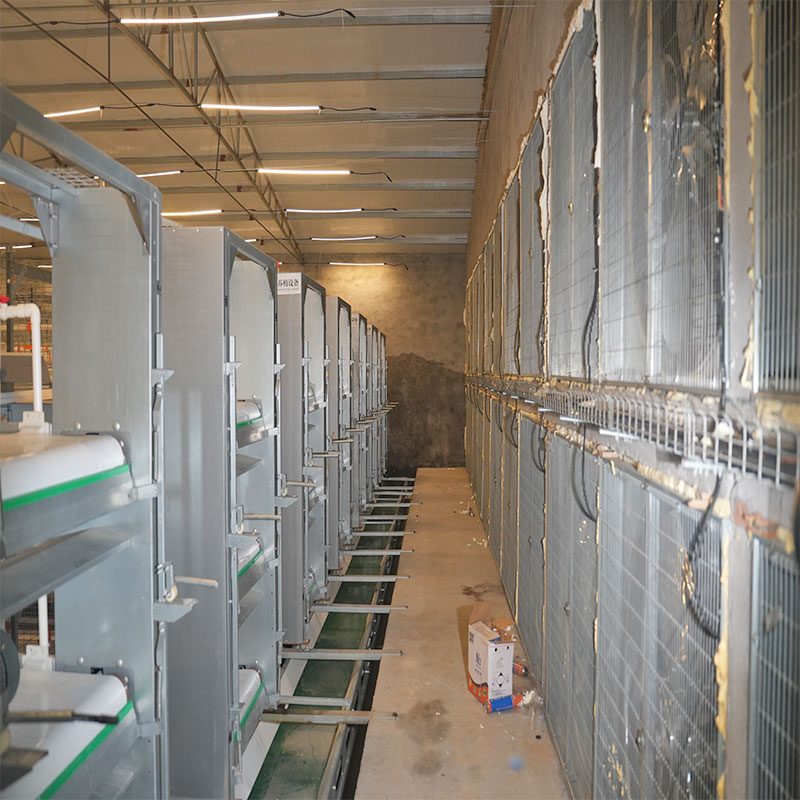
For the small-scale poultry farmer, every square foot of the coop matters. The daily routine of collecting eggs from nesting boxes, only to find a few broken or hidden under bedding, represents a constant, low-grade drain on time and profit. The transition from traditional floor-based systems to a structured cage environment is not merely about modernization; it's a fundamental shift in operational efficiency, bird management, and ultimately, the farm's bottom line. The 3-4 tier layer cage system, designed specifically for smaller operations, offers a compelling solution that maximizes output without demanding a massive footprint or budget.
The Vertical Advantage: Maximizing Space and Production
The most immediate benefit of a multi-tiered cage system is its use of vertical space. A small farm might have a coop that is 20 feet by 30 feet. Using a floor system, this 600-square-foot area might comfortably house 200 birds before overcrowding becomes a concern. With a 4-tier cage system, that same floor space can now accommodate the equivalent of 800 birds. This isn't magic; it's simple physics. The birds are housed in stacked enclosures, each tier functioning as a separate "floor." The farmer hasn't increased the land used, but has quadrupled the potential laying population.
This vertical design directly translates to higher egg production per square foot of building. When a hen is housed in a controlled cage environment, her energy is directed toward laying eggs, not competing for space, foraging, or establishing a pecking order across a wide area. The farmer who installs these cages often reports a more consistent daily yield. Instead of eggs being laid in a dozen different corners of the coop—some in nesting boxes, some on the floor, some in hard-to-reach spots—every egg is laid within the cage and rolls forward onto the collection tray. This consolidation turns a scavenger hunt into a simple, linear collection process.
Anatomy of a Modern Small-Farm Cage System
Understanding the components of these cages is key to appreciating their functionality. They are not just wire boxes stacked on top of each other; they are integrated systems.
The cages themselves are typically constructed from heavy-galvanized steel wire, a material chosen for its resistance to rust and corrosion from manure and humidity. Each compartment is sized to hold a small group of hens—often three to seven birds. This group size is a careful balance. It is small enough to prevent the severe bullying that can happen in large flocks, but large enough to be economically efficient for the farmer to manage. The floor of the cage is not flat; it is sloped. This subtle gradient is one of the most critical design features. When a hen lays an egg, it doesn't remain where it was laid. It gently rolls away from the bird onto a dedicated egg collection tray that runs the length of the cage row. This single feature drastically reduces the number of eggs that are cracked, pecked at, or soiled by the birds' feet.
Beneath each tier of cages runs another essential component: the manure removal system. In simpler, low-price models, this may be a manure deflector plate. This angled plate catches the droppings from the tier above and directs them to fall in a consolidated pile between the cage rows, rather than coating the birds and cages below. This keeps the hens cleaner and significantly improves the overall hygiene of the coop. For farms willing to invest a bit more, a fully automated manure removal scraper can be added. This system features a long, slow-moving belt or a scraper blade that travels the length of the cage bank once or twice a day, collecting all the manure and depositing it into a central collection pit or container outside the coop. This automation can save hours of labor each week.
The feeding and watering systems are similarly integrated. A long trough runs along the front of each tier, connected to a central feed line. The farmer only needs to fill a single hopper, and an auger or chain system distributes the feed evenly throughout all the cages. This ensures every bird has equal access to a balanced diet and eliminates the waste associated with floor feeding, where feed can be scattered, spoiled, or mixed with manure. Nipple drinking systems are the standard for water delivery. These small, valve-activated nipples are positioned within each cage. A hen learns to peck at the nipple to release a few drops of water. This system keeps the water clean and free from contaminants, unlike open troughs which can become breeding grounds for algae and bacteria.
Economic Realities: Low Price and Long-Term Value
The term "low price" in this context requires careful interpretation. It does not mean "cheap" in the sense of poor quality. Rather, it signifies a product designed with the budget constraints of a small-scale operator in mind. Manufacturers achieve this lower price point through several means. They may use slightly lighter-gauge steel (though still sufficiently strong for the application), simplify the automation (opting for manual egg collection and basic manure deflectors instead of full conveyors), and design systems that are easy to ship flat-packed and simple for the farmer to assemble on-site, reducing factory labor costs.
The true economic analysis must be a comparison of initial outlay versus long-term operational savings. The upfront cost of a 4-tier cage system for 500 birds is a significant investment. However, this cost must be weighed against the ongoing expenses of a floor system. The labor savings are substantial. A task that once took an hour—collecting eggs, checking for floor eggs, refilling scattered feeders and waterers—might now take fifteen minutes. The time saved can be redirected to marketing, flock health monitoring, or other farm tasks.
Feed conversion rates almost always improve. In a cage, a hen cannot spill or scratch away her feed. Every gram of nutrition is consumed by the intended bird. Farmers frequently observe a 10-15% reduction in feed costs for the same number of eggs produced. Egg quality directly impacts income. The dramatic reduction in cracked, dirty, and lost eggs means a higher percentage of the total production is suitable for sale at a premium grade. The improved hygiene leads to healthier birds and lower mortality rates, reducing the cost of replacing lost layers. Over a single laying cycle, these accumulated savings can effectively pay for the cage system itself.
Bird Welfare and Management in a Confined Space
The topic of animal welfare in cage systems is a complex and vital one. For the small farmer, the welfare perspective is often a practical one. While cages restrict natural behaviors like dust-bathing and full-wing flapping, they also eliminate many of the dangers and stresses of floor life. In a barn, weaker birds can be bullied away from food and water by more dominant flock members. In a cage, with a small, stable social group and direct access to nipples and a feed trough, this is virtually impossible. Every bird can eat and drink whenever it needs to.
The incidence of diseases like coccidiosis, which thrives in damp litter, is nearly eliminated in cage systems because the birds are separated from their manure. The farmer also gains an unparalleled ability to monitor individual bird health. Walking down the aisle, it is easy to spot a hen that is listless, has abnormal droppings, or isn't eating. In a large floor flock, a sick bird can go unnoticed for days, by which time it may have spread illness to others. This enhanced oversight allows for early intervention, leading to better outcomes and less reliance on antibiotics.
The design of the cage plays a role in welfare. The correct floor slope is crucial; if it's too steep, it can cause foot problems and stress for the hens. The wire mesh must be smooth and of an appropriate gauge to provide a stable, comfortable footing without injuring their feet. Providing perches within the cage, even in simple low-price models, allows birds to roost at night, a strong natural instinct, which improves their comfort and helps maintain strong bone structure.

Practical Considerations for Implementation
Installing a multi-tiered system is a project that requires forethought. The first consideration is the structural integrity of the coop itself. A 4-tier system, fully loaded with hens, feed, and equipment, is extremely heavy. The floor must be strong, level, and able to support this weight. Concrete is the ideal base. Headroom is another factor. The farmer must ensure there is adequate space above the top tier for both the birds' comfort and for the farmer to work, including performing tasks like removing a bird from the top cage for inspection.
Ventilation becomes even more critical in a high-density cage system. While the manure management system helps, the air within the coop can still become laden with ammonia and dust. A properly designed ventilation system—a combination of ridge vents, sidewall inlets, and exhaust fans—is non-negotiable. It is responsible for removing moisture and harmful gases, bringing in fresh air, and keeping the birds comfortable in all seasons. Poor ventilation will quickly lead to respiratory problems that can sweep through the entire flock.
Lighting must be uniform. Since the cages are stacked, it's possible for the lower tiers to be in shadow, which can disrupt the hens' laying cycles. A consistent, automated lighting system that provides the recommended 16 hours of light per day across all tiers is essential for maintaining peak production. Many farmers use reflective surfaces on the walls and ceiling to help bounce light into the lower levels of the cage structure.

The choice between a 3-tier and a 4-tier system often comes down to the specific dimensions of the coop and the farmer's physical capabilities. A 3-tier system is easier to access for daily checks and bird handling; the top cage is at a more manageable height. A 4-tier system offers greater stock density but may require a small step stool for comfortable access to the highest level. For a farmer planning to stay in the business for many years, considering their own ease of use is an important part of the purchasing decision.
The transition to a 3-4 tier layer cage system represents a strategic investment for the small poultry farmer. It is a move away from a reactive, labor-intensive model toward a proactive, efficient, and controlled agricultural enterprise. By leveraging vertical space, integrating feeding and waste management, and providing a controlled environment, these systems address the core challenges of small-scale egg production. The initial financial commitment is offset by tangible returns in labor savings, feed efficiency, and superior product quality. For the farmer focused on building a sustainable and profitable operation, adopting this technology is a definitive step forward.
1. Drinking system include the water pipes, water pressure adjuster, drinking nipples, Waterline front-end device, dosing system etc, choose them according to customer's needs.
2. High-quality water drinking pipes, pressure regulating valves and water drinking nipples can effectively prevent the water leakage. Drinking system adopt the closed piping system, which can minimize the water pollution.
3. 360-degree drinking nipples provide adequate drinking water for poultry at all stages.
4. The automatic drinking water system mainly adopts the steel ball drinking nipple. lt uses imported high-grad stainless steel, POM resin, and APS engineering material, which is wearing resistant, and the durability can be used for long time.



1. Automatic feeding machine can be chosen between gantry and ladder feeding machine. Gantry type feeding machine is a relatively economical and practical machine with simple operation, remote control walking character, easy to manage.
2. Mechanical transmission device running smoothly, low noise, long service life.
3. With the use of automatic control, the feeding system can adjust the amount of material.
4. Feeding with arched structure, high carrying capacity, not easily deformed.
5. Saving man power, saving feed, greatly improving the efficiency of Large-scale farming.
6. The walking speed of gantry feeding machine is 9--12 m/min.




1. Manure removing system included scraper type and conveyor belt type, Which can reduce the labor intensity and labor cost, keep the chicken shed dry and clean.
2. A type chicken cage can use scraper type or conveyor belt type.


3. The scraper type is suitable for A type cages, which can clean two or three rows. For the starters, this type is a good choice. lt can not only save some labor cost, but also save some investment in the whole project. The cleaning speed is 6-10 meters per minute.
4. Conveyor belt type is more suitable for large scale farming. The manure removing belt we use is high quality PP material (polypropylene). The walking speed is 2-4 meters per minute.



High Quality Pellets Made by Mobile Pellet Machine
1. It has professional designed angle of the blade. After the dynamic balance test one by one, the blade can operate smoothly.
2. The air volume is consistent in the whole life of the fan. Bearings has advantage of high strength, low noise, durable and so on.
1. The cooling pads uses high-quality wet curtain paper and adopts space cross-linking technology, which has the advantages of high water absorption, high water resistance, anti-toxicity and long service life.
2. The cooling efficiency is over 80%, without surfactant, natural water absorption, fast diffusion speed and long-lasting effect.
3. The product does not contain phenol and other chemical substances that are easy to cause skin allergies. It is non-toxic and harmless to the human body and chicken when installed and used. It is green, safe, energy-saving, environmentally friendly, economical, and easy to install.
4. The frame aluminum alloy has high strength, good corrosion resistance, durability and beautiful appearance.
5. Use a special filter for the cooling pad at the upper water to ensure clean water quality and support efficient water circulation components.
6. Combined with a negative pressure fan, it can effectively lower the indoor temperature.
The window is made of special selected high-quality engineering plastic, with high strength and long service life, together with superior anti-aging and anti-UV performance.
Function: Ventilation of the chicken house, usually used in the winter.
This system can adjust the wind speed and direction, thus the cold air will not reach chicken directly , which can effectively prevent the phenomenon of cold stress in chicken.
Environmental control system equipment is suitable for large-scale and intensive farming. According to customer requirements, we can provide various types of smart poultry equipment.
1. Our poultry management system is a modular system that manages all aspects of the chicken house, such as climate, temperature, humidity, ammonia, feeding, feed weighing, lighting and ventilation systems, and can monitor the situation of the chicken house in real time through a computer and mobile phone.
2. The management computer is the heart of the poultry farm, allowing you to easily monitor the entire poultry farm.

 WeChat:+8617838608255