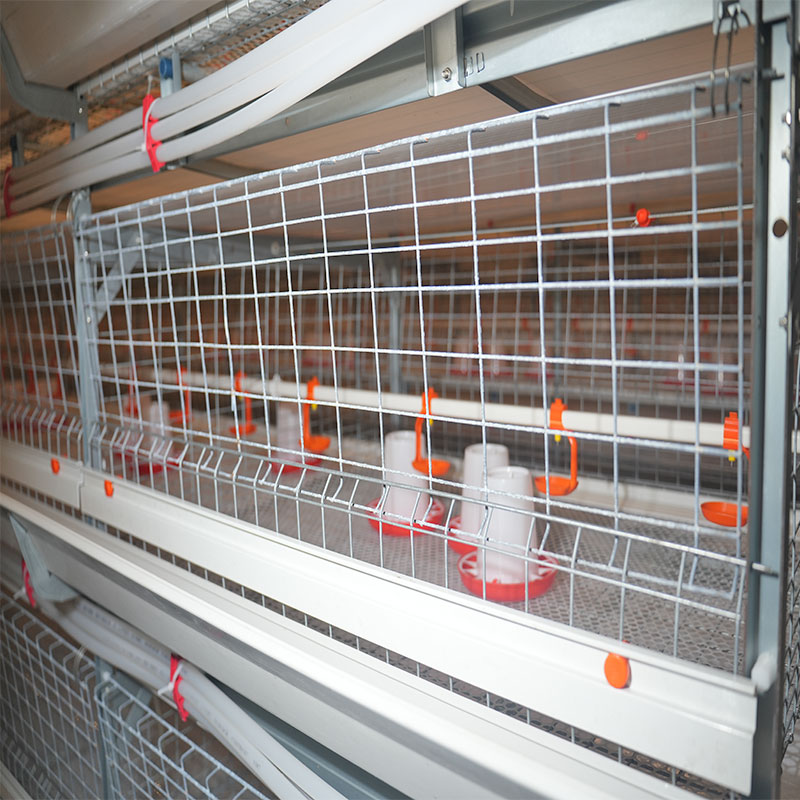
AType Cages for Layers: The Complete Guide to Optimal Hen Housing
For poultry farmers and egg producers, the choice of housing system is one of the most consequential decisions impacting animal welfare, operational efficiency, and ultimately, the bottom line. Among the various options, Atype cage systems for layers remain a prevalent and highly engineered solution worldwide. But what exactly are Atype cages, and are they the right choice for your operation? This comprehensive guide delves deep into the design, benefits, challenges, and best practices surrounding Atype layer cages. We'll move beyond basic definitions to provide a nuanced understanding grounded in practical farming experience and current industry standards. Whether you're planning a new installation or optimizing an existing one, this resource aims to be your authoritative reference.
An Atype cage system is a multitiered battery cage arrangement where the rows of cages are positioned at an angle to form a shape resembling the letter "A." This classic design is distinct from flatdeck or Htype systems and is engineered for space efficiency and manure management.
Angled Tiers: Cages are stacked in two vertical columns that slope inward, meeting at a central manure collection point.
Central Manure Belt: A key feature is the conveyor belt running through the "V" created by the angled tiers. This belt automatically removes droppings, maintaining hygiene and reducing ammonia levels.
HighDensity Housing: The design allows for a large number of birds to be housed in a relatively small floor space.
Integrated Systems: Modern Atype cages incorporate automated systems for feeding, watering (usually nipple drinkers), egg collection (via inclined cage floors that roll eggs to a collection belt), and sometimes even climate control.
When managed correctly, Atype cages offer several compelling advantages that explain their continued use.
The high level of automation inherent in modern Atype systems drastically reduces labor requirements for feeding, watering, egg collection, and manure cleaning. This allows farm staff to focus on bird monitoring and health management.
By separating birds from their manure via the sloped floor and central belt system, the risk of fecaloral transmission of parasites and diseases (like coccidiosis) is significantly reduced. It creates a cleaner environment for the hens.
The controlled environment reduces energy expenditure from activities like excessive movement or feather pecking, allowing more energy to be directed toward egg production. Feed is delivered consistently with minimal waste.
For producers operating where land cost is high or space is limited, the vertical design maximizes bird capacity per square meter of building footprint.
Eggs roll away immediately upon being laid onto a protected collection belt. This minimizes floor eggs, breakage, and contamination from litter or manure, leading to a higher percentage of clean, saleable eggs.
While efficient, Atype cages are not without controversy or challenge. An expert perspective requires acknowledging these points.
This is the most significant factor shaping the industry's future. Conventional battery cages have faced severe restrictions (e.g., EU ban in 2012) due to welfare concerns regarding limited space and behavioral restriction.
Enriched/Furnished Cages: In many regions transitioning away from conventional cages but retaining caged systems,"Enriched" or "Furnished" Atype cages have emerged. These provide perches,a nesting area,a scratching pad,and more space per hen than conventional designs.
Know Your Market: Compliance with local laws (like California's Proposition 12) and retailer/consumer preferences (cagefree commitments) is paramount before investment.
A fully automated Atype cage house represents a significant upfront capital cost compared to barn or freerange systems. The ROI calculation must factor in longterm labor savings and productivity.
These are complex mechanical systems. Proper maintenance of belts,motors,nipple lines,and ventilation is nonnegotiable.Farm managers need technical knowledge alongside poultry science expertise to troubleshoot issues promptly.
While disease transmission from manure is reduced,the high density requires vigilant daily observation.Spotting individual sick birds among thousands can be more challenging than in less dense systems.Training staff on systematic monitoring is crucial.
Success with an Atype system hinges on meticulous management.Here are key actionable insights:
1. Flock Management:
Source uniform,pullets adapted to caged systems.
Follow precise lighting programs tailored to breed specifications.
Implement a strict vaccination and health monitoring protocol.
2. Environmental Control:
Ventilation is King: Prevent moisture buildup and control ammonia.Static pressure,tunnel ventilation,and air inlet management must be precisely calibrated.
Maintain consistent temperature ranges suitable for layers.Avoid drafts directly on birds.
3.System Maintenance:
Establish a daily/weekly/monthly maintenance schedule for all automated components.
Regularly check nipple drinker water pressure and cleanliness.
Inspect egg collection belts for wear and manure belts for proper operation.
Lubricate moving parts as per manufacturer guidelines.
4.DataDriven Decisions:
Track key metrics daily: feed consumption water intake mortality rate,and egg production (% henday).
Use this data to spot trends early.A sudden drop in water intake can signal health or system issues before production drops.
The decision to use an Atype cage system for layers is multifaceted.It offers undeniable efficiencies in labor biosecurity feed conversion,and egg quality which can support sustainable food production at scale However this must be rigorously balanced against evolving animal welfare standards consumer demands regulatory requirementsand significant capital outlay
For existing producersin regions where enriched cages remain compliantmodernizingto an automated furnishedAtypecan bea viablepathway.For new entrantsor thoserespondingto specific market signals(cagefree)the investmentmay carry higher riskUltimatelysuccess requiresmore than just installing equipment;it demandscommitmentto expertmanagementtechnicalmaintenanceand unwaveringattentionto flockwelfarewithin the system'sdesign parameters
Q1: What's the difference between conventional battery cagesand enrichedAtypecages?
Conventional battery cagesprovide minimalspace perhenwith no behavioral amenities.Enrichedor furnishedcages(includingenrichedAtypes)provide more verticaland horizontal spaceand must includeperchesa nestingareaand scratchingpadsto allowfor natural behaviorslike nestingdustbathingand perching
Q2: How many hens can fitin oneAtypecage unit?
This variesby designand local regulations.Conventionalcagesmight hold510birds.Enrichedcagesspecify minimumspace perhen(e.g750 cm²per henin EU enriched)cagingmeaningfewerbirdsper cage unitAlways consultcurrentregulationsin your jurisdiction
Q3: Are eggsfromAtypecagessafe toeat?
YesEgg safetyis primarily determinedby biosecurityfeed qualityand handlingpracticesThe separationof hensfrommanurein wellmanagedAtypesystemscan reducebacterialcontaminationrisksleadingto safecleaneggsPropercollectioncleaningand refrigerationare criticalsteps regardlessof housing
Q4:Whatis themain disadvantageofAtypecages?
The primarydisadvantageremainsthe ongoingpublicand regulatoryscrutinyover animalwelfare limitationson naturalbehaviorslike full wingflappingand foragingThis has ledto bansor phasedoutplansin many marketscreatingpotentialfutureproofingrisksfor investors
Q5:How often doesthe manure beltrun inanAtypecagehouse?
Typicallymanurebeltsrun onceor twice dailyto removedroppingspreventexcessiveammoniabuildupand maintaindrylitterconditionsThe schedulemay beadjustedbasedon humiditytemperatureand bird age
Q6:What happensduringa power outageinan automatedAtypehouse?
Thisisa criticalriskBackupgeneratorsare essentialto maintainminimalventilationfeeding(if automated)and wateringEvenashort outagecan leadto heatstress suffocationordehydrationEmergencyproceduresmustbe inplace
Q7:Canyou useany chickenbreedin anAtypecage?
NoCommercialwhiteegglayinghybrids(e.gHyLine W36Lohmann LSL)are specificallybredfor high productivityin intensive systemsincludingcagesHeavierbreedsorbrown egglayersmay notperformas wellor fitcagedimensions optimallyAlways followbreederguidelinesfor housingrecommendations
Q8:Arethere alternativestoAtypecagesthat offer similar efficiency?
YesAlternativesincludeHtypecages(manurebeltsbetweenverticaltiers)multitier aviaries(barn systemswith tiers)and variouscagefreelayer barnsEfficiencycomparisonsdependon definitionsof laborvs landvs feedefficiencyEachhas distinctwelfaremanagementand costtradeoffs
Q9:Whatisthe typicallifespanofanAtypecage system?
Withproper maintenancehighqualityautomatedAtypesystemscan havea physical lifespanof15+yearsHoweverthe economiclifespanmaybe shorterdueto changingregulationsormarketdemandsInvestingin flexibleor upgradabledesignsis prudent
1. Drinking system include the water pipes, water pressure adjuster, drinking nipples, Waterline front-end device, dosing system etc, choose them according to customer's needs.
2. High-quality water drinking pipes, pressure regulating valves and water drinking nipples can effectively prevent the water leakage. Drinking system adopt the closed piping system, which can minimize the water pollution.
3. 360-degree drinking nipples provide adequate drinking water for poultry at all stages.
4. The automatic drinking water system mainly adopts the steel ball drinking nipple. lt uses imported high-grad stainless steel, POM resin, and APS engineering material, which is wearing resistant, and the durability can be used for long time.



1. Automatic feeding machine can be chosen between gantry and ladder feeding machine. Gantry type feeding machine is a relatively economical and practical machine with simple operation, remote control walking character, easy to manage.
2. Mechanical transmission device running smoothly, low noise, long service life.
3. With the use of automatic control, the feeding system can adjust the amount of material.
4. Feeding with arched structure, high carrying capacity, not easily deformed.
5. Saving man power, saving feed, greatly improving the efficiency of Large-scale farming.
6. The walking speed of gantry feeding machine is 9--12 m/min.




1. Manure removing system included scraper type and conveyor belt type, Which can reduce the labor intensity and labor cost, keep the chicken shed dry and clean.
2. A type chicken cage can use scraper type or conveyor belt type.


3. The scraper type is suitable for A type cages, which can clean two or three rows. For the starters, this type is a good choice. lt can not only save some labor cost, but also save some investment in the whole project. The cleaning speed is 6-10 meters per minute.
4. Conveyor belt type is more suitable for large scale farming. The manure removing belt we use is high quality PP material (polypropylene). The walking speed is 2-4 meters per minute.



High Quality Pellets Made by Mobile Pellet Machine
1. It has professional designed angle of the blade. After the dynamic balance test one by one, the blade can operate smoothly.
2. The air volume is consistent in the whole life of the fan. Bearings has advantage of high strength, low noise, durable and so on.
1. The cooling pads uses high-quality wet curtain paper and adopts space cross-linking technology, which has the advantages of high water absorption, high water resistance, anti-toxicity and long service life.
2. The cooling efficiency is over 80%, without surfactant, natural water absorption, fast diffusion speed and long-lasting effect.
3. The product does not contain phenol and other chemical substances that are easy to cause skin allergies. It is non-toxic and harmless to the human body and chicken when installed and used. It is green, safe, energy-saving, environmentally friendly, economical, and easy to install.
4. The frame aluminum alloy has high strength, good corrosion resistance, durability and beautiful appearance.
5. Use a special filter for the cooling pad at the upper water to ensure clean water quality and support efficient water circulation components.
6. Combined with a negative pressure fan, it can effectively lower the indoor temperature.
The window is made of special selected high-quality engineering plastic, with high strength and long service life, together with superior anti-aging and anti-UV performance.
Function: Ventilation of the chicken house, usually used in the winter.
This system can adjust the wind speed and direction, thus the cold air will not reach chicken directly , which can effectively prevent the phenomenon of cold stress in chicken.
Environmental control system equipment is suitable for large-scale and intensive farming. According to customer requirements, we can provide various types of smart poultry equipment.
1. Our poultry management system is a modular system that manages all aspects of the chicken house, such as climate, temperature, humidity, ammonia, feeding, feed weighing, lighting and ventilation systems, and can monitor the situation of the chicken house in real time through a computer and mobile phone.
2. The management computer is the heart of the poultry farm, allowing you to easily monitor the entire poultry farm.

 WeChat:+8617838608255