The Ultimate Guide to Choosing the Right Chicken Cage for Your Flock
Whether you're a seasoned farmer managing thousands of birds or a backyard enthusiast starting with your first three hens, the housing you choose is not just a cage—it's your chickens' home, fortress, and productivity hub. The term "chicken cage" encompasses a vast array of systems, from simple backyard coops to sophisticated commercial battery cages. Selecting the wrong one can lead to poor bird health, low egg production, behavioral issues, and unnecessary labor. This comprehensive guide cuts through the confusion. We’ll explore every type of chicken cage system, analyze their pros and cons through the lenses of animal welfare, efficiency, and cost, and provide you with the expert knowledge to make an informed decision that aligns with your goals, ethics, and budget. Your journey to optimal poultry management starts here.
Before diving into types and features, it's crucial to understand why people search for "chicken cage." The intent typically falls into three categories:
Informational (HowTo & Learning): New owners seeking basic knowledge on types, sizing (how much space per chicken), and essential features.
Commercial (Purchase & Comparison): Smallscale farmers or commercial operators comparing systems like battery cages vs. freerange barns for ROI, durability, and automation.
Navigational (Specific Systems): Users looking for specific models (e.g., "Aframe chicken tractor," "laying hen battery cages") or brands.
This guide is structured to satisfy all these intents, providing foundational knowledge and actionable comparison data.
Your choice fundamentally shapes your management style. Here’s a breakdown of the primary systems.
The traditional system in largescale egg production.
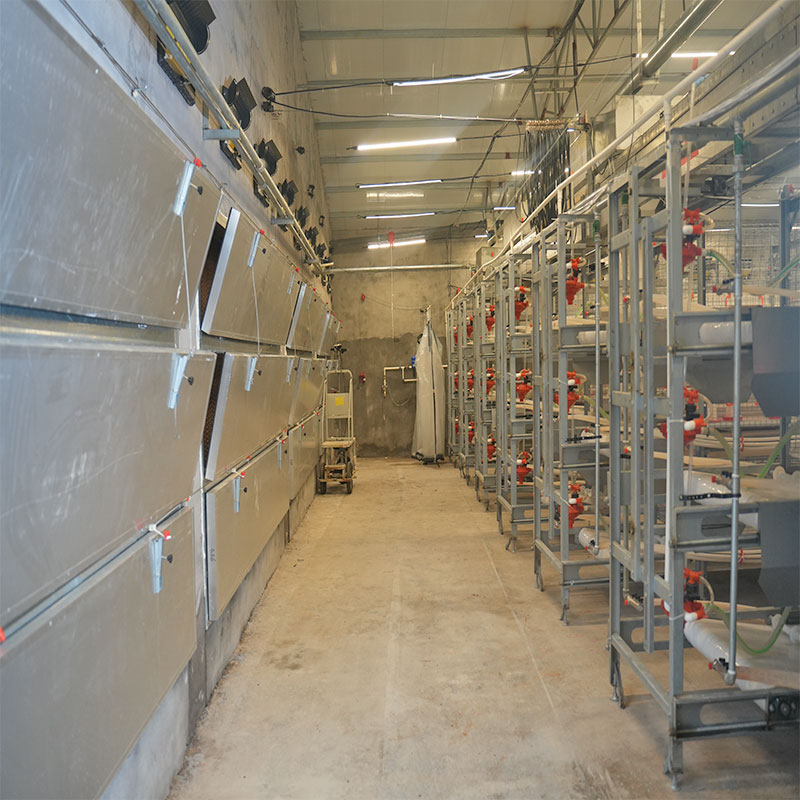
H3: Design & Description: A series of small, wiremesh units stacked in tiers. Each cage houses 510 hens. Automated systems provide feed, water, and egg collection.
H3: Pros & Cons Table
| Pros | Cons |
| : | : |
| High stock density maximizes space efficiency | Severely restricts natural behaviors (perching, dustbathing) |
| Low feed waste due to controlled delivery | Associated with higher bone fragility and foot problems |
| Simplified egg collection (rollaway design) | Growing consumer rejection on welfare grounds |
| Lower exposure to parasites and fecal matter | Facing increasing regulatory bans (e.g., EU) |
Best For: Largescale commercial egg producers prioritizing efficiency and costperegg in regions where still permitted.
An evolution of battery cages designed to address welfare concerns.
H3: Design & Description: Provides more space per hen than conventional batteries and includes mandatory "furnishings": a perch, nesting area for laying eggs in private, and a scratching/dustbathing area.
H3: Key Features:
Increased space allowance per bird.
Provisions for key natural behaviors.
Maintains many automation benefits of battery systems.
Best For: Commercial producers in markets transitioning away from conventional cages but needing to maintain scale and automation.
Birds are housed indoors in a large open barn without cages.
H3: Design & Description: Hens have freedom to move on the floor. The system includes multitiered platforms with perches, nest boxes on walls or tiers, and automated feeding lines. Litter flooring allows for scratching.
H3: Welfare vs. Management Tradeoffs:
Pros: Express full range of natural behaviors; strong bones; meets "cagefree" market standards.
Cons: Higher risk of feather pecking/cannibalism requiring beak trimming; more complex manure management; potential for higher disease transmission; eggs may be laid on floor (dirty).
Best For: Midtolarge scale operations supplying the growing cagefree egg market.
Combines indoor housing with outdoor access.
H3: Design & Description: Birds have continuous daytime access to an outdoor range or pasture. Housing is typically a mobile coop ("chicken tractor") or a stationary barn with popholes.
H3: Critical Considerations List:
Space Requirements: Significant land needed for rotation to prevent disease buildup and pasture damage.
Predator Protection: Secure fencing/coop is nonnegotiable.
Feed Supplementation: Pasture reduces feed costs but doesn't eliminate them.
Product Quality: Often associated with darker yolks and perceived higher nutritional value by consumers.
Best For: Small farms directmarketing eggs/meat at a premium price point; hobbyists focused on animal welfare.
The diverse world of DIY or prefabricated housing for small flocks (<50 birds).
H3: Essential Features Every Coop Must Have:
1. Ventilation vs. DraftFree Design: Toplevel vents remove moisture without creating drafts at bird level.
2. PredatorProofing: Hardware cloth (not chicken wire), secure latches.
3. Roosting Bars: ~2" wide wood bars at least 12" apart.
4. Nesting Boxes: One box per 45 hens.
5. Space Requirements: Minimum 4 sq ft/bird inside coop; 810 sq ft/bird in an attached run.
Beyond type, consider these critical factors.
Galvanized steel wire resists rust。 Pressuretreated wood should be avoided due to toxicity risks。 Consider ease of cleaning—removable trays, large doors,and smooth surfaces are key。
Cramming birds is false economy。 Overcrowding causes stress, disease outbreaks, feather pecking,and productivity drops。 Always exceed minimum space guidelines。
For serious producers,automation is a gamechanger:
Automatic feeders/waterers reduce daily labor。
Rollaway nest boxes keep eggs clean。
Conveyor belt manure systems improve hygiene。
There is no single “best” chicken cage。 The optimal choice is a calculated balance between your operational scale, ethical values, target market ,and available resources。 A commercial producer supplying major retailers will logically choose differently than a homesteader selling at a farmers' market。
The trend is unequivocally moving towards systems that allow for greater expression of natural behaviors—be it enriched colonies ,aviaries ,or pasturebased models。 Investing time in this decision pays dividends in flock health ,product quality ,and ultimately ,your own satisfaction as a poultry keeper。
Prioritize welfare alongside efficiency 。 A healthy ,unstressed hen housed appropriately is inherently more productive 。 Start by defining your goals clearly ,then use this guide as your roadmap to select the chicken cage system that turns those goals into reality。
Q1: What size chicken cage do I need for X number of chickens?
A: Space depends entirely on the system。 For backyard coops ,provide at least 4 square feet per bird insidethe coop itself 。 In an attached run ,aim for 810 square feet per bird 。 Commercial caged systems have much lower allowances (often under one sq ft),but we recommend exceeding any minimum standard whenever possible 。
Q2: Are battery cages illegal?
A: Laws vary globally 。 They are banned in the European Union (including enriched colonies by2027)and several U.S.states (like California)have passed laws phasing out conventional battery cages 。 Always check your local regulations before investing 。
Q3: What's better :wire floor or solid floor in a chicken cage?
A: It depends 。 Wire floors (with proper gauge)allow manure to drop through ,keeping birds cleaner but requiring manure management below 。 Solid floors need frequent litter changes but may be better for feet 。 In most setups ,a solid floor covered with absorbent bedding (like pine shavings)inside the coop combined with wire flooring under roosts offers good balance 。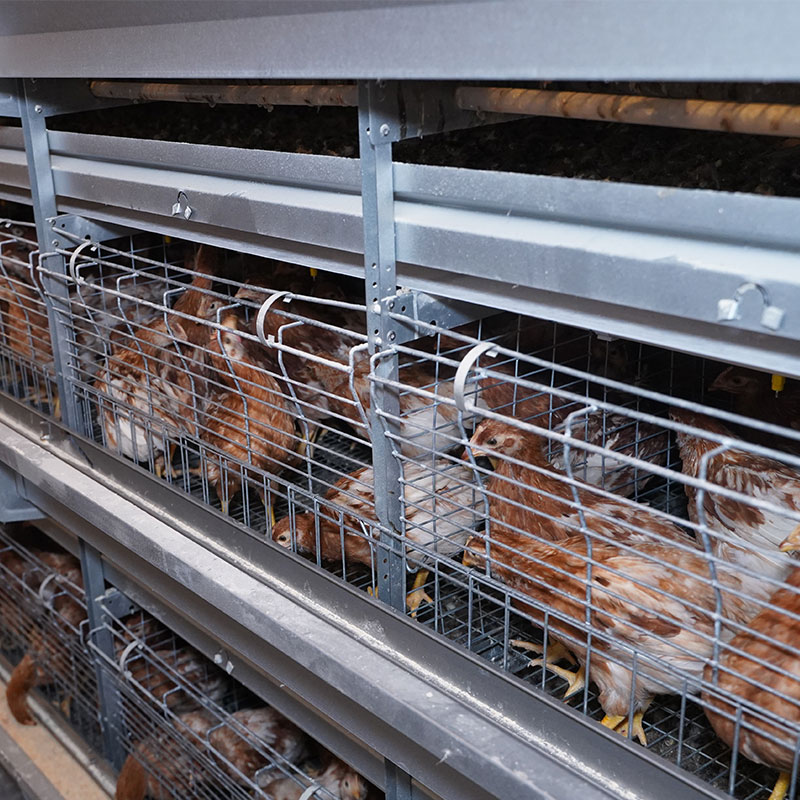
Q4: How do I protect my chickens from predators?
A: Use ½ inch hardware cloth over all openings —never use standard “chicken wire” alone as raccoons can tear it 。 Bury fencing12 inches outward from base (an “apron”)to deter diggers 。 Ensure all doors have predatorproof latches 。
Q5: What's the difference between “cagefree”and “freerange”?
A:“Cagefree”means hens live inside an open barn without cages but do not necessarily have outdoor access。“Freerange”certification requires continuous daytime access outdoors(though density can be high)。“Pastureraised”typically implies even lower density rotational grazing 。
Q6: Can I build my own chicken cage/coop?
A: Absolutely! Many resources exist for DIY plans 。 Key considerations :use safe materials(avoid treated wood),ensure proper ventilation design(high vents),make it easy to clean(large doors),and prioritize predatorproof construction above all else 。
Q7: How often do I need to clean my chicken coop?
A:“Deep cleaning”(removing all litter)should occur every few months depending on flock size。“Spot cleaning”(removing wet litter/manure)should be done weekly if not daily using tools like cat litter scoops。“The deep litter method”involves adding fresh bedding regularly allowing composting action below 。
Q8: Do chickens need sunlight inside their cage?
A :Yes! Light regulates their laying cycle . Windows provide natural light which also helps reduce ammonia levels . Ensure windows are secured against predators . In winter , supplemental lighting may be needed .
Q9 :What features prevent eggeating behavior ?
A : Provide enough dark , private nesting boxes . Use rollaway nest boxes so eggs disappear immediately . Collect eggs frequently —at least twice daily . Ensure diet has sufficient calcium/protein so hens aren't nutrientdeficient .
Q10 :Is it worth buying an automatic waterer/feeder ?
A : For flocks larger than ~10 birds , automatic waterers are highly recommended . They ensure constant fresh water supply reducing labor drastically . Automatic feeders are great if you're away weekends ; otherwise daily feeding allows monitoring .
Q11 :How high should roosting bars be placed ?
A : Most breeds prefer roosts between18 inches 36 inches off ground . Place highest bar first then stagger others lower so droppings don't fall onto birds below . Allow at least8 inches horizontal space per bird .
Q12 :Can different types / ages share same cage ?
A : Generally not advisable without careful integration . Chicks require separate brooder until fully feathered (~6 weeks). Mixing mature flocks risks severe pecking order violence requiring slow supervised introductions over weeks within neutral territory
1. Drinking system include the water pipes, water pressure adjuster, drinking nipples, Waterline front-end device, dosing system etc, choose them according to customer's needs.
2. High-quality water drinking pipes, pressure regulating valves and water drinking nipples can effectively prevent the water leakage. Drinking system adopt the closed piping system, which can minimize the water pollution.
3. 360-degree drinking nipples provide adequate drinking water for poultry at all stages.
4. The automatic drinking water system mainly adopts the steel ball drinking nipple. lt uses imported high-grad stainless steel, POM resin, and APS engineering material, which is wearing resistant, and the durability can be used for long time.



1. Automatic feeding machine can be chosen between gantry and ladder feeding machine. Gantry type feeding machine is a relatively economical and practical machine with simple operation, remote control walking character, easy to manage.
2. Mechanical transmission device running smoothly, low noise, long service life.
3. With the use of automatic control, the feeding system can adjust the amount of material.
4. Feeding with arched structure, high carrying capacity, not easily deformed.
5. Saving man power, saving feed, greatly improving the efficiency of Large-scale farming.
6. The walking speed of gantry feeding machine is 9--12 m/min.




1. Manure removing system included scraper type and conveyor belt type, Which can reduce the labor intensity and labor cost, keep the chicken shed dry and clean.
2. A type chicken cage can use scraper type or conveyor belt type.


3. The scraper type is suitable for A type cages, which can clean two or three rows. For the starters, this type is a good choice. lt can not only save some labor cost, but also save some investment in the whole project. The cleaning speed is 6-10 meters per minute.
4. Conveyor belt type is more suitable for large scale farming. The manure removing belt we use is high quality PP material (polypropylene). The walking speed is 2-4 meters per minute.



High Quality Pellets Made by Mobile Pellet Machine
1. It has professional designed angle of the blade. After the dynamic balance test one by one, the blade can operate smoothly.
2. The air volume is consistent in the whole life of the fan. Bearings has advantage of high strength, low noise, durable and so on.
1. The cooling pads uses high-quality wet curtain paper and adopts space cross-linking technology, which has the advantages of high water absorption, high water resistance, anti-toxicity and long service life.
2. The cooling efficiency is over 80%, without surfactant, natural water absorption, fast diffusion speed and long-lasting effect.
3. The product does not contain phenol and other chemical substances that are easy to cause skin allergies. It is non-toxic and harmless to the human body and chicken when installed and used. It is green, safe, energy-saving, environmentally friendly, economical, and easy to install.
4. The frame aluminum alloy has high strength, good corrosion resistance, durability and beautiful appearance.
5. Use a special filter for the cooling pad at the upper water to ensure clean water quality and support efficient water circulation components.
6. Combined with a negative pressure fan, it can effectively lower the indoor temperature.
The window is made of special selected high-quality engineering plastic, with high strength and long service life, together with superior anti-aging and anti-UV performance.
Function: Ventilation of the chicken house, usually used in the winter.
This system can adjust the wind speed and direction, thus the cold air will not reach chicken directly , which can effectively prevent the phenomenon of cold stress in chicken.
Environmental control system equipment is suitable for large-scale and intensive farming. According to customer requirements, we can provide various types of smart poultry equipment.
1. Our poultry management system is a modular system that manages all aspects of the chicken house, such as climate, temperature, humidity, ammonia, feeding, feed weighing, lighting and ventilation systems, and can monitor the situation of the chicken house in real time through a computer and mobile phone.
2. The management computer is the heart of the poultry farm, allowing you to easily monitor the entire poultry farm.

 WeChat:+8617838608255