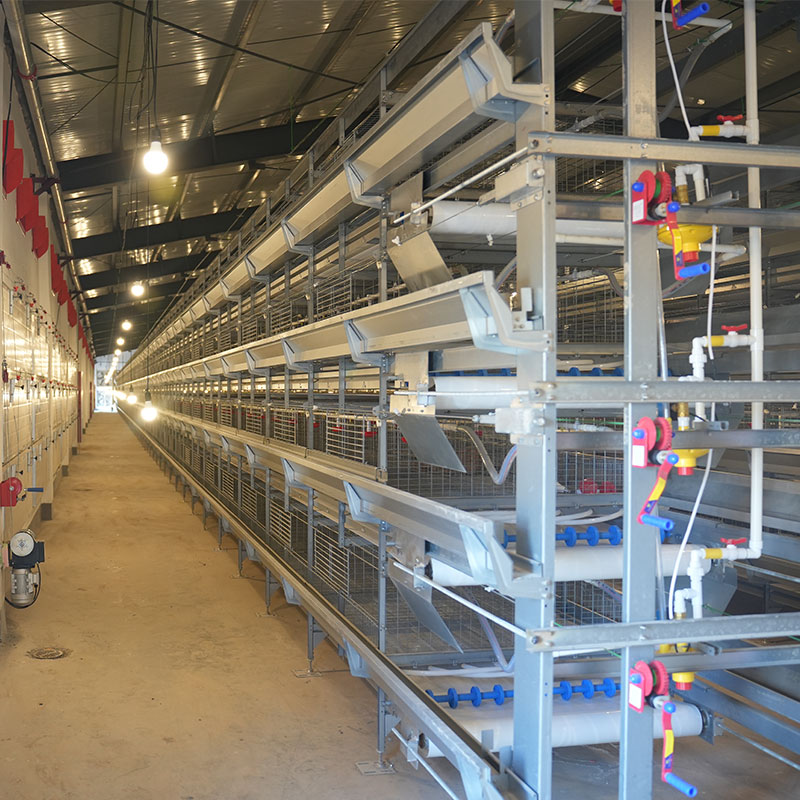
The Ultimate Guide to Layer Cages: Choosing the Right Type for Your Poultry Farm
For modern poultry farmers, the choice of housing system is one of the most critical decisions impacting bird welfare, productivity, and operational efficiency. Among the various options, layer cages stand out as a predominant system for commercial egg production worldwide. But not all cages are created equal. The specific type of layer cage you select can determine the health of your flock, the quality of your eggs, and ultimately, the profitability of your enterprise. This comprehensive guide delves deep into the world of layer cages, moving beyond basic definitions to provide expert analysis on design, welfare considerations, economic impact, and how to choose the optimal system aligned with your goals, market demands, and regulatory environment.
A layer cage is a housing system designed to house egglaying hens in a structured, compartmentalized environment. Its primary functions are to provide security, simplify management tasks like feeding and egg collection, and optimize space within a poultry house.
The evolution of layer cages reflects changing priorities in agriculture:
Traditional Battery Cages: The original design, now widely phased out or banned in many regions (including the EU and several US states), featured small, barren wire enclosures. The focus was solely on space efficiency.
Enriched / Furnished Cages: Developed in response to animal welfare concerns, these systems provide perches, nesting areas, scratching pads, and more space per hen than conventional batteries.
CombiCages & MultiTier Systems: Advanced designs that often integrate manure belts, automated systems for feeding and egg collection, and optimized ventilation across multiple tiers (Aframe or stairstep configurations).
The key shift has been from viewing cages purely as a production tool to integrating hen behavioral needs into their design.
Choosing the right system requires understanding the nuances of each available option.
Description: Basic wire mesh units arranged in long rows and multiple tiers. They are severely restrictive.
Typical Space Allowance: Often less than 550 cm² per bird (less than a standard sheet of paper).
Features: Automated feed troughs and water lines; eggs roll onto a collection belt; manure drops through the wire onto a belt or into a pit.
Current Status: Banned in the European Union under Directive 1999/74/EC. Use is declining globally but persists in some regions with less stringent welfare laws.
This is now the standard cage system in welfareregulated markets.
Description: Provides essential resources for natural behaviors.
Key Furnishings (Per EU Standards):
Nesting Area: A secluded space for laying eggs.
Perches: At least 15 cm of perch space per hen for roosting.
Scratching Area: A littered or textured pad for dustbathing and foraging.
Claw Shorteners: To help maintain claw health.
Space Allowance: Significantly higher than battery cages. EU minimum is 750 cm² per hen (of which 600 cm² is usable area), with additional shared space for furnishings.
Advantages: Improved bone strength from perching; reduced feather pecking due to distraction; cleaner eggs from designated nests; better compliance with animal welfare legislation.
Description: The most common multitier configuration. Cages are stacked diagonally like stairs so that manure from upper tiers falls directly into pits or onto belts without soiling birds below.
Advantages: Excellent manure management; better air quality; allows higher stocking density within the house footprint.
Considerations: Can be more challenging for workers to access birds in all tiers.
Description: Cages are stacked directly on top of each other vertically. Each tier typically has its own integrated manure belt.
Advantages:
Superior Manure Drying: Manure is removed frequently via belts, drastically reducing ammonia levels.
Better Bird Observation: Easier visual inspection across all levels from aisleways.
Modularity: Often easier to install and expand.
Considerations: Generally has a higher initial cost due to more complex belt systems.
These represent the hightech end of caged production.
Description: Integrate all functions—feeding, watering, egg collection (often with central conveyors), manure drying/removal—into a single optimized module.
Features: May include climate control at cage level, advanced monitoring sensors, and robotic assistants for bird handling.
Your choice should be based on a multifaceted analysis:
| Factor | Key Questions to Ask | Impact |
| : | : | : |
| Animal Welfare & Legislation | What are my local/national laws? What are my buyers' (retailers') standards? | Determines legal compliance & market access. May mandate enriched cages or noncage systems. |
| Flock Health & Performance | What disease pressure exists? How will I manage feather pecking? | Design affects air quality (ammonia), parasite load (red mite), injury rates (bone strength), and stress levels. |
| Labor & Management Efficiency | What is my labor availability/cost? How automated do I need feeding/collection/manure removal? | More automation reduces daily labor but increases capital cost and need for technical maintenance skills. |
| Economic Viability | What is my total capital investment budget? What are my operational costs per dozen eggs? | Includes cage cost, installation, automation systems vs. longterm savings in labor feed efficiency (<feed waste), mortality rates). |
| Egg Quality | How important are clean shells & low cracks/broken eggs? Is there a premium for nestlaid eggs? | Systems with dedicated nesting areas produce cleaner eggs with fewer cracks from rolling distances. |
| Manure Management | How will I handle manure? As wet litter or dried fertilizer? | Belt systems (esp.Htype) produce dry manure with higher resale value as fertilizer; pit systems require different handling |
The discussion around layer cages is inseparable from animal welfare. As an expert advisor transparency is key:
1) Ability to perform natural behaviors (perching dustbathing nesting).
2) Incidence of bone fractures osteoporosis .
3) Prevalence of feather pecking cannibalism .
4) Levels fear stress .
Informed consumers retailers increasingly demand evidence good welfare practices making your housing choice part your brand story .
Investing highquality cage system only first step proper installation ongoing maintenance crucial longevity performance .
Choosing right type layer cage complex decision requiring balance ethics economics biology . While enriched colony cages currently represent dominant compliant solution commercial scale producers must stay attuned evolving consumer preferences scientific research technological innovation .
Future likely see increased precision within caged environments—systems monitor individual bird health activity potentially integrating aspects environmental enrichment previously associated only noncage systems . By focusing foundational principles—hen health operational efficiency egg quality regulatory compliance—you can make informed resilient investment supports sustainable profitable business years come .
Q1: What exactly does "enriched" or "furnished" mean in a layer cage context?
A1 It refers specific amenities provided within cage allow hens express key natural behaviors An enriched furnished colony cage must include private nesting box perch scratching pad claw shortener These mandated EU regulations similar standards other markets significantly improve behavioral physiological welfare compared barren battery cages .
Q2 Are layer cages illegal?
A2 Legality depends jurisdiction Conventional battery cages illegal European Union United Kingdom Canada several U S states including California Michigan Washington Enriched colony cages however remain legal widely used many parts world Always check your specific national state provincial regulations .
Q3 What main advantage using any type layer cage over free range barn system?
A3 Primary advantages typically include superior biosecurity reduced exposure wild birds parasites lower incidence infectious diseases greater control over environment feed intake resulting consistent production lower mortality rates reduced labor requirements per bird easier manure management collection clean eggs .
Q4 How much space does hen get enriched colony cage?
A4 Minimum legal requirement European Union 750 square centimeters hen usable space least 600 cm² Additionally must share access communal furnishings nest perch This roughly times space provided old battery cages .
Q5 Do chickens suffer stress living cages?
A5 Any confinement can potential cause stress but well designed managed enriched cage system mitigates this providing outlets natural behavior Research shows factors like stable social groups within colony predictable light/dark cycles adequate ventilation minimal noise crucial reducing stress Modern designs focus behavioral needs can support good welfare outcomes .
Q6 What best type cage for small scale beginner farmer?
A6 For smaller operations simplicity cost often paramount Single tier A type enriched colony systems manual feeding egg collection can excellent starting point They easier observe manage require less technical expertise maintain than complex multi tier automated combi systems Prioritize robust easy clean design over advanced features initially .
Q7 How often should manure removed from under layer cages?
A8 Frequency removal significantly impacts air quality bird health For belt systems daily removal ideal producing dry manageable fertilizer For deep pit systems may be emptied between flocks Regular removal essential controlling ammonia levels preventing respiratory issues .
Q8 Can you automate feeding watering all types layer cages?
A9 Yes virtually all modern commercial layer cage designs incorporate automated nipple drinking lines feed delivery systems either via chain trough pan feeder Automation ensures consistent fresh supply reduces labor drastically minimizes feed waste spillage crucial economic efficiency large flock .
Q9 What typical lifespan quality layer cage system?
A10 With proper installation maintenance high quality galvanized steel cage system last years between flocks Routine inspection replacement worn parts like plastic components nipple drinkers essential Expected lifespan often exceeds years before major refurbishment replacement needed depending corrosion environment .
Q10 How do choose between stair step A frame H type vertical stack configuration?
A11 Decision hinges priorities Stair step A frame excellent cost effective manure dropping management suitable wide range houses H type vertical stack offers superior air quality via rapid manure drying easier bird observation across tiers but higher initial cost Consider your existing building layout ventilation capacity long term labor goals .
1. Drinking system include the water pipes, water pressure adjuster, drinking nipples, Waterline front-end device, dosing system etc, choose them according to customer's needs.
2. High-quality water drinking pipes, pressure regulating valves and water drinking nipples can effectively prevent the water leakage. Drinking system adopt the closed piping system, which can minimize the water pollution.
3. 360-degree drinking nipples provide adequate drinking water for poultry at all stages.
4. The automatic drinking water system mainly adopts the steel ball drinking nipple. lt uses imported high-grad stainless steel, POM resin, and APS engineering material, which is wearing resistant, and the durability can be used for long time.



1. Automatic feeding machine can be chosen between gantry and ladder feeding machine. Gantry type feeding machine is a relatively economical and practical machine with simple operation, remote control walking character, easy to manage.
2. Mechanical transmission device running smoothly, low noise, long service life.
3. With the use of automatic control, the feeding system can adjust the amount of material.
4. Feeding with arched structure, high carrying capacity, not easily deformed.
5. Saving man power, saving feed, greatly improving the efficiency of Large-scale farming.
6. The walking speed of gantry feeding machine is 9--12 m/min.




1. Manure removing system included scraper type and conveyor belt type, Which can reduce the labor intensity and labor cost, keep the chicken shed dry and clean.
2. A type chicken cage can use scraper type or conveyor belt type.


3. The scraper type is suitable for A type cages, which can clean two or three rows. For the starters, this type is a good choice. lt can not only save some labor cost, but also save some investment in the whole project. The cleaning speed is 6-10 meters per minute.
4. Conveyor belt type is more suitable for large scale farming. The manure removing belt we use is high quality PP material (polypropylene). The walking speed is 2-4 meters per minute.



High Quality Pellets Made by Mobile Pellet Machine
1. It has professional designed angle of the blade. After the dynamic balance test one by one, the blade can operate smoothly.
2. The air volume is consistent in the whole life of the fan. Bearings has advantage of high strength, low noise, durable and so on.
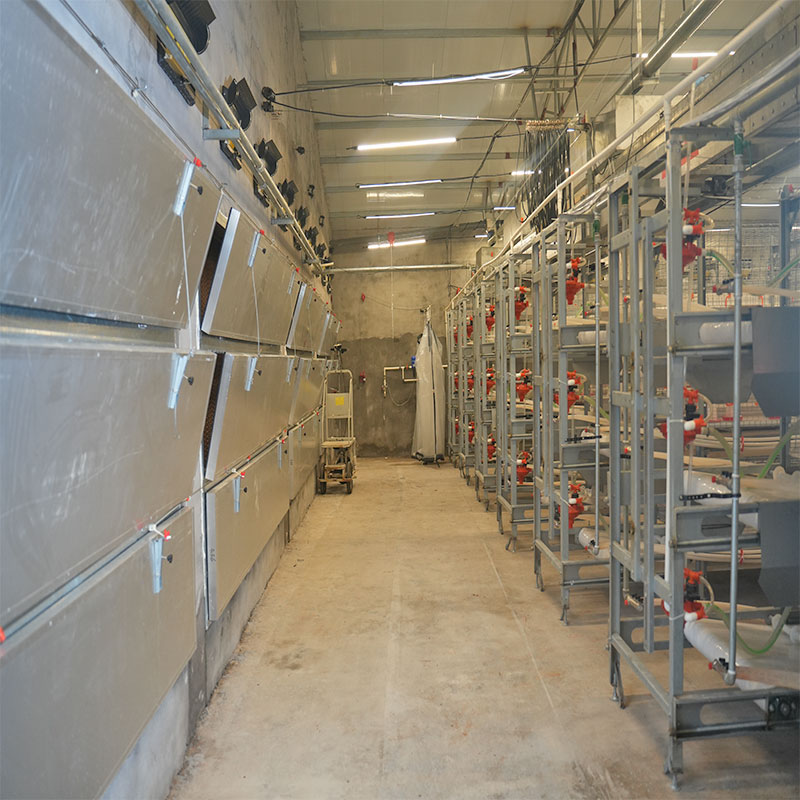
1. The cooling pads uses high-quality wet curtain paper and adopts space cross-linking technology, which has the advantages of high water absorption, high water resistance, anti-toxicity and long service life.
2. The cooling efficiency is over 80%, without surfactant, natural water absorption, fast diffusion speed and long-lasting effect.
3. The product does not contain phenol and other chemical substances that are easy to cause skin allergies. It is non-toxic and harmless to the human body and chicken when installed and used. It is green, safe, energy-saving, environmentally friendly, economical, and easy to install.
4. The frame aluminum alloy has high strength, good corrosion resistance, durability and beautiful appearance.
5. Use a special filter for the cooling pad at the upper water to ensure clean water quality and support efficient water circulation components.
6. Combined with a negative pressure fan, it can effectively lower the indoor temperature.
The window is made of special selected high-quality engineering plastic, with high strength and long service life, together with superior anti-aging and anti-UV performance.
Function: Ventilation of the chicken house, usually used in the winter.
This system can adjust the wind speed and direction, thus the cold air will not reach chicken directly , which can effectively prevent the phenomenon of cold stress in chicken.
Environmental control system equipment is suitable for large-scale and intensive farming. According to customer requirements, we can provide various types of smart poultry equipment.
1. Our poultry management system is a modular system that manages all aspects of the chicken house, such as climate, temperature, humidity, ammonia, feeding, feed weighing, lighting and ventilation systems, and can monitor the situation of the chicken house in real time through a computer and mobile phone.
2. The management computer is the heart of the poultry farm, allowing you to easily monitor the entire poultry farm.

 WeChat:+8617838608255