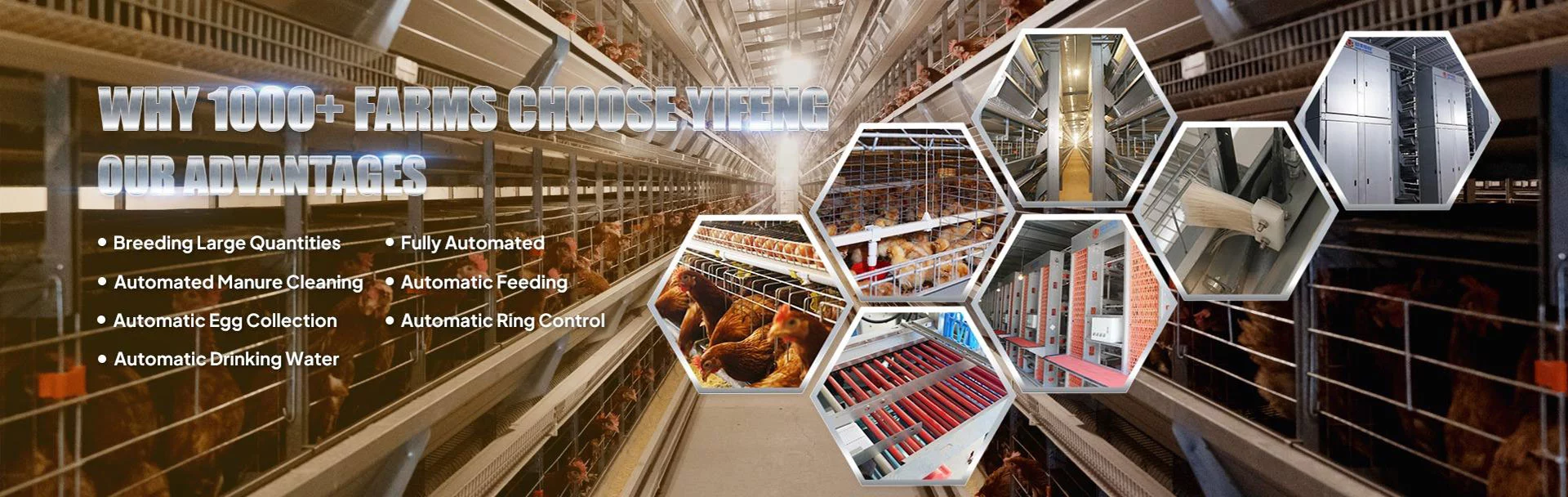
The morning sun hasn’t yet broken over the horizon, but the low hum inside the poultry house is already a sign of the day’s work beginning. For generations, this sound was accompanied by the rustle of straw and the squawk of birds underfoot. Today, it’s the quiet whir of automated feeders traversing rows of meticulously organized cages. This shift from open-floor rearing to cage systems represents one of the most significant evolutions in layer management, and at the heart of this change is the A Type layer cage.
Unlike the flat-deck or single-tier systems sometimes used for pullets or breeders, the A Frame cage is engineered specifically for the high-density, high-efficiency environment of a commercial egg operation. The name comes from its distinctive profile; when viewed from the end of a row, the structure forms a steep ‘A’ shape, with two banks of cages sloping downward from a central peak. This isn’t just an architectural choice. This design is the foundation for a completely different approach to bird management, labor allocation, and resource control.
The Anatomy of an A Frame System: More Than Just a Cage
To understand its value, you need to walk through its components not as a list of parts, but as a collection of solutions to everyday problems.
Start with the frame itself. The heavy-gauge, hot-dipped galvanized steel framework is the skeleton of the entire operation. A farmer who recently made the switch from a H-type system noted that the rigidity of the A-frame’s construction meant he could finally run his egg collection belt at a higher speed without the entire row shaking. This rigidity is critical because everything hangs from this frame: the cages, the manure belts, the feeding system, and the water lines. There’s no need for additional support structures cluttering the floor, making the entire house easier to navigate with utility vehicles for feed bags or maintenance.
The cages are typically arranged in three to eight tiers, with three to five birds per cage, depending on the breed and desired welfare standards. The cage floor isn’t flat; it’s sloped. This subtle angle is one of the system’s most clever features. As a hen lays an egg, it rolls gently away from her onto a collection belt. This simple action prevents egg eating, minimizes shell cracks from being trampled, and keeps the egg remarkably clean. You’re not collecting eggs from a littered nest; you’re gathering them from a smooth, continuous conveyor belt that deposits them directly into the grading room.
Beneath each tier runs another belt: the manure droppings board. In a traditional system, manure piles up beneath cages, creating ammonia challenges and a labor-intensive cleaning process. Here, the manure falls onto a slow-moving plastic belt. This belt might run once a day or once a week, transporting the waste directly out of the building to a collection point. The difference in air quality is immediate and profound. One long-time farmer remarked that the chronic respiratory issues he’d accepted as normal in his flock virtually disappeared within weeks of moving birds into a new A Frame house, all because manure was being removed continuously rather than accumulating.
The feeding and watering systems are fully integrated. A central feed hopper fills a chain or auger system that runs along the peak of the ‘A’. From there, feed is distributed down to troughs at the front of each cage row. Because the system is enclosed, feed waste from birds flicking it out is drastically reduced, and it’s protected from moisture and pests. Nipple drinkers are standard, providing a constant supply of fresh water. Their design means water is only released when a bird pecks at it, keeping the litter in the cages—and the eggs—dry.
The Tangible Operational Advantages
The theoretical benefits of any system are meaningless unless they translate to the bottom line. The A Type cage’s advantages are intensely practical.
Labor Efficiency and Staff Safety
Perhaps the most immediate impact is on labor. Manual egg collection is one of the most time-consuming tasks in a layer operation. Workers must move through the house, often bending and reaching into cages, hundreds of times a day. It’s physically demanding work that leads to fatigue and a higher risk of repetitive strain injuries. With an automated collection system, that task is eliminated. The eggs are brought to the operator. The same is true for manure cleaning. Instead of a weekly, grueling job of scraping pits, a worker simply flips a switch to activate the manure belts.
This reallocation of labor is transformative. The team’s time is freed up for higher-value tasks: monitoring bird health, checking feed and water systems for clogs or leaks, and maintaining equipment. It also makes the farm a more attractive place to work, helping to attract and retain staff in a competitive labor market.
Feed Conversion and Flock Health
Precision feeding is a major contributor to profitability. In open systems, a significant amount of feed can be wasted—trodden into the litter, spilled, or consumed by pests. The enclosed troughs of an A Frame system ensure that almost every gram of feed is presented directly to the birds. This precise delivery, combined with reduced energy expenditure from the birds (as they aren’t roaming a large area), leads to a consistently better feed conversion ratio (FCR). You’re spending less on feed to produce the same dozen eggs.
Flock health observability is another critical advantage. While the system is high-density, the small group sizes within each cage make it easier to monitor individual birds. A sick hen is quickly spotted because she’ll be separate from her few cage-mates and won’t be coming to the feeder. This allows for early intervention and treatment, preventing an issue from spreading through a large floor-reared flock where a single bird can be hard to find. The separation from manure drastically reduces the parasite load and the incidence of bacterial diseases like E. coli and Salmonella, which thrive in moist litter.
Environmental Control and Manure Management
Modern poultry houses are increasingly focused on environmental control, and the A Frame system is a powerful tool in this effort. By containing and quickly removing manure, the system directly tackles the source of ammonia emissions. Lower ammonia levels mean less stress on the birds’ respiratory systems, leading to better overall health and production. It also creates a better working environment and reduces the farm’s environmental footprint.
The manure that is collected on the belts is typically in a drier, more uniform state than wet, mixed litter from a pit. This dry manure is easier to handle, transport, and compost. It becomes a more valuable by-product, whether it’s sold as fertilizer or used on the farm’s own land.
Considerations and Implementation

Adopting an A Type system is a major capital investment and a fundamental shift in management philosophy. It is not a decision to be made lightly.
The initial investment is the most significant barrier. The cost of the cages, the automated systems, and potentially reinforcing or building a new house represents a substantial financial commitment. However, this must be weighed against the long-term operational savings: reduced labor costs, lower feed bills, improved bird livability, and higher egg quality. Most farmers view it not as an expense, but as a capital investment in the future efficiency and sustainability of their business.

Bird welfare is a central part of the public conversation around egg production. Modern A Type cages are designed to meet and exceed animal welfare standards. features include:
Increased Space Allowance: Per-bird space has increased significantly from older battery cage designs.
Enrichment: Perches are standard, allowing birds to express natural roosting behaviors.
Nesting Area: The sloped floor provides a designated, private area for laying.
Claw Shorteners: These are integrated into the feed trough to help naturally maintain claw length and prevent injuries.
It is crucial to source equipment from reputable manufacturers who design their systems with these welfare outcomes in mind.
Finally, the management style changes. This is a more technical, data-driven environment. Success depends on a deep understanding of the equipment. A manager must be able to troubleshoot a misaligned egg belt, calibrate a feeder, and interpret data on water consumption to spot health issues before they become visible. It requires a proactive, rather than reactive, approach. The system provides the tools for exceptional management, but it demands a higher level of engagement with the details of the operation.
The Bottom Line
The transition to an A Type layer cage system is a strategic decision that moves a farm from a traditional, labor-intensive model to a modern, precision-agriculture enterprise. It is a system that prioritizes control: control over the birds’ environment, control over input costs, and control over product quality.
For the poultry farmer watching the sun rise, the benefits are measured in the clear air of the house, the steady hum of machinery performing tasks that once required hours of manual labor, and the consistent quality of eggs moving toward packaging. It represents a commitment to running a operation that is not only productive and profitable but also sustainable, safe, and focused on the well-being of both the flock and the people who care for them. It is, fundamentally, the engineering of efficiency for the modern egg producer.
1. Drinking system include the water pipes, water pressure adjuster, drinking nipples, Waterline front-end device, dosing system etc, choose them according to customer's needs.
2. High-quality water drinking pipes, pressure regulating valves and water drinking nipples can effectively prevent the water leakage. Drinking system adopt the closed piping system, which can minimize the water pollution.
3. 360-degree drinking nipples provide adequate drinking water for poultry at all stages.
4. The automatic drinking water system mainly adopts the steel ball drinking nipple. lt uses imported high-grad stainless steel, POM resin, and APS engineering material, which is wearing resistant, and the durability can be used for long time.



1. Automatic feeding machine can be chosen between gantry and ladder feeding machine. Gantry type feeding machine is a relatively economical and practical machine with simple operation, remote control walking character, easy to manage.
2. Mechanical transmission device running smoothly, low noise, long service life.
3. With the use of automatic control, the feeding system can adjust the amount of material.
4. Feeding with arched structure, high carrying capacity, not easily deformed.
5. Saving man power, saving feed, greatly improving the efficiency of Large-scale farming.
6. The walking speed of gantry feeding machine is 9--12 m/min.




1. Manure removing system included scraper type and conveyor belt type, Which can reduce the labor intensity and labor cost, keep the chicken shed dry and clean.
2. A type chicken cage can use scraper type or conveyor belt type.


3. The scraper type is suitable for A type cages, which can clean two or three rows. For the starters, this type is a good choice. lt can not only save some labor cost, but also save some investment in the whole project. The cleaning speed is 6-10 meters per minute.
4. Conveyor belt type is more suitable for large scale farming. The manure removing belt we use is high quality PP material (polypropylene). The walking speed is 2-4 meters per minute.



High Quality Pellets Made by Mobile Pellet Machine
1. It has professional designed angle of the blade. After the dynamic balance test one by one, the blade can operate smoothly.
2. The air volume is consistent in the whole life of the fan. Bearings has advantage of high strength, low noise, durable and so on.
1. The cooling pads uses high-quality wet curtain paper and adopts space cross-linking technology, which has the advantages of high water absorption, high water resistance, anti-toxicity and long service life.
2. The cooling efficiency is over 80%, without surfactant, natural water absorption, fast diffusion speed and long-lasting effect.
3. The product does not contain phenol and other chemical substances that are easy to cause skin allergies. It is non-toxic and harmless to the human body and chicken when installed and used. It is green, safe, energy-saving, environmentally friendly, economical, and easy to install.
4. The frame aluminum alloy has high strength, good corrosion resistance, durability and beautiful appearance.
5. Use a special filter for the cooling pad at the upper water to ensure clean water quality and support efficient water circulation components.
6. Combined with a negative pressure fan, it can effectively lower the indoor temperature.
The window is made of special selected high-quality engineering plastic, with high strength and long service life, together with superior anti-aging and anti-UV performance.
Function: Ventilation of the chicken house, usually used in the winter.
This system can adjust the wind speed and direction, thus the cold air will not reach chicken directly , which can effectively prevent the phenomenon of cold stress in chicken.
Environmental control system equipment is suitable for large-scale and intensive farming. According to customer requirements, we can provide various types of smart poultry equipment.
1. Our poultry management system is a modular system that manages all aspects of the chicken house, such as climate, temperature, humidity, ammonia, feeding, feed weighing, lighting and ventilation systems, and can monitor the situation of the chicken house in real time through a computer and mobile phone.
2. The management computer is the heart of the poultry farm, allowing you to easily monitor the entire poultry farm.

 WeChat:+8617838608255