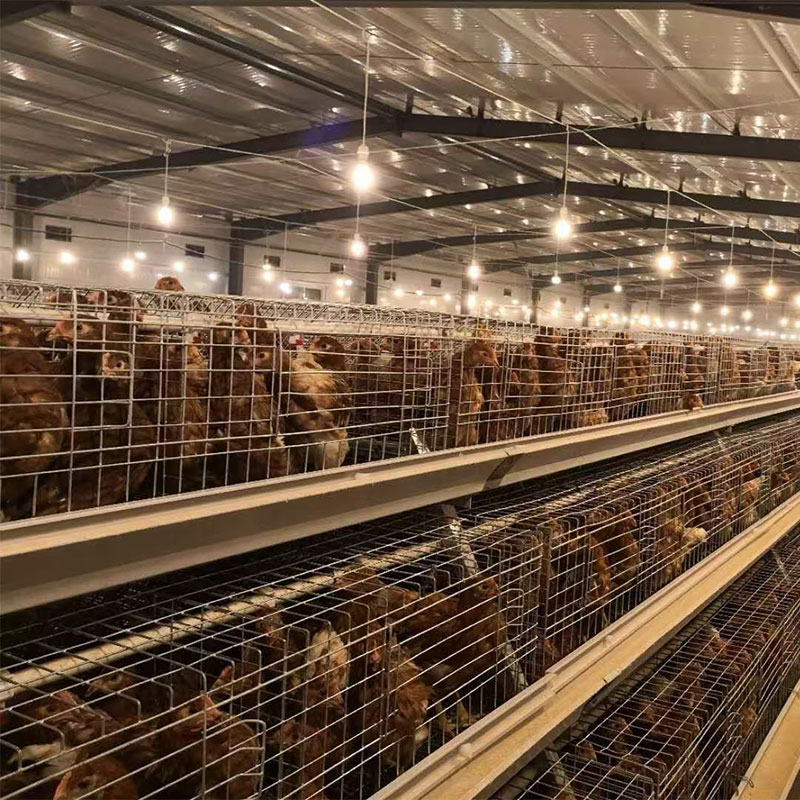
The morning feed run tells the story long before the books do. You hear it in the silence between the rows, the quiet shuffling of birds that aren’t fighting. You see it in the uniformity of the flock, the clean feathers, the consistent weight. This isn’t an accident; it’s the result of a deliberate environmental design. For generations, the quest for the optimal pullet rearing system has been a central challenge. The transition from brooding to the layer house is the most critical juncture in a hen’s life, a period that dictates her future productivity, health, and welfare. The A Type Pullet Cage system represents a significant evolution in meeting this challenge, not as a mere container for birds, but as a managed environment engineered for development.
The core principle of the A Type design is its namesake shape. Imagine two rows of cages sloping inward toward a central feed trough and outward toward manure belts, forming a steep ‘A’ frame. This isn’t just for structural stability; it is the fundamental driver of the system’s efficiency. The steep pitch of the roof is the first line of defense in environmental control. In a tunnel-ventilated barn, warm, moisture-laden air and dust particles naturally rise. The angled roof provides a direct, unobstructed path for this air to travel up and out of the building through the ridge vents, rather than getting trapped against a flat ceiling and tumbling back down on the birds. This continuous evacuation of stale air pulls fresh, conditioned air evenly across the width of the barn, ensuring every bird in every cage receives her share. You’re not just moving air; you’re managing a microclimate.
This superior air handling directly addresses one of the most persistent issues in pullet rearing: ammonia control. Pullet manure is particularly high in moisture and nitrogen. In a flat-deck system or poor deep-litter environments, this manure accumulates, and the breakdown process releases ammonia gas. This gas hovers at bird level, burning the delicate linings of their eyes and respiratory tracts, leading to conjunctivitis, increased susceptibility to respiratory diseases like bronchitis, and chronic stress that suppresses immune function. The A Type cage incorporates a critical component directly beneath each tier: a continuous manure belt.
These belts are not simply collection devices; they are active management tools. By running these belts on a scheduled program—for instance, a single complete cycle every two or three days—you remove the waste from the bird’s environment almost as soon as it is produced. The manure is conveyed to a central collection point or an outdoor cross-conveyor while still relatively fresh and solid, dramatically reducing the time available for ammonia volatilization. The difference is palpable. Walk into a barn with a well-managed belt system, and the air is clear. Your eyes don’t water. The absence of that sharp ammonia smell isn’t just more pleasant for you; it translates directly to healthier lung tissue for every pullet in the house. This isn’t an abstract concept of welfare; it’s the tangible result of a dry, clean breathing environment.
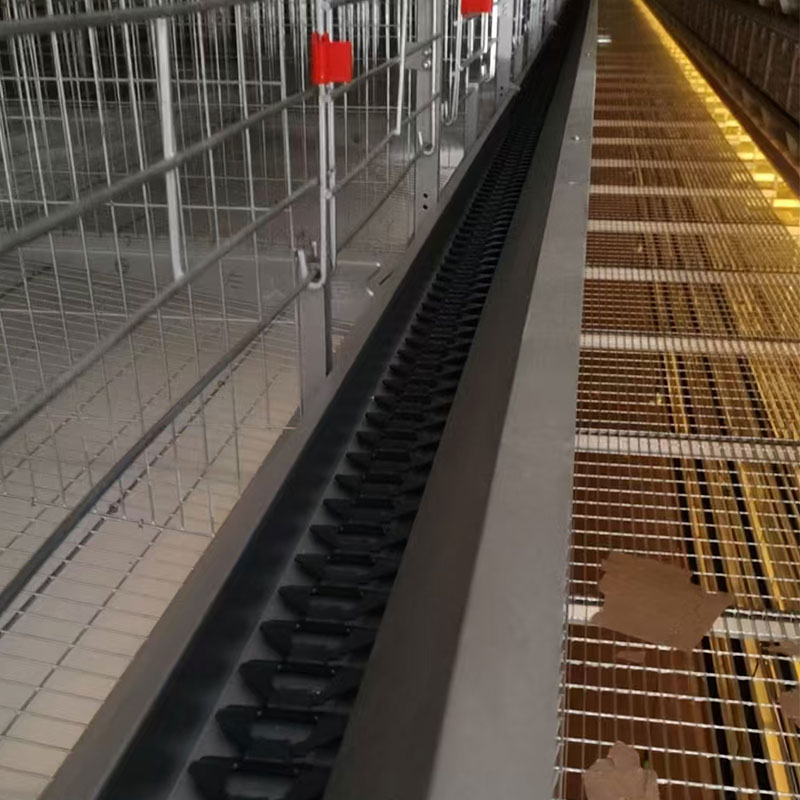
Beyond air quality, the physical design of the cage itself is tailored to the specific needs of a developing pullet. Space allocation is a science, not a guess. The square inches per bird are calculated to allow for natural behaviors like preening, stretching, and turning around without encouraging the aggression and competition that arises from overcrowding. But the quality of that space is just as important as the quantity. The flooring is a prime example. Pullets reared on a traditional wire mesh floor can develop footpad lesions or bumblefoot if the weld points are rough or the gauge is incorrect. Modern A Type cages use a carefully engineered wire, often a rectangular mesh, that provides a firm, comfortable, and supportive standing surface. The spacing of the wires is precise: narrow enough to prevent foot injuries or entrapment, but wide enough to allow manure to pass through freely onto the belt below, keeping the birds consistently dry. This is a critical detail. A damp breast feather from constantly sitting on soiled wire is a primary cause of feather pecking, which can quickly escalate into cannibalalism. The system is designed to preempt this behavior by eliminating its root cause.
The transition from brooding to growing phases is seamless within an A Type system. The cages are often modular, allowing farmers to start with chicks in a smaller, confined section of the cage equipped with paper for feed and smaller drinkers. As the birds grow, internal partitions can be removed, granting them access to the full cage area. This "whole-house brooding" concept within the cage they will occupy until transfer eliminates the massive stressor of catching and moving birds from a brooder ring to a grow-out pen. That single event—the catch and move—triggers a stress response that can set a flock back by days, affecting weight gain and uniformity. By rearing them in their final home from day one, you avoid this setback entirely. The birds become accustomed to their environment, the location of feed and water, and the sounds of the barn. They simply grow into their space.
Feed and water delivery in an A Type system is a study in consistency and waste reduction. The central feed trough is served by an auger system that runs the length of the row. Because the trough is easily accessible from both sides of the ‘A’ frame, the system can hold a large number of birds with a very efficient footprint. The key advantage is portion control. The auger can be programmed for multiple, small feed drops throughout the day. This mimics natural foraging behavior, encouraging activity and ensuring the feed in the trough remains fresh and palatable. It prevents the birds from gorging and then lying idle, which can lead to overconsumption and poor feed conversion ratios. More importantly, it ensures the last bird in the row gets the same fresh, nutritionally consistent feed as the first. You will never see the hollowed-out trough where the vitamins and minerals have been picked out, leaving only the coarse grains for the birds at the end of the line. This consistent nutrition is the bedrock of flock uniformity.
Water is provided through nipple drinker systems. Each bird learns to activate the pin to release a drop of water. This keeps the water clean, closed off from the environment and from fecal contamination. Compared to open bell drinkers, which can become reservoirs for bacteria, biofilm, and medication residues, nipple systems provide a pure water source. This drastically reduces the risk of waterborne diseases like E. coli or Salmonella. The placement of the nipples is also deliberate. They are positioned to ensure the bird must reach slightly upward to drink, a posture that causes her to let the water drop fall into her beak and then swallow. This natural action prevents water from spilling onto her feathers and onto the cage floor, maintaining that crucial dryness.
The impact of this controlled environment on flock health is profound and multifaceted. The most significant metric for any pullet grower is uniformity—the percentage of birds that are within 10% of the average body weight of the flock. A uniform flock is the ultimate sign of successful management. It means every bird had equal access to feed and water, experienced the same low stress levels, and was not hampered by disease. When you transfer a uniform flock of pullets to a layer house, they will all come into lay at roughly the same time. This creates a sharp, high peak of production instead of a long, sluggish climb. The A Type system, by controlling the environment to eliminate stressors and guarantee equitable resource access, is a uniformity machine. It allows the genetic potential of the bird to express itself fully.

Disease management is also fundamentally different. The closed nature of the system creates a significant biosecurity barrier. The birds have no contact with their manure, drastically reducing the parasite load and the cycle of reinfection from worms or coccidia. While vaccination programs are still essential, the challenge level from these persistent environmental pathogens is minimized. This controlled separation also makes monitoring and managing the flock infinitely easier. During daily walks, the birds are visible and accessible. A trained eye can spot a bird that is off-feeder or lethargic immediately. In the event a health issue does arise, such as a respiratory challenge, treating the birds through the water line is highly effective because you know every bird is drinking from a controlled source. There is no guesswork about medication concentration in an open waterer that is subject to evaporation and spillage.
The economic argument for the A Type Pullet Cage is built on these pillars of performance. The initial capital investment is higher than open-floor systems, but the return is realized through operational efficiencies. Labor is the most obvious area. Tasks that once took hours—such as manually adjusting feeders, cleaning waterers, or raking litter—are now automated. One person can manage a flock of tens of thousands of birds, with the daily routine consisting of monitoring system controls, observing bird behavior, and performing routine maintenance. This labor savings is compounded by the savings in inputs. Precise feed delivery reduces waste by an estimated 5-10% compared to manual systems. Better health means reduced mortality and lower veterinary costs. The production of a robust, highly uniform pullet commands a premium price from layer operations because they know these birds will perform. The building itself is also utilized with maximum efficiency, housing more birds in a healthier environment within the same square footage.
Finally, the system directly addresses increasing market and consumer demands for animal welfare and sustainable production. The A Type cage provides demonstrable benefits in all of the Five Freedoms: freedom from hunger and thirst through constant access to fresh feed and water; freedom from discomfort through appropriate space and dry, comfortable flooring; freedom from pain, injury, and disease through reduced pathogen load and injury prevention; freedom to express normal behavior by providing space for essential movements; and freedom from fear and distress by creating a stable, low-stress environment. This isn’t a marketing slogan; it is the operational outcome of the design. Furthermore, the efficient collection of manure in a dry form on the belts transforms a waste product into a resource. This dry manure is far more valuable as a fertilizer than wet litter, as it retains its nitrogen content and is easier to transport and spread, closing the nutrient loop on the farm.
The decision to invest in an A Type Pullet Cage system is a decision to control the variables. It is an acknowledgment that the potential of a modern laying hen is written in her genetics, but it is realized in her environment. By engineering that environment to remove stressors, guarantee equity, and promote health, the system allows the birds to do what they are bred to do: develop into strong, uniform, and highly productive members of the laying flock. The proof is in the silence of the barn, the clarity of the air, and the evenness of the flock moving as one toward a productive future.
1. Drinking system include the water pipes, water pressure adjuster, drinking nipples, Waterline front-end device, dosing system etc, choose them according to customer's needs.
2. High-quality water drinking pipes, pressure regulating valves and water drinking nipples can effectively prevent the water leakage. Drinking system adopt the closed piping system, which can minimize the water pollution.
3. 360-degree drinking nipples provide adequate drinking water for poultry at all stages.
4. The automatic drinking water system mainly adopts the steel ball drinking nipple. lt uses imported high-grad stainless steel, POM resin, and APS engineering material, which is wearing resistant, and the durability can be used for long time.



1. Automatic feeding machine can be chosen between gantry and ladder feeding machine. Gantry type feeding machine is a relatively economical and practical machine with simple operation, remote control walking character, easy to manage.
2. Mechanical transmission device running smoothly, low noise, long service life.
3. With the use of automatic control, the feeding system can adjust the amount of material.
4. Feeding with arched structure, high carrying capacity, not easily deformed.
5. Saving man power, saving feed, greatly improving the efficiency of Large-scale farming.
6. The walking speed of gantry feeding machine is 9--12 m/min.




1. Manure removing system included scraper type and conveyor belt type, Which can reduce the labor intensity and labor cost, keep the chicken shed dry and clean.
2. A type chicken cage can use scraper type or conveyor belt type.


3. The scraper type is suitable for A type cages, which can clean two or three rows. For the starters, this type is a good choice. lt can not only save some labor cost, but also save some investment in the whole project. The cleaning speed is 6-10 meters per minute.
4. Conveyor belt type is more suitable for large scale farming. The manure removing belt we use is high quality PP material (polypropylene). The walking speed is 2-4 meters per minute.



High Quality Pellets Made by Mobile Pellet Machine
1. It has professional designed angle of the blade. After the dynamic balance test one by one, the blade can operate smoothly.
2. The air volume is consistent in the whole life of the fan. Bearings has advantage of high strength, low noise, durable and so on.
1. The cooling pads uses high-quality wet curtain paper and adopts space cross-linking technology, which has the advantages of high water absorption, high water resistance, anti-toxicity and long service life.
2. The cooling efficiency is over 80%, without surfactant, natural water absorption, fast diffusion speed and long-lasting effect.
3. The product does not contain phenol and other chemical substances that are easy to cause skin allergies. It is non-toxic and harmless to the human body and chicken when installed and used. It is green, safe, energy-saving, environmentally friendly, economical, and easy to install.
4. The frame aluminum alloy has high strength, good corrosion resistance, durability and beautiful appearance.
5. Use a special filter for the cooling pad at the upper water to ensure clean water quality and support efficient water circulation components.
6. Combined with a negative pressure fan, it can effectively lower the indoor temperature.
The window is made of special selected high-quality engineering plastic, with high strength and long service life, together with superior anti-aging and anti-UV performance.
Function: Ventilation of the chicken house, usually used in the winter.
This system can adjust the wind speed and direction, thus the cold air will not reach chicken directly , which can effectively prevent the phenomenon of cold stress in chicken.
Environmental control system equipment is suitable for large-scale and intensive farming. According to customer requirements, we can provide various types of smart poultry equipment.
1. Our poultry management system is a modular system that manages all aspects of the chicken house, such as climate, temperature, humidity, ammonia, feeding, feed weighing, lighting and ventilation systems, and can monitor the situation of the chicken house in real time through a computer and mobile phone.
2. The management computer is the heart of the poultry farm, allowing you to easily monitor the entire poultry farm.

 WeChat:+8617838608255