1. PAINPOINT DRIVEN OPENING
Managing a modern layer operation requires precision, but manual or semiautomated systems introduce costly variables. Are you facing these persistent challenges?
Labor Inefficiency & Cost: Manual egg collection and manure cleaning consume excessive labor hours, directly impacting your operational budget and exposing you to labor availability risks.
Egg Quality & Breakage Rates: Frequent handling and multiple transfer points in nonautomated systems lead to cracked and dirty eggs, diminishing your gradeout percentage and revenue per hen housed.
Inconsistent Environmental Control: Manual ventilation adjustments and uneven manure drying create ammonia spikes and microclimates, stressing birds and compromising feed conversion ratios (FCR).
Biosecurity Vulnerabilities: Constant human traffic through bird areas increases the risk of pathogen introduction, threatening flock health and requiring more stringent containment protocols.
Data Gaps in Flock Management: Without integrated monitoring, identifying underperforming sections or early signs of health issues relies on delayed observation, preventing proactive intervention.
What if your equipment could directly address these points, transforming fixed costs into controllable efficiencies?
2. PRODUCT OVERVIEW
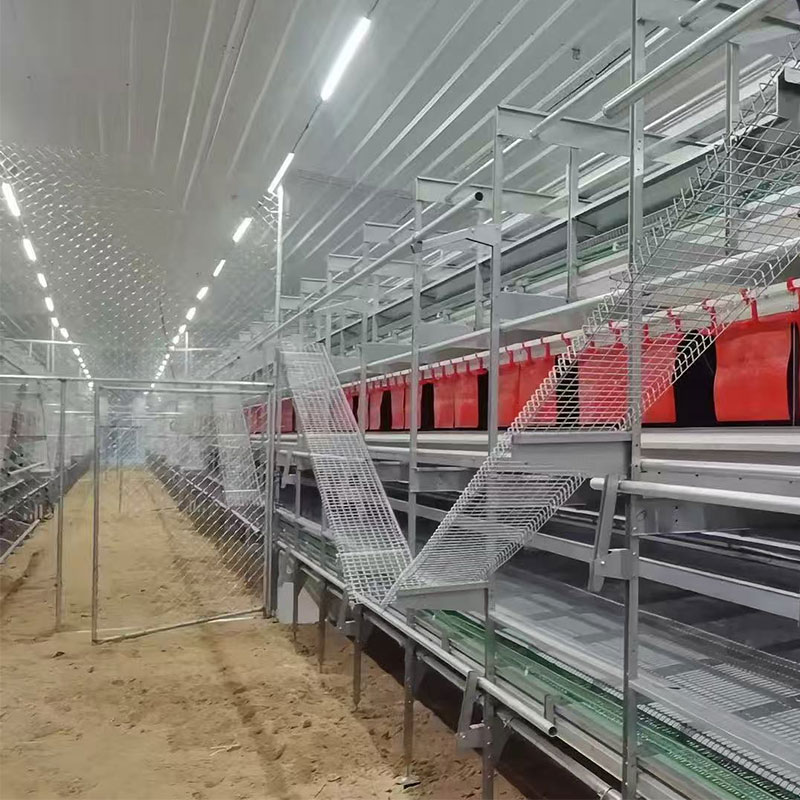
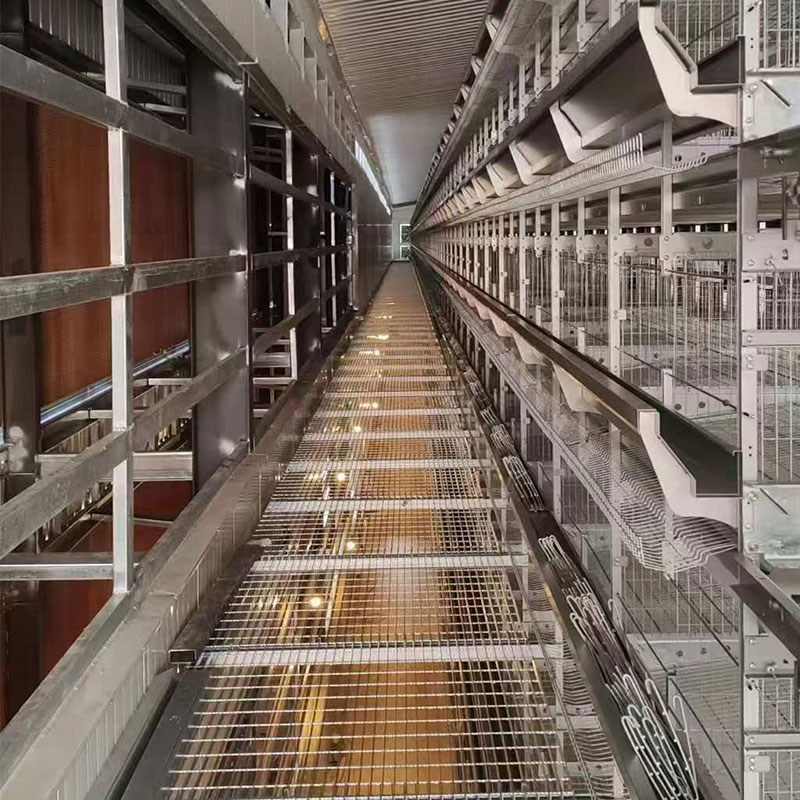
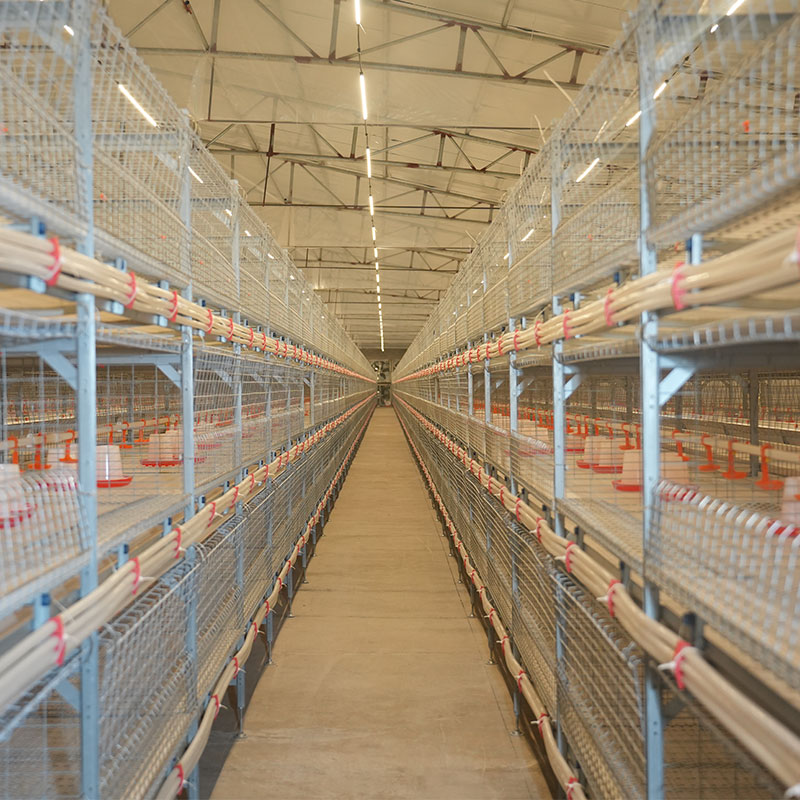
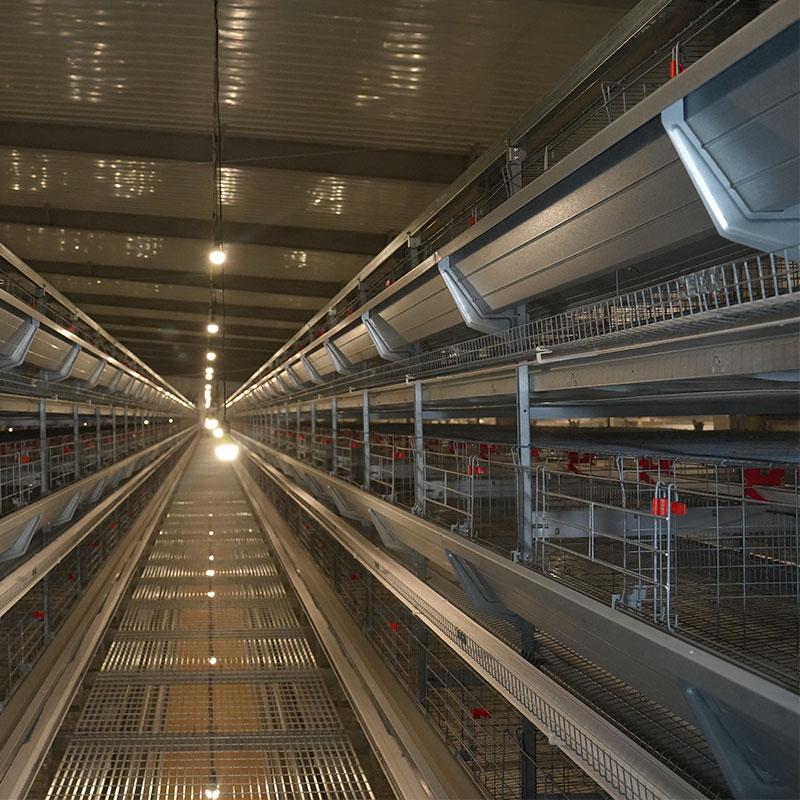
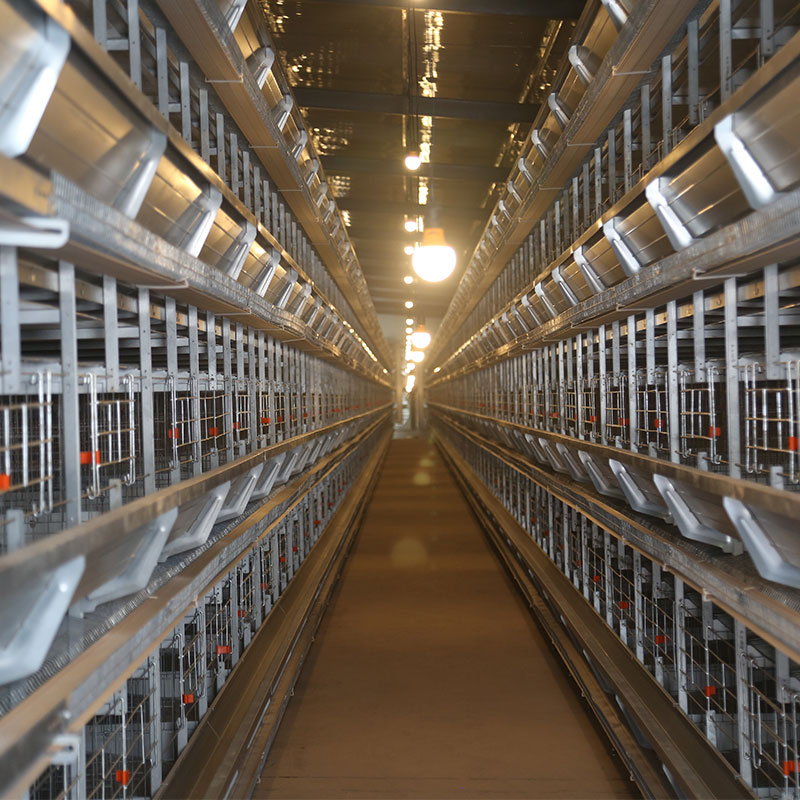
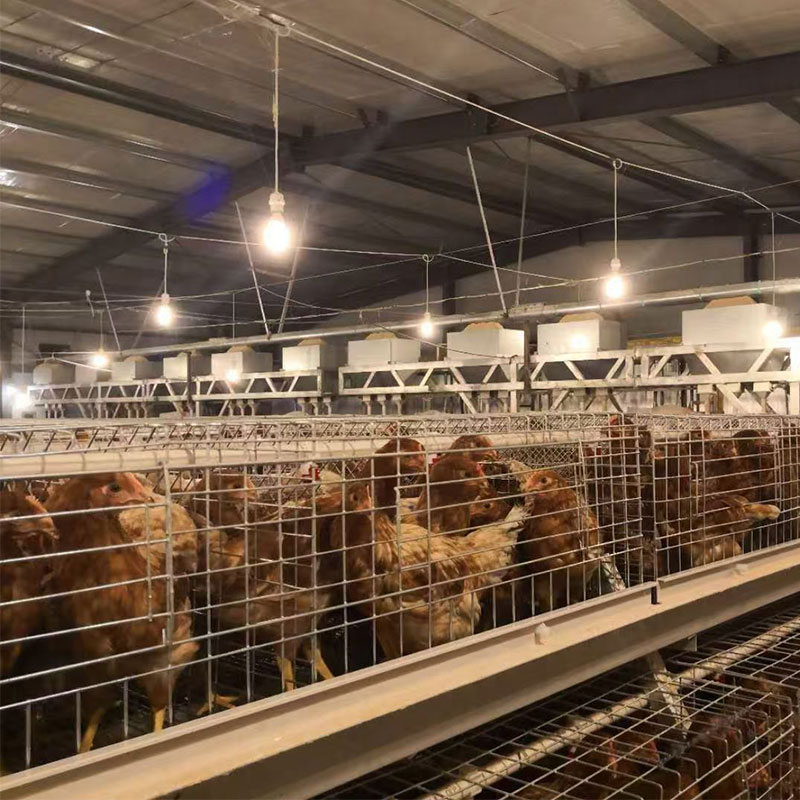
The Automatic AType Layer Cage is a fully integrated housing system designed for highdensity commercial egg production. It consolidates bird housing, feeding, watering, egg collection, and manure management into a single, automated workflow.
Operational Workflow:
1. Centralized Feeding & Watering: A feed hopper supplies a chain or trolley system that delivers precise rations along each tier. Nipple drinking lines provide constant fresh water.
2. Automated Egg Collection: Laid eggs gently roll onto a conveyor belt running the length of each tier. This belt transfers eggs directly to the central collection point without manual handling.
3. Continuous Manure Drying & Removal: A manure belt beneath each tier operates on a timed cycle. Manure is dried by controlled air flow before being transported to the end of the house for disposal.
4. Integrated Environmental Management: The cage structure facilitates uniform air distribution via tunnel ventilation, working in concert with the manure drying system.
Application Scope & Limitations:
Scope: Ideal for largescale commercial layer operations (20,000+ birds) prioritizing labor efficiency, egg quality, and datadriven management. Suitable for new construction or comprehensive retrofits.
Limitations: Requires significant capital investment and reliable electrical infrastructure. Not costeffective for very small farms (<5,000 birds) or operations seeking fully freerange or aviary systems.
3. CORE FEATURES
Centralized Egg Collection System | Technical Basis: Gentle inclined conveyor belts with soft edges per tier | Operational Benefit: Eggs are collected within minutes of being laid, minimizing exposure and handlinginduced cracks | ROI Impact: Field data shows a reduction in grade B and loss eggs by 24%, directly increasing saleable yield.
Tiered Manure Belt Drying System | Technical Basis: Pertier PVC belts with timed removal cycle and optimized air channeling | Operational Benefit: Removes manure daily, drastically reducing inhouse ammonia levels (commonly below 10 ppm) | ROI Impact: Improves FCR by up to 5 points and lowers respiratory disease incidence, reducing medication costs.
Precision Feed Delivery Chain | Technical Basis: Lowfriction chain in trough with cleats; controlled by inverter motor | Operational Benefit: Delivers fresh feed evenly along the entire cage line multiple times daily, eliminating feed competition | ROI Impact: Reduces feed waste by an estimated 37% and promotes uniform flock body weight.
Galvanized Steel Reinforced Structure | Technical Basis: Heavygauge, hotdip galvanized steel frames and mesh | Operational Benefit: Provides longterm structural integrity against corrosion from ammonia and moisture | ROI Impact: Extends operational lifespan beyond 20 years with minimal maintenance, lowering depreciation cost per year.
Integrated Monitoring Points | Technical Basis: Preinstalled ports for sensors (temperature, humidity) & manual inspection access | Operational Benefit: Enables routine flock observation and data collection without disrupting automation cycles | ROI Impact: Facilitates early disease detection and performance tracking, supporting informed culling decisions.
4. COMPETITIVE ADVANTAGES
| Performance Metric | Industry Standard (Conventional Cage) | Automatic AType Layer Cage Solution | Advantage (% Improvement) |
| Labor Hours per 10k Birds/Week | ~2530 hours (feeding, collection) | ~58 hours (system monitoring) | ~7080% Reduction |
| Egg Breakage Rate | 1.5 2.5% | 0.6 1.2% | ~50% Reduction |
| InHouse Ammonia Concentration (avg.)| 15 30 ppm | 50% Reduction |
| Feed Conversion Ratio (FCR) Variance| High (uneven feeding access) Low Uniformity across tiers High variance in bird weight Low Uniformity across tiers High variance in bird weight Low Uniformity across tiers High variance in bird weight Low Uniformity across tiers High variance in bird weight Low Uniformity across tiers High variance in bird weight Low Uniformity across tiers High variance in bird weight Low Uniformity across tiers High variance in bird weight Low Uniformity across tiers High variance in bird weight Low Uniformity across tiers High variance in bird weight Low Uniformity across tiers High variance in bird weight Low Uniformity across tiers High variance in bird weight ))| Tightened Range (<0.05 difference)| Improved Feed Efficiency |
5. TECHNICAL SPECIFICATIONS
Capacity/Rating: Standard configurations house 120160 birds per unit (e.g., 8tier design). Customizable for total house capacity.
Power Requirements: Primary drive motors operate on 380V/3phase/50Hz (configurable). Total system load is approximately 0.8 1.2 kW per 1,000 birds.
Material Specifications: Main structure uses hotdip galvanized steel sheet (SGCC Z120). Egg collection belts are foodgrade PVC. Nipple drinkers are stainless steel.
Physical Dimensions (Sample Unit): Single cage bank width: ~2.2m; Height (8tier): ~2m; Length customizable in modular sections of ~1m or ~2m.
Environmental Operating Range: System designed for operation within controlled poultry house environments between +10°C to +30°C at <70% relative humidity.
6. APPLICATION SCENARIOS
Challenge:A producer expanding from100k to300k birds needed to cap labor costs while ensuring consistent egg quality from new pullets.Solution:A complete house outfitted with an Automatic AType Layer Cage system,includin gcentral climate control interfacing .Results:Labor per bird reduced by78%.Eggs reaching Grade A increased by3 .5%.The operation achieved target capacity without increasing overall headcount .
Challenge:A midsized farm faced pressure to lower antibiotic useand improve welfare metrics amid rising ammonia levelsin old deeppit houses .Solution:A retrofit replacing old cageswith an Automatic AType system featuringmanure beltsand enriched space per hen .Results :Ammonia levels dropped consistently below15 ppm ,respiratory treatments decreasedby40%,and the farm achieved certified welfare compliance ,opening premium market channels .
7 . COMMERCIAL CONSIDERATIONS
Pricingfor an AutomaticAType Layer Cage systemis projectspecific ,scalingwith capacity ,automation level,and regional factors .
Base Equipment Tier:Covers core cage structure ,feeding ,watering,and egg collection .Pricedper bird housed .
Optional Features :Add ons include integrated weigh scales ,air quality sensor packages ,automaticventilation controls,and central egg grading/packing station interfaces .
Service Packages :Standard warranty covers partsfor12 months .Extended service agreements provide scheduled maintenanceand priority technical support .
Financing Options :Manufacturer facilitated financingor leasing structuresare availableto spread capital outlay over3–7 years ,aligning paymentswith production revenue .
8 . FAQ
Q:What is the lead time from orderto installationfora fullhouse system ?
A :Lead times varybyproject scalebut typically range from90to150 days.This includes manufacturing,customs clearance,and installation scheduling .
Q:Cana nAutomaticAType systembe integratedwith our existingpoultry house ventilation ?
A :Yes.Engineers can design interfacesto workwith most modern tunnel ventilation systems.The manure drying process often improves overall air quality management .
Q:What trainingis providedfor our operational staff ?
A :Comprehensive onsite trainingis included coveringdaily operation,routine maintenance procedures,and basic troubleshootingfor farm managersand key personnel .
Q:What isthe expected lifespanof the equipment,and whatare themain consumable parts ?
A:The galvanized steel structure hasa design lif eexceeding20 years.Primary consumables include driv ebelts(eggand manure),nipple drinker seals,and feed chain components,wit htypical replacement cyclesof3–5years basedon usage .
Q:Doyou offerperformance guarantees ?
A :Yes.We provide guaranteed performance metrics foregg collection efficiency(98%)whenthe systemis operatedwithin specified parameters .
Q:Arethere specific floor requirementsforthe installation ?
A:A level,solid concrete flooris essentialfor structural alignmentand stability.Minimum loadbearing capacity requirementswill be detailedin site preparation documents .
Q:What happensif thereisa power outage ?Willthe birdsbe at risk ?
A:Systems include battery backupsfor critical controls.Manual overrides allowfeedand water acces sshortterm.For extended outages ,standby generator integrationis strongly recommendedas partof biosecurityprotocols
1. Drinking system include the water pipes, water pressure adjuster, drinking nipples, Waterline front-end device, dosing system etc, choose them according to customer's needs.
2. High-quality water drinking pipes, pressure regulating valves and water drinking nipples can effectively prevent the water leakage. Drinking system adopt the closed piping system, which can minimize the water pollution.
3. 360-degree drinking nipples provide adequate drinking water for poultry at all stages.
4. The automatic drinking water system mainly adopts the steel ball drinking nipple. lt uses imported high-grad stainless steel, POM resin, and APS engineering material, which is wearing resistant, and the durability can be used for long time.



1. Automatic feeding machine can be chosen between gantry and ladder feeding machine. Gantry type feeding machine is a relatively economical and practical machine with simple operation, remote control walking character, easy to manage.
2. Mechanical transmission device running smoothly, low noise, long service life.
3. With the use of automatic control, the feeding system can adjust the amount of material.
4. Feeding with arched structure, high carrying capacity, not easily deformed.
5. Saving man power, saving feed, greatly improving the efficiency of Large-scale farming.
6. The walking speed of gantry feeding machine is 9--12 m/min.




1. Manure removing system included scraper type and conveyor belt type, Which can reduce the labor intensity and labor cost, keep the chicken shed dry and clean.
2. A type chicken cage can use scraper type or conveyor belt type.


3. The scraper type is suitable for A type cages, which can clean two or three rows. For the starters, this type is a good choice. lt can not only save some labor cost, but also save some investment in the whole project. The cleaning speed is 6-10 meters per minute.
4. Conveyor belt type is more suitable for large scale farming. The manure removing belt we use is high quality PP material (polypropylene). The walking speed is 2-4 meters per minute.



High Quality Pellets Made by Mobile Pellet Machine
1. It has professional designed angle of the blade. After the dynamic balance test one by one, the blade can operate smoothly.
2. The air volume is consistent in the whole life of the fan. Bearings has advantage of high strength, low noise, durable and so on.
1. The cooling pads uses high-quality wet curtain paper and adopts space cross-linking technology, which has the advantages of high water absorption, high water resistance, anti-toxicity and long service life.
2. The cooling efficiency is over 80%, without surfactant, natural water absorption, fast diffusion speed and long-lasting effect.
3. The product does not contain phenol and other chemical substances that are easy to cause skin allergies. It is non-toxic and harmless to the human body and chicken when installed and used. It is green, safe, energy-saving, environmentally friendly, economical, and easy to install.
4. The frame aluminum alloy has high strength, good corrosion resistance, durability and beautiful appearance.
5. Use a special filter for the cooling pad at the upper water to ensure clean water quality and support efficient water circulation components.
6. Combined with a negative pressure fan, it can effectively lower the indoor temperature.
The window is made of special selected high-quality engineering plastic, with high strength and long service life, together with superior anti-aging and anti-UV performance.
Function: Ventilation of the chicken house, usually used in the winter.
This system can adjust the wind speed and direction, thus the cold air will not reach chicken directly , which can effectively prevent the phenomenon of cold stress in chicken.
Environmental control system equipment is suitable for large-scale and intensive farming. According to customer requirements, we can provide various types of smart poultry equipment.
1. Our poultry management system is a modular system that manages all aspects of the chicken house, such as climate, temperature, humidity, ammonia, feeding, feed weighing, lighting and ventilation systems, and can monitor the situation of the chicken house in real time through a computer and mobile phone.
2. The management computer is the heart of the poultry farm, allowing you to easily monitor the entire poultry farm.

 WeChat:+8617838608255