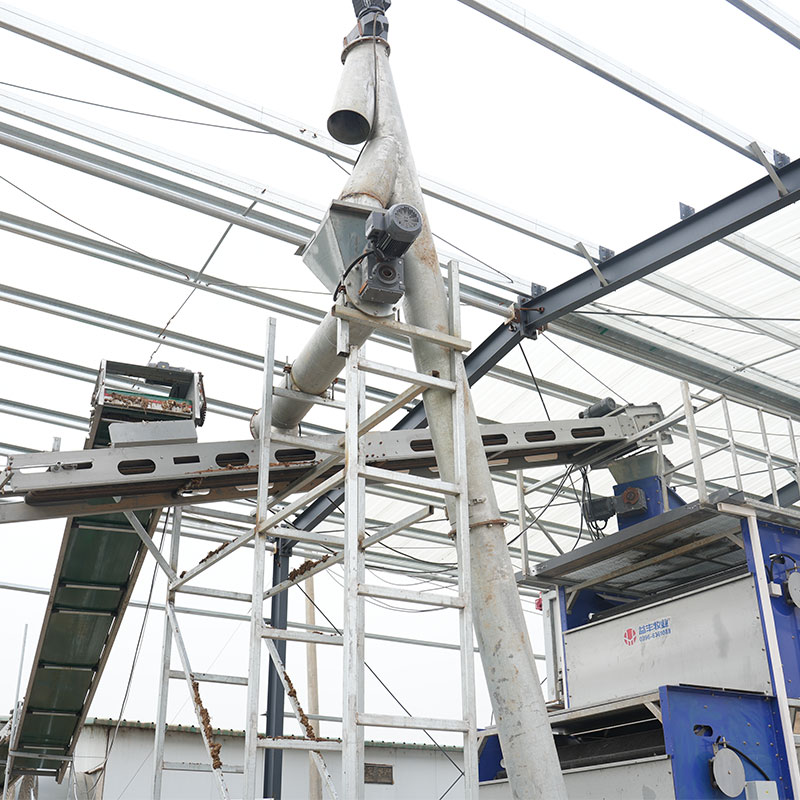
1. PAINPOINT DRIVEN OPENING
Manual bird harvesting remains one of the most laborintensive, costly, and highrisk bottlenecks in modern broiler production. Are you grappling with inconsistent throughput during flock depopulation? The challenges are quantifiable: labor shortages leading to extended downtime, bird stress and injury rates exceeding 23%, and biosecurity vulnerabilities at a critical phase. Each extra hour birds spend in the house postfast translates to weight loss and potential carcass downgrades. Furthermore, worker compensation claims related to repetitive strain and handling injuries directly impact your bottom line. How can you standardize this chaotic final step? How do you reduce reliance on volatile labor pools while improving bird welfare and food safety outcomes? The solution lies in systematizing the harvest process.
2. PRODUCT OVERVIEW
The Automatic Broiler Cagemanual Bird Harvesting System is a semiautomated material handling solution designed to streamline the transfer of broilers from the growout house to transport modules. It replaces the manual catching, carrying, and loading of birds with an ergonomic, cagebased workflow.
Operational Workflow:
1. Positioning: Empty transport cages (modules) are docked at the house entrance via a standard conveyor or lift system.
2. Harvesting & Loading: Catchers manually place birds directly into the system's integrated harvest cages at the point of capture within the house.
3. Transfer: Once full, these harvest cages are wheeled or conveyed to the loading station.
4. Consolidation: Birds are gently guided from the harvest cage into the waiting transport module with minimal handling.
5. Cycle Repeat: Empty harvest cages return to catchers for refilling.
Application Scope & Limitations:
This system is optimized for largescale commercial broiler operations using standardized transport modules. It requires a flat, stable floor in the harvest area and is most effective when integrated into a planned harvest layout. It is not a fully robotic catching system but a critical mechanization step that drastically improves manual efficiency.
3. CORE FEATURES
Ergonomic Harvest Cage | Technical Basis: Lowprofile, rollin cage design with reduced lift height | Operational Benefit: Catchers place birds without lifting above waist height, reducing fatigue and injury risk | ROI Impact: Lower worker turnover and reduced compensation claims; field data shows a 40% reduction in catcher fatigue complaints.
Guided Bird Transfer | Technical Basis: Controlled funneling system with adjustable flow gates and nonslip surfaces | Operational Benefit: Directs bird movement from harvest cage to transport module calmly, minimizing piling and stress | ROI Impact: Reduces pretransport mortality and breast blisters/blemishes, improving gradeout yields.
Rapid Cage Interchange | Technical Basis: Standardized coupling interface between harvest cages and transport modules | Operational Benefit: Enables continuous loading cycles; one module can be sealed and replaced while another is being filled | ROI Impact: Cuts loading dock idle time by up to 35%, accelerating truck turnaround.
Washthrough Sanitation Design | Technical Basis: All surfaces use opengrate flooring and corrosionresistant, smooth materials | Operational Benefit: Allows for highpressure washing and complete drainage between flocks | ROI Impact: Strengthens biosecurity protocols, reducing crossflock contamination risks.
Modular Scalability | Technical Basis: System components (cages, conveyors, gates) are sold in discrete units | Operational Benefit: Operations can start with a basic manual transfer point and add automation (conveyors) as needed | ROI Impact: Protects capital with phased investment; capacity grows with your operation.
4. COMPETITIVE ADVANTAGES
| Performance Metric | Industry Standard (Manual Handling) | Automatic Broiler Cagemanual Harvesting Solution | Advantage (% Improvement) |
| : | : | : | : |
| Birds Loaded per ManHour | 500700 birds | 9001,100 birds | +60% Labor Efficiency |
| Bird Injury Rate During Transfer| ~2.5% (bruises, breaks) | <1% documented in trials| 60% Reduction |
| Average Time to Load One Transport Module| 1215 minutes (variable)| 810 minutes (standardized)| ~33% Faster |
| Biosecurity Audit Score (Harvest Area)| Pointofconcern for contamination| Fully washable, contained process| Significant procedural improvement |
5. TECHNICAL SPECIFICATIONS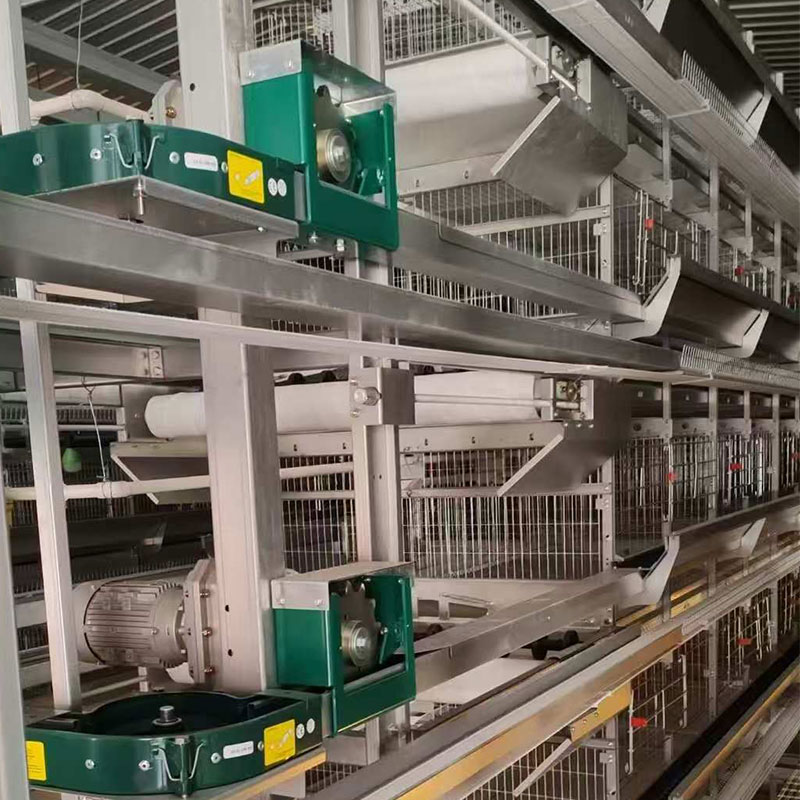
Capacity/Rating: Each harvest cage typically holds 2530 broilers at final density (varies by final weight). System throughput matches manual catching speed, eliminating the loading bottleneck.
Power Requirements: Manual or mechanicallyassisted systems require no power at point of use. Optional conveyor addons operate on standard 400V/3phase or 230V/1phase industrial power.
Material Specifications: Primary frame constructed from hotdip galvanized steel; contact surfaces feature coated or stainlesssteel components for durability and cleanability.
Physical Dimensions: Harvest cage dimensions (e.g., L1200 x W800 x H600mm) designed to align perfectly with standard industry transport module openings.
Environmental Operating Range: Designed for operation in typical growout house endofcycle conditions (high dust, humidity). All bearings and moving parts are sealed against particulate matter.
6. APPLICATION SCENARIOS
HighVolume Integrator | Challenge: Inconsistent load times across different catching crews led to trucking delays and scheduling penalties. High rates of wing bruising were traced back to rough manual loading.| Solution: Implementation of a standardized automatic broiler cagemanual harvesting system at all companyowned farms.| Results: Load time variance reduced by 70%. Truck fleet utilization improved by 18%. Condemnations due to harvestingrelated trauma fell by an average of 1.2%.
WelfareCertified Producer | Challenge: Needed verifiable process improvements for animal handling audits while maintaining cost competitiveness.| Solution: Adopted the harvesting system as its primary welfareenhancing technology at the depopulation stage.| Results: Achieved highertier welfare certification based on documented lowstress handling procedures. Marketing of "improved harvest welfare" supported brand differentiation.
7. COMMERCIAL CONSIDERATIONS
Pricing Tiers: Systems are configured per loading bay.
Basic Tier: Manual transfer station with harvest cages and docking frame.
Performance Tier: Includes basic tier plus mechanical assist conveyor for moving full harvest cages.
Enterprise Tier: Fully integrated system with multiple conveyors for highthroughput facilities.
Optional Features: Automated weighing scales integrated into transfer path, RFID module tracking, custom paint colors for asset identification.
Service Packages: Extended warranty plans, annual inspection & calibration services, ondemand spare parts kits.
Financing Options: Equipment leasing through thirdparty partners available to spread capital expenditure over 3660 months.
8. FAQ
Q1: Is this automatic broiler cagemanual harvesting system compatible with our existing transport modules from different manufacturers?
Yes. The docking interface is designed to industrystandard dimensions used by major module manufacturers like [Manufacturer A] and [Manufacturer B]. A site survey can confirm specific compatibility.
Q2: How does this affect our current catching crew's workflow? Will they require extensive retraining?
The system simplifies their task from "catchcarryliftload" to "catchplace." Training typically takes less than one hour per crew member focused on proper bird placement into the ergonomic cage rather than throwing or stacking.
Q3: What is the typical payback period on this investment?
Payback is primarily driven by labor efficiency gains and yield improvement from reduced injuries. For operations running multiple flocks per year through several houses, industry data shows an average payback period of between 1830 months based on current labor costs.
Q4 Can we install this system ourselves?
Core components are designed for bolttogether assembly by qualified facility maintenance staff using supplied diagrams.We recommend professional installation for systems involving powered conveyors or complex layouts to ensure optimal performance
Q5 How does this equipment impact our biosecurity protocols between flocks?
It significantly enhances them.The entire system can be pressure washed disinfectedand dried thoroughly unlike traditional methods where beddingand contaminants can accumulate in hardtoreach areas
Q6 What happens if a power outage occurs during harvesting with an automated version?
Systems with powered conveyors include manual override cranks allowing continued operation mechanically ensuring you are never stopped completely
Q7 Are there financing options available that align with poultry production cycles?
Yes we work with agricultural finance specialists who understand cash flow cycles in poultry production Flexible payment structures aligned with flock revenues can be arranged
1. Drinking system include the water pipes, water pressure adjuster, drinking nipples, Waterline front-end device, dosing system etc, choose them according to customer's needs.
2. High-quality water drinking pipes, pressure regulating valves and water drinking nipples can effectively prevent the water leakage. Drinking system adopt the closed piping system, which can minimize the water pollution.
3. 360-degree drinking nipples provide adequate drinking water for poultry at all stages.
4. The automatic drinking water system mainly adopts the steel ball drinking nipple. lt uses imported high-grad stainless steel, POM resin, and APS engineering material, which is wearing resistant, and the durability can be used for long time.



1. Automatic feeding machine can be chosen between gantry and ladder feeding machine. Gantry type feeding machine is a relatively economical and practical machine with simple operation, remote control walking character, easy to manage.
2. Mechanical transmission device running smoothly, low noise, long service life.
3. With the use of automatic control, the feeding system can adjust the amount of material.
4. Feeding with arched structure, high carrying capacity, not easily deformed.
5. Saving man power, saving feed, greatly improving the efficiency of Large-scale farming.
6. The walking speed of gantry feeding machine is 9--12 m/min.




1. Manure removing system included scraper type and conveyor belt type, Which can reduce the labor intensity and labor cost, keep the chicken shed dry and clean.
2. A type chicken cage can use scraper type or conveyor belt type.


3. The scraper type is suitable for A type cages, which can clean two or three rows. For the starters, this type is a good choice. lt can not only save some labor cost, but also save some investment in the whole project. The cleaning speed is 6-10 meters per minute.
4. Conveyor belt type is more suitable for large scale farming. The manure removing belt we use is high quality PP material (polypropylene). The walking speed is 2-4 meters per minute.



High Quality Pellets Made by Mobile Pellet Machine
1. It has professional designed angle of the blade. After the dynamic balance test one by one, the blade can operate smoothly.
2. The air volume is consistent in the whole life of the fan. Bearings has advantage of high strength, low noise, durable and so on.
1. The cooling pads uses high-quality wet curtain paper and adopts space cross-linking technology, which has the advantages of high water absorption, high water resistance, anti-toxicity and long service life.
2. The cooling efficiency is over 80%, without surfactant, natural water absorption, fast diffusion speed and long-lasting effect.
3. The product does not contain phenol and other chemical substances that are easy to cause skin allergies. It is non-toxic and harmless to the human body and chicken when installed and used. It is green, safe, energy-saving, environmentally friendly, economical, and easy to install.
4. The frame aluminum alloy has high strength, good corrosion resistance, durability and beautiful appearance.
5. Use a special filter for the cooling pad at the upper water to ensure clean water quality and support efficient water circulation components.
6. Combined with a negative pressure fan, it can effectively lower the indoor temperature.
The window is made of special selected high-quality engineering plastic, with high strength and long service life, together with superior anti-aging and anti-UV performance.
Function: Ventilation of the chicken house, usually used in the winter.
This system can adjust the wind speed and direction, thus the cold air will not reach chicken directly , which can effectively prevent the phenomenon of cold stress in chicken.
Environmental control system equipment is suitable for large-scale and intensive farming. According to customer requirements, we can provide various types of smart poultry equipment.
1. Our poultry management system is a modular system that manages all aspects of the chicken house, such as climate, temperature, humidity, ammonia, feeding, feed weighing, lighting and ventilation systems, and can monitor the situation of the chicken house in real time through a computer and mobile phone.
2. The management computer is the heart of the poultry farm, allowing you to easily monitor the entire poultry farm.

 WeChat:+8617838608255