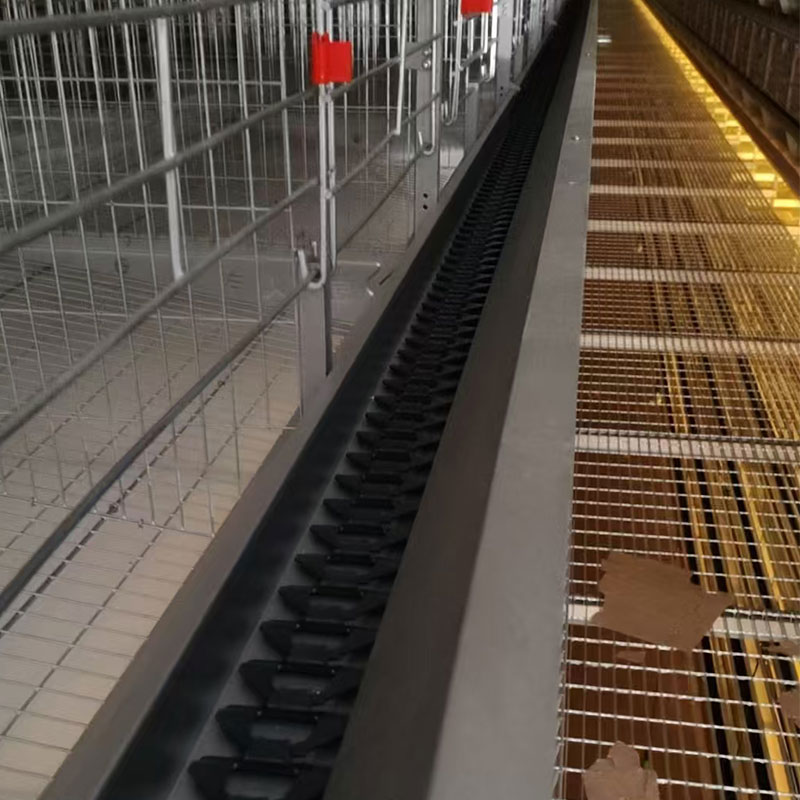
The modern poultry farm is a symphony of precision, where animal welfare, operational efficiency, and economic viability must harmonize. At the heart of this transformation for egg production is the automatic Htype layer chicken cage. More than just a housing system, it represents a paradigm shift—a fully integrated, technologydriven solution designed to maximize output while systematically addressing the challenges of labor, biosecurity, and resource management. This comprehensive guide delves into the mechanics, benefits, and critical considerations of implementing an automatic Htype cage system, providing the depth of knowledge needed for farmers and investors to make informed decisions for a sustainable and profitable future.
An automatic Htype layer chicken cage is a multitiered, modular battery cage system characterized by its distinctive "H" profile when viewed from the end. Unlike traditional Aframe or stairstep cages, the Htype design features vertically stacked tiers that are directly aligned, creating a compact, spaceefficient footprint. The term "automatic" refers to the fully integrated mechanization of core farm tasks:
Automatic Feeding: A central chain or spiral feed line runs along each tier, delivering precise rations directly to the feed trough.
Automatic Drinking: Nipple drinking lines provide clean water on demand for each cage segment.
Automatic Egg Collection: Gentle conveyor belts run beneath each tier's sloped floor, collecting eggs smoothly and transporting them directly to the central packing room.
Automatic Manure Removal: A scraper belt or deep pit system beneath each level removes droppings at scheduled intervals, dramatically improving hygiene and air quality.
This closedloop automation minimizes daily human intervention, focusing labor on management, monitoring, and bird welfare observation.
The robust galvanized steel frame supports multiple tiers (typically 38 levels). Each tier contains a series of partitioned cages designed to house a specific number of hens per compartment according to animal welfare standards. The floor is sloped gently forward to allow laid eggs to roll onto the egg collection belt.
Feeding System: Controlled by a central panel, it ensures uniform feed distribution. Advanced systems can track consumption per row.
Egg Collection System: Belts run at low speed multiple times daily, preventing pileups and reducing cracks. Eggs converge at a central point for washing, grading, and packing.
Manure Management: The beltcleaning system transports dry manure to one end of the house into a collection trolley or pit. This "dry" handling preserves its value as fertilizer and reduces ammonia emissions.
Environmental Control Interface: While not part of the cage itself, modern systems integrate with climate computers to regulate ventilation, temperature, and lighting based on data from sensors throughout the house.
Modern designs incorporate:
Perching spaces.
Clawshortening devices.
Designated nesting areas.
Easyaccess gates for health checks and bird handling.
| Advantage | Description & Impact |
| : | : |
| Maximized Land Use | Vertical design offers the highest stock density per square meter of floor space compared to other systems. Ideal for operations with land constraints. |
| Labor Efficiency | Automates 7080% of daily manual tasks (feeding, egg collection, manure cleaning). Reduces labor costs and dependency while minimizing human traffic (improving biosecurity). |
| Enhanced Biosecurity | Closed automation reduces crosscontamination risks. Dry manure removal lowers pathogen load and ammonia levels in the air. |
| Superior Egg Quality | Gentle, frequent egg collection results in cleaner eggs with significantly lower crack rates (<2%). Direct transport to packing room minimizes handling damage. |
|Feed & Resource Efficiency| Precise feeding reduces waste. Dry manure is easier to handle and more valuable as organic fertilizer. Water usage is optimized via nipple drinkers.|
|DataDriven Management| Integration potential with farm management software allows monitoring of production metrics (feed intake per line), enabling proactive health and performance management. |
The comprehensive automation represents a significant upfront investment compared to manual or semiautomated systems. A detailed ROI analysis factoring in labor savings (typically 5070% reduction), improved feed conversion ratio (FCR), higher saleable egg yield (>95%), and reduced mortality is essential.
Operating this equipment requires basic technical knowhow for troubleshooting sensors belts motors etc Uninterrupted power supply with backup generators is non negotiable; a system halt can jeopardize bird welfare within hours
While efficient high density demands impeccable management:
Ventilation must be expertly designed (tunnel + cross ventilation) to remove heat moisture gases
Lighting programs must be uniform across all tiers
Health monitoring must be vigilant; automated systems require skilled stockmanship—observing birds not just machines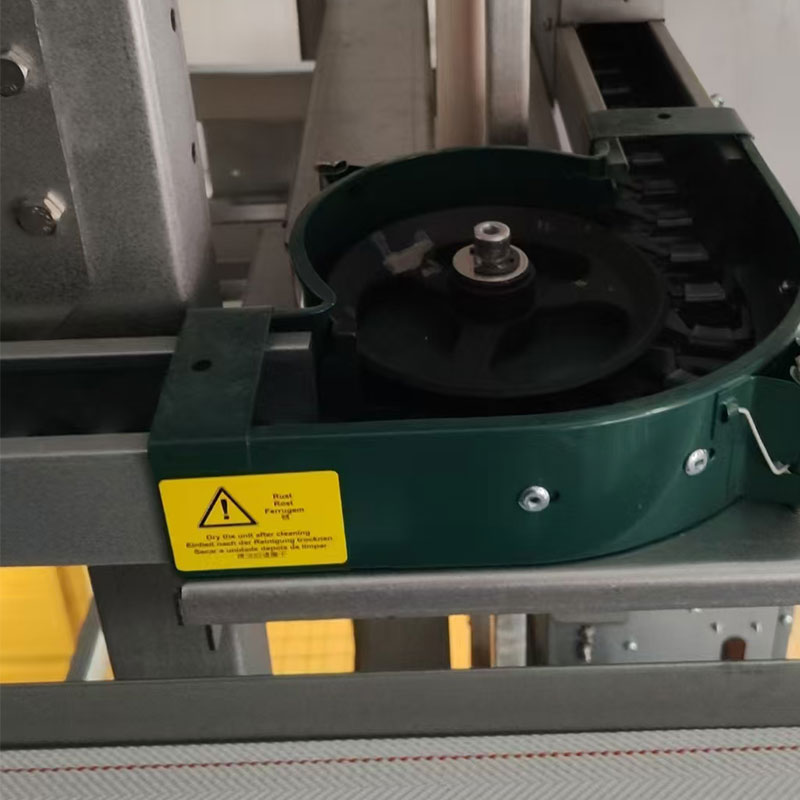
4 Animal Welfare Regulations Compliance
Investors must ensure their chosen system complies with local national regulations (e g EU Directive US United Egg Producers Certified) regarding space per hen enrichments etc Future proofing against regulatory changes is prudent
H Type vs Other Cage Systems A Comparative Analysis
||A Type / Stair Step Cages|H Type Cages|
||||
|Space Efficiency Lower density more floor space required Highest vertical density compact footprint|||
Automation Level Often semi automated full manual possible Designed for full closed loop automation|||
Manure Handling Manure falls onto piles or belts below each tier creating wetter conditions Belt system removes manure from entire tier keeping it drier|||
Bird Access More difficult access to upper tiers Better access across all tiers via platforms/catwalks|||
Investment Cost Lower initial cost higher long term operational cost Higher initial investment lower operational costs|||
Implementing Your System Best Practices
1 Site Preparation Foundation must be perfectly level House structure should accommodate maintenance walkways catwalks between rows
2 Supplier Selection Choose reputable manufacturers with strong after sales service spare parts availability Request site visits to existing working farms
3 Flock Management Transition Start with healthy high quality pullets Train staff thoroughly on both machine operation AND bird behavior within this system Implement all biosecurity protocols before placement
4 Proactive Maintenance Schedule Daily visual checks weekly belt tension inspections monthly lubrication quarterly full system audits Preventative maintenance prevents catastrophic failures
Conclusion Engineering Success in Modern Egg Production
The decision to invest in an automatic H type layer chicken cage system is strategic It moves beyond mere equipment purchase towards adopting a holistic production philosophy While capital intensive its true value unfolds through years of consistent reliable operation yielding superior egg quality dramatic labor savings enhanced biosecurity By prioritizing technical training meticulous management animal welfare alongside technological investment farmers can harness this systems full potential ensuring their operation remains productive sustainable competitive in an evolving global market Ultimately it represents not just where you house your hens but how you build resilience into your business foundation
Q1: What exactly does "Htype" mean in these cages?
A1: It refers to the physical profile shape When viewed from one end vertical support columns create compartments that resemble letter Hs stacked together This allows multiple tiers usually 4 8+ be aligned directly over one another maximizing vertical space unlike staggered A frame designs
Q2: How many birds can be housed in one automatic H type cage system?
A2: Capacity varies by manufacturer design number tiers Typical commercial systems range from 20 000 over 100 000 birds per house Exact numbers depend on compartment size meeting animal welfare standards e g often cm² hen Always calculate based on certified designs not just total cages
Q3: Is manure handling really better with an H type system?
A3: Yes significantly Its continuous belt removal system keeps manure drier prevents pile up beneath cages reducing ammonia levels improving overall air quality inside house Drier manure also easier handle more valuable as fertilizer less odorous
Q4: What happens during power failure?
A4: Backup power essential Most critical functions like ventilation fans have priority connection backup generator Entire automation feeding egg collection may pause short periods but generators should restore full operation within minutes prevent heat stress suffocation Emergency protocols mandatory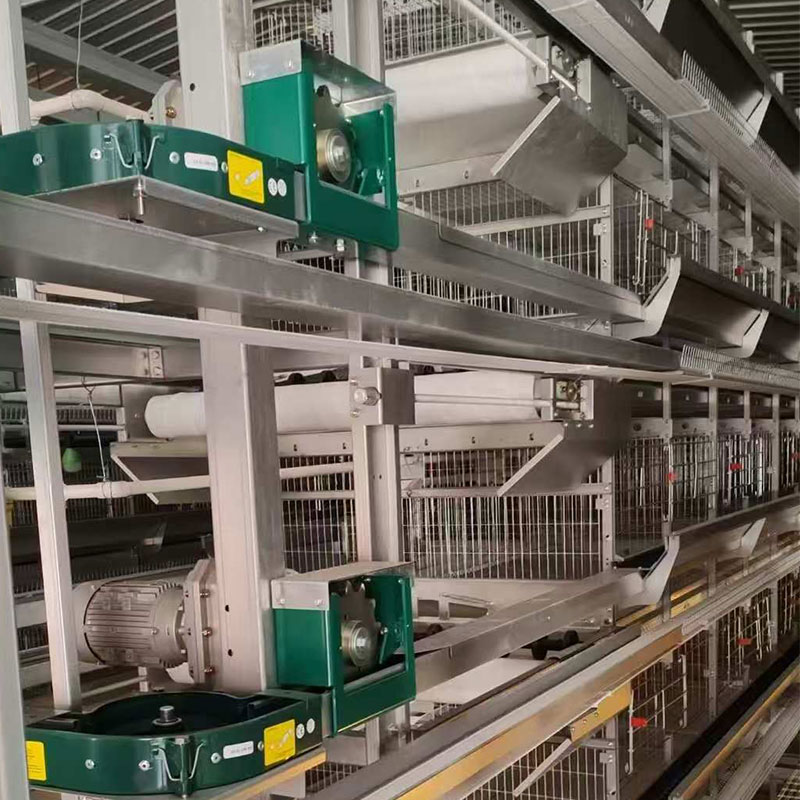
Q5 Are automatic H type cages considered humane?
A5 Humane depends on design management Modern systems built comply strict welfare regulations include enrichments like perches nesting areas claw shorteners Key factor skilled stockmanship using technology monitor health wellbeing not replace observation Industry moving towards providing more behavioral freedom within automated environment
Q6 What main maintenance challenges these systems?
A6 Primary challenges involve wear tear moving parts Regular maintenance includes lubricating chains checking tension drive belts cleaning sensors ensuring egg collection belts aligned preventing jams Electrical components control panels also need periodic inspection Preventative schedule crucial avoid breakdowns disrupt production cycle
Q7 How much labor actually save compared traditional cages?
A7 Labor reduction typically ranges % depending previous setup Automation eliminates most daily manual tasks feeding collecting eggs cleaning manure One two workers manage flock tens thousands focusing health checks monitoring equipment performance rather repetitive physical labor
Q8 Can integrate climate control lighting automation?
A8 Absolutely Modern turnkey solutions seamlessly integrate environmental controls Sensors throughout house feed data climate computer adjusts ventilation rates cooling pads heaters sidewall curtains Lighting programs synchronized across all tiers ensuring uniform day length stimulation crucial consistent laying cycles
1. Drinking system include the water pipes, water pressure adjuster, drinking nipples, Waterline front-end device, dosing system etc, choose them according to customer's needs.
2. High-quality water drinking pipes, pressure regulating valves and water drinking nipples can effectively prevent the water leakage. Drinking system adopt the closed piping system, which can minimize the water pollution.
3. 360-degree drinking nipples provide adequate drinking water for poultry at all stages.
4. The automatic drinking water system mainly adopts the steel ball drinking nipple. lt uses imported high-grad stainless steel, POM resin, and APS engineering material, which is wearing resistant, and the durability can be used for long time.



1. Automatic feeding machine can be chosen between gantry and ladder feeding machine. Gantry type feeding machine is a relatively economical and practical machine with simple operation, remote control walking character, easy to manage.
2. Mechanical transmission device running smoothly, low noise, long service life.
3. With the use of automatic control, the feeding system can adjust the amount of material.
4. Feeding with arched structure, high carrying capacity, not easily deformed.
5. Saving man power, saving feed, greatly improving the efficiency of Large-scale farming.
6. The walking speed of gantry feeding machine is 9--12 m/min.




1. Manure removing system included scraper type and conveyor belt type, Which can reduce the labor intensity and labor cost, keep the chicken shed dry and clean.
2. A type chicken cage can use scraper type or conveyor belt type.


3. The scraper type is suitable for A type cages, which can clean two or three rows. For the starters, this type is a good choice. lt can not only save some labor cost, but also save some investment in the whole project. The cleaning speed is 6-10 meters per minute.
4. Conveyor belt type is more suitable for large scale farming. The manure removing belt we use is high quality PP material (polypropylene). The walking speed is 2-4 meters per minute.



High Quality Pellets Made by Mobile Pellet Machine
1. It has professional designed angle of the blade. After the dynamic balance test one by one, the blade can operate smoothly.
2. The air volume is consistent in the whole life of the fan. Bearings has advantage of high strength, low noise, durable and so on.
1. The cooling pads uses high-quality wet curtain paper and adopts space cross-linking technology, which has the advantages of high water absorption, high water resistance, anti-toxicity and long service life.
2. The cooling efficiency is over 80%, without surfactant, natural water absorption, fast diffusion speed and long-lasting effect.
3. The product does not contain phenol and other chemical substances that are easy to cause skin allergies. It is non-toxic and harmless to the human body and chicken when installed and used. It is green, safe, energy-saving, environmentally friendly, economical, and easy to install.
4. The frame aluminum alloy has high strength, good corrosion resistance, durability and beautiful appearance.
5. Use a special filter for the cooling pad at the upper water to ensure clean water quality and support efficient water circulation components.
6. Combined with a negative pressure fan, it can effectively lower the indoor temperature.
The window is made of special selected high-quality engineering plastic, with high strength and long service life, together with superior anti-aging and anti-UV performance.
Function: Ventilation of the chicken house, usually used in the winter.
This system can adjust the wind speed and direction, thus the cold air will not reach chicken directly , which can effectively prevent the phenomenon of cold stress in chicken.
Environmental control system equipment is suitable for large-scale and intensive farming. According to customer requirements, we can provide various types of smart poultry equipment.
1. Our poultry management system is a modular system that manages all aspects of the chicken house, such as climate, temperature, humidity, ammonia, feeding, feed weighing, lighting and ventilation systems, and can monitor the situation of the chicken house in real time through a computer and mobile phone.
2. The management computer is the heart of the poultry farm, allowing you to easily monitor the entire poultry farm.

 WeChat:+8617838608255