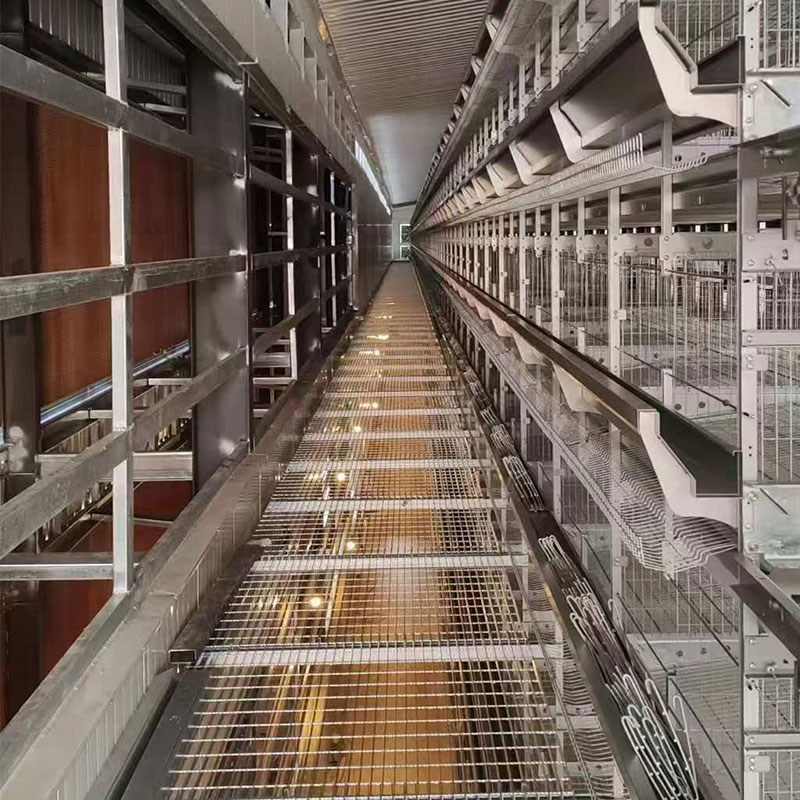
For generations, poultry farmers have understood that the environment directly shapes a hen’s productivity. A stressed bird, one fighting for feed or space, cannot lay to her genetic potential. The shift from traditional floor systems to cage-based housing was a monumental step in addressing these challenges, but the advent of the modern automatic layer cage system represents a fundamental evolution in management philosophy. This isn’t merely a cage; it’s an integrated life-support system designed to optimize every aspect of a laying hen’s existence, from the air she breathes to the egg she produces.
The core of this system is the cage structure itself, typically constructed from heavy-gauge, hot-dipped galvanized steel. This material choice is critical. Unlike painted or mild steel, which can rust from the constant exposure to ammonia and moisture in a poultry house, galvanized steel provides a durable, corrosion-resistant framework that can last for decades. The design is modular, with individual cages arranged in long rows, often stacked vertically in three or four tiers—a configuration known as an A-type or H-type battery cage system. This vertical stacking is the first major efficiency gain, dramatically increasing the bird capacity per square foot of floor space without expanding the building’s footprint.
Each cage is engineered to provide a specific, consistent amount of space per bird, a crucial factor for animal welfare and productivity. The floor of the cage is sloped wire mesh, a feature whose importance becomes clear at collection time. When an egg is laid, it gently rolls away from the bird onto a conveyor belt or into a designated egg trough. This immediate removal is the first step in preserving egg quality. It prevents eggs from being pecked, cracked, or soiled, directly translating to a higher percentage of Grade A eggs reaching the market.
The Mechanics of Automation: Feed, Water, and Waste
The term “automatic” separates these modern systems from their predecessors. Automation touches three critical areas: feeding, watering, and manure management.
The feeding system often consists of a chain or spiral auger that runs along the front of each tier of cages. At scheduled intervals, a motor drives this mechanism, pulling a precise blend of nutrients from a central hopper through a trough accessible to all birds. This eliminates the labor-intensive and inconsistent nature of manual feeding. A farmer no longer needs to push a feed cart down the aisles, a process that can stress the birds and result in some cages receiving more feed than others. With an automated system, every hen has equal access to fresh feed at the same time, promoting uniform flock growth and egg production. The feed trough is designed to minimize waste; birds cannot easily flick feed out, ensuring that more of the expensive ration goes into egg production rather than onto the floor.

Watering is handled by a nipple drinker system. A pressurized water line runs the length of each row, with small stainless-steel nipples positioned at strategic points within the cages. Hens learn quickly to activate the nipple with their beaks, receiving a drop of fresh, clean water. This closed system is a vast improvement over open troughs or bell drinkers. It prevents water from being contaminated with feed, dust, or droppings, significantly reducing the risk of waterborne diseases. It also keeps the litter beneath the cages drier, which is pivotal for overall air quality.
Perhaps the most significant labor-saving and hygiene improvement comes from the automated manure removal system. Beneath each tier of cages, a series of scrapers or a continuous belt system is installed. These are programmed to run at set intervals, perhaps once or twice a day, to remove the accumulating droppings. The manure is conveyed to one end of the house and deposited into a pit or a cross-conveyor that transports it outside. This continuous removal is transformative. It drastically cuts ammonia levels within the house, as the manure does not have time to decompose and release gases. Lower ammonia means healthier respiratory systems for the birds, which correlates directly to better feed conversion and stronger shells. For the farm workers, it eliminates the grueling, daily task of manual manure scraping, creating a safer and more pleasant working environment.
Environmental Control and Bird Welfare Integration
An automatic cage system does not operate in isolation; it functions best within a controlled-environment house. These houses are equipped with modern ventilation systems, consisting of inlet fans, exhaust fans, and often evaporative cooling pads. The cage system’s open design allows for optimal air circulation around the birds. In summer, the ventilation system pulls hot air out, replacing it with cooler, fresh air. In winter, the system can be adjusted to maintain warmth while still removing excess moisture and ammonia. This stable microclimate prevents the thermal stress that can cause egg production to plummet during heatwaves or cold snaps.
Bird welfare considerations are increasingly integrated into modern cage designs. While debates over cage-free systems continue, manufacturers of battery cages have responded with improved features. These include more generous space allowances per hen, perches that allow for natural roosting behavior, and scratch pads or abrasive strips that help keep claws trimmed. The cages are designed to prevent injury, with smooth, rounded edges and appropriate wire spacing that supports the hen’s feet without causing bumblefoot. The consistent environment—free from predators, damp litter, and the social stressors of large flock dynamics on the floor—can contribute to a lower mortality rate and a more stable laying cycle.
Economic Calculation: Analyzing the Return on Investment
The initial investment in an automatic layer cage system is substantial. It is not merely the cost of the cages, but also the accompanying infrastructure: the feeding and drinking lines, the manure conveyors, the ventilation systems, and potentially upgraded electrical systems to power it all. This upfront cost can be a significant barrier for smaller operations. However, the decision must be viewed through the lens of long-term operational economics.
The return on investment is realized through three primary channels: labor reduction, feed efficiency, and improved production metrics.
Labor costs are one of the most volatile and challenging expenses for any farm. An automatic system can reduce the daily man-hours required for bird care by as much as 70-80%. Tasks that once took hours—feeding, watering, egg collection, manure cleaning—are now managed by the system, with workers needed primarily for monitoring bird health, maintaining equipment, and managing the collected eggs. This allows a single worker to manage a flock of tens of thousands of birds, a ratio that is impossible with manual methods.
Feed represents up to 70% of the cost of producing an egg. Automated feeding systems minimize spillage and ensure a consistent, balanced diet is available. Furthermore, the controlled environment reduces the energy hens expend on staying warm or cool, meaning more of the feed’s energy is directed toward egg production. It is not uncommon for farms that switch to automated cages to see a measurable improvement in their feed conversion ratio (the amount of feed required to produce a dozen eggs).
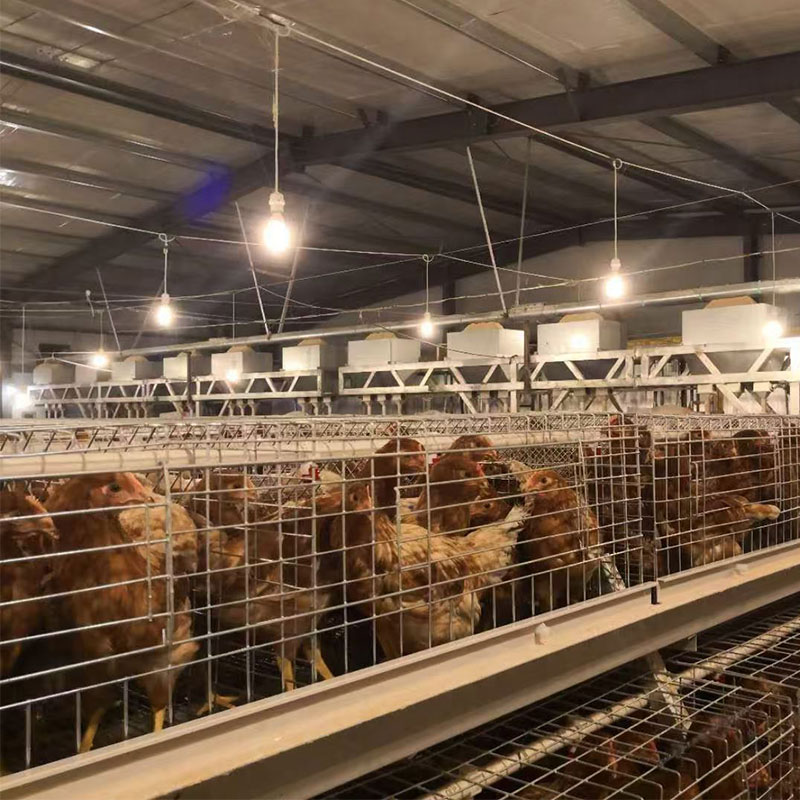
Finally, the production metrics themselves improve. The combination of reduced stress, better hygiene, and consistent nutrition leads to a higher peak lay percentage and a more persistent laying curve. Hens lay more eggs over their productive life. Furthermore, the automated egg collection results in a higher percentage of clean, uncracked eggs, which command a better price. Reduced mortality means more birds are contributing to revenue for a longer period.
When a farmer calculates the cost, they must weigh the capital expenditure against the annual savings in labor, the improved feed conversion, and the increased revenue from higher-quality egg output over the system’s 15-to-20-year lifespan.
Selecting a System: Considerations for Farmers
Choosing the right automatic cage system is not a one-size-fits-all decision. A farmer must consider their specific circumstances.
Flock Size and Expansion Plans: Modular systems allow for scalability. A farmer might start with a two-tier system and add a third tier later as the flock grows. It’s crucial to select equipment that can be expanded without major structural changes.
House Dimensions: The layout of the existing or planned poultry house will dictate the configuration. The width of the aisles between cage rows is critical for allowing workers to inspect birds and perform maintenance. The height of the building must accommodate the stacked tiers while leaving space for air to circulate above.
Level of Automation: Systems can range from semi-automatic (perhaps manual egg collection but automated feeding) to fully automatic. The choice depends on the available labor budget and the farmer’s preference for hands-on management.
Quality of Components: Not all galvanized steel is created equal. The thickness of the wire and the quality of the galvanization affect longevity. The motors driving the feed chain and manure belts should be reliable and have accessible service support. A failure in a critical component can disrupt the entire operation.
Supplier Reputation and Support: The best equipment is only as good as the company behind it. Farmers should seek suppliers with a proven track record, who can provide installation guidance, training for staff, and, most importantly, a reliable supply of spare parts.
The modern automatic layer cage system is a sophisticated tool that redefines efficiency in egg production. It moves the farmer’s role from one of constant, physical labor to that of a system manager and animal caregiver. By creating a stable, hygienic, and controlled environment, these systems allow hens to express their full genetic potential for egg production. The significant investment is justified by substantial and sustained returns in labor savings, resource efficiency, and product quality. For the poultry farmer looking to build a resilient, scalable, and profitable operation for the long term, integrating an automatic cage system is a decisive step toward achieving those goals.
1. Drinking system include the water pipes, water pressure adjuster, drinking nipples, Waterline front-end device, dosing system etc, choose them according to customer's needs.
2. High-quality water drinking pipes, pressure regulating valves and water drinking nipples can effectively prevent the water leakage. Drinking system adopt the closed piping system, which can minimize the water pollution.
3. 360-degree drinking nipples provide adequate drinking water for poultry at all stages.
4. The automatic drinking water system mainly adopts the steel ball drinking nipple. lt uses imported high-grad stainless steel, POM resin, and APS engineering material, which is wearing resistant, and the durability can be used for long time.



1. Automatic feeding machine can be chosen between gantry and ladder feeding machine. Gantry type feeding machine is a relatively economical and practical machine with simple operation, remote control walking character, easy to manage.
2. Mechanical transmission device running smoothly, low noise, long service life.
3. With the use of automatic control, the feeding system can adjust the amount of material.
4. Feeding with arched structure, high carrying capacity, not easily deformed.
5. Saving man power, saving feed, greatly improving the efficiency of Large-scale farming.
6. The walking speed of gantry feeding machine is 9--12 m/min.




1. Manure removing system included scraper type and conveyor belt type, Which can reduce the labor intensity and labor cost, keep the chicken shed dry and clean.
2. A type chicken cage can use scraper type or conveyor belt type.


3. The scraper type is suitable for A type cages, which can clean two or three rows. For the starters, this type is a good choice. lt can not only save some labor cost, but also save some investment in the whole project. The cleaning speed is 6-10 meters per minute.
4. Conveyor belt type is more suitable for large scale farming. The manure removing belt we use is high quality PP material (polypropylene). The walking speed is 2-4 meters per minute.



High Quality Pellets Made by Mobile Pellet Machine
1. It has professional designed angle of the blade. After the dynamic balance test one by one, the blade can operate smoothly.
2. The air volume is consistent in the whole life of the fan. Bearings has advantage of high strength, low noise, durable and so on.
1. The cooling pads uses high-quality wet curtain paper and adopts space cross-linking technology, which has the advantages of high water absorption, high water resistance, anti-toxicity and long service life.
2. The cooling efficiency is over 80%, without surfactant, natural water absorption, fast diffusion speed and long-lasting effect.
3. The product does not contain phenol and other chemical substances that are easy to cause skin allergies. It is non-toxic and harmless to the human body and chicken when installed and used. It is green, safe, energy-saving, environmentally friendly, economical, and easy to install.
4. The frame aluminum alloy has high strength, good corrosion resistance, durability and beautiful appearance.
5. Use a special filter for the cooling pad at the upper water to ensure clean water quality and support efficient water circulation components.
6. Combined with a negative pressure fan, it can effectively lower the indoor temperature.
The window is made of special selected high-quality engineering plastic, with high strength and long service life, together with superior anti-aging and anti-UV performance.
Function: Ventilation of the chicken house, usually used in the winter.
This system can adjust the wind speed and direction, thus the cold air will not reach chicken directly , which can effectively prevent the phenomenon of cold stress in chicken.
Environmental control system equipment is suitable for large-scale and intensive farming. According to customer requirements, we can provide various types of smart poultry equipment.
1. Our poultry management system is a modular system that manages all aspects of the chicken house, such as climate, temperature, humidity, ammonia, feeding, feed weighing, lighting and ventilation systems, and can monitor the situation of the chicken house in real time through a computer and mobile phone.
2. The management computer is the heart of the poultry farm, allowing you to easily monitor the entire poultry farm.

 WeChat:+8617838608255