
1. PAINPOINT DRIVEN OPENING
Managing a commercial layer operation demands precision and consistency. Yet, manual or semiautomated pullet rearing presents persistent challenges that directly impact your bottom line. Are you experiencing inconsistent bird development due to variable feed and water access? Struggling with labor costs for daily manure collection and bird handling? Concerned about disease spread from inefficient waste management or stressinduced immunosuppression during transfers? These operational inefficiencies translate into quantifiable costs: increased feed conversion ratios, higher veterinary interventions, extended downtime between flocks, and suboptimal peak lay performance. The core question for plant managers is this: how can you standardize pullet rearing to produce uniform, healthy birds that seamlessly transition to your layer cages, maximizing lifetime egg production?
2. PRODUCT OVERVIEW
The Automatic Layer Pullet Cage is a fully integrated rearing system designed to house birds from chick placement through to prelay transfer. This automated cage equipment standardizes the critical growth phase, ensuring pullets are physically and behaviorally prepared for the laying house.
Operational Workflow:
1. Chick Placement: Dayold chicks are placed into the thermally controlled cage environment.
2. Automated Rearing: From day one, birds access feed via a progressive chain system and water via nipple lines, with manure removed by a continuous belt system—all without daily human intervention.
3. Controlled Development: Lighting programs, feed formulations, and space allocation are precisely managed through the central control panel as birds grow.
4. PreLay Transfer: At approximately 1618 weeks, fullyfeathered and uniform pullets are systematically transferred to the laying house, minimizing stress.
Application Scope & Limitations:
Scope: Designed for commercialscale layer pullet rearing (typically 5,000 to 100,000+ bird capacities per house). Ideal for integration with automated layer cage systems.
Limitations: Requires initial capital investment, stable electrical infrastructure, and trained maintenance personnel. Not designed for freerange or aviarystyle rearing.
3. CORE FEATURES
Progressive Feed System | Technical Basis: Heightadjustable chain feeder with variable speed control | Operational Benefit: Delivers precise feed rationing tailored to bird age, minimizing waste and ensuring uniform growth across the flock | ROI Impact: Field data shows a 35% reduction in total feed cost during rear versus pan feeding systems.
Continuous Manure Belt Drying System | Technical Basis: Perforated belt with integrated ventilation plenum beneath each tier | Operational Benefit: Removes manure daily, drastically reducing ammonia levels (maintaining 98% livability rate through rear.
StressReduced Bird Transfer | Technical Basis: Dedicated internal cage partitions and conveyor belts that operate at bird level | Operational Benefit: Enables smooth movement of pullets from rear to lay cages with minimal human handling and fright | ROI Impact: Reduces transferrelated injuries and stressinduced delays in peak lay achievement by an average of 5 days.
Centralized Management Interface | Technical Basis: Touchscreen PLC with data logging and remote monitoring capability | Operational Benefit: Allows managers to monitor feed consumption, water usage, environmental data, and system status from a single point | ROI Impact: Enables proactive management decisions, reducing troubleshooting time by an estimated 30%.
4. COMPETITIVE ADVANTAGES
| Performance Metric | Industry Standard (Open Floor/Manual Cage) | Automatic Layer Pullet Cage Solution | Advantage (% improvement) |
| : | : | : | : |
| Labor Hours per Bird Cycle | ~0.025 hours/bird | ~0.005 hours/bird | 80% Reduction |
| Feed Conversion Ratio (Rear) | ~5.2 5.5 kg feed/kg gain| ~4.9 5.1 kg feed/kg gain| ~6% Improvement |
| Flock Uniformity (Body Weight @ Transfer) | ±15% Coefficient of Variation| ±8% Coefficient of Variation| ~47% Improvement |
| Ammonia Concentration (Average) | 30 50 ppm+ (seasonal) 50% Reduction |
5. TECHNICAL SPECIFICATIONS
Capacity/Rating: Configurable systems typically house 2436 birds per cage section (depending on breed standards), with multiple tiers (36). Total house capacity is customengineered.
Power Requirements: Primary system operates on threephase power; control systems on singlephase backup. Typical total connected load ranges from 1540 kW per house depending on scale.
Material Specifications: Main structure fabricated from hotdip galvanized steel wire; feeding system components in stainless steel or foodgrade PVC; manure belts in durable polypropylene.
Physical Dimensions: Standard cage tier height is adjustable from ~300mm (start) to ~450mm (transfer). System width is modular; typical bay length is 12 meters.
Environmental Operating Range: Internal system operation rated for ambient temperatures of 10°C to +40°C with relative humidity up to 80%. Maintains target internal brooding/climate zone independently.
6. APPLICATION SCENARIOS
Challenge A major egg producer faced inconsistent pullet quality from contract growers leading to variable peak production in their automated layer houses.
Solution Implementation of an onsite Automatic Layer Pullet Cage facility with strict environmental and feeding protocols.
Results Achieved flock uniformity of ±7%. Posttransfer mortality dropped by 0.4%, and hens reached 50% production rate consistently at dayofage +135 days.
Challenge A multigeneration farm struggled with rising labor costs for their deeplitter pullet barns and high ammonia levels affecting bird health.
Solution Retrofitted two existing poultry houses with tiered Automatic Layer Pullet Cage systems including manure belts & ventilation upgrades.
Results Labor for bird care/manure handling reduced by over two fulltime equivalents annually. Ammonia levels were controlled below industryrecommended thresholds yearround.
7. COMMERCIAL CONSIDERATIONS
Equipment pricing is structured around modular capacity: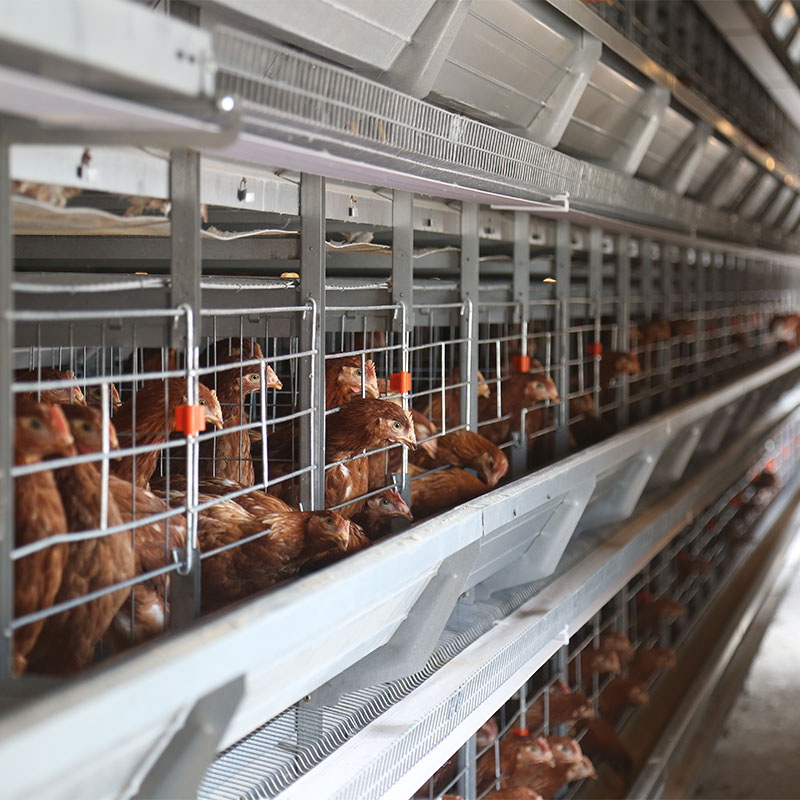
Tier A (EntryScale): For operations up to 20K birds per house—includes core automation features suitable for retrofit projects.
Tier B (CommercialScale): For operations up to 50K birds per house—includes enhanced PLC controls & data analytics packages as standard.
Optional features include advanced climate monitoring probes,
backup power integration,
and automated vaccination platforms.
Service packages range from basic annual maintenance contracts
to comprehensive performance guarantees
that include parts coverage
and prioritized technical support.
Financing options are available through our manufacturing partners,
including leasetoown structures
and project financing tied
to documented efficiency gains,
helping manage capital expenditure impact.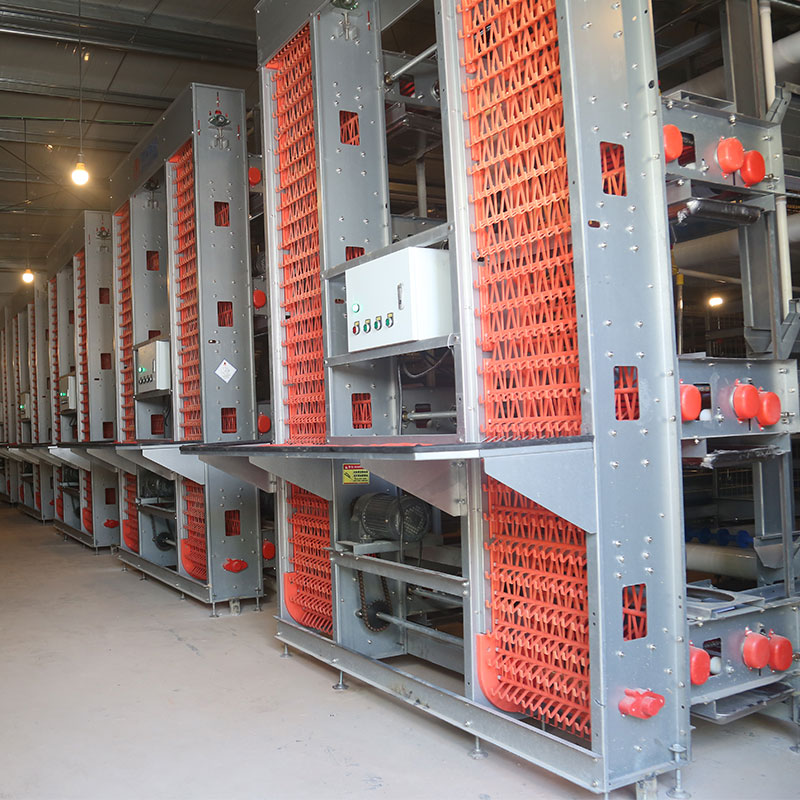
8.FAQ
Q1 How compatible is this equipment with our existing layer cages?
A1 Our engineering team designs the Automatic Layer Pullet Cage specifications—including feeder height,
drink line placement,
and perch training—to match your specific laying cage dimensions,
ensuring a seamless behavioral transition for the birds.
Q2 What is the typical payback period on this investment?
A2 Based on client data aggregating labor savings,
feed efficiency gains,
and improved lay performance,
the typical return on investment period ranges between three
to five years depending on operational scale
and local cost structures.
Q3 Can the system handle different breeds of layers?
A3 Yes The equipment features adjustable feeding programs,
space allocations,
and perch heights configurable via the control panel
to meet the specific rearing guidelines for ISA Brown HyLine Lohmann
and other major commercial breeds
Q4 What happens during a power failure?
A4 Critical components like ventilation can be connected
to backup generators The control system includes batterybacked memory
and can be specified with failsafe mechanisms that default feeders
to open positions ensuring continued bird welfare
Q5 What training is provided for our operators?
A5 We provide comprehensive onsite commissioning training covering daily operation routine maintenance troubleshooting procedures as well as remote access support manuals
Q6 Is phased implementation possible across multiple houses?
A6 Yes many clients adopt a phased capital investment strategy retrofitting one house initially then scaling based on demonstrated results This allows operational learning without fullscale commitment
Q7 Are spare parts readily available?
A7 We maintain regional parts depots guaranteeing availability for all critical wear items like chain links drive sprockets belt sections Control boards carry longterm warranties
1. Drinking system include the water pipes, water pressure adjuster, drinking nipples, Waterline front-end device, dosing system etc, choose them according to customer's needs.
2. High-quality water drinking pipes, pressure regulating valves and water drinking nipples can effectively prevent the water leakage. Drinking system adopt the closed piping system, which can minimize the water pollution.
3. 360-degree drinking nipples provide adequate drinking water for poultry at all stages.
4. The automatic drinking water system mainly adopts the steel ball drinking nipple. lt uses imported high-grad stainless steel, POM resin, and APS engineering material, which is wearing resistant, and the durability can be used for long time.



1. Automatic feeding machine can be chosen between gantry and ladder feeding machine. Gantry type feeding machine is a relatively economical and practical machine with simple operation, remote control walking character, easy to manage.
2. Mechanical transmission device running smoothly, low noise, long service life.
3. With the use of automatic control, the feeding system can adjust the amount of material.
4. Feeding with arched structure, high carrying capacity, not easily deformed.
5. Saving man power, saving feed, greatly improving the efficiency of Large-scale farming.
6. The walking speed of gantry feeding machine is 9--12 m/min.




1. Manure removing system included scraper type and conveyor belt type, Which can reduce the labor intensity and labor cost, keep the chicken shed dry and clean.
2. A type chicken cage can use scraper type or conveyor belt type.


3. The scraper type is suitable for A type cages, which can clean two or three rows. For the starters, this type is a good choice. lt can not only save some labor cost, but also save some investment in the whole project. The cleaning speed is 6-10 meters per minute.
4. Conveyor belt type is more suitable for large scale farming. The manure removing belt we use is high quality PP material (polypropylene). The walking speed is 2-4 meters per minute.



High Quality Pellets Made by Mobile Pellet Machine
1. It has professional designed angle of the blade. After the dynamic balance test one by one, the blade can operate smoothly.
2. The air volume is consistent in the whole life of the fan. Bearings has advantage of high strength, low noise, durable and so on.
1. The cooling pads uses high-quality wet curtain paper and adopts space cross-linking technology, which has the advantages of high water absorption, high water resistance, anti-toxicity and long service life.
2. The cooling efficiency is over 80%, without surfactant, natural water absorption, fast diffusion speed and long-lasting effect.
3. The product does not contain phenol and other chemical substances that are easy to cause skin allergies. It is non-toxic and harmless to the human body and chicken when installed and used. It is green, safe, energy-saving, environmentally friendly, economical, and easy to install.
4. The frame aluminum alloy has high strength, good corrosion resistance, durability and beautiful appearance.
5. Use a special filter for the cooling pad at the upper water to ensure clean water quality and support efficient water circulation components.
6. Combined with a negative pressure fan, it can effectively lower the indoor temperature.
The window is made of special selected high-quality engineering plastic, with high strength and long service life, together with superior anti-aging and anti-UV performance.
Function: Ventilation of the chicken house, usually used in the winter.
This system can adjust the wind speed and direction, thus the cold air will not reach chicken directly , which can effectively prevent the phenomenon of cold stress in chicken.
Environmental control system equipment is suitable for large-scale and intensive farming. According to customer requirements, we can provide various types of smart poultry equipment.
1. Our poultry management system is a modular system that manages all aspects of the chicken house, such as climate, temperature, humidity, ammonia, feeding, feed weighing, lighting and ventilation systems, and can monitor the situation of the chicken house in real time through a computer and mobile phone.
2. The management computer is the heart of the poultry farm, allowing you to easily monitor the entire poultry farm.

 WeChat:+8617838608255