The morning feed run used to mean two hours of dragging buckets through dust and feathers, watching half the ration get trampled while the stronger chicks bullied their way to the trough. This daily struggle isn’t just labor; it’s profit leaking onto the floor. For poultry farmers focused on raising chicks from day-old to pullet, the transition from manual to automated systems represents a fundamental shift in management and economics. The H-Type automatic feeding cage system is engineered specifically for this grow-out phase, turning the chore of feeding into a precise, hands-off operation.
At its core, the H-Type system is a multi-tiered cage structure where the "H" frame supports a central feed carriage that travels the length of the house. Imagine a feed bin stationed at one end of your poultry shed, connected to a long, narrow trolley that runs on rails along the top tier of cages. This trolley isn't just a container; it's a distribution machine. At a set time, a motor engages, and the trolley begins its journey. As it moves, a precisely measured stream of feed is delivered from the trolley into a trough that runs the entire length of each cage level. Every chick, from the front of the house to the back, receives its portion at exactly the same moment. There are no first-comers, no stragglers, and no competition at the feed line. This simultaneous delivery is the first critical advantage.
The Mechanics of Consistent Nutrition
The system’s automation begins with the feed bin, often a corrugated steel hopper located outside or at the end of the shed. An auger—a giant, rotating screw inside a tube—draws the feed upward from the bin and deposits it into the traveling trolley. This trolley, or feed carriage, is the heart of the operation. Before its journey, it’s filled with a predetermined amount of feed. When the timer triggers the motor, the carriage begins to traverse the rails.
The delivery mechanism to the tiers below is elegantly simple. From the moving carriage, feed flows down a series of drop tubes, one for each level of cages. These tubes connect to the long, continuous trough attached to the front of each row. Think of it like a train on a track, with passenger cars (the troughs) being filled simultaneously as the engine (the carriage) passes by. The flow rate is calibrated so that by the time the carriage reaches the end of the house, every trough has been filled to the desired depth, typically enough for the chicks to eat comfortably until the next scheduled feeding.
This eliminates "feed separation," a common problem in manual pan feeding where finer, nutrient-dense particles sift to the bottom. Chicks selectively eat the larger grains, leaving a less palatable, powdery residue that is often wasted. The automated system's gentle, consistent delivery and the design of the trough encourage chicks to consume a homogenous mix, ensuring each bird gets the full spectrum of vitamins, minerals, and proteins formulated into the ration. The result is a more uniform flock. When you weigh a sample of birds at four weeks, the weight variance will be significantly tighter than in a manually fed flock. This uniformity is a direct predictor of better performance in the laying house or processing plant.
Transforming Labor and Feed Conversion
The most immediate impact farmers notice is on labor. A 10,000-bird shed that once required multiple hours each day for feeding now needs only minutes to check the system and monitor the feed level in the bulk bin. This reclaimed time can be redirected to more critical management tasks: observing chick behavior, checking water lines for proper pressure, and monitoring environmental controls for temperature and ventilation. Health checks become more proactive because the farmer is no longer a constant disruptor in the shed. The reduced human traffic means less stress for the chicks and a lower risk of tracking pathogens from the outside.
Feed conversion ratio (FCR)—the measure of how efficiently birds convert feed into body mass—is where the system pays for itself. Manual feeding inevitably leads to waste. Chicks scratch and flick feed out of pans; it gets soiled with droppings and becomes inedible. The automated trough system, with its adjustable height, can be positioned to minimize this spillage. As the chicks grow, the trough can be raised, keeping the lip at breast height to allow easy access while preventing them from standing in it and contaminating the feed.
Furthermore, the ability to implement precise feeding programs is transformative. Instead of one or two large meals a day, the timer can be set for multiple, smaller feedings. This mimics natural pecking behavior, keeping the chicks active and engaged, which improves gut health and nutrient absorption. For example, a farmer might program the system to run six times a day in the first two weeks, ensuring a constant supply of fresh feed for the developing chicks. As the birds grow, the number of runs can be adjusted, and the amount delivered per run can be fine-tuned based on weekly weight gain targets. This level of control is impossible to achieve manually. It’s common for farmers to report an improvement in FCR of 5 to 10 points, a saving that directly boosts the bottom line, especially as feed costs constitute over 70% of production expenses.
Stocking Density and Animal Welfare Considerations
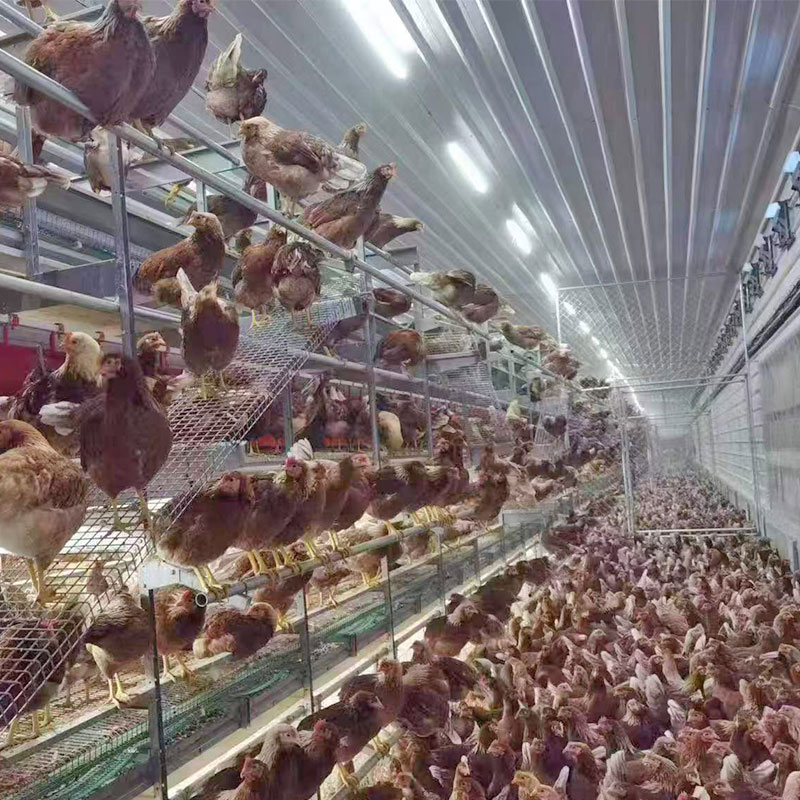
The H-Type system is designed for high-density rearing, but this must be balanced with animal welfare. A standard configuration might be four to eight tiers high, with cages designed to hold a specific number of chicks based on their target weight. For instance, a cage might be sized to hold 25 chicks from day-one to four weeks, providing adequate space for them to access feed and water without overcrowding.
The multi-tiered design inherently improves the living environment. Because the cages are stacked, the droppings from upper tiers fall through the wire mesh floors into a deep pit or onto a manure belt below. This separation of birds from their waste is a critical health benefit. It drastically reduces ammonia levels in the shed, as the manure is removed from the immediate breathing zone. Lower ammonia means healthier respiratory systems, less eye irritation, and stronger immune function. The air in the shed is clearer, which is better for both the chicks and the workers who enter for inspections.
The system’s uniformity also promotes welfare by reducing competition and stress. In a floor-raising system or with manual feeding, a social hierarchy, or "pecking order," is quickly established. Dominant birds control access to resources, leading to weaker birds being underfed and more prone to bullying, including cannibalism. The automated system, by delivering feed to the entire flock at once and ensuring every bird has equal access to a long, continuous trough, neutralizes this competition. The stress of fighting for food is eliminated, leading to calmer birds and a dramatic reduction in vices like feather pecking.
Installation, Maintenance, and Operational Nuances
Adopting an H-Type system is a significant infrastructure investment. It requires a dedicated, level poultry house with a strong structural foundation to support the weight of the cages, the feed system, and the birds. Installation is not a DIY project; it requires specialized technicians to assemble the frame, align the rails for the feed carriage, and calibrate the feeding mechanism. A misaligned rail can cause the carriage to jam, and an improperly calibrated feed drop can leave some tiers under-filled.

Once operational, the system demands a new kind of vigilance. The daily "walk-through" shifts from distributing feed to inspecting the machinery. A farmer must listen for unusual sounds from the motor or the carriage wheels, check for wear on the auger flighting, and ensure the drop tubes are clear. A single blocked tube can starve an entire row of cages. Preventative maintenance is non-negotiable. This includes regular lubrication of moving parts, checking electrical connections for corrosion, and cleaning the feed sensors that tell the system when the trolley is full.
Power reliability becomes a paramount concern. The system is entirely dependent on electricity. A power outage during a feed cycle can strand the carriage, leaving parts of the flock unfed. A backup generator is not a luxury but a necessity. Furthermore, the quality of the feed itself is more critical than ever. The augers and delicate mechanisms of the distribution system are intolerant of foreign material. A single stone or a clump of damp, moldy feed can cause a catastrophic blockage that takes hours to dismantle and clear. This necessitates stricter quality control from the feed mill and proper storage in the bulk bin to prevent moisture ingress.
Economic Justification and Long-Term Value
The decision to invest in an H-Type cage system is ultimately a financial calculation. The upfront cost per bird is substantial, encompassing the cages, the feeding system, and often upgraded ventilation and cooling to manage the higher density. However, this cost must be weighed against the long-term operational savings.
The labor savings are quantifiable. Reducing two hours of daily labor to fifteen minutes adds up to hundreds of hours per year, freeing up the farm family or staff for other enterprises or management-intensive tasks. The feed savings, often between 5% and 8%, provide a continuous return on investment. On a farm raising 50,000 chicks per cycle, a 6% saving on 100 tons of feed represents a significant financial gain cycle after cycle.
Improved bird performance adds another layer of value. A more uniform flock with better FCR and lower mortality means more saleable birds at the end of the grow-out period. For pullet rearers, delivering a uniform, healthy flock to a layer farm commands a premium price and builds a reputation for quality. The enhanced bird health from the improved environment also reduces veterinary costs and mortality losses, further protecting the investment.
The system also future-proofs the farm. As the agricultural workforce becomes scarcer and more expensive, automation is no longer an option but a requirement for scalability and continuity. A well-maintained H-Type system has a lifespan of 15 years or more, making it a capital asset that depreciates while generating efficiency gains year after year. It transforms poultry farming from a manual-labor-intensive job into a management-focused profession, where the farmer’s expertise is applied to data, bird behavior, and system optimization rather than the physical strain of feed bags and buckets. This shift is essential for the next generation of sustainable, profitable poultry production.
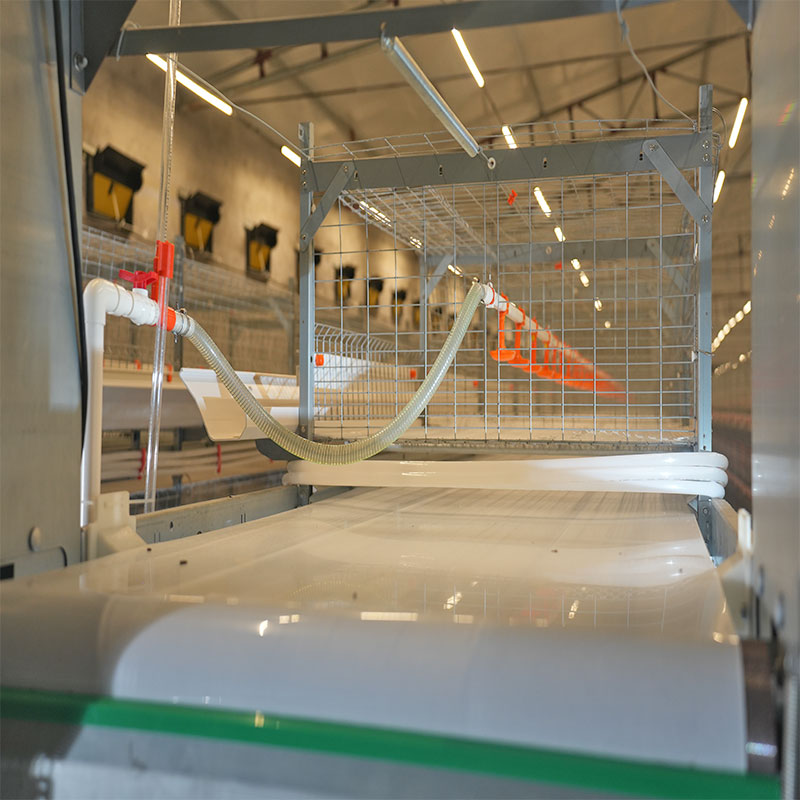
1. Drinking system include the water pipes, water pressure adjuster, drinking nipples, Waterline front-end device, dosing system etc, choose them according to customer's needs.
2. High-quality water drinking pipes, pressure regulating valves and water drinking nipples can effectively prevent the water leakage. Drinking system adopt the closed piping system, which can minimize the water pollution.
3. 360-degree drinking nipples provide adequate drinking water for poultry at all stages.
4. The automatic drinking water system mainly adopts the steel ball drinking nipple. lt uses imported high-grad stainless steel, POM resin, and APS engineering material, which is wearing resistant, and the durability can be used for long time.



1. Automatic feeding machine can be chosen between gantry and ladder feeding machine. Gantry type feeding machine is a relatively economical and practical machine with simple operation, remote control walking character, easy to manage.
2. Mechanical transmission device running smoothly, low noise, long service life.
3. With the use of automatic control, the feeding system can adjust the amount of material.
4. Feeding with arched structure, high carrying capacity, not easily deformed.
5. Saving man power, saving feed, greatly improving the efficiency of Large-scale farming.
6. The walking speed of gantry feeding machine is 9--12 m/min.




1. Manure removing system included scraper type and conveyor belt type, Which can reduce the labor intensity and labor cost, keep the chicken shed dry and clean.
2. A type chicken cage can use scraper type or conveyor belt type.


3. The scraper type is suitable for A type cages, which can clean two or three rows. For the starters, this type is a good choice. lt can not only save some labor cost, but also save some investment in the whole project. The cleaning speed is 6-10 meters per minute.
4. Conveyor belt type is more suitable for large scale farming. The manure removing belt we use is high quality PP material (polypropylene). The walking speed is 2-4 meters per minute.



High Quality Pellets Made by Mobile Pellet Machine
1. It has professional designed angle of the blade. After the dynamic balance test one by one, the blade can operate smoothly.
2. The air volume is consistent in the whole life of the fan. Bearings has advantage of high strength, low noise, durable and so on.
1. The cooling pads uses high-quality wet curtain paper and adopts space cross-linking technology, which has the advantages of high water absorption, high water resistance, anti-toxicity and long service life.
2. The cooling efficiency is over 80%, without surfactant, natural water absorption, fast diffusion speed and long-lasting effect.
3. The product does not contain phenol and other chemical substances that are easy to cause skin allergies. It is non-toxic and harmless to the human body and chicken when installed and used. It is green, safe, energy-saving, environmentally friendly, economical, and easy to install.
4. The frame aluminum alloy has high strength, good corrosion resistance, durability and beautiful appearance.
5. Use a special filter for the cooling pad at the upper water to ensure clean water quality and support efficient water circulation components.
6. Combined with a negative pressure fan, it can effectively lower the indoor temperature.
The window is made of special selected high-quality engineering plastic, with high strength and long service life, together with superior anti-aging and anti-UV performance.
Function: Ventilation of the chicken house, usually used in the winter.
This system can adjust the wind speed and direction, thus the cold air will not reach chicken directly , which can effectively prevent the phenomenon of cold stress in chicken.
Environmental control system equipment is suitable for large-scale and intensive farming. According to customer requirements, we can provide various types of smart poultry equipment.
1. Our poultry management system is a modular system that manages all aspects of the chicken house, such as climate, temperature, humidity, ammonia, feeding, feed weighing, lighting and ventilation systems, and can monitor the situation of the chicken house in real time through a computer and mobile phone.
2. The management computer is the heart of the poultry farm, allowing you to easily monitor the entire poultry farm.

 WeChat:+8617838608255