
The Ultimate Guide to Battery Cages for 1,000 Layers: Costs, Systems, and Ethical Considerations
Managing a flock of 1,000 laying hens is a significant undertaking that sits at the intersection of commercial viability and smalltomediumscale farming. For decades, the battery cage system has been the dominant housing model for egg production worldwide, prized for its efficiency and costeffectiveness. However, the landscape is rapidly changing. This comprehensive guide delves into every critical aspect of using battery cages for a 1,000bird operation. We'll move beyond simplistic explanations to explore the precise engineering, economic calculations, welfare debates, and evolving regulations that any serious farmer or investor must understand. Whether you're evaluating existing systems or planning a new venture, this resource provides the depth of knowledge needed to make informed decisions in a complex industry.
A battery cage system is not merely a "cage"; it's an integrated housing and manure management structure designed for highdensity confinement.
For 1,000 layers, the system is typically arranged in multiple rows of tiered cages (usually 34 tiers).
Cage Dimensions: A standard cage for commercial laying hens allocates 6786 square inches (432555 sq cm) of space per bird. For 1,000 birds, this translates to a total cage area of approximately 465 to 600 square feet.
Tiered Structure: Cages are stacked in Aframe or stairstep configurations. Modern systems often include manure belts under each tier to remove waste automatically.
Integrated Systems:
Feeding: Automated troughs run along the front of each cage row.
Watering: Nipple drinkers are installed in each cage.
Egg Collection: Sloped cage floors allow eggs to roll onto a conveyor belt for centralized collection.
Ventilation & Lighting: The entire house requires precise environmental control.
Housing 1,000 hens in battery cages requires meticulous planning. The footprint isn't just the cages themselves.
| Component | Estimated Requirement for 1,000 Birds | Notes |
| : | : | : |
| Total Cage Floor Space | 465 600 sq ft | Varies based on chosen space allowance per bird. |
| House Footprint | ~1,200 1,800 sq ft | Must include aisles for access, feed systems, and egg collection points. |
| Typical Cage Rows | 46 rows | Depends on house width and chosen tier configuration (e.g., 4tier vs. 3tier). |
Key Consideration: Local regulations may mandate minimum space allowances that exceed traditional industry standards (e.g., >116 sq in/bird), drastically altering these calculations.
Investing in a battery cage system for 1,000 layers is a capitalintensive decision with longterm operational implications.
Costs can vary widely based on automation level and region.
Cage System & Installation: This is the largest capital outlay. A basic system can start at $15$25 per bird capacity ($15k$25k), while fully automated systems with climate control can exceed $40 per bird ($40k+).
Poultry House Construction/Renovation: Modifying an existing structure or building new can cost from $30 to $100+ per square foot.
Pullets (Young Hens): The cost of 1 pointoflay pullets.
This is where battery cages have historically shined:
Feed Efficiency: Restricted movement reduces energy expenditure, potentially lowering feed conversion ratios.
Labor Efficiency: Automated collection and feeding reduce daily labor to monitoring and maintenance.
Egg Collection & Quality: Eggs roll away quickly, reducing breakage and keeping eggs cleaner.
Health Monitoring & Mortality: Sick birds are easier to identify in rows of cages.
You cannot responsibly discuss modern battery cages without addressing animal welfare. This is not just an ethical issue but a core business risk.
Scientific research has highlighted significant behavioral and physical problems associated with conventional cages:
Behavioral Deprivation: Hens cannot perform innate behaviors like dustbathing, foraging perching fully stretching wings or nesting.
Physical Health Issues: Includes weakened bones (osteoporosis) due to lack of exercise feather loss from abrasion foot problems from wire flooring
Consumer demand corporate policies government legislation are driving change:
European Union EU Directive: Conventional battery cages were banned in 2012 Enriched colony cages which provide more space perch nesting area scratch pad are now required
United States Several states including California Massachusetts Washington have passed laws phasing out conventional cage sales
Major food retailers restaurants (McDonald's Nestle Unilever etc.) have committed to cagefree supply chains by specific deadlines
For a farmer this means considering futureproofing any investment Enriched colony systems or aviary systems may represent more sustainable long term choices despite higher initial costs

Managing birds successfully requires strict protocols especially at high density
Density facilitates rapid disease spread Common issues include:
A closed controlled environment aids biosecurity but demands consistency:
Choosing to house layers in any system involves balancing economics animal welfare market access labor availability personal ethics For new entrants particularly those supplying markets with shifting expectations understanding these tradeoffs is crucial While conventional battery cages may offer lower entry costs operational simplicity they come with growing legal reputational risks Exploring alternatives like enriched colonies barn systems even small scale free range may align better with future market trends consumer values Ultimately success lies not just in producing eggs efficiently but doing so sustainably responsively within an evolving social contract around food production
Here are answers to some of the most common questions people ask about housing layers in battery cage systems.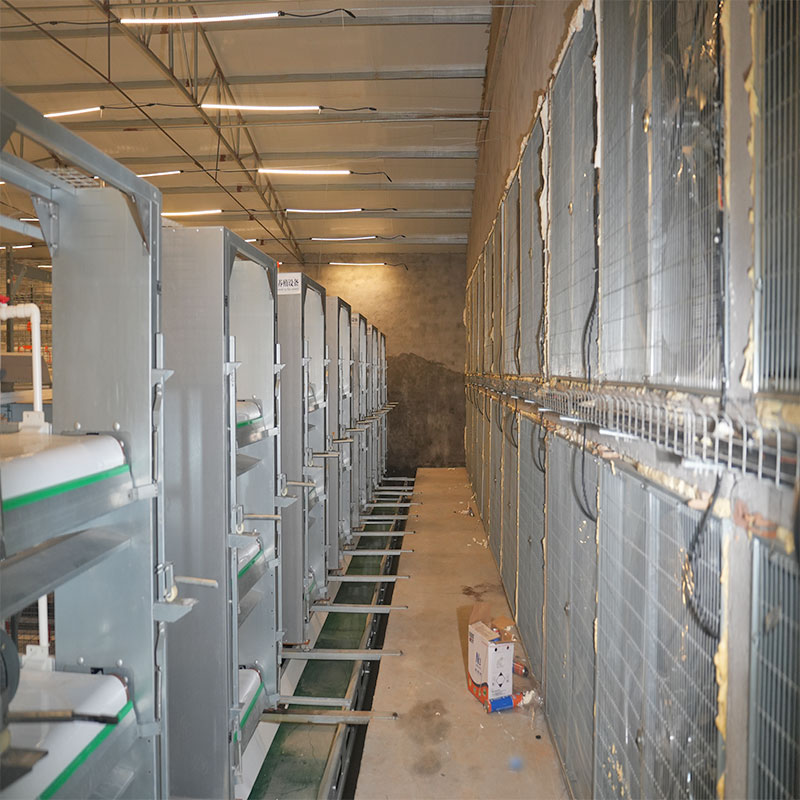
Q What exactly is meant by 'battery cage'?
A A battery cage refers specifically wire enclosure housing multiple laying hens arranged rows columns connected together like cells 'battery' They designed maximize egg production efficiency minimal space allowing automation feeding watering egg collection manure removal
Q How much does it cost set up battery caging ?
A For flock initial capital costs vary widely Basic semi automated system housing could start around $15000 $30000 excluding poultry house itself Fully automated climate controlled installation easily exceed $50000 It's crucial factor ongoing costs pullets feed labor utilities veterinary care into your financial model
Q Are battery cages illegal?
A Legality depends entirely jurisdiction European Union banned conventional barren years ago United States no federal ban but several states passed laws prohibiting sale eggs produced such systems Many countries moving towards regulations requiring enriched environments Always check your local national agricultural regulations before investing equipment
Q What's difference between conventional enriched colony cage?
A Conventional provide only bare essentials food water sloped wire floor Enriched also called furnished larger provide additional amenities perching area scratch pad private nesting area These allow express more natural behaviors mandated EU considered compromise welfare productivity
Q How many fit single cage?
A Traditional held birds Often more Smaller group sizes sometimes used comply certain welfare standards Space allowance key metric rather than number alone
Q Do produce better quality eggs than other systems?
A They produce cleaner eggs less breakage because roll away immediately laid However studies show nutritional content similar across housing types Shell strength may affected by bone health issues associated inactivity
Q What main health issues associated ?
A Common problems include osteoporosis brittle bones due lack exercise foot lesions wire flooring feather loss abrasion against cage increased susceptibility mites lice due inability dust bathe properly Behavioral issues like severe feather pecking can also propagate quickly confined environment
Q How often manure need cleaned ?
A Modern incorporate manure belts remove daily store outside poultry house This major advantage reducing ammonia levels improving air quality health Older designs manure pits cleaned out entire flock cycle leading poorer conditions
Q Is possible convert existing building ?
A Yes many farmers retrofit older barns However must ensure structure handle weight tiered loading proper ventilation electrical infrastructure automation Consulting engineer experienced supplier essential successful conversion project
Q Are there viable alternatives small medium scale farmers?
A Absolutely Alternatives include single tier aviary barn systems free range pasture based models Each different cost labor management welfare trade off Market premium often available specially marketed free organic pasture raised helping offset higher production costs
Q What typical lifespan hen production cycle ?
A Commercial lay peak production approximately weeks after point lay After weeks months productivity gradually declines Most commercial flocks kept one laying cycle before replaced new pullets Welfare focused systems sometimes employ molting induced rest period second cycle
Q How manage end lay hens spent fowl ?
A This challenging aspect industry spent no longer economically viable typically removed transported processing plant often used pet food soup etc Farmers must plan logistics humane handling transportation compliance with relevant animal transport slaughter regulations
1. Drinking system include the water pipes, water pressure adjuster, drinking nipples, Waterline front-end device, dosing system etc, choose them according to customer's needs.
2. High-quality water drinking pipes, pressure regulating valves and water drinking nipples can effectively prevent the water leakage. Drinking system adopt the closed piping system, which can minimize the water pollution.
3. 360-degree drinking nipples provide adequate drinking water for poultry at all stages.
4. The automatic drinking water system mainly adopts the steel ball drinking nipple. lt uses imported high-grad stainless steel, POM resin, and APS engineering material, which is wearing resistant, and the durability can be used for long time.



1. Automatic feeding machine can be chosen between gantry and ladder feeding machine. Gantry type feeding machine is a relatively economical and practical machine with simple operation, remote control walking character, easy to manage.
2. Mechanical transmission device running smoothly, low noise, long service life.
3. With the use of automatic control, the feeding system can adjust the amount of material.
4. Feeding with arched structure, high carrying capacity, not easily deformed.
5. Saving man power, saving feed, greatly improving the efficiency of Large-scale farming.
6. The walking speed of gantry feeding machine is 9--12 m/min.




1. Manure removing system included scraper type and conveyor belt type, Which can reduce the labor intensity and labor cost, keep the chicken shed dry and clean.
2. A type chicken cage can use scraper type or conveyor belt type.


3. The scraper type is suitable for A type cages, which can clean two or three rows. For the starters, this type is a good choice. lt can not only save some labor cost, but also save some investment in the whole project. The cleaning speed is 6-10 meters per minute.
4. Conveyor belt type is more suitable for large scale farming. The manure removing belt we use is high quality PP material (polypropylene). The walking speed is 2-4 meters per minute.



High Quality Pellets Made by Mobile Pellet Machine
1. It has professional designed angle of the blade. After the dynamic balance test one by one, the blade can operate smoothly.
2. The air volume is consistent in the whole life of the fan. Bearings has advantage of high strength, low noise, durable and so on.
1. The cooling pads uses high-quality wet curtain paper and adopts space cross-linking technology, which has the advantages of high water absorption, high water resistance, anti-toxicity and long service life.
2. The cooling efficiency is over 80%, without surfactant, natural water absorption, fast diffusion speed and long-lasting effect.
3. The product does not contain phenol and other chemical substances that are easy to cause skin allergies. It is non-toxic and harmless to the human body and chicken when installed and used. It is green, safe, energy-saving, environmentally friendly, economical, and easy to install.
4. The frame aluminum alloy has high strength, good corrosion resistance, durability and beautiful appearance.
5. Use a special filter for the cooling pad at the upper water to ensure clean water quality and support efficient water circulation components.
6. Combined with a negative pressure fan, it can effectively lower the indoor temperature.
The window is made of special selected high-quality engineering plastic, with high strength and long service life, together with superior anti-aging and anti-UV performance.
Function: Ventilation of the chicken house, usually used in the winter.
This system can adjust the wind speed and direction, thus the cold air will not reach chicken directly , which can effectively prevent the phenomenon of cold stress in chicken.
Environmental control system equipment is suitable for large-scale and intensive farming. According to customer requirements, we can provide various types of smart poultry equipment.
1. Our poultry management system is a modular system that manages all aspects of the chicken house, such as climate, temperature, humidity, ammonia, feeding, feed weighing, lighting and ventilation systems, and can monitor the situation of the chicken house in real time through a computer and mobile phone.
2. The management computer is the heart of the poultry farm, allowing you to easily monitor the entire poultry farm.

 WeChat:+8617838608255