Battery Cages for 500 Layers: A Comprehensive Guide for Farmers
When planning a poultry operation for 500 laying hens, the choice of housing system is one of the most critical decisions you will make. The term "battery cage" often surfaces in this context, representing a traditional, highdensity housing method. This guide provides an indepth, professional analysis of implementing a battery cage system for a flock of 500 layers. We will explore the technical specifications, economic considerations, welfare debates, management practices, and regulatory landscape to give you a complete, unbiased picture. Whether you are a new farmer evaluating options or an existing operator considering expansion, this resource is designed to deliver the expert knowledge necessary for informed decisionmaking.
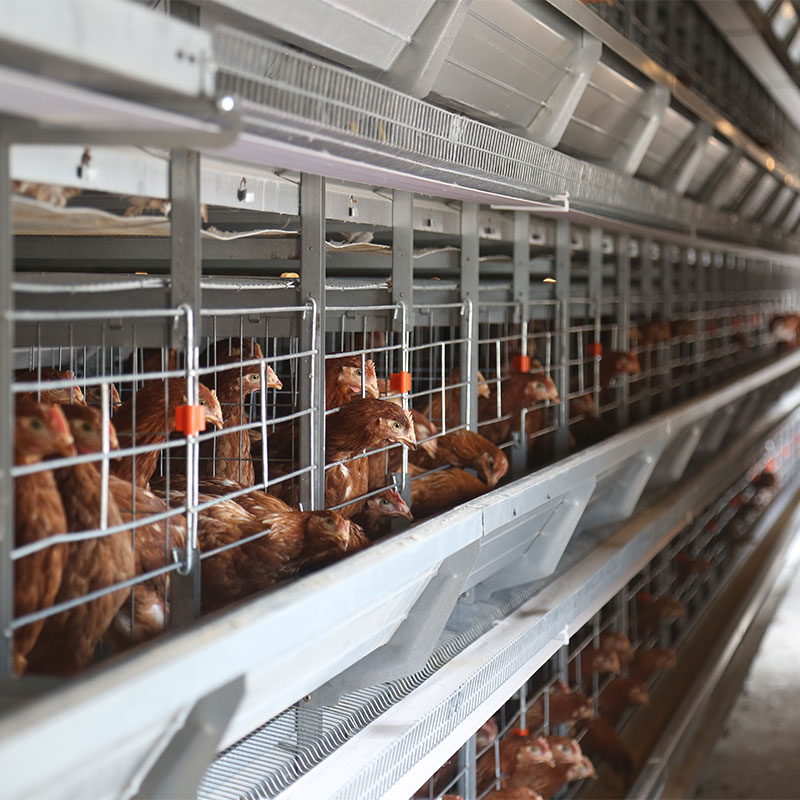
A battery cage system is a housing structure where hens are kept in rows and tiers of identical wire cages. The system is designed for efficient space utilization, egg collection, and manure management. For a flock of 500 birds, this typically involves multiple connected cages arranged in long rows, often within a controlledenvironment house.
Key Components of a 500Layer Battery Cage Setup:
Cage Units: Individual cages usually house 38 hens each. For 500 birds, you might have approximately 70165 cages, depending on cage size and stocking density.
Tier Structure: Cages are arranged in tiers (Aframe or stairstep) to maximize floor space. A 3tier or 4tier system is common.
Feeding System: An automated trough runs along the front of each cage row.
Watering System: Nipple drinkers are installed in each cage.
Egg Collection: Sloped cage floors allow eggs to roll onto a conveyor belt or into a collection gutter.
Manure Management: Droppings fall through the wire floor onto belts or into pits below for periodic removal.
Precise planning is essential. Industry standards, though evolving due to legislation, have historically guided dimensions.
Sample Layout Calculation (Based on Traditional Density):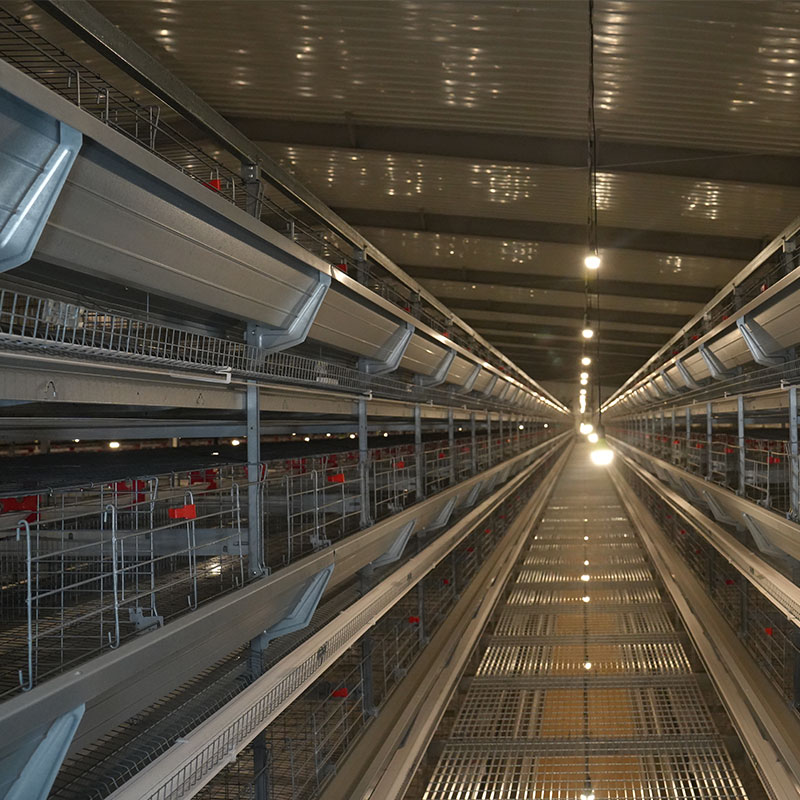
| Component | Traditional Metric (per bird) | For 500 Birds (Approx.) | Notes |
| : | : | : | : |
| Cage Space | 6786 sq. in. (432555 cm²) | Total Cage Area: 230300 sq. ft. | This is inside the cage space only. |
| Cage Height | Minimum 1516 inches (3840 cm) | Consistent across tiers | Allows hen to stand without touching roof. |
| Total Building Footprint | N/A | 8001,200 sq. ft. | Must include service aisles, equipment, and storage. |
| Feeder Space | ~2 inches (5 cm) per hen | ~84 linear feet of trough | |
| Waterer Access | 1 nipple per 46 hens | 85125 nipple drinkers | |
Important Note: These figures represent conventional densities that are now banned or being phased out in the European Union, many U.S. states (like California), and other regions due to animal welfare laws. Modern "enriched" or "furnished" colony cages require significantly more space per hen (at least 116 sq. in./750 cm²).
A primary driver for choosing battery cages has been economic efficiency.
Initial Investment Breakdown:
1. Cage Equipment & Installation: The largest cost. A system for 500 birds can range from $10,000 to $25,000+, depending on automation level (auto feeding, egg belts) and cage type (conventional vs. enriched).
2. Housing/Building: Cost varies wildly by location and materials.
3. Bird Purchase (Pullets): Cost for 500 readytolay pullets.
4. Ventilation & Lighting Systems: Crucial for environmental control.
Operational Advantages Contributing to ROI:
Higher Stocking Density: More birds per square foot of building.
Feed Efficiency: Reduced feed wastage and potentially better feed conversion due to restricted movement.
Labor Efficiency: Automated egg collection and manure belts drastically reduce labor time per egg.
Hen Health Management: Easier monitoring of individual birds; separation from manure reduces parasite load and some bacterial diseases.
Egg Quality: Eggs roll away quickly, minimizing breakage and keeping them clean.
This is the most significant factor influencing the future of battery cages.
Arguments Against Conventional Battery Cages:
Behavioral Restriction: Hens cannot perform innate behaviors like nesting, dustbathing perching fully stretching wings or foraging
Physical Health Issues: Increased risk of bone fragility osteoporosis foot problems from wire floors and feather loss
Psychological Stress: Due to confinement and lack of environmental enrichment
Industry Responses & Alternatives:
1 2 3 4
5 6 7 8
9 10 11 12
13 14 15 16
17 18 19 20
21 22 23
1. Drinking system include the water pipes, water pressure adjuster, drinking nipples, Waterline front-end device, dosing system etc, choose them according to customer's needs.
2. High-quality water drinking pipes, pressure regulating valves and water drinking nipples can effectively prevent the water leakage. Drinking system adopt the closed piping system, which can minimize the water pollution.
3. 360-degree drinking nipples provide adequate drinking water for poultry at all stages.
4. The automatic drinking water system mainly adopts the steel ball drinking nipple. lt uses imported high-grad stainless steel, POM resin, and APS engineering material, which is wearing resistant, and the durability can be used for long time.



1. Automatic feeding machine can be chosen between gantry and ladder feeding machine. Gantry type feeding machine is a relatively economical and practical machine with simple operation, remote control walking character, easy to manage.
2. Mechanical transmission device running smoothly, low noise, long service life.
3. With the use of automatic control, the feeding system can adjust the amount of material.
4. Feeding with arched structure, high carrying capacity, not easily deformed.
5. Saving man power, saving feed, greatly improving the efficiency of Large-scale farming.
6. The walking speed of gantry feeding machine is 9--12 m/min.




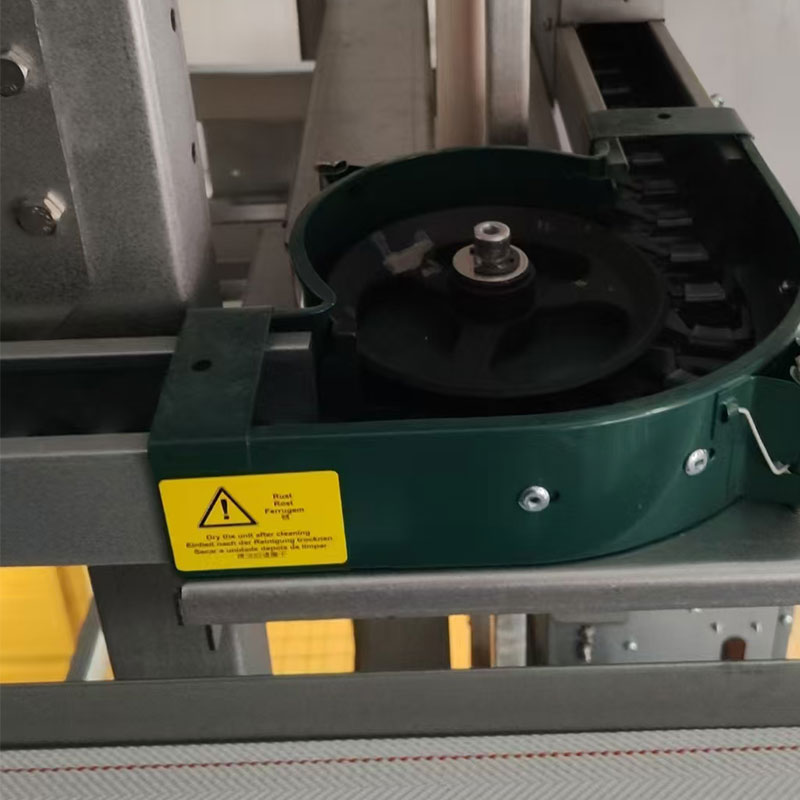
1. Manure removing system included scraper type and conveyor belt type, Which can reduce the labor intensity and labor cost, keep the chicken shed dry and clean.
2. A type chicken cage can use scraper type or conveyor belt type.


3. The scraper type is suitable for A type cages, which can clean two or three rows. For the starters, this type is a good choice. lt can not only save some labor cost, but also save some investment in the whole project. The cleaning speed is 6-10 meters per minute.
4. Conveyor belt type is more suitable for large scale farming. The manure removing belt we use is high quality PP material (polypropylene). The walking speed is 2-4 meters per minute.



High Quality Pellets Made by Mobile Pellet Machine
1. It has professional designed angle of the blade. After the dynamic balance test one by one, the blade can operate smoothly.
2. The air volume is consistent in the whole life of the fan. Bearings has advantage of high strength, low noise, durable and so on.
1. The cooling pads uses high-quality wet curtain paper and adopts space cross-linking technology, which has the advantages of high water absorption, high water resistance, anti-toxicity and long service life.
2. The cooling efficiency is over 80%, without surfactant, natural water absorption, fast diffusion speed and long-lasting effect.
3. The product does not contain phenol and other chemical substances that are easy to cause skin allergies. It is non-toxic and harmless to the human body and chicken when installed and used. It is green, safe, energy-saving, environmentally friendly, economical, and easy to install.
4. The frame aluminum alloy has high strength, good corrosion resistance, durability and beautiful appearance.
5. Use a special filter for the cooling pad at the upper water to ensure clean water quality and support efficient water circulation components.
6. Combined with a negative pressure fan, it can effectively lower the indoor temperature.
The window is made of special selected high-quality engineering plastic, with high strength and long service life, together with superior anti-aging and anti-UV performance.
Function: Ventilation of the chicken house, usually used in the winter.
This system can adjust the wind speed and direction, thus the cold air will not reach chicken directly , which can effectively prevent the phenomenon of cold stress in chicken.
Environmental control system equipment is suitable for large-scale and intensive farming. According to customer requirements, we can provide various types of smart poultry equipment.
1. Our poultry management system is a modular system that manages all aspects of the chicken house, such as climate, temperature, humidity, ammonia, feeding, feed weighing, lighting and ventilation systems, and can monitor the situation of the chicken house in real time through a computer and mobile phone.
2. The management computer is the heart of the poultry farm, allowing you to easily monitor the entire poultry farm.

 WeChat:+8617838608255