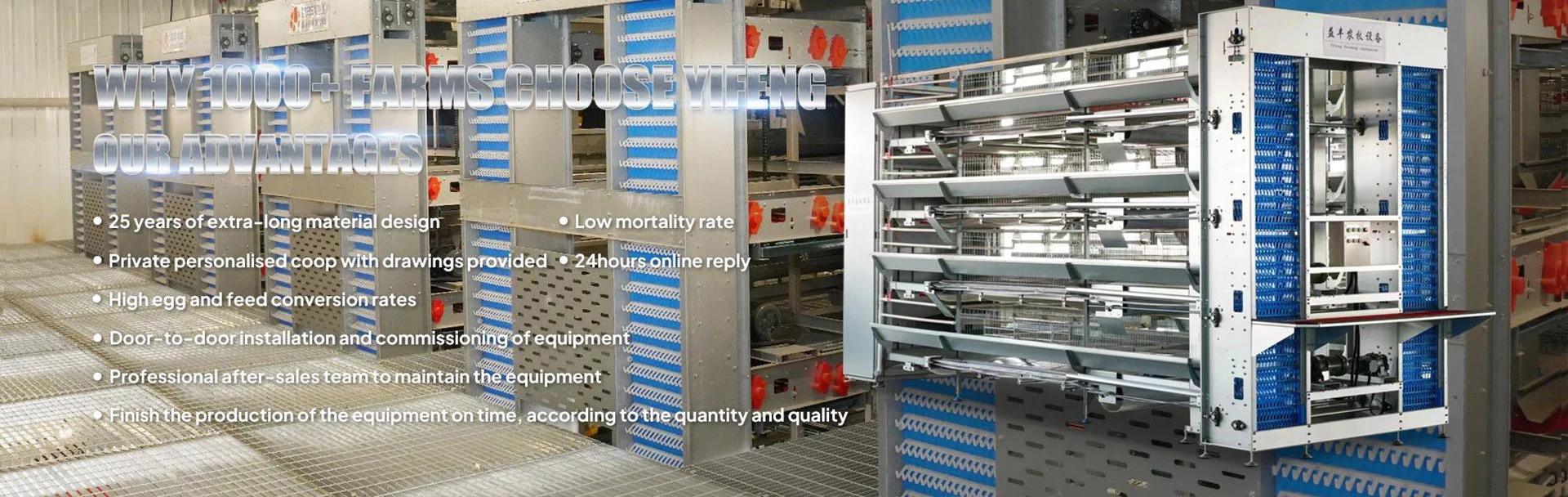
The financial weight of a new cage system rests heavily on every poultry farmer’s shoulders. It’s not a simple matter of finding the cheapest price per unit; it’s a complex calculation where the initial purchase is just the first line item in a long ledger of operational costs. The term "battery cage price" is a starting point, but the real conversation is about total investment, durability, and the ripple effects a system has on everything from bird performance to labor efficiency.
Understanding the components that build up that final price tag is crucial for making an informed decision that will impact your operation for a decade or more.
Deconstructing the Cage System: More Than Just Wire
A battery cage system is an integrated environment. The galvanized wire mesh that holds the birds is just the most visible part. The price is built upon the quality and design of several key components.
The cage mesh itself is a primary cost driver. Think of it like fencing for livestock. A thin, poorly galvanized wire will chip and rust quickly, especially under the constant corrosive assault of manure and ammonia. Replacing a rusted-out cage floor in two years isn’t just an inconvenience; it’s a significant, unplanned capital expense that obliterates any initial savings. A high-quality, heavy-gauge wire with a thick, durable galvanization might cost 20% more upfront but can last the entire 10-15 year lifespan of the system without needing replacement. The gauge of the wire also affects bird comfort and foot health. A floor that is too flexible or has sharp welds can lead to bumblefoot and other injuries, directly impacting bird welfare and productivity.
The supporting structure is the skeleton of the operation. Lightweight angle iron might look adequate on a spec sheet, but it will flex and warp under the constant load of birds, feed, and eggs. This movement isn’t just a structural concern; it leads to misaligned egg collection belts, causing eggs to crack and roll onto the manure belts below. A single cracked egg smeared across a manure belt creates a sanitation nightmare and represents a direct loss of product. A robust structure made from heavy-duty, cold-rolled steel provides the rigidity needed to keep everything perfectly aligned, protecting your daily output.
The manure removal system is where many hidden costs reveal themselves. A basic scraped-plate system has a lower initial price but operates with a high degree of friction, requiring more powerful motors and consuming more electricity. The scraping action can also fail to fully clean the plates, leading to manure buildup, increased ammonia levels, and higher ventilation costs to maintain air quality. A high-end, centrally-driven dry-belt system represents a larger initial investment. However, its efficiency is transformative. It removes manure cleanly and continuously with minimal power draw, drastically cutting electricity bills. By keeping the house drier, it reduces the pathogen load and the energy required for ventilation, creating a healthier environment for the birds and the workers.
The watering system is another critical point. Cheap, plastic nipple drinkers with weak springs are a constant source of problems. They leak, leading to wet litter and all its associated health issues. They clog with mineral deposits and biofilm, requiring frequent manual cleaning that pulls workers away from other tasks. A premium stainless-steel nipple drinker with a positive seal might seem like a small detail, but it ensures every drop of water is consumed by the bird, not wasted on the floor. This conserves water, maintains litter quality, and ensures consistent flock hydration, which is directly tied to feed conversion and egg production.
The True Cost of Ownership: Looking Beyond the Invoice
The purchase price is a single event. The operating costs are a daily reality. This is where the concept of Return on Investment (ROI) truly lives.
Labor is one of the largest and most variable operational expenses. A modern, automated cage system is fundamentally a labor-saving device. The difference between systems lies in how much labor they save. A system with a poorly designed egg collection system that frequently jams or requires manual egg gathering from the cages negates the purpose of automation. A farmer might spend hours each day walking the aisles, retrieving eggs, and troubleshooting jams. This is not efficient labor; it is wasted time.
Contrast this with a seamlessly integrated system where eggs glide smoothly from the cage onto a central collection belt, are transported gently to the packing room, and have integrated washers and graders. The labor shifts from manual, repetitive tasks to monitoring, maintenance, and management. The reduction in required man-hours, or the ability to redirect labor to more valuable tasks like bird health monitoring, is a direct financial benefit that pays for a higher-quality system over time.
Durability and maintenance costs are a slow bleed that can drain profitability. A cheaply made feed trolley system with plastic components that crack under stress or motors that burn out from uneven loads will require a constant supply of spare parts and frequent service calls. Downtime in a poultry house is not an option; when the feeding system fails, the entire flock is affected. Investing in a system with industrial-grade motors, metal gearing, and proven reliability minimizes unexpected breakdowns. The cost of a single service call and the lost productivity from a feeding disruption can easily exceed the price difference between a budget and a commercial-grade trolley system.
Energy consumption is a permanent line item on your utility bill. The choice of manure system, ventilation fans, and feeding motors directly determines this cost. An inefficient system can consume double the electricity of a well-engineered one. Over ten years, the savings on power alone can amount to thousands of dollars, effectively subsidizing the initial investment in more efficient technology.
Bird performance is the ultimate metric. All these systems exist to support the hen. A stressed bird in an uncomfortable cage with poor air quality will not convert feed efficiently. She will produce fewer eggs, and a higher percentage of those eggs may be downgraded due to cracks or thin shells. A high-welfare, well-designed cage system that provides easy access to feed and water, a stable floor, and a clean environment reduces stress. The result is often seen in improved feed conversion ratios (FCR), higher peak production, and a more consistent egg quality throughout the lay cycle. This enhanced performance is the most significant ROI of all, as it increases the revenue generated from the same amount of feed and pullets.
Navigating the Market and Making the Choice

Once you understand what you are actually buying, the process of selecting a system becomes more strategic.
First, conduct a brutal assessment of your current operation. Track your labor hours. How much time is spent on egg collection, maintenance, and troubleshooting? Calculate your current energy usage per bird. Examine your egg quality metrics—what is your percentage of cracked and dirty eggs? These baseline figures will provide a clear picture of the potential areas for improvement and cost savings a new system must deliver.
When engaging with suppliers, move beyond the brochure price. Ask specific, technical questions. Don’t ask, “Is the galvanization good?” Ask, “What is the precise zinc coating thickness in microns on the wire mesh? What is the warranty period against rust?” Request a list of recommended spare parts and their costs. Ask for the power consumption specifications for the manure belt and feeding system motors. A reputable supplier will have this data readily available and will be willing to discuss the engineering behind their product.

The most valuable research is to talk to other farmers who have installed the systems you are considering. Visit their farms if possible. Ask them not just if they are happy with the system, but about the specifics: How often does it require maintenance? How has their bird mortality and production changed? How much did their electricity bill change after installation? Real-world experience is an irreplaceable guide.
Finally, work with your financial advisor to model the total cost. Factor in the initial price, estimated financing costs, projected energy savings, labor reduction, and potential improvements in production revenue. This holistic financial model will reveal which system offers the strongest long-term value, transforming the "battery cage price" from a simple number into a strategic business decision. The goal is not to find the cheapest system, but to identify the system that will be the cheapest to own and operate over its entire productive life.
1. Drinking system include the water pipes, water pressure adjuster, drinking nipples, Waterline front-end device, dosing system etc, choose them according to customer's needs.
2. High-quality water drinking pipes, pressure regulating valves and water drinking nipples can effectively prevent the water leakage. Drinking system adopt the closed piping system, which can minimize the water pollution.
3. 360-degree drinking nipples provide adequate drinking water for poultry at all stages.
4. The automatic drinking water system mainly adopts the steel ball drinking nipple. lt uses imported high-grad stainless steel, POM resin, and APS engineering material, which is wearing resistant, and the durability can be used for long time.



1. Automatic feeding machine can be chosen between gantry and ladder feeding machine. Gantry type feeding machine is a relatively economical and practical machine with simple operation, remote control walking character, easy to manage.
2. Mechanical transmission device running smoothly, low noise, long service life.
3. With the use of automatic control, the feeding system can adjust the amount of material.
4. Feeding with arched structure, high carrying capacity, not easily deformed.
5. Saving man power, saving feed, greatly improving the efficiency of Large-scale farming.
6. The walking speed of gantry feeding machine is 9--12 m/min.




1. Manure removing system included scraper type and conveyor belt type, Which can reduce the labor intensity and labor cost, keep the chicken shed dry and clean.
2. A type chicken cage can use scraper type or conveyor belt type.


3. The scraper type is suitable for A type cages, which can clean two or three rows. For the starters, this type is a good choice. lt can not only save some labor cost, but also save some investment in the whole project. The cleaning speed is 6-10 meters per minute.
4. Conveyor belt type is more suitable for large scale farming. The manure removing belt we use is high quality PP material (polypropylene). The walking speed is 2-4 meters per minute.



High Quality Pellets Made by Mobile Pellet Machine
1. It has professional designed angle of the blade. After the dynamic balance test one by one, the blade can operate smoothly.
2. The air volume is consistent in the whole life of the fan. Bearings has advantage of high strength, low noise, durable and so on.
1. The cooling pads uses high-quality wet curtain paper and adopts space cross-linking technology, which has the advantages of high water absorption, high water resistance, anti-toxicity and long service life.
2. The cooling efficiency is over 80%, without surfactant, natural water absorption, fast diffusion speed and long-lasting effect.
3. The product does not contain phenol and other chemical substances that are easy to cause skin allergies. It is non-toxic and harmless to the human body and chicken when installed and used. It is green, safe, energy-saving, environmentally friendly, economical, and easy to install.
4. The frame aluminum alloy has high strength, good corrosion resistance, durability and beautiful appearance.
5. Use a special filter for the cooling pad at the upper water to ensure clean water quality and support efficient water circulation components.
6. Combined with a negative pressure fan, it can effectively lower the indoor temperature.
The window is made of special selected high-quality engineering plastic, with high strength and long service life, together with superior anti-aging and anti-UV performance.
Function: Ventilation of the chicken house, usually used in the winter.
This system can adjust the wind speed and direction, thus the cold air will not reach chicken directly , which can effectively prevent the phenomenon of cold stress in chicken.
Environmental control system equipment is suitable for large-scale and intensive farming. According to customer requirements, we can provide various types of smart poultry equipment.
1. Our poultry management system is a modular system that manages all aspects of the chicken house, such as climate, temperature, humidity, ammonia, feeding, feed weighing, lighting and ventilation systems, and can monitor the situation of the chicken house in real time through a computer and mobile phone.
2. The management computer is the heart of the poultry farm, allowing you to easily monitor the entire poultry farm.

 WeChat:+8617838608255