Title: Battery Cages for Broilers: The Reality, Welfare Concerns, and Industry Alternatives
Introduction
The term "battery cage system" is one of the most recognized—and contentious—concepts in modern animal agriculture. While historically associated with egglaying hens, the question of their use for broiler chickens (chickens raised for meat) is a critical point of inquiry for consumers, farmers, and animal welfare scientists alike. This deepdive analysis, crafted from an agricultural and veterinary perspective, moves beyond simplistic portrayals to examine the technical realities, profound welfare implications, economic drivers, and the evolving global shift toward alternative systems. Understanding this topic is essential for making informed decisions, whether you're a producer optimizing operations or a consumer aligning purchases with your values.
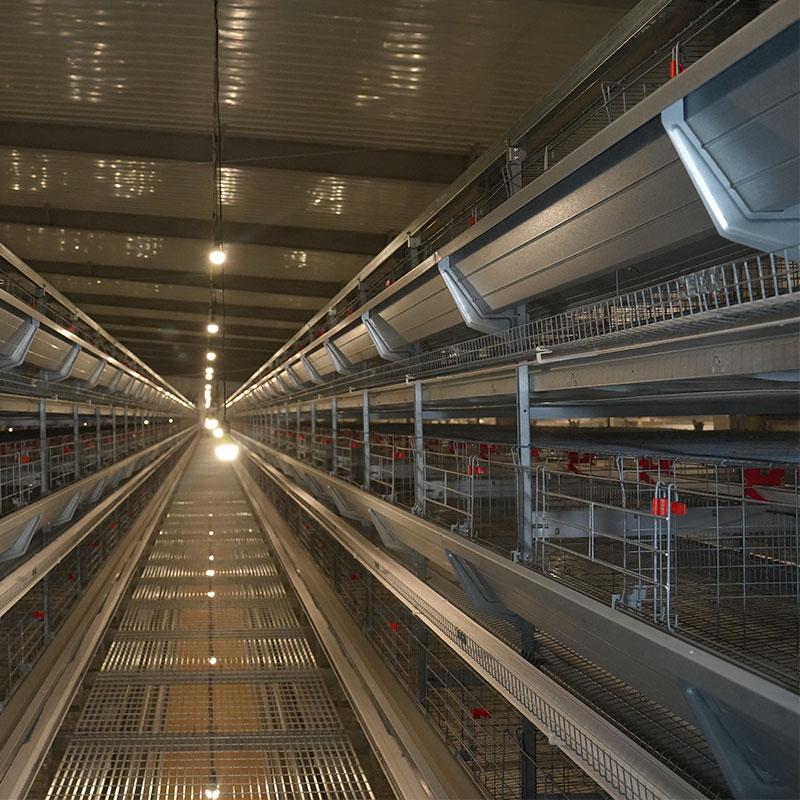
A battery cage system is a housing method characterized by rows of small, identical wire cages stacked in tiers inside a controlledenvironment shed. Key features include:
High Density: Designed to maximize space efficiency and bird count per square foot.
Automation: Integrated systems provide automated feeding, watering, and egg collection (in layer operations).
Containment: Birds are confined within the cage for their productive life.
The direct answer is no, traditional battery cages as used for layers are not employed in standard commercial broiler production. This is a crucial distinction often misunderstood.
Broiler Physiology vs. Layer Physiology: Broilers are genetically selected for rapid muscle growth and weight gain. Confining them in small wire cages would lead to catastrophic levels of leg disorders, skeletal deformities, and contact dermatitis (breast blisters), rendering the system economically and ethically nonviable.
The Primary System for Broilers: Intensive Indoor Floor Raising. Over 90% of global broiler production uses a floorbased system. Birds are reared in large opensided or environmentally controlled sheds on litter (e.g., wood shavings), with access to feed and water lines. While this allows for movement, stocking densities are often very high (e.g., over 33 kg/m²), leading to its own set of welfare challenges related to air quality, litter condition, and restricted natural behaviors.
However, the concept of extreme confinement persists in some contexts:
Breeder Birds: Parent stock of broiler chickens (the birds that produce fertile eggs) are sometimes housed in colony cages or modified cage systems to control mating, feed intake (to prevent obesity), and egg collection.
Certain Regional Practices: In some regions, smallscale or outdated operations may use severely confined pens that mirror cagelike conditions.
Even if not in classic "batteries," intensive confinement remains a core welfare issue. Animal welfare science assesses systems against frameworks like the Five Freedoms:
| Welfare Principle | Challenge in Intensive/Confinement Systems |
| : | : |
| Freedom from Hunger/Thirst | Met via automation. |
| Freedom from Discomfort | Often compromised by high density, poor litter quality (in floor systems), and lack of suitable resting surfaces. |
| Freedom from Pain/Injury/Disease | High risk due to rapid growth rates (leg disorders), contact injuries, and disease spread in dense populations. |
| Freedom to Express Normal Behavior | Severely restricted. Key natural behaviors like foraging, dustbathing perching,and full stretching are impossible in close confinement. |
| Freedom from Fear/Distress | Can be compromised by constant proximity to other birds,inability to escape aggression,and barren environments leading to chronic stress. |
Scientific consensus indicates that environments preventing the expression of speciesspecific behaviors cause intrinsic welfare harm.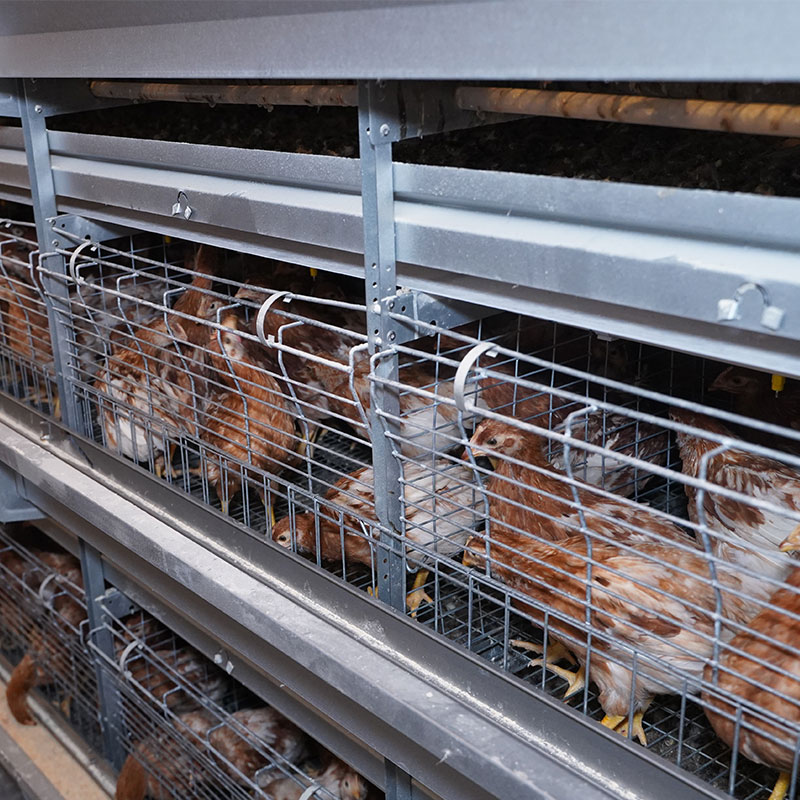
The historical drive toward highdensity systems is rooted in economics:
Lower Initial Capital Cost per Bird: More birds per building reduces infrastructure cost.
Operational Efficiency: Automated feeding/watering lowers labor costs.
Disease Control (Theoretical): Separation from feces can reduce parasite loads.
Standardization & Predictability: Uniform environments aim to produce uniform products.
However,the economic calculus is shifting.Consumer demand for higherwelfare products,growing regulatory bans on cages,and market commitments from major food corporations are altering costbenefit analyses.Investments in alternative systems can mitigate risks related to brand reputation,supply chain stability,and antibiotic use.
The industry spectrum is broadening.Here’s a comparison:
| System | Description | Key Welfare Improvements | Challenges |
| : | : | : | : |
| Conventional Indoor | Highdensity floor rearing on litter. | Allows basic movement. | Very high density,poor air/litter quality,welfare issues persist. |
| ReducedDensity / Enhanced Indoor | Lower stocking density (<30 kg/m²),enrichments (perches,bales). | Improved mobility,better air/litter,some behavioral expression. Higher welfare certifications available( e.g.,Global Animal Partnership). Higher production cost per bird requires premium market .|
| BarnRaised / FreeRange Access to an outdoor range or pasture during daylight hours .Significant space allowance indoors .Allows full range of natural behaviors foraging,dustbathing,sunlight .Greatly improved leg health & behavioral expression .Requires more land.Manages predation & biosecurity risks.Higher labor input .|
Organic Meets freerange standards plus organic feed ,no routine antibiotics ,longer slaughter age .Highest standard for natural behavior & preventative health .Substantially higher production costs ,strict certification requirements .|
\ Certification programs vary; standards define specifics.
Legislation is rapidly evolving,moving decisively away from confinement:
Conclusion
While the iconic"battery cage"is not usedfor commercial broiler meat production,the underlying principleof highdensity confinement remains prevalentin standard indoor farming.The scientific evidenceon its impact on animal welfareis clear:it fundamentally restrictsnatural behaviorsand contributes topathological conditions .
The futureof poultry productionlies notin refiningcagesbutin movingtoward systemsthat providebroilerswith what they inherently needspace,a complex environment,andthe abilityto express their natural behaviors.This transitionis being drivenbya powerful confluenceof informed consumer demand,sound animal welfare science,and evolving corporateand regulatory policies.For producers ,adaptingto this shiftrepresentsbotha challengeandan opportunityto buildresilient,sustainable,and ethicallygroundedoperations.For consumers ,understandingthis spectrumempowerschoices that alignwith personalvaluesand supportmeaningful changewithinthe foodsystem .
Q1:What exactlyis abattery cage system?
A:A battery cage systemis a housing methodwhere birdsare keptin smallwire cagesstackedin rowsand tiers.It was designedfor maximumspace efficiencyand automationbut severely restrictsthe animals'movementand natural behaviors .
Q2:Arebattery cagesusedfor chickensraisedfor meat(broilers)?
A:No ,traditionalbattery cagesas seenin eggproductionare not usedin mainstreambroiler production.Broilers'rapid growthmakescage confinementphysically devastating.Theyare typicallyrearedon the floorof largesheds ,thoughoftenat veryhigh densities .
Q3:Whatare themainwelfare issueswith cagingsystems?
A:The corewelfare issuesincludeextreme restrictionof movement,inabilityto performnatural behaviorslike foragingordustbathing,increasedriskof bone weaknessandinjuries ,and chronicstressdue tobaren environments .
Q4:Arethere anybenefitsto usingcages?
A:The historicalbenefitswere primarilyeconomic:higherbird densityper buildingloweredcosts ,automationreducedlabor ,and it allowedforsome diseasecontrolby separatingbirdsfrom their feces.Froma pureproductionefficiencystandpoint ,it was effective.But these benefitscomeat asignificantwelfare cost .
Q5:Whatis"freerange"broiler farming?
A:Freerangefarming requiresthat broilershaveongoingaccessduring daylight hoursto an outdoorrangeor pasture.This allowsthemto expresskey naturalbehaviorslike peckingat greensand insects ,which significantlyimprovestheir overallwelfare comparedto indooronlysystems .
Q6:Whatdo"cagefree"labelsmeanfor broilermeats?
A:"Cagefree"for broilersis somewhatmisleadingastheyaren'tcagedto beginwith.It typicallyindicatesan indoorfloorrearingsystembut doesn'tguaranteelow densityor outdooraccess.Lookfor more specificcertificationslike "freerange","pastureraised",or welterecognizedwelfare certificationlogos(GAP,RSPCA Assuredetc.)formean ingfulstandards .
Q7:Arealternativesystemslike freerangemore expensive?
A:Yes.Theygenerallyrequiremore land,labor,and managementinput ,leadingto higherproductioncosts.This isoftenreflectedin theretail priceofthe meat .
Q8:Arecagessbeingphasedout globally?
A:Yes,thereisa strongglobal trendawayfrom cagedsystems.Manycountrieshavebannedbatterycagesfor layers,and marketforcesare pushingthe entirepoultryindustrytowardlessconfined,higherwelfaresystemsfor bothlayersandbroilers .
Q9:Dohigherwelfaresystemsactuallyproducehealthiermeat?
A:Whilenutritionalcontent(protein,fat)issimilar,welfaresystemscan impactmeat quality.Stresscan affectmusclechemistry.Somestudiessuggestpastureraisedbirdsmayhavehigherlevelsof certain beneficialfatslike Omega3sdue todiet.Furthermore,the reducedneedfor antibioticsinhighwelfarehealthfocusedsystemsis asignificantpublic healthbenefit .
Q10:WhatshouldI lookfor whenbuyinghigherwelfarechicken?
A:Lookfortrustworthythirdpartycertificationlabelswith clearcriteria.Relyingon marketingtermsalonecan be misleading.Certificationsfrom GlobalAnimal Partnership(GAPSteps),RSPCA Assured,CertifiedHumane®,or organiclabelsprovideverifiedstandardson space,densityenrichments,and outdooraccess .
1. Drinking system include the water pipes, water pressure adjuster, drinking nipples, Waterline front-end device, dosing system etc, choose them according to customer's needs.
2. High-quality water drinking pipes, pressure regulating valves and water drinking nipples can effectively prevent the water leakage. Drinking system adopt the closed piping system, which can minimize the water pollution.
3. 360-degree drinking nipples provide adequate drinking water for poultry at all stages.
4. The automatic drinking water system mainly adopts the steel ball drinking nipple. lt uses imported high-grad stainless steel, POM resin, and APS engineering material, which is wearing resistant, and the durability can be used for long time.



1. Automatic feeding machine can be chosen between gantry and ladder feeding machine. Gantry type feeding machine is a relatively economical and practical machine with simple operation, remote control walking character, easy to manage.
2. Mechanical transmission device running smoothly, low noise, long service life.
3. With the use of automatic control, the feeding system can adjust the amount of material.
4. Feeding with arched structure, high carrying capacity, not easily deformed.
5. Saving man power, saving feed, greatly improving the efficiency of Large-scale farming.
6. The walking speed of gantry feeding machine is 9--12 m/min.




1. Manure removing system included scraper type and conveyor belt type, Which can reduce the labor intensity and labor cost, keep the chicken shed dry and clean.
2. A type chicken cage can use scraper type or conveyor belt type.


3. The scraper type is suitable for A type cages, which can clean two or three rows. For the starters, this type is a good choice. lt can not only save some labor cost, but also save some investment in the whole project. The cleaning speed is 6-10 meters per minute.
4. Conveyor belt type is more suitable for large scale farming. The manure removing belt we use is high quality PP material (polypropylene). The walking speed is 2-4 meters per minute.



High Quality Pellets Made by Mobile Pellet Machine
1. It has professional designed angle of the blade. After the dynamic balance test one by one, the blade can operate smoothly.
2. The air volume is consistent in the whole life of the fan. Bearings has advantage of high strength, low noise, durable and so on.
1. The cooling pads uses high-quality wet curtain paper and adopts space cross-linking technology, which has the advantages of high water absorption, high water resistance, anti-toxicity and long service life.
2. The cooling efficiency is over 80%, without surfactant, natural water absorption, fast diffusion speed and long-lasting effect.
3. The product does not contain phenol and other chemical substances that are easy to cause skin allergies. It is non-toxic and harmless to the human body and chicken when installed and used. It is green, safe, energy-saving, environmentally friendly, economical, and easy to install.
4. The frame aluminum alloy has high strength, good corrosion resistance, durability and beautiful appearance.
5. Use a special filter for the cooling pad at the upper water to ensure clean water quality and support efficient water circulation components.
6. Combined with a negative pressure fan, it can effectively lower the indoor temperature.
The window is made of special selected high-quality engineering plastic, with high strength and long service life, together with superior anti-aging and anti-UV performance.
Function: Ventilation of the chicken house, usually used in the winter.
This system can adjust the wind speed and direction, thus the cold air will not reach chicken directly , which can effectively prevent the phenomenon of cold stress in chicken.
Environmental control system equipment is suitable for large-scale and intensive farming. According to customer requirements, we can provide various types of smart poultry equipment.
1. Our poultry management system is a modular system that manages all aspects of the chicken house, such as climate, temperature, humidity, ammonia, feeding, feed weighing, lighting and ventilation systems, and can monitor the situation of the chicken house in real time through a computer and mobile phone.
2. The management computer is the heart of the poultry farm, allowing you to easily monitor the entire poultry farm.

 WeChat:+8617838608255