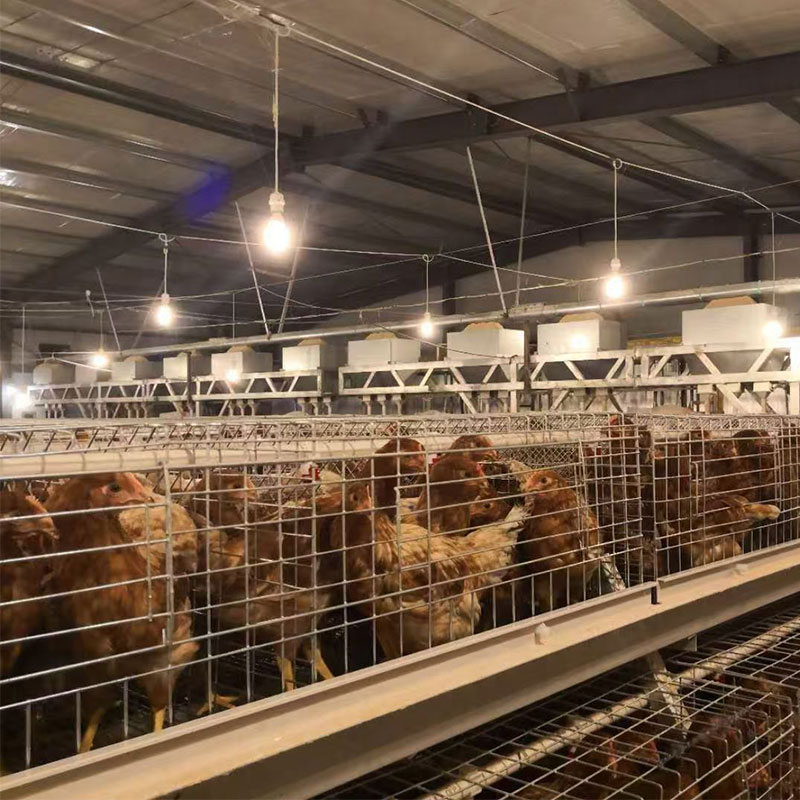
The rhythmic clatter of feeding chains and the low hum of ventilation fans provide the soundtrack to modern broiler production. For decades, the battery cage system has been a cornerstone of this high-efficiency environment, a tool designed to turn feed into muscle with relentless precision. Its adoption represented a significant shift from floor-based operations, promising a new level of control over the variables that determine profitability. Understanding this system, from its steel framework to its daily operational demands, is essential for any poultry farmer evaluating their production model.
At its core, a broiler battery cage is a containment unit, typically constructed from galvanized steel wire mesh, designed to house a specific number of birds from arrival to processing. Unlike the multi-tiered layer cages familiar to egg producers, broiler cages are often single-tier, though modern designs increasingly utilize two or three tiers to maximize space utilization within a house. The fundamental principle is not merely confinement, but the creation of a micro-managed environment for each bird. The cage floor is sloped, gently rolling towards the front to allow eggs from breeding stock to roll onto a collection conveyor belt, a feature critical for operations managing parent stock. For meat-only operations, the floor is a key component in manure management.
The architecture of a cage house is a study in controlled density. Birds are grouped in small numbers per cage, which are then arranged in long rows, often called batteries, suspended from the house’s superstructure. This suspension is not arbitrary; it elevates the birds away from their own waste. Below the cages, a continuous belt, sometimes a deep pit system, runs the length of the row. This manure removal belt operates on a set schedule, perhaps once daily or every other day, pulling the droppings out of the house and into a storage or composting facility. This physical separation is the first and most crucial defense against footpad dermatitis and manure-borne pathogens. A bird on a litter floor is in constant contact with its waste; a bird in a cage is not. The difference in footpad quality at processing can be stark, directly impacting grade and value.
This separation also fundamentally alters the farmer’s relationship with ventilation. In a litter-based house, air movement must manage moisture from the floor, litter, and the birds themselves. It’s a constant battle against dampness and ammonia buildup. In a cage system, the primary moisture source—the manure—is largely removed from the bird environment. Ventilation strategies can shift focus from moisture abatement to precise temperature and air quality control. The air the birds breathe is cleaner, with lower ammonia levels, which supports better respiratory health. For a farmer used to the acrid smell of a litter house nearing clean-out, the air in a well-managed cage facility is noticeably different. The technical goal of achieving a specific static pressure or air exchange rate is translated into the practical outcome of seeing birds resting comfortably without panting or huddling.
Feeding and watering in a cage system are automated to an extreme degree. A feed hopper runs along the front of each tier, connected to a chain or auger system that delivers a precisely formulated ration on a timer. Birds learn the sound of the motor starting and move to the trough. The design of the feeder ensures minimal spillage. Water is provided through nipple drinkers, one nipple serving a set number of birds. The water line is pressurized, and each actuation of a nipple delivers a fresh drop of water. This closed system prevents contamination from litter, feathers, or spilled feed, a common vector for disease in open-water systems. The practical result is a significant reduction in water consumption per bird and drier manure, which is easier to handle and less prone to emitting ammonia.
The management of bird health takes on a different character in cages. The primary advantage is visibility. A sick or injured bird cannot hide in a corner of a large shed. It is immediately apparent to a stockperson walking the aisles. This allows for early intervention, treatment, or culling, preventing the spread of illness and improving overall flock uniformity. Treatments can be administered with precision through the water lines. However, this visibility is a double-edged sword; it demands constant, attentive observation. The birds are always on display, and any lapse in management—a blocked nipple, a malfunctioning feeder—becomes instantly critical.
The most significant challenge, and the subject of intense ethical and consumer-driven debate, is the restriction of natural behaviors. A broiler chicken has an inherent drive to perform activities like foraging, dustbathing, perching, and fully stretching its wings. The cage environment physically prevents most of these behaviors. While selective breeding has produced broilers with a docile nature and a overwhelming propensity to eat and sit, the behavioral restriction remains a core welfare concern. This is not an abstract concept; it manifests in observable ways. Without substrates to forage in, birds can develop redirected behaviors, like pecking at the wire or at each other. While severe feather pecking is less common in the short-lived broiler than in layers, it remains a risk that must be managed through lighting schemes, feed presentation, and genetic selection.

Bone strength is another critical physiological factor. The lack of opportunity for sustained weight-bearing exercise can result in poorer skeletal integrity. A bird on litter may walk several meters a day to reach feed and water; a bird in a cage takes only a few steps. This can lead to weaker leg bones, which is a welfare issue for the bird and a processing issue for the plant, as it can increase the incidence of broken bones and downgrades during harvesting. Nutritionists combat this by formulating diets with careful attention to calcium, phosphorus, and Vitamin D3 levels to maximize bone mineralization in a low-activity environment.
The economic calculus for adopting a cage system is complex and goes far beyond the initial capital outlay. The infrastructure investment is substantial. The cages themselves, the manure belt systems, the reinforced housing structure to support the weight, and the more sophisticated climate control computers represent a significant per-bird cost compared to a simple litter-floor house. This high fixed cost demands high utilization and exceptional performance to achieve a return.
Operational costs tell a different story. Feed conversion ratios (FCR) in cage systems are typically superior. With no energy expended on walking or foraging, and virtually no feed wasted to spillage or contamination, more of every gram of feed is directed toward growth. In an industry where feed constitutes up to 70% of the cost of production, a difference of even a few points in FFC—for example, 1.65 vs. 1.70—translates into tens of thousands of dollars in saved feed costs over a single flock. Mortality rates are also often lower due to improved biosecurity, reduced cannibalism, and quicker disease detection. The improved livability directly boosts the number of kilograms of meat sold per square meter of house space.
Labor efficiency is another powerful economic driver. A single worker can manage a much larger number of birds in a cage system. Tasks are streamlined: checking water pressure, observing bird behavior, and removing mortalities are done from the aisle. There is no need to walk among the birds, change litter, or manage caked wet spots in the bedding. The back-breaking labor of catching birds at harvest is also transformed. Instead of teams of catchers manually gathering birds from the floor, automated harvesting systems can be used. These systems often involve a module that aligns with the cage row, gently encouraging the birds onto a conveyor belt that carries them to the waiting transport modules. This reduces labor costs, minimizes bird stress during catching, and decreases the physical strain on workers.
The market destination for the final product is the ultimate determinant of a system's viability. The global poultry market is increasingly fragmented by production method claims. Major quick-service restaurant chains and supermarket retailers in Europe and North America have largely moved away from sourcing cage-reared chicken in response to consumer activism. Their animal welfare policies often explicitly prohibit such systems. Therefore, a farmer contracted to supply these markets would find a cage system commercially unviable, regardless of its operational efficiencies.
Conversely, in many other regions globally, where price remains the dominant consumer priority and domestic welfare legislation is less restrictive, the cost-efficiency of cage systems ensures their continued prevalence. Furthermore, for certain products like specific breeding stock or in regions with extreme disease pressure where biosecurity is paramount, the controlled isolation offered by cages can be a decisive advantage.

The decision to implement a battery cage system for broilers is therefore a strategic one, balancing internal operational efficiency against external market expectations and ethical considerations. It is a technology that offers unparalleled control over the production environment, turning a poultry house into a highly tuned biological machine. It delivers tangible benefits in feed efficiency, bird health monitoring, labor savings, and manure management. Yet, it does so at the cost of high capital investment and by imposing significant restrictions on the bird’s behavioral repertoire.
For the modern poultry farmer, the choice is rarely simple. It requires a clear-eyed assessment of their financial capacity, their target market's demands, their management capability, and their own ethical framework. The system is not a universal solution but a specific tool, one that excels in certain contexts and is entirely unsuitable in others. Its successful implementation hinges not on the steel of the cage itself, but on the skill and diligence of the farmer who manages it, ensuring that the pursuit of efficiency is always tempered by a responsibility for the welfare of the flock under their care.
1. Drinking system include the water pipes, water pressure adjuster, drinking nipples, Waterline front-end device, dosing system etc, choose them according to customer's needs.
2. High-quality water drinking pipes, pressure regulating valves and water drinking nipples can effectively prevent the water leakage. Drinking system adopt the closed piping system, which can minimize the water pollution.
3. 360-degree drinking nipples provide adequate drinking water for poultry at all stages.
4. The automatic drinking water system mainly adopts the steel ball drinking nipple. lt uses imported high-grad stainless steel, POM resin, and APS engineering material, which is wearing resistant, and the durability can be used for long time.



1. Automatic feeding machine can be chosen between gantry and ladder feeding machine. Gantry type feeding machine is a relatively economical and practical machine with simple operation, remote control walking character, easy to manage.
2. Mechanical transmission device running smoothly, low noise, long service life.
3. With the use of automatic control, the feeding system can adjust the amount of material.
4. Feeding with arched structure, high carrying capacity, not easily deformed.
5. Saving man power, saving feed, greatly improving the efficiency of Large-scale farming.
6. The walking speed of gantry feeding machine is 9--12 m/min.




1. Manure removing system included scraper type and conveyor belt type, Which can reduce the labor intensity and labor cost, keep the chicken shed dry and clean.
2. A type chicken cage can use scraper type or conveyor belt type.


3. The scraper type is suitable for A type cages, which can clean two or three rows. For the starters, this type is a good choice. lt can not only save some labor cost, but also save some investment in the whole project. The cleaning speed is 6-10 meters per minute.
4. Conveyor belt type is more suitable for large scale farming. The manure removing belt we use is high quality PP material (polypropylene). The walking speed is 2-4 meters per minute.



High Quality Pellets Made by Mobile Pellet Machine
1. It has professional designed angle of the blade. After the dynamic balance test one by one, the blade can operate smoothly.
2. The air volume is consistent in the whole life of the fan. Bearings has advantage of high strength, low noise, durable and so on.
1. The cooling pads uses high-quality wet curtain paper and adopts space cross-linking technology, which has the advantages of high water absorption, high water resistance, anti-toxicity and long service life.
2. The cooling efficiency is over 80%, without surfactant, natural water absorption, fast diffusion speed and long-lasting effect.
3. The product does not contain phenol and other chemical substances that are easy to cause skin allergies. It is non-toxic and harmless to the human body and chicken when installed and used. It is green, safe, energy-saving, environmentally friendly, economical, and easy to install.
4. The frame aluminum alloy has high strength, good corrosion resistance, durability and beautiful appearance.
5. Use a special filter for the cooling pad at the upper water to ensure clean water quality and support efficient water circulation components.
6. Combined with a negative pressure fan, it can effectively lower the indoor temperature.
The window is made of special selected high-quality engineering plastic, with high strength and long service life, together with superior anti-aging and anti-UV performance.
Function: Ventilation of the chicken house, usually used in the winter.
This system can adjust the wind speed and direction, thus the cold air will not reach chicken directly , which can effectively prevent the phenomenon of cold stress in chicken.
Environmental control system equipment is suitable for large-scale and intensive farming. According to customer requirements, we can provide various types of smart poultry equipment.
1. Our poultry management system is a modular system that manages all aspects of the chicken house, such as climate, temperature, humidity, ammonia, feeding, feed weighing, lighting and ventilation systems, and can monitor the situation of the chicken house in real time through a computer and mobile phone.
2. The management computer is the heart of the poultry farm, allowing you to easily monitor the entire poultry farm.

 WeChat:+8617838608255