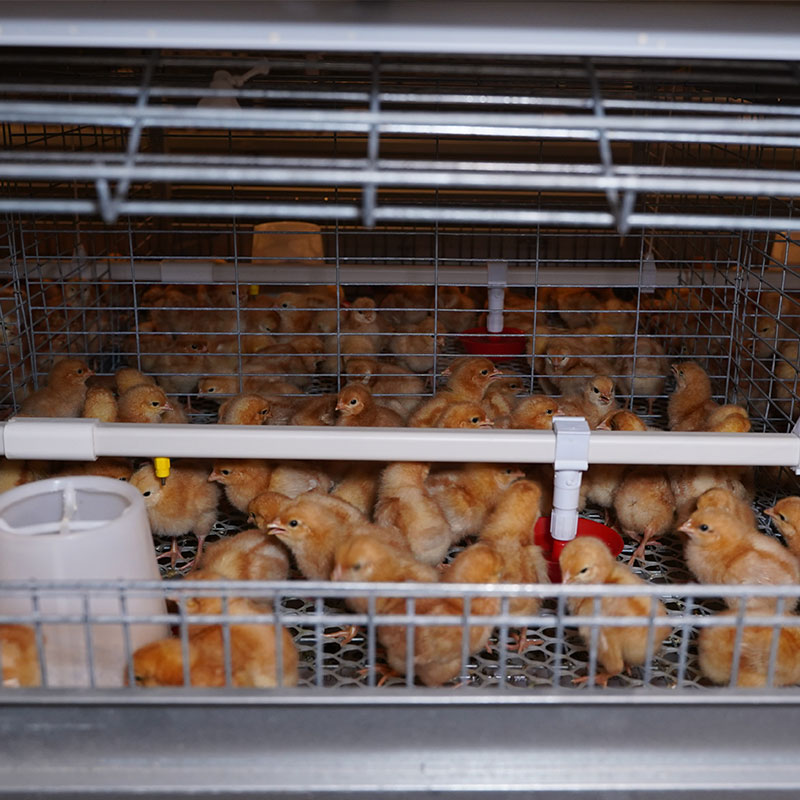
Battery Cage System in Poultry Farming: A Comprehensive Analysis
The battery cage system stands as one of the most recognizable—and contentious—systems in modern egg production. For decades, this method has been the backbone of the commercial egg industry, engineered for maximum efficiency and output. However, it sits at the epicenter of a global debate involving animal welfare, economics, food safety, and consumer ethics. This article provides a professional, indepth examination of battery cages, exploring their design, historical context, inherent advantages, significant criticisms, and the evolving regulatory landscape. Whether you are a farmer, a student, a policymaker, or a conscientious consumer, understanding this system is crucial to navigating the complex realities of poultry farming today.
A battery cage system is a housing method for egglaying hens (layers) characterized by rows of small, identical wire cages arranged in tiers inside a controlledenvironment shed. The term "battery" refers to the repetitive arrangement of units, similar to artillery batteries.
Key Design Features:
Wire Mesh Construction: Floors are typically sloped wire mesh to allow eggs to roll onto a collection belt and manure to drop through to a pit or conveyor below.
High Density: Each cage houses multiple birds. Historically, space allowance per hen was often less than an A4 sheet of paper (e.g., 432483 cm²).
Automation Integration: The system is designed for integration with automated feeding tubes running along the cages, nipple drinker lines, egg collection belts, and manure removal systems.
Environmental Control: The shed housing the cages controls lighting (to stimulate laying), temperature, and ventilation.
The development of battery cages accelerated after World War II, driven by postwar food security needs and industrialization trends in agriculture.
1950s1970s: Widespread adoption occurred as farmers sought to increase production scale, improve feed efficiency (FCR), reduce labor costs through automation.
Primary Driver: Economic efficiency. Cages allowed for more birds per square meter of barn space.
From an operational management standpoint:
1. Increased Production Efficiency & Lower Costs:
Higher bird density reduces land and barn construction costs per bird.
Automated systems drastically cut labor requirements for feeding, watering.
2. Enhanced Biosecurity & Disease Control:
Birds are separated from their feces.
Reduced direct contact with pathogens like E. coli or Salmonella from manure.
3. Simplified Management:
Easy monitoring of feed/water consumption per row.
Simplified egg collection; eggs remain clean as they roll away quickly.
4. Reduced Cannibalism & Feather Pecking: The confined space physically restricts these damaging behaviors common in large flocks.
This is where the system faces its most significant challenges from animal welfare science and advocacy groups.
Core Welfare Compromises (Based on "Five Freedoms"):
1. Freedom from Hunger/Thirst: Met via automation.
2. Freedom from Discomfort: Severely compromised. Wire floors can cause foot lesions (bumblefoot). Lack of space prevents comfortable resting postures or wingstretching.
3. Freedom from Pain/Injury/Disease: Compromised. Cage design leads to high incidence of bone fragility (osteoporosis) due to lack of exercise; fractures during depopulation are common.
4. Freedom to Express Normal Behavior: Severely restricted. Hens have strong behavioral drives to perch/dustbathe/scratch/forage/nestbuild—all impossible in a barren cage.
5. Freedom from Fear/Distress: Can be compromised by close confinement with no retreat space.
Other Criticisms:
Ethical Concerns: Viewed by many as inherently inhumane due to extreme confinement.
Antibiotic Use: While disease transmission may be lower between cages stressinduced immunosuppression can increase susceptibility requiring preventive medication raising concerns about antimicrobial resistance (AMR).
Public Perception & Market Rejection: Growing consumer demand for higherwelfare products has led major retailers/food corporations globally to pledge cagefree supply chains.
Regulation is moving decisively away from conventional battery cages.
| System Type | Space Allowance per Hen | Key Features | Legal Status in Key Regions |
| : | : | : | : |
| Conventional Battery Cage | Often <550 cm² | Barren wire cage only | Banned in EU UK Canada New Zealand several US states etc |
| Enriched/Furnished Colony Cage | ~750800 cm² minimum EU | Provides perch nesting area scratch pad more height | Permitted but debated; phaseouts planned by some corporations |
| CageFree Systems (Aviary Barn FreeRange Organic) | Varies significantly >~1100 cm² indoors + litter area | Multitiered systems with litter area for dustbathing scratching; freerange includes outdoor access | Rapidly growing market segment driven by legislation corporate pledges |
Key Legislation Examples:
European Union: Banned conventional battery cages in 2012 now mandates enriched colony systems minimum space ~750cm²/hen
United Kingdom Canada New Zealand have similar bans
United States: Several states including California Massachusetts Washington have passed bans; many major food companies committed to cagefree transitions
1. Enriched Colony Cages
2. Barn/Aviary Systems
3. FreeRange
4. PastureRaised
5. Organic Systems
Each alternative involves tradeoffs between welfare outcomes disease management environmental impact labor costs final product price
The conventional battery cage system represents an era of poultry farming optimized almost exclusively for economic efficiency at scale Its decline reflects societal evolution where animal welfare environmental sustainability transparency are increasingly valued market drivers While enriched cages offer incremental improvements debate continues whether they suffice Future lies in refining truly cagefree systems balancing genuine behavioral freedom with responsible biosecurity management For farmers this means adapting business models For consumers it underscores importance informed choices understanding labels implications behind them Ultimately transition away battery cages signifies broader shift towards more holistic ethical view our food systems where productivity not sole metric success
Q1: What exactly is meant by "battery" in battery cages?
A1: The term "battery" refers not power source but militarystyle arrangement identical units lined up together Thus "battery cage" describes long rows uniform wire cages housed shed similar artillery battery formation
Q2: Are battery cages still legal anywhere?
A2: Yes While banned European Union United Kingdom Canada New Zealand several US states among others they remain legal many parts world including some regions Asia Africa South America However global trend moving towards restrictions phaseouts
Q3: Why did farmers ever start using battery cages?
A3: Primary drivers were postWWII need produce affordable protein scale Cages allowed dramatic increases flock size within existing barns reduced labor through automation improved certain disease control measures separating birds manure leading lower production costs cheaper eggs consumers
Q4: What's difference between battery cage enriched colony cage?
A4 Conventional barren battery cage provides only feed water space Enriched colony cage sometimes called furnished larger provides minimum amenities per hen including perch nesting box private laying area scratch pad allowing some natural behaviors though still confined enclosure
Q5 Do chickens suffer battery cages?
A5 Based extensive animal welfare science consensus yes Chickens experience significant physical psychological deprivation inability perform innate behaviors like dustbathing foraging perching fully leading frustration poor bone health other welfare compromises
Q6 Are eggs from caged hens less nutritious?
A6 Nutritional composition protein fat cholesterol largely similar regardless housing However some studies show freerange/pasture eggs may have higher levels Omega3 fatty acids Vitamin D due varied diet sunlight exposure respectively Primary difference ethical not nutritional
Q7 How does moving away from cages affect egg price?
A7 Transitioning cagefree systems typically increases production costs due higher land/barn infrastructure requirements more labor different management practices These costs often passed consumer leading higher retail prices cagefree freerange eggs 
Q8 What biggest challenge managing cagefree flocks compared caged?
A8 Key challenges include managing feather pecking cannibalism larger groups ensuring hens utilize multitiered aviary systems effectively maintaining good litter quality controlling parasitic diseases like red mite requiring different stockmanship skills entirely
Q9 Is Salmonella risk higher lower caged systems?
A9 Risk profile different Cages separate birds manure potentially reducing fecaloral transmission However stress immunosuppression crowded conditions may increase susceptibility Cagefree systems expose birds litter which harbor pathogens but allow expression healthier immune responses through activity foraging Debate ongoing research continues
Q10 As consumer how can I tell what system my eggs come from?
A10 Check label carefully Terms regulated most regions:
1. Drinking system include the water pipes, water pressure adjuster, drinking nipples, Waterline front-end device, dosing system etc, choose them according to customer's needs.
2. High-quality water drinking pipes, pressure regulating valves and water drinking nipples can effectively prevent the water leakage. Drinking system adopt the closed piping system, which can minimize the water pollution.
3. 360-degree drinking nipples provide adequate drinking water for poultry at all stages.
4. The automatic drinking water system mainly adopts the steel ball drinking nipple. lt uses imported high-grad stainless steel, POM resin, and APS engineering material, which is wearing resistant, and the durability can be used for long time.



1. Automatic feeding machine can be chosen between gantry and ladder feeding machine. Gantry type feeding machine is a relatively economical and practical machine with simple operation, remote control walking character, easy to manage.
2. Mechanical transmission device running smoothly, low noise, long service life.
3. With the use of automatic control, the feeding system can adjust the amount of material.
4. Feeding with arched structure, high carrying capacity, not easily deformed.
5. Saving man power, saving feed, greatly improving the efficiency of Large-scale farming.
6. The walking speed of gantry feeding machine is 9--12 m/min.




1. Manure removing system included scraper type and conveyor belt type, Which can reduce the labor intensity and labor cost, keep the chicken shed dry and clean.
2. A type chicken cage can use scraper type or conveyor belt type.


3. The scraper type is suitable for A type cages, which can clean two or three rows. For the starters, this type is a good choice. lt can not only save some labor cost, but also save some investment in the whole project. The cleaning speed is 6-10 meters per minute.
4. Conveyor belt type is more suitable for large scale farming. The manure removing belt we use is high quality PP material (polypropylene). The walking speed is 2-4 meters per minute.



High Quality Pellets Made by Mobile Pellet Machine
1. It has professional designed angle of the blade. After the dynamic balance test one by one, the blade can operate smoothly.
2. The air volume is consistent in the whole life of the fan. Bearings has advantage of high strength, low noise, durable and so on.
1. The cooling pads uses high-quality wet curtain paper and adopts space cross-linking technology, which has the advantages of high water absorption, high water resistance, anti-toxicity and long service life.
2. The cooling efficiency is over 80%, without surfactant, natural water absorption, fast diffusion speed and long-lasting effect.
3. The product does not contain phenol and other chemical substances that are easy to cause skin allergies. It is non-toxic and harmless to the human body and chicken when installed and used. It is green, safe, energy-saving, environmentally friendly, economical, and easy to install.
4. The frame aluminum alloy has high strength, good corrosion resistance, durability and beautiful appearance.
5. Use a special filter for the cooling pad at the upper water to ensure clean water quality and support efficient water circulation components.
6. Combined with a negative pressure fan, it can effectively lower the indoor temperature.
The window is made of special selected high-quality engineering plastic, with high strength and long service life, together with superior anti-aging and anti-UV performance.
Function: Ventilation of the chicken house, usually used in the winter.
This system can adjust the wind speed and direction, thus the cold air will not reach chicken directly , which can effectively prevent the phenomenon of cold stress in chicken.
Environmental control system equipment is suitable for large-scale and intensive farming. According to customer requirements, we can provide various types of smart poultry equipment.
1. Our poultry management system is a modular system that manages all aspects of the chicken house, such as climate, temperature, humidity, ammonia, feeding, feed weighing, lighting and ventilation systems, and can monitor the situation of the chicken house in real time through a computer and mobile phone.
2. The management computer is the heart of the poultry farm, allowing you to easily monitor the entire poultry farm.

 WeChat:+8617838608255