Title: Battery Cage System of Poultry: A Comprehensive Guide to History, Welfare, and Alternatives
Introduction
The term "battery cage system" is one of the most recognized—and contentious—phrases in modern agriculture. For decades, it has been the cornerstone of global egg production, praised for its efficiency and criticized for its animal welfare implications. As consumers become increasingly conscious of where their food comes from, understanding this system is crucial. This indepth guide, written from an agricultural and animal science perspective, will explore the battery cage system in poultry farming. We'll delve into its design and history, rigorously analyze its profound impacts on hen welfare and egg production, examine the evolving legal landscape, and detail the viable alternatives shaping the future of the industry. Whether you're a farmer, a student, a policymaker, or an informed consumer, this resource aims to provide a balanced, expertlevel overview grounded in facts and current practices.
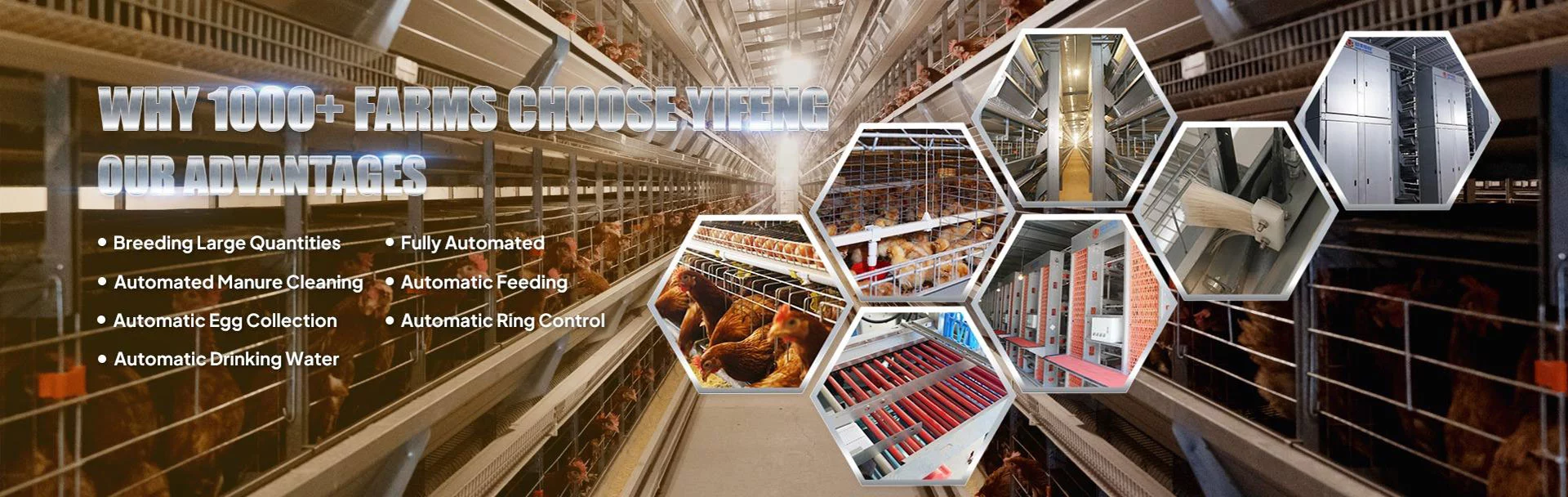
A battery cage system is a housing method for egglaying hens (layers) where birds are confined in rows of identical wire cages arranged in tiers, often connected for automated feeding, watering, and egg collection—resembling cells in a battery.
The typical design features include:
Small Wire Cages: Each cage houses multiple hens, providing minimal space per bird. Historically, space allowance was often less than the size of a standard sheet of paper (e.g., 432483 cm² per hen).
Sloped Wire Flooring: Allows eggs to roll onto a collection belt and manure to fall through to a pit or conveyor below.
Automated Systems: For delivery of feed and water via nipple drinkers or troughs.
Stacked Tiers: To maximize floor space utilization within a shed.
The primary objectives were economic: to increase egg yield per square foot of barn space, reduce feed waste and labor costs through automation, minimize disease transmission from manure (via separation), and simplify flock management.
The development and adoption of battery cages accelerated after World War II. Driven by postwar food security concerns and technological advancements, agriculture shifted towards intensification. The goal was to produce affordable protein for growing populations. The battery cage became symbolic of this industrial approach—prioritizing efficiency, consistency, and low cost above other considerations. For much of the late 20th century, it was the undisputed standard in commercial egg production worldwide.
This is where expert analysis becomes essential. Decades of ethological (animal behavior) research have identified significant welfare compromises inherent in conventional cage designs:
1. Severe Behavioral Restriction (H3)
Hens are highly motivated to perform innate behaviors. Battery cages severely restrict or completely prevent:
Perching: Roosting at night is a strong instinct for safety.
Dustbathing: A critical behavior for feather maintenance and parasite control.
Nesting: The drive to seek a secluded area to lay eggs is profound.
Foraging & Scratching: Essential exploratory behaviors.
Full Wing Flapping & Movement.
The inability to express these behaviors leads to frustration and can result in abnormal repetitive behaviors.
2. Physical Health Consequences (H3)
Osteoporosis & Bone Fractures: Lack of weightbearing exercise combined with high calcium demand for eggshells leads to fragile bones. This is a major welfare issue during depopulation (endoflay hen removal).
Foot Disorders: Constant contact with wire mesh can cause footpad lesions and bumblefoot.
Feather Loss & Skin Damage: Friction against cages and neighbors leads to poor plumage condition.
Increased Risk:
While cages reduce contact with manure (lowering some parasitic risks), they increase susceptibility to metabolic diseases like fatty liver syndrome.
Cannibalism & feather pecking can erupt rapidly if not managed with beak trimming.
3. Psychological Stress (H3)
Chronic stress from crowding, inability to escape aggressive cagemates (lack of "personal space"), and environmental deprivation can compromise immune function and overall wellbeing.
Proponents historically argued that cages:
1. Lowered the cost of eggs dramatically for consumers.
2. Improved hygiene by separating hens from their feces.
3. Increased feed efficiency as birds used less energy moving.
4. Simplified veterinary care and mortality monitoring.
5. Reduced labor requirements per thousand eggs produced.
While these points hold economic merit within a narrow framework that excludes welfare costs ("externalities"), the market and regulatory landscape are now factoring animal welfare into the economic equation.
Driven by scientific evidence and public concern, legislation is changing rapidly:
European Union: A partial ban on unenriched battery cages took effect in 2012 under Directive 1999/74/EC. "Enriched" cages with more space per hen must provide amenities like a nest box,
perch,
and litter area for scratching/dustbathing
are still permitted but face growing criticism
and future bans in several member states
(e.g.,
Germany aims for 2025,
Austria has already banned them).
United States: Varies by state
California,
Massachusetts,
Washington,
Oregon,
Michigan,
and others have passed laws requiring cagefree housing by specific dates
often driven by ballot initiatives
Major food corporations
and retailers nationwide have committed
to sourcing only cagefree eggs
in their supply chains
Other Countries: Similar movements are active
in Canada,
New Zealand,
India,
and elsewhere
This regulatory push reflects an application
of EEAT principles within policymaking:
relying on expert scientific testimony
(E)
from animal behaviorists
and veterinarians
to establish authoritative standards
Today's commercial producers choose from several systems each with distinct welfare tradeoffs management requirements
An evolution
of the traditional cage providing slightly more space per hen approximately cm² EU standard plus mandatory enrichments nest box perch scratching area They aim
to allow expression
of key behaviors while retaining some efficiency benefits However critics argue they still restrict movement significantly particularly flying jumping running
This umbrella term includes two main types:
Barn/ Aviary Systems Hens live indoors on litter floors with multiple tiers equipped with perches nest boxes They have freedom
to move vertically horizontally Key challenges include managing air quality preventing floor eggs controlling parasites like red mites ensuring even use
of all facilities across large flocks Feather pecking cannibalism risks can be higher requiring careful breed selection management enrichment lighting control Beak trimming may still be practiced Nonbeaktrimming systems rely heavily on genetics environment Stocking densities vary widely under different certification programs e g United Egg Producer Certified Humane RSPCA Assured standards set specific limits Certified Humane requires birds m² indoors plus outdoor access see below FreeRange PastureRaised Systems These incorporate all elements aviary plus daytime access outdoors pasture ranging areas offer greatest behavioral opportunities including foraging insects sunlight dustbathing natural vegetation They represent highest tier welfarefocused production but come challenges biosecurity predator control weather dependency higher land costs lower stocking densities leading premium price point Eggs marketed as pastureraised typically imply moveable housing rotated land ensuring fresh vegetation access Conclusion The debate around battery cages fundamentally centers balancing historical models efficiency against contemporary understanding animal sentience welfare While conventional battery cages are being phased out across much world legacy remains complex transition underway Industry navigating towards models enriched colony cages various forms freerange each presenting own set compromises Ultimately informed consumer choices supporting clear labeling thirdparty certifications alongside robust sciencebased regulations driving meaningful change future poultry farming FAQ Section Frequently Asked Questions About Poultry Battery Cages What exactly means battery name The term refers arrangement identical small wire cages connected together rows tiers resembling cells electrical battery It describes physical setup not specific breed chicken Are battery cages illegal United States Not federally illegal However many individual states passed laws banning sale production eggs caged hens Additionally numerous major retailers restaurant chains committed sourcing only cagefree eggs making effectively obsolete large portions US market What difference between caged cagefree eggs Primary difference lies housing environment Cagefree hens live barns aviaries without enclosed wire cages allowing express natural behaviors like perching nesting dustbathing This reflected price point typically higher due increased management costs lower stocking densities Do chickens suffer batteries Scientific consensus based decades behavioral physiological research indicates conventional severely compromise physical psychological preventing expression nearly all natural leading health issues bone weakness feather loss stress Do caged chickens get sunlight No conventional systems entirely indoors artificial lighting controlled stimulate laying cycles Access natural sunlight available only freerange pasturebased systems Why were invented originally They were developed midth century maximize egg production minimize costs labor disease through automation separation manure response postwar demand affordable protein What alternatives exist Main alternatives Enriched Colony Cages Furnished slightly more space legal requirements amenities CageFree Aviary Barn systems FreeRange PastureBased systems outdoor access Are healthier than Research shows nutritional content protein fat vitamins largely similar determined primarily diet However some studies indicate freerange may have slightly higher levels omega fatty acids vitamin due foraging activity varied diet Can tell egg came just looking No cannot discern housing system shell appearance color requires carton labeling trust certification logos e g Certified Humane American Humane Certified Pasture Raised How long do live laying Typically lay productively about months weeks after reach maturity Regardless housing system spent hens same breeds used commercial layer operations What happens end lay period Hens productivity declines they typically processed into products like pet food soups This standard practice across all largescale systems including organic freerange
1. Drinking system include the water pipes, water pressure adjuster, drinking nipples, Waterline front-end device, dosing system etc, choose them according to customer's needs.
2. High-quality water drinking pipes, pressure regulating valves and water drinking nipples can effectively prevent the water leakage. Drinking system adopt the closed piping system, which can minimize the water pollution.
3. 360-degree drinking nipples provide adequate drinking water for poultry at all stages.
4. The automatic drinking water system mainly adopts the steel ball drinking nipple. lt uses imported high-grad stainless steel, POM resin, and APS engineering material, which is wearing resistant, and the durability can be used for long time.



1. Automatic feeding machine can be chosen between gantry and ladder feeding machine. Gantry type feeding machine is a relatively economical and practical machine with simple operation, remote control walking character, easy to manage.
2. Mechanical transmission device running smoothly, low noise, long service life.
3. With the use of automatic control, the feeding system can adjust the amount of material.
4. Feeding with arched structure, high carrying capacity, not easily deformed.
5. Saving man power, saving feed, greatly improving the efficiency of Large-scale farming.
6. The walking speed of gantry feeding machine is 9--12 m/min.




1. Manure removing system included scraper type and conveyor belt type, Which can reduce the labor intensity and labor cost, keep the chicken shed dry and clean.
2. A type chicken cage can use scraper type or conveyor belt type.


3. The scraper type is suitable for A type cages, which can clean two or three rows. For the starters, this type is a good choice. lt can not only save some labor cost, but also save some investment in the whole project. The cleaning speed is 6-10 meters per minute.
4. Conveyor belt type is more suitable for large scale farming. The manure removing belt we use is high quality PP material (polypropylene). The walking speed is 2-4 meters per minute.



High Quality Pellets Made by Mobile Pellet Machine
1. It has professional designed angle of the blade. After the dynamic balance test one by one, the blade can operate smoothly.
2. The air volume is consistent in the whole life of the fan. Bearings has advantage of high strength, low noise, durable and so on.
1. The cooling pads uses high-quality wet curtain paper and adopts space cross-linking technology, which has the advantages of high water absorption, high water resistance, anti-toxicity and long service life.
2. The cooling efficiency is over 80%, without surfactant, natural water absorption, fast diffusion speed and long-lasting effect.
3. The product does not contain phenol and other chemical substances that are easy to cause skin allergies. It is non-toxic and harmless to the human body and chicken when installed and used. It is green, safe, energy-saving, environmentally friendly, economical, and easy to install.
4. The frame aluminum alloy has high strength, good corrosion resistance, durability and beautiful appearance.
5. Use a special filter for the cooling pad at the upper water to ensure clean water quality and support efficient water circulation components.
6. Combined with a negative pressure fan, it can effectively lower the indoor temperature.
The window is made of special selected high-quality engineering plastic, with high strength and long service life, together with superior anti-aging and anti-UV performance.
Function: Ventilation of the chicken house, usually used in the winter.
This system can adjust the wind speed and direction, thus the cold air will not reach chicken directly , which can effectively prevent the phenomenon of cold stress in chicken.
Environmental control system equipment is suitable for large-scale and intensive farming. According to customer requirements, we can provide various types of smart poultry equipment.
1. Our poultry management system is a modular system that manages all aspects of the chicken house, such as climate, temperature, humidity, ammonia, feeding, feed weighing, lighting and ventilation systems, and can monitor the situation of the chicken house in real time through a computer and mobile phone.
2. The management computer is the heart of the poultry farm, allowing you to easily monitor the entire poultry farm.

 WeChat:+8617838608255