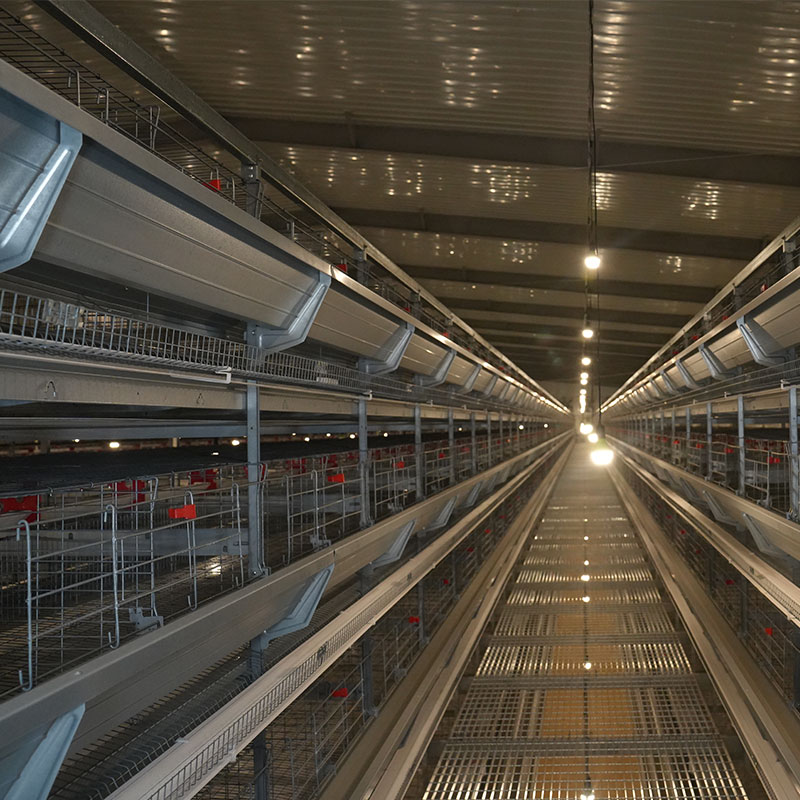
The broiler house represents one of agriculture’s most precise environments, a controlled ecosystem where every decision, from feed formulation to ventilation, directly impacts the bottom line. Among these critical choices, the selection of a caging system stands as a foundational investment. It is not merely a piece of equipment to house birds; it is the operational backbone that dictates daily workflows, influences bird health, and ultimately determines the efficiency and profitability of an entire grow-out cycle. The quest for the best cage for broiler chicken production is not about finding a single perfect model, but about identifying the system whose engineering and features most closely align with a specific operation’s goals, scale, and management philosophy.
The modern poultry farmer is presented with a spectrum of cage technologies, each with distinct advantages and operational requirements. Moving beyond the outdated image of simple wire boxes, today’s systems are integrated platforms designed to manage waste, control environment, and streamline bird handling. The core decision often begins with choosing between two primary philosophies: raised wire floor systems and plastic slat or wire mesh systems.
Raised wire floor cages, constructed from heavy-gauge galvanized steel, have been a long-standing industry workhorse. Their primary benefit is unparalleled manure management. The open weave of the wire floor allows droppings to fall through immediately, separating the bird from its waste. This significantly reduces contact with ammonia, a gas released as manure decomposes, which can burn birds’ eyes and respiratory tracts, leading to condemnations at processing. For a farmer in a humid climate, this rapid drying and separation of waste is a powerful tool for maintaining air quality. However, the trade-off has traditionally been bird welfare, particularly regarding footpad health. Constant contact with a rigid wire surface can lead to lesions and pododermatitis, which are not only welfare concerns but can also be a grading issue. Modern iterations of wire systems address this with thicker, smoother wires and modified designs that distribute pressure more evenly across the foot.
In response to welfare-driven market demands, plastic slat or reinforced polymer mesh systems have gained substantial traction. These floors are designed with bird comfort as a primary driver. The material is warmer to the touch than metal and offers a more forgiving surface, drastically reducing the incidence of footpad lesions and breast blisters. A farmer supplying a premium market that audits for these specific welfare indicators will find immense value in this attribute. The design of the slats—their shape, spacing, and texture—is critical. They must be wide enough to provide comfort but have gaps sufficient for manure to pass through effectively. A poor design can lead to manure building up on the slats, creating a wet, slippery surface and negating the air quality benefits. The best plastic slat systems are engineered with a slight texture to provide grip and are often treated with antimicrobial agents.
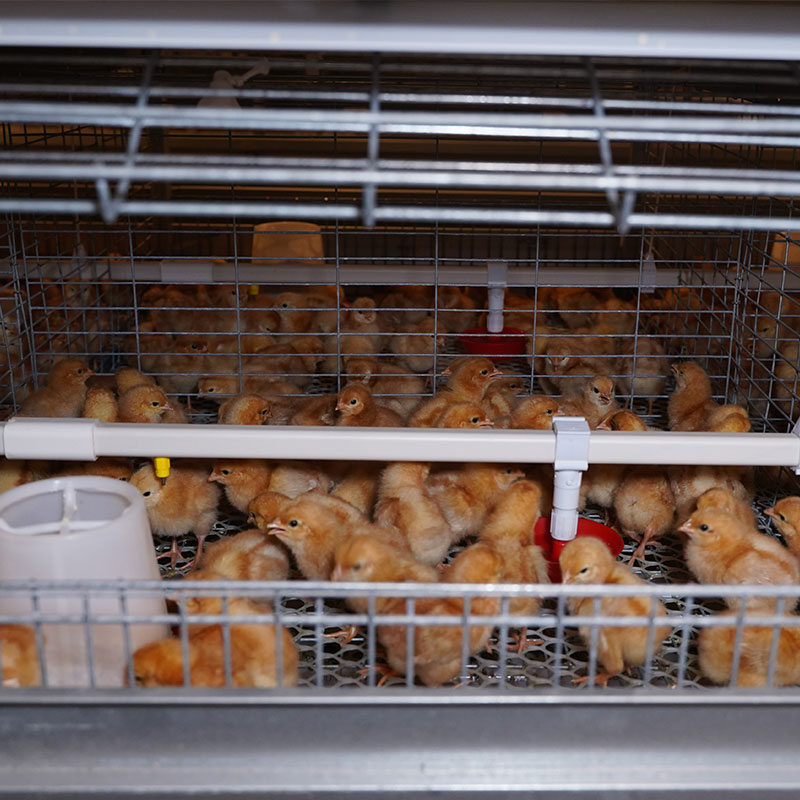
Beyond the floor material, the structural integrity of the cage system is non-negotiable. Broilers reach their target weight in a matter of weeks, and the collective mass of a full house represents a significant load. Frame strength is paramount. Look for systems constructed from high-tensile steel with reinforced welding at all major stress points—corners, gate hinges, and leg attachments. A weak frame will sag over time, creating uneven floors that can lead to feed and water distribution problems. The galvanization process is equally important. High-quality hot-dip galvanization provides a thick, durable coating that protects against the corrosive atmosphere of the poultry house, which is laden with moisture, ammonia, and dust. A poorly galvanized system will show signs of rust within a few cycles, compromising structural strength and creating a constant maintenance headache.
The design of the cage doors and partitions is a feature whose importance is only realized during catch and clean-out. Large, full-height doors that open smoothly and lock securely are essential. During harvest, crews need to access birds quickly and safely. A sticky or poorly designed door latch slows down the process, increasing bird stress and labor costs. Similarly, removable partitions between cages allow farmers to create larger pens if needed for specific management practices or to adapt to different bird sizes, adding a layer of flexibility to the system.
Perhaps the most significant evolution in cage design is the integration of utility management systems. The best modern cages are not passive structures but active platforms that precisely deliver feed and water. Feed systems typically consist of a trough running the length of the cage, filled by an auger system. The design of the trough is crucial. It must have no sharp edges, be easy to adjust for depth to control feed availability, and be designed to minimize feed wastage. Birds are inherently messy eaters, and a poorly designed trough can result in significant feed loss onto the manure belt below, directly eroding profitability.
Watering systems have evolved from simple nipple drinkers to sophisticated mechanisms. The modern standard is the nipple drinker with a pin-activated valve. The key performance indicators here are drip rate and activation pressure. A drippy drinker creates wet litter underneath, elevating humidity and ammonia levels. The activation pressure must be low enough for day-old chicks to easily operate but high enough to prevent constant leaking. Many top-tier systems now incorporate cups or catch trays under each nipple drinker. These devices capture any accidental drops of water when the bird releases the nipple, preventing that moisture from contributing to wet litter problems. This is a simple yet highly effective feature for maintaining a dry environment.

The mechanism for manure removal is the silent workhorse of the cage system, operating continuously to maintain hygiene. There are two main types: the belt system and the deep pit.
Manure belts run beneath each tier of cages. They are typically made of a durable, flexible polymer and are programmed to run at set intervals, perhaps once or twice daily, to remove waste from the building and deposit it into a cross-conveyor or trailer. The advantage is frequent removal, which minimizes ammonia production within the house itself. For a farmer located near sensitive neighbors or under strict environmental permits, this constant export of waste is a major benefit. The maintenance requirement involves ensuring belts are tracking correctly and are not becoming frayed or damaged.
Deep pit systems, in contrast, allow manure to accumulate in a pit beneath the cages for the entire grow-out period, sometimes longer. This system requires powerful ventilation to draw ammonia and moisture out of the building and away from the birds. The primary advantage is a massive reduction in daily labor and mechanical complexity—there are no belts to run or maintain during the cycle. The challenge comes at the end of the flock during total clean-out, which is a major undertaking. This system often works best in colder, drier climates where ammonia production is naturally slower.
The arrangement of these cages within the house—the configuration—is a strategic decision. Single-tier systems, where cages are arranged on one level, offer the ultimate in bird welfare and accessibility. Every bird is easily visible and reachable for monitoring and health checks. Ventilation is simpler, as there are no tiers to disrupt air flow. The trade-off is a much lower bird density per square foot of house space, which increases the capital cost per bird housed. This is often the choice for niche, high-welfare, or organic production.
Multi-tier systems, often three or four levels high (sometimes called A-frame or stair-step configurations), maximize land and building utilization. They allow a farmer to significantly increase the number of birds per house, dramatically improving economic efficiency. The engineering challenges are greater: ventilation must be carefully managed to ensure even air quality and temperature from the top tier to the bottom. Light must be strategically placed to reach all levels uniformly. And perhaps most importantly, the system must be designed for easy access to all tiers for daily bird inspection, a critical animal welfare requirement. Despite these challenges, the economic imperative makes multi-tier systems the dominant choice for large-scale commercial broiler production.
Selecting the best system is a process of weighing these factors against your specific operation. A contract grower for a major integrator will likely have their system specified for them to ensure uniformity. An independent producer has more freedom but also more responsibility. considerations include:
Flocks per Year: Operations targeting more flocks per year need a system with minimal downtime for maintenance. Robust, easy-to-clean systems with reliable manure belts are key.
Labor Availability: Highly automated systems with central computer controls for feeding, watering, and lighting reduce daily labor needs but require more technical skill to maintain.
Market Specifications: Are you selling to a market that requires specific animal welfare certifications? This will heavily influence your choice towards plastic slat systems and potentially lower stocking densities.
Local Climate: Hot, humid climates benefit tremendously from manure belts that remove waste continuously. Drier climates can more easily manage deep pit systems.
Initial Investment vs. Long-Term Cost: A cheaper, lightly galvanized system may save capital upfront but will likely cost more in repairs, replacements, and lost productivity over a five-year period compared to a premium, heavy-duty system.
The installation of the system is not a task for amateurs. Professional installation ensures that all sections are level, all belts are aligned and tensioned correctly, and all utilities are plumbed without leaks. A misaligned feed trough will leave birds at one end hungry and birds at the other end drowning in feed. A poorly tracked manure belt will derail, creating a massive sanitation and maintenance crisis in the middle of a flock.
Finally, the relationship with the supplier should be viewed as a long-term partnership. The quality of their technical support, availability of spare parts, and responsiveness when a problem arises are intangible factors that can have a very tangible impact on your operation’s continuity. The best cage for broiler chickens is, in the final analysis, the one that seamlessly integrates into your unique operation, becoming a reliable and efficient partner in producing a healthy, profitable flock, cycle after cycle.
1. Drinking system include the water pipes, water pressure adjuster, drinking nipples, Waterline front-end device, dosing system etc, choose them according to customer's needs.
2. High-quality water drinking pipes, pressure regulating valves and water drinking nipples can effectively prevent the water leakage. Drinking system adopt the closed piping system, which can minimize the water pollution.
3. 360-degree drinking nipples provide adequate drinking water for poultry at all stages.
4. The automatic drinking water system mainly adopts the steel ball drinking nipple. lt uses imported high-grad stainless steel, POM resin, and APS engineering material, which is wearing resistant, and the durability can be used for long time.



1. Automatic feeding machine can be chosen between gantry and ladder feeding machine. Gantry type feeding machine is a relatively economical and practical machine with simple operation, remote control walking character, easy to manage.
2. Mechanical transmission device running smoothly, low noise, long service life.
3. With the use of automatic control, the feeding system can adjust the amount of material.
4. Feeding with arched structure, high carrying capacity, not easily deformed.
5. Saving man power, saving feed, greatly improving the efficiency of Large-scale farming.
6. The walking speed of gantry feeding machine is 9--12 m/min.




1. Manure removing system included scraper type and conveyor belt type, Which can reduce the labor intensity and labor cost, keep the chicken shed dry and clean.
2. A type chicken cage can use scraper type or conveyor belt type.


3. The scraper type is suitable for A type cages, which can clean two or three rows. For the starters, this type is a good choice. lt can not only save some labor cost, but also save some investment in the whole project. The cleaning speed is 6-10 meters per minute.
4. Conveyor belt type is more suitable for large scale farming. The manure removing belt we use is high quality PP material (polypropylene). The walking speed is 2-4 meters per minute.



High Quality Pellets Made by Mobile Pellet Machine
1. It has professional designed angle of the blade. After the dynamic balance test one by one, the blade can operate smoothly.
2. The air volume is consistent in the whole life of the fan. Bearings has advantage of high strength, low noise, durable and so on.
1. The cooling pads uses high-quality wet curtain paper and adopts space cross-linking technology, which has the advantages of high water absorption, high water resistance, anti-toxicity and long service life.
2. The cooling efficiency is over 80%, without surfactant, natural water absorption, fast diffusion speed and long-lasting effect.
3. The product does not contain phenol and other chemical substances that are easy to cause skin allergies. It is non-toxic and harmless to the human body and chicken when installed and used. It is green, safe, energy-saving, environmentally friendly, economical, and easy to install.
4. The frame aluminum alloy has high strength, good corrosion resistance, durability and beautiful appearance.
5. Use a special filter for the cooling pad at the upper water to ensure clean water quality and support efficient water circulation components.
6. Combined with a negative pressure fan, it can effectively lower the indoor temperature.
The window is made of special selected high-quality engineering plastic, with high strength and long service life, together with superior anti-aging and anti-UV performance.
Function: Ventilation of the chicken house, usually used in the winter.
This system can adjust the wind speed and direction, thus the cold air will not reach chicken directly , which can effectively prevent the phenomenon of cold stress in chicken.
Environmental control system equipment is suitable for large-scale and intensive farming. According to customer requirements, we can provide various types of smart poultry equipment.
1. Our poultry management system is a modular system that manages all aspects of the chicken house, such as climate, temperature, humidity, ammonia, feeding, feed weighing, lighting and ventilation systems, and can monitor the situation of the chicken house in real time through a computer and mobile phone.
2. The management computer is the heart of the poultry farm, allowing you to easily monitor the entire poultry farm.

 WeChat:+8617838608255