
The Ultimate Guide to Choosing the Best Cage for Your Hens
For backyard chicken keepers and smallscale farmers, selecting the right cage or coop is one of the most critical decisions you'll make. It's not merely about containment; it's about providing a safe, healthy, and productive environment where your hens can thrive. The "best" cage isn't a onesizefitsall product—it's the housing solution that perfectly balances your flock's biological needs with your space, climate, budget, and management style. This comprehensive guide will cut through the confusion and equip you with the expert knowledge needed to choose or build the ideal home for your feathered companions.
Before comparing cages, you must understand what a hen requires from her living quarters. Any "best cage" must address these fundamental needs:
Protection: Security from predators (raccoons, foxes, hawks) and extreme weather (wind, rain, snow, scorching sun).
Space: Adequate room to perform natural behaviors like perching, nesting, scratching, dust bathing, and wingflapping.
Ventilation: Excellent air flow to remove moisture and ammonia without creating drafts directly on the birds.
Light: Access to natural light cycles to regulate laying and overall health.
Sanitation: A design that allows for easy cleaning to prevent disease and parasite buildup.
The term "cage" often implies a fully enclosed system, but most backyard setups use a coopandrun model. Let's break down the primary structures.
This is the gold standard for small flocks. It consists of an enclosed shelter (the coop) attached to a secure outdoor area (the run).
Best For: Most backyard keepers seeking a balance of security, space, and animal welfare.
Pros: Allows for natural behaviors; easier sanitation; better flock health and social structure.
Cons: Requires more space; higher initial cost and setup effort.
A floorless pen that can be moved around the yard.
Best For: Those wanting to fertilize lawns/gardens naturally and provide fresh forage daily.
Pros: Provides fresh grass and bugs; eliminates manure buildup in one spot; good for small spaces.
Cons: Requires daily moving; less protection from digging predators; can be heavy.
A large, permanent predatorproof run connected to a coop.
Best For: Keepers with dedicated space who cannot freerange safely due to predator pressure.
Pros: Maximum security; provides ample space even when confined; keeper can enter easily.
Cons: Permanent footprint on property; ground can become barren over time.
Small wire cages stacked in rows. These are standard in industrial egg production but are widely criticized.
Note: We mention these only to advise against them for almost all small flock scenarios. They severely restrict natural behaviors and are illegal in many regions for backyard use.
When evaluating any housing option, scrutinize these essential features.
Cramped quarters lead to stress, disease, feather pecking, and reduced egg production.
| Bird Type | Minimum Coop Space per Bird | Minimum Run Space per Bird |
| : | : | : |
| Standard/Large Hens (e.g., Rhode Island Red) | 4 sq ft | 10 sq ft |
| Bantam Hens | 2 sq ft | 8 sq ft |
| ExtraLarge Breeds (e.g., Jersey Giant) | 56 sq ft | 1215 sq ft |
Pro Tip: These are minimums. More space is always better. If your birds cannot freerange at all, double or triple the run space recommendation.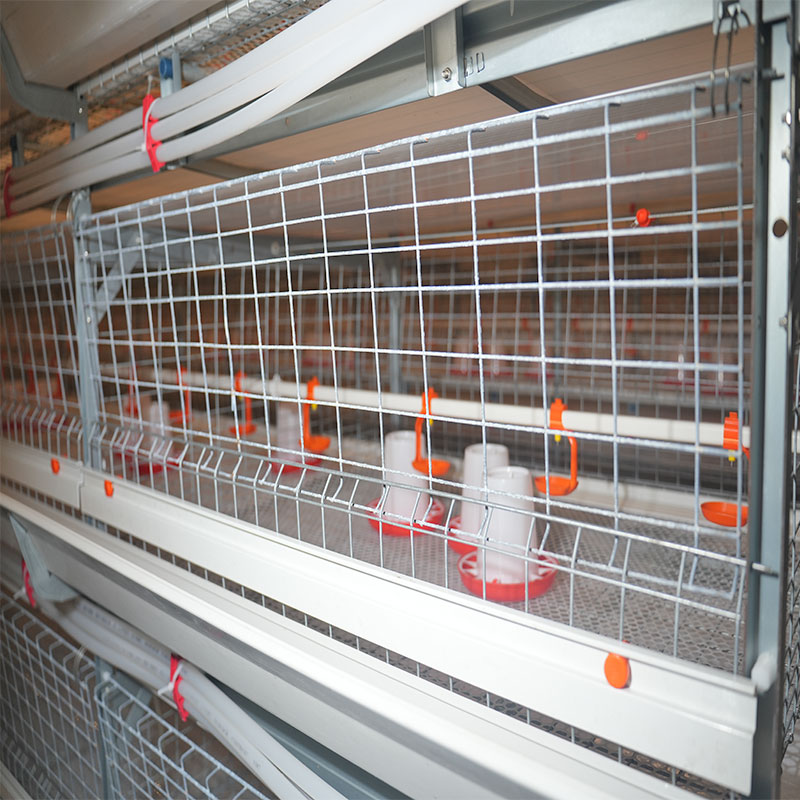
Your coop is a fortress. Ensure it has:
Hardware Cloth (1/2 inch): Use this—not chicken wire—on all openings. Chicken wire keeps chickens in but does not keep predators out.
Secure Latches: Raccoons can open simple hooks and slides. Use locking carabiners or padlocks.
Buried Apron: Bury hardware cloth 12 inches out from the base of the run walls to deter diggers like foxes and dogs.
Solid LockUp at Night: A door that automatically closes or that you religiously close at dusk is nonnegotiable.
Ventilation should be high—at or above roost level. This allows moist, ammonialaden air to escape while preventing cold wind from blowing directly onto resting birds. Look for coops with adjustable vents under the eaves or along the top of walls.
Roosts: Provide flat wooden bars (2x4 with rounded edges is ideal), at least 812 inches per bird, placed higher than the nesting boxes.
Nesting Boxes: Plan for one box for every 34 hens. Each should be about 12x12x12 inches, filled with soft bedding like pine shavings or straw.
The best designs have features that save you time:
Large Access Doors or panels that open fully.
Removable Dropping Trays under roosts.
Slanted Roofs on runs to shed rain/snow easily.
Durable materials that can be hosed down (like sealed wood or plastic).
| Material | Pros | Cons | Best For |
| : | : | : | : |
| Wood (Cedar/Pine) | Natural insulation; strong; customizable; attractive. | Requires sealing/treatment; can harbor mites if not maintained; heavier. | Permanent coops; DIY builders; cold climates. |
| Plastic/Composite | Rotproof; easy to clean; lightweight; miteresistant. | Can be less sturdy; may degrade in UV light over time; less insulation. | Mobile tractors; damp climates; prefab coops. |
| Metal (Galvanized) | Extremely strong/predatorproof; fireproof; durable. | Poor insulation (hot/cold); can condensate inside in winter/heavy rain noise inside during storms.| Runs/fencing elements only typically used as part of larger structure rather than entire shelter unless wellinsulated |
Ask yourself these questions:
1. How many hens do I have/plan to get? (Always plan for more!)
2.What is my primary predator threat? (This dictates security needs.)
3.What is my local climate? (Dictates insulation/ventilation balance.)
4.How much time do I have for daily/weekly maintenance?
5.What is my budget? (Remember: investing upfront saves money on vet bills later.)
6.Am I handy enough to build my own or should I buy prefabricated?
Ultimately,the best cagefor your hens isn't necessarily themost expensiveorfeatureladenone on themarket.It'sthestructurethatreliablykeeps themsafe,dry,andstressfreewhile fittingseamlesslyintoyourlife.Whetheryouchoosea sturdywoodencoopwitha spaciousrun,a cleverlydesignedmobiletractorora custombuiltmasterpieceprioritizingyourflock'swelfareoverallelsewillleadtothehappiesthensandthemostrewardingexperienceforyou.Theyrewardyourcarewitheggs,buttheirhealthandcontentmentarethetruemeasureofsuccess.Startwiththeirneedsandyoucan'tgowrong
Q1: How much does a good chicken coop cost?
A1: Prices vary wildly.A basic prefab coop for34chickens starts around$300$500.A quality,welldesignedcoopfor6hens oftenrangesfrom$800to$2000.DIYbuildscan save3050%butrequiretimeandskill.Mobiletractors typicallycost$400$1000.Rememberthisisalongterminvestmentinyourflock'shealth
Q2: Can I keep chickens in just acagewithoutarun?
A2: Itisnotrecommendedforlongtermhousing.Chickensareforagersandneedspacefornaturalbehaviorsandsunlight.Permanentconfinementtoasmallcageleadstobehavioralproblems,poorhealth,andweakenedbones.Ifspaceisextremelylimitedconsiderifchickenkeepingissuitableforyoursituation
Q3:Whatistheeasiestchickencoptoclean?
A3:Coopswithlargeaccessdoorsremovabledroppingtraysdirectlyundertheroostsandsmoothinteriorsurfacesareeasiest.Someplasticcoopshavepullouttraysandsnapapartpanelsforsimplehosingdown.Elevatedcoopswithslidingdroppingsboardsarealsoahugehelp
Q4:Dochickensneedheatintheircoopinwinter?
A4: Generallyno!Healthyadultchickenswithaproperlyweatherproofeddryanddraftfreecoopcantolerateverycoldtemperatures.Heatinglampsinfirehazardsandoftenpreventbirdsfromacclimating.Focusonincreasingbeddingprovidingextrafeedblockingwindandensuringwaterdoesn'tfreeze.Ventilationremainscriticaltopreventfrostbitefromhumidity
Q5:Howsmallistoosmallforachickencoop?
A5:A coopthatdoesnotmeettheminimumspacerequirementslistedaboveistoosmall.Signsyourscoopistoosmallincludeaggressionfeatherpeckingdirtyeggsincreaseddiseaseandhensthatseemdesperatetoescapewhenyouservetheirrunspace.Moreisalwaysbetterwhenitcomestocoopsize
Q6:Whatisthebestflooringforachickencageorcoop?
A6:Themostcommonandeffectiveflooringisdeepbedding.Directlyonthewoodorplasticfloorlayerpine shavingsorsimilarabsorbentmaterial.Thiscreatesacushionedinsulatingandeasytocleanbase.The"deeplitter"methodwhereyouonlyaddfreshbeddingontopworkswellformanymonths.Strawcanharbormoldandmitesifitgetsdampsoavoiditinhumidclimatesorwetconditions.Concreteiseasytohosebutcoldandhardonyourhens'feetunlesscoveredwithdeepbedding.Wirefloorsarediscouragedascancausefootinjuriesunlessusedsparinglyasaremovedroppingstrayoverasolidbase
1. Drinking system include the water pipes, water pressure adjuster, drinking nipples, Waterline front-end device, dosing system etc, choose them according to customer's needs.
2. High-quality water drinking pipes, pressure regulating valves and water drinking nipples can effectively prevent the water leakage. Drinking system adopt the closed piping system, which can minimize the water pollution.
3. 360-degree drinking nipples provide adequate drinking water for poultry at all stages.
4. The automatic drinking water system mainly adopts the steel ball drinking nipple. lt uses imported high-grad stainless steel, POM resin, and APS engineering material, which is wearing resistant, and the durability can be used for long time.



1. Automatic feeding machine can be chosen between gantry and ladder feeding machine. Gantry type feeding machine is a relatively economical and practical machine with simple operation, remote control walking character, easy to manage.
2. Mechanical transmission device running smoothly, low noise, long service life.
3. With the use of automatic control, the feeding system can adjust the amount of material.
4. Feeding with arched structure, high carrying capacity, not easily deformed.
5. Saving man power, saving feed, greatly improving the efficiency of Large-scale farming.
6. The walking speed of gantry feeding machine is 9--12 m/min.




1. Manure removing system included scraper type and conveyor belt type, Which can reduce the labor intensity and labor cost, keep the chicken shed dry and clean.
2. A type chicken cage can use scraper type or conveyor belt type.


3. The scraper type is suitable for A type cages, which can clean two or three rows. For the starters, this type is a good choice. lt can not only save some labor cost, but also save some investment in the whole project. The cleaning speed is 6-10 meters per minute.
4. Conveyor belt type is more suitable for large scale farming. The manure removing belt we use is high quality PP material (polypropylene). The walking speed is 2-4 meters per minute.



High Quality Pellets Made by Mobile Pellet Machine
1. It has professional designed angle of the blade. After the dynamic balance test one by one, the blade can operate smoothly.
2. The air volume is consistent in the whole life of the fan. Bearings has advantage of high strength, low noise, durable and so on.
1. The cooling pads uses high-quality wet curtain paper and adopts space cross-linking technology, which has the advantages of high water absorption, high water resistance, anti-toxicity and long service life.
2. The cooling efficiency is over 80%, without surfactant, natural water absorption, fast diffusion speed and long-lasting effect.
3. The product does not contain phenol and other chemical substances that are easy to cause skin allergies. It is non-toxic and harmless to the human body and chicken when installed and used. It is green, safe, energy-saving, environmentally friendly, economical, and easy to install.
4. The frame aluminum alloy has high strength, good corrosion resistance, durability and beautiful appearance.
5. Use a special filter for the cooling pad at the upper water to ensure clean water quality and support efficient water circulation components.
6. Combined with a negative pressure fan, it can effectively lower the indoor temperature.
The window is made of special selected high-quality engineering plastic, with high strength and long service life, together with superior anti-aging and anti-UV performance.
Function: Ventilation of the chicken house, usually used in the winter.
This system can adjust the wind speed and direction, thus the cold air will not reach chicken directly , which can effectively prevent the phenomenon of cold stress in chicken.
Environmental control system equipment is suitable for large-scale and intensive farming. According to customer requirements, we can provide various types of smart poultry equipment.
1. Our poultry management system is a modular system that manages all aspects of the chicken house, such as climate, temperature, humidity, ammonia, feeding, feed weighing, lighting and ventilation systems, and can monitor the situation of the chicken house in real time through a computer and mobile phone.
2. The management computer is the heart of the poultry farm, allowing you to easily monitor the entire poultry farm.

 WeChat:+8617838608255