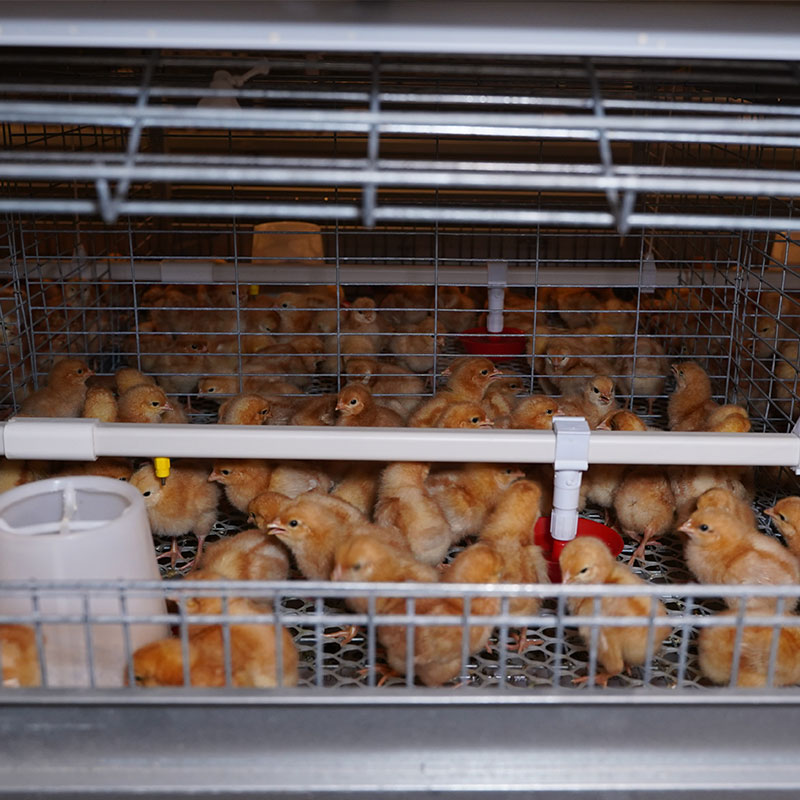
For poultry farmers across Africa, the daily rhythm of egg collection represents more than routine—it’s the pulse of their livelihood. The sight of a full tray of clean, uncracked eggs is a direct reflection of management decisions, chief among them the choice of housing. The layer cage system is not merely a piece of equipment; it’s the foundational environment where feed is converted into income. The A-Type 160-bird battery cage has emerged as a prominent solution, striking a critical balance between initial investment and long-term operational efficiency. Its design directly addresses the pressing challenges of space optimization, labor intensity, and bird health that confront farmers aiming for a sustainable commercial operation.

The core advantage of the A-Type cage lies in its spatial economy. In many regions, the cost of land for constructing poultry houses is a significant and escalating expense. A traditional deep-litter system, where birds roam freely on a floor, can require more than double the building footprint to hold the same number of birds as a well-organized cage system. The A-Type design, with its triangular roof-like structure, utilizes vertical space effectively. By stacking tiers of cages, it compresses the productive capacity of a large floor into a much smaller area. For a farmer with a 20x30 foot shed, this could mean the difference between housing 500 birds on the floor and 1,600 birds in a multi-tiered cage system. This density is not about crowding; it is about intelligent architecture that multiplies the revenue-generating potential of every square foot of the farm.
This spatial efficiency translates directly into labor savings. Consider the task of feeding. In a scatter-feeding system, a worker must carry sacks of feed, distribute it across a wide area, and contend with birds trampling and wasting a portion of it. Inside an A-Type cage system, a central feed trough runs the length of each tier. A farmer can often implement a simple manual feed trolley that runs on a rail, or connect a motorized auger system, allowing one person to deliver a precise amount of feed to 160 birds in a matter of minutes. The same principle applies to watering. Nipple drinkers are positioned within easy reach of each bird. When a hen is thirsty, she pecks at the pin, releasing a drop of water directly into her beak. This eliminates the labor of cleaning and refilling open waterers and drastically reduces spillage, keeping the manure below drier and the overall environment healthier.
The management of manure is perhaps one of the most underappreciated benefits of this system. In a deep-litter house, manure mixes with bedding material, feathers, and split water. This moist, organic mass requires regular turning and eventual complete removal—a physically demanding and time-consuming job that releases high levels of ammonia. In the A-Type cage, the slanted wire floor allows droppings to fall through, away from the birds. They accumulate on a manure tray or, in more advanced setups, on a drying plate beneath each tier. Because the birds are separated from their waste, the manure remains relatively dry and manageable. A worker can scrape these trays clean periodically with far less effort than a full litter overhaul. This separation is a critical health intervention. It breaks the cycle of parasite and pathogen transmission that is common in floor systems, where birds are in constant contact with their own feces.
The design of the cage itself is tailored to the hen’s laying behavior and well-being. The floor is not flat but sloped, typically at a gentle angle of around 8 to 10 degrees. When a hen lays an egg, it does not remain where it was laid. It immediately rolls away from the bird, down the slope, and out of the cage onto the egg collection tray that runs along the front of each tier. This simple gravitational mechanism is crucial. It prevents the hens from pecking at or breaking the eggs, a common cause of loss in less managed systems. The eggs collected on the tray are consistently cleaner, having rolled away from the manure zone, and they suffer far fewer hairline cracks that can render them unmarketable. The cage also includes a dedicated feed trough and a drinker line, ensuring that every bird has unimpeded access to nutrition and water without having to compete aggressively within a large flock.

When evaluating the "cheapest" cage, the perspective must extend far beyond the initial invoice price. The true cost is measured over the productive lifetime of the system. A cage made from thin, low-grade wire that begins to rust after the first year is not cheap. It will sag, potentially trapping birds' legs or heads. The galvanization will wear off, leading to constant corrosion that weakens the structure and can introduce toxic elements into the environment. The manure trays might be made of flimsy plastic that cracks under the weight of a worker during cleaning. These failures lead to bird mortality, increased veterinary costs, and a system that may need complete replacement long before the investment has been recouped.
A durable system, even at a slightly higher upfront cost, is the more economical choice. Look for cages constructed from heavy-gauge, electro-galvanized steel wire. This material can withstand the constant pecking and scratching of the hens and resist the corrosive effects of ammonia and moisture in the poultry house. The welding points at every joint should be solid and smooth, with no sharp burrs that could injure a bird's feet or feathers. The supports and frames should feel rigid and not flex under pressure. A farmer should ask the supplier about the thickness of the wire and the quality of the galvanization coating. A system that lasts for eight to ten years, protecting the birds and facilitating efficient management, has a far lower annual cost than a system that fails in three.
The 160-bird capacity is a modular unit that allows for scalable planning. A new farmer might start with a single block of these cages, housing 160 birds, to test the market and their management skills. As demand for eggs grows and operational experience is gained, they can add identical blocks alongside the first. This modularity provides a clear growth path without requiring a complete redesign of the poultry house or the adoption of a different management system. The equipment—feed trolleys, egg baskets, cleaning tools—remains consistent. This repeatability simplifies training for farm workers and streamlines spare parts inventory, as all cages share the same components.
Installation is a critical phase that determines the long-term performance of the system. The foundation must be perfectly level. An unlevel installation will cause feed to pile up on one side of the trough, leaving birds at the higher end hungry. Water in the pipe lines may not distribute evenly. Perhaps most critically, the gentle slope of the cage floor will be compromised. On an unlevel surface, eggs may not roll out consistently; they can get stuck in the middle of the cage or roll with such force that they crack against the end of the collection tray. It is worth investing the time to use a spirit level during setup, checking and rechecking the frames before the final tightening of all bolts. Furthermore, adequate aisle space between the cage rows is not a luxury; it is a necessity for animal welfare and workflow. A worker must be able to walk down the aisle to inspect birds, collect eggs, and remove mortalities without having to squeeze sideways. Narrow aisles slow down every single daily task and increase the risk of injury to both the worker and the birds.
Routine daily observation is the most powerful diagnostic tool a farmer has. The design of the A-Type cage makes this observation efficient. As a farmer walks the aisles for the morning egg collection, they are also on a health inspection tour. They can quickly spot a bird that is isolated, lethargic, or showing signs of distress. Is a particular nipple drinker leaking and creating a wet patch? Is there a section of the feed trough that is consistently empty, indicating a blockage in the delivery system? These small issues, if caught early, can be rectified before they escalate into larger problems affecting productivity. The system provides the structure for consistent monitoring, but it is the farmer's attentive eye that turns that structure into a proactive health management program.
The relationship between the cage environment and feed conversion ratio is direct and financially significant. Because the birds in cages expend less energy on roaming, fighting for dominance, and maintaining body temperature in drafty conditions, the calories from their feed are channeled more efficiently into egg production. A hen that uses 1.5 kilograms of feed to produce a dozen eggs is more profitable than a hen that requires 1.8 kilograms for the same output. Over a flock of 1,600 hens, that difference of 0.3 kilograms per dozen equates to hundreds of kilograms of saved feed every month. The controlled feeding in the trough system also prevents the birds from selectively eating only the high-energy components of the feed and wasting the rest, a common problem in floor systems. Every handful of feed wasted is money literally thrown on the floor.
The timing of the transition from pullets to the laying cages is a delicate operation. Young birds, typically around 16-18 weeks of age, should be moved into their laying quarters before they begin to lay. This gives them time to acclimate to their new environment, learn the locations of the feed and water, and establish their place in the small social group within the cage without the added stress of starting egg production. Moving them too early risks stunting their growth if they cannot compete for resources in the new setup. Moving them too late means the first eggs may be laid on the transport crates or on the floor of the cage before they have learned the laying roll-out process, leading to a higher number of dirty or lost eggs at the start of the cycle.
The end of a laying cycle, after 12 to 14 months of peak production, presents another management decision. The entire house must be depopulated, cleaned, and disinfected before a new flock is introduced. This is the opportunity for major maintenance on the cage system itself. Every component should be inspected. Worn-out nipple drinker pins should be replaced. Feed troughs should be checked for dents or rust spots that could impede the flow of feed. Manure scrapers and trays should be examined for cracks or warping. Performing this maintenance during the empty period ensures that the next flock enters a system that is in "like-new" condition, ready to support another successful production cycle without interruption from equipment failure.
The choice of a layer cage system is a strategic investment in the future of a poultry enterprise. It is a decision that moves the operation from a labor-intensive, variable-outcome model to a controlled, efficient, and scalable business. The A-Type 160-bird cage, when selected for quality and managed with attention to detail, provides a framework that protects the health of the birds, optimizes the use of feed and labor, and delivers a consistent, high-quality product to the market. It transforms the daily challenges of poultry farming from battles against waste and disease into a predictable process of conversion, where inputs are managed and outputs are maximized. For the African poultry farmer looking to build a resilient and profitable business, this system is not just a purchase of equipment; it is an investment in a more certain and productive future.
1. Drinking system include the water pipes, water pressure adjuster, drinking nipples, Waterline front-end device, dosing system etc, choose them according to customer's needs.
2. High-quality water drinking pipes, pressure regulating valves and water drinking nipples can effectively prevent the water leakage. Drinking system adopt the closed piping system, which can minimize the water pollution.
3. 360-degree drinking nipples provide adequate drinking water for poultry at all stages.
4. The automatic drinking water system mainly adopts the steel ball drinking nipple. lt uses imported high-grad stainless steel, POM resin, and APS engineering material, which is wearing resistant, and the durability can be used for long time.



1. Automatic feeding machine can be chosen between gantry and ladder feeding machine. Gantry type feeding machine is a relatively economical and practical machine with simple operation, remote control walking character, easy to manage.
2. Mechanical transmission device running smoothly, low noise, long service life.
3. With the use of automatic control, the feeding system can adjust the amount of material.
4. Feeding with arched structure, high carrying capacity, not easily deformed.
5. Saving man power, saving feed, greatly improving the efficiency of Large-scale farming.
6. The walking speed of gantry feeding machine is 9--12 m/min.




1. Manure removing system included scraper type and conveyor belt type, Which can reduce the labor intensity and labor cost, keep the chicken shed dry and clean.
2. A type chicken cage can use scraper type or conveyor belt type.


3. The scraper type is suitable for A type cages, which can clean two or three rows. For the starters, this type is a good choice. lt can not only save some labor cost, but also save some investment in the whole project. The cleaning speed is 6-10 meters per minute.
4. Conveyor belt type is more suitable for large scale farming. The manure removing belt we use is high quality PP material (polypropylene). The walking speed is 2-4 meters per minute.



High Quality Pellets Made by Mobile Pellet Machine
1. It has professional designed angle of the blade. After the dynamic balance test one by one, the blade can operate smoothly.
2. The air volume is consistent in the whole life of the fan. Bearings has advantage of high strength, low noise, durable and so on.
1. The cooling pads uses high-quality wet curtain paper and adopts space cross-linking technology, which has the advantages of high water absorption, high water resistance, anti-toxicity and long service life.
2. The cooling efficiency is over 80%, without surfactant, natural water absorption, fast diffusion speed and long-lasting effect.
3. The product does not contain phenol and other chemical substances that are easy to cause skin allergies. It is non-toxic and harmless to the human body and chicken when installed and used. It is green, safe, energy-saving, environmentally friendly, economical, and easy to install.
4. The frame aluminum alloy has high strength, good corrosion resistance, durability and beautiful appearance.
5. Use a special filter for the cooling pad at the upper water to ensure clean water quality and support efficient water circulation components.
6. Combined with a negative pressure fan, it can effectively lower the indoor temperature.
The window is made of special selected high-quality engineering plastic, with high strength and long service life, together with superior anti-aging and anti-UV performance.
Function: Ventilation of the chicken house, usually used in the winter.
This system can adjust the wind speed and direction, thus the cold air will not reach chicken directly , which can effectively prevent the phenomenon of cold stress in chicken.
Environmental control system equipment is suitable for large-scale and intensive farming. According to customer requirements, we can provide various types of smart poultry equipment.
1. Our poultry management system is a modular system that manages all aspects of the chicken house, such as climate, temperature, humidity, ammonia, feeding, feed weighing, lighting and ventilation systems, and can monitor the situation of the chicken house in real time through a computer and mobile phone.
2. The management computer is the heart of the poultry farm, allowing you to easily monitor the entire poultry farm.

 WeChat:+8617838608255