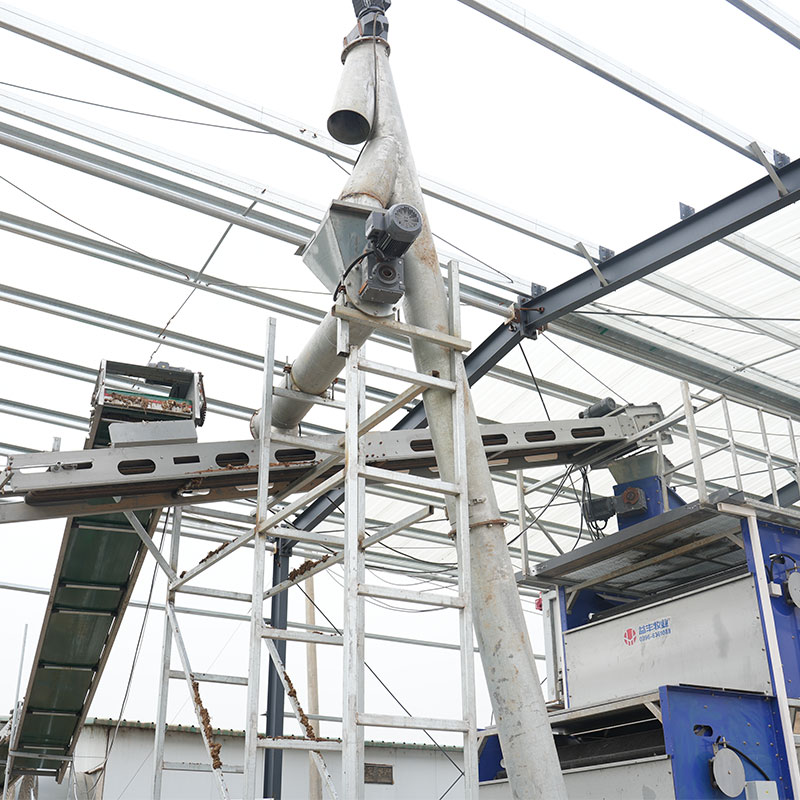
The morning feed run tells the story. For a poultry farmer using older cage systems or floor rearing, it begins with the sound of scrambling, the sight of dust and feathers kicked up by a thousand hungry birds, and the physical strain of navigating a narrow walkway with a heavy cart. For a farmer using a modern Big Chicken Cage system, it’s different. A switch is flipped, a low hum begins, and a perfectly metered line of feed travels silently down the length of the building, delivering a precisely formulated ration to every single bird at exactly the same time. There is no scrambling, no waste underfoot, just the quiet, efficient conversion of feed into protein. This single moment captures the core promise of these systems: controlled, precise, and scalable management.
The term "Big Chicken Cage" often brings to mind vast, industrial complexes, but the principles apply to operations of many sizes. At its heart, it’s not about scale for scale’s sake; it’s about applying a higher degree of environmental and husbandry control to achieve predictable outcomes. The system is an integrated framework, typically built in long, multi-tiered rows called batteries, where every component—feeding, watering, climate, lighting, and manure management—is automated and interconnected.

Consider the laying hen. In a less controlled environment, her day is dictated by external variables. A sudden noise can cause a panic, leading to smothering. A hot spot near a ventilation fan means she drinks more, while a bird in a stagnant corner drinks less, leading to inconsistent flock health. The light from a morning sunrise hitting one end of the barn sooner than the other can throw off laying cycles. A Big Chicken Cage system is designed to eliminate these variables. It creates a single, optimized microclimate for the entire flock.
The feeding mechanism is a prime example of this precision. Instead of a hopper that birds can scratch from and waste feed, these systems use a continuous chain or spiral auger that runs in a trough. The farmer can program the feed mill to run for specific intervals, say fifteen minutes every two hours. This isn’t just about automation; it’s about behavior and biology. The birds learn the schedule. They don’t pace or stress waiting for food because its arrival is predictable. This regularity promotes calmness and improves feed conversion ratios—the measure of how many pounds of feed it takes to produce a pound of eggs or meat. If a farmer notices a drop in consumption at a particular tier, the problem is isolated. It’s not a mysterious flock-wide issue; it could be a simple adjustment needed on one specific feed line motor.
Watering follows the same philosophy. Nipple drinkers are standard, designed to release water only when a bird pecks at them. This keeps the water clean and free from bedding, feces, or algae. The system is connected to a central water line with medicators, allowing a farmer to administer vaccines, vitamins, or medications uniformly to the entire flock through their water supply. Imagine trying to evenly administer a vaccine to 20,000 birds on the floor. The stress of catching birds and the inconsistency of delivery are significant challenges. With an automated system, the farmer adds the treatment to a reservoir, and every bird receives the correct dosage simply by doing what it does naturally: drinking.
Perhaps the most significant advancement, and the most misunderstood, is the manure management system. In traditional setups, manure accumulates. It’s a constant source of ammonia, a gas that irritates birds’ respiratory tracts, leading to higher susceptibility to disease and poorer overall air quality for both the birds and the farm workers. The weekly or bi-weekly clean-out is a labor-intensive, unpleasant chore.
Big Chicken Cage systems incorporate continuous manure belts. Typically, a thin, synthetic belt runs beneath each tier of cages. Instead of manure building up for weeks, these belts are programmed to run on a schedule, often once every two or three days. They gently transport the dry, cake-like manure to the end of the building where it drops into a cross-conveyor or a collection cart. The key here is dryness and timing. Because the manure is removed so frequently and is exposed to air movement, it doesn’t have time to ferment and release high levels of ammonia. The difference in air quality inside the poultry house is immediately noticeable; the sharp, pungent smell of ammonia is replaced by a mustier, drier odor.
This has a direct impact on bird health. Lower ammonia levels mean healthier respiratory systems, which in turn means birds require fewer antibiotics to combat secondary infections. The dry manure collected is also a more valuable byproduct. It can be sold directly as fertilizer or further processed into compost without the need for extensive drying, creating an additional revenue stream that offsets operational costs.
For the layer farmer, egg collection is transformed. Hand-collecting eggs from floor nests or even from older cage systems is a time-consuming process fraught with breakage. In a modern cage system, the floor of the cage is sloped. When a hen lays an egg, it gently rolls out of the cage onto a soft, rubberized collection belt. This belt can be run multiple times a day, transporting the eggs directly to the central packing area at the end of the building. The eggs never touch the floor, are handled minimally, and are far less likely to be cracked or soiled. This results in a higher percentage of Grade A eggs, which command a premium price. The farmer can also install sensors on the collection belt to count eggs from specific rows, providing instant data on daily production and quickly identifying any drop in output from a particular section of the house.
The control extends to the very light the birds experience. Lighting is no longer a simple on/off switch. It’s a programmed tool. Farmers can use dimmable LED systems to simulate a slow, natural sunrise and sunset, preventing the stress of a sudden blackout that can cause birds to pile in a corner. They can program specific light intensities for different stages of the bird’s life—brighter for pullets to encourage activity and feed intake, softer for layers to promote calmness and egg production. This photoperiod management is a powerful lever for regulating maturity and productivity.
The decision to transition to such a system is a major capital investment, and the planning stage is critical. It’s not merely a purchase of equipment; it’s a redesign of the entire production workflow. A farmer must consider building specifications: roof strength to support the weight of multi-tiered systems, floor flatness for proper installation, and insulation quality to maximize the efficiency of the climate control systems. Power redundancy is also a key factor. A backup generator is not an optional extra; it is essential. If the power fails, so does the ventilation, the feeding, and the watering. A farm can suffer significant losses in a very short time without backup power.
The type of bird also dictates the system design. A system built for egg-laying hens will look different from one built for broilers or pullets. Layer cages include the egg roll-out design and are often configured for more birds per cage, as layers are smaller and less active. Broiler systems, focused on meat production, often prioritize space allowance to ensure proper growth and leg health, and may feature simpler feeding systems. The choice of cage door type—roll-out or pop-up—affects the ease of bird placement and depopulation. These are not one-size-fits-all decisions; they are strategic choices made in consultation with equipment manufacturers and based on the farmer’s specific goals.
Beyond the machinery, this style of farming demands a new skillset from the farmer and their staff. The role shifts from manual labor to data analysis and mechanical oversight. Instead of shoveling feed, a worker is reading digital panels, interpreting production graphs, and performing routine maintenance on motors and belts. A vibrating feed line might indicate a worn sprocket. A drop in water pressure could signal a blocked filter or a leak. The modern poultry farmer becomes a systems manager, proactively maintaining the equipment to prevent downtime.
The financial calculation is complex. The upfront cost is substantial, often running into hundreds of thousands of dollars for a single house. This must be weighed against the long-term gains: drastic reductions in labor costs, significant improvements in feed conversion, higher product quality (more saleable eggs, better bird health), and the value of the manure byproduct. The business case is often made on consistency and risk mitigation. The system provides a buffer against the variables that can cripple a traditional operation—labor shortages, disease outbreaks exacerbated by poor air quality, and product quality issues.

Ultimately, the adoption of a Big Chicken Cage system represents a fundamental evolution in poultry production. It is a move from reactive to proactive management. It replaces guesswork with data, physical strain with mechanical advantage, and variable outcomes with controlled consistency. The goal remains the same as it has always been for farmers: to raise healthy birds efficiently and productively. The tools, however, have changed dramatically, offering an unprecedented level of command over the environment and the economics of the farm. The morning feed run becomes not a chore, but a confirmation that the entire operation is running exactly as planned.
1. Drinking system include the water pipes, water pressure adjuster, drinking nipples, Waterline front-end device, dosing system etc, choose them according to customer's needs.
2. High-quality water drinking pipes, pressure regulating valves and water drinking nipples can effectively prevent the water leakage. Drinking system adopt the closed piping system, which can minimize the water pollution.
3. 360-degree drinking nipples provide adequate drinking water for poultry at all stages.
4. The automatic drinking water system mainly adopts the steel ball drinking nipple. lt uses imported high-grad stainless steel, POM resin, and APS engineering material, which is wearing resistant, and the durability can be used for long time.



1. Automatic feeding machine can be chosen between gantry and ladder feeding machine. Gantry type feeding machine is a relatively economical and practical machine with simple operation, remote control walking character, easy to manage.
2. Mechanical transmission device running smoothly, low noise, long service life.
3. With the use of automatic control, the feeding system can adjust the amount of material.
4. Feeding with arched structure, high carrying capacity, not easily deformed.
5. Saving man power, saving feed, greatly improving the efficiency of Large-scale farming.
6. The walking speed of gantry feeding machine is 9--12 m/min.




1. Manure removing system included scraper type and conveyor belt type, Which can reduce the labor intensity and labor cost, keep the chicken shed dry and clean.
2. A type chicken cage can use scraper type or conveyor belt type.


3. The scraper type is suitable for A type cages, which can clean two or three rows. For the starters, this type is a good choice. lt can not only save some labor cost, but also save some investment in the whole project. The cleaning speed is 6-10 meters per minute.
4. Conveyor belt type is more suitable for large scale farming. The manure removing belt we use is high quality PP material (polypropylene). The walking speed is 2-4 meters per minute.



High Quality Pellets Made by Mobile Pellet Machine
1. It has professional designed angle of the blade. After the dynamic balance test one by one, the blade can operate smoothly.
2. The air volume is consistent in the whole life of the fan. Bearings has advantage of high strength, low noise, durable and so on.
1. The cooling pads uses high-quality wet curtain paper and adopts space cross-linking technology, which has the advantages of high water absorption, high water resistance, anti-toxicity and long service life.
2. The cooling efficiency is over 80%, without surfactant, natural water absorption, fast diffusion speed and long-lasting effect.
3. The product does not contain phenol and other chemical substances that are easy to cause skin allergies. It is non-toxic and harmless to the human body and chicken when installed and used. It is green, safe, energy-saving, environmentally friendly, economical, and easy to install.
4. The frame aluminum alloy has high strength, good corrosion resistance, durability and beautiful appearance.
5. Use a special filter for the cooling pad at the upper water to ensure clean water quality and support efficient water circulation components.
6. Combined with a negative pressure fan, it can effectively lower the indoor temperature.
The window is made of special selected high-quality engineering plastic, with high strength and long service life, together with superior anti-aging and anti-UV performance.
Function: Ventilation of the chicken house, usually used in the winter.
This system can adjust the wind speed and direction, thus the cold air will not reach chicken directly , which can effectively prevent the phenomenon of cold stress in chicken.
Environmental control system equipment is suitable for large-scale and intensive farming. According to customer requirements, we can provide various types of smart poultry equipment.
1. Our poultry management system is a modular system that manages all aspects of the chicken house, such as climate, temperature, humidity, ammonia, feeding, feed weighing, lighting and ventilation systems, and can monitor the situation of the chicken house in real time through a computer and mobile phone.
2. The management computer is the heart of the poultry farm, allowing you to easily monitor the entire poultry farm.

 WeChat:+8617838608255