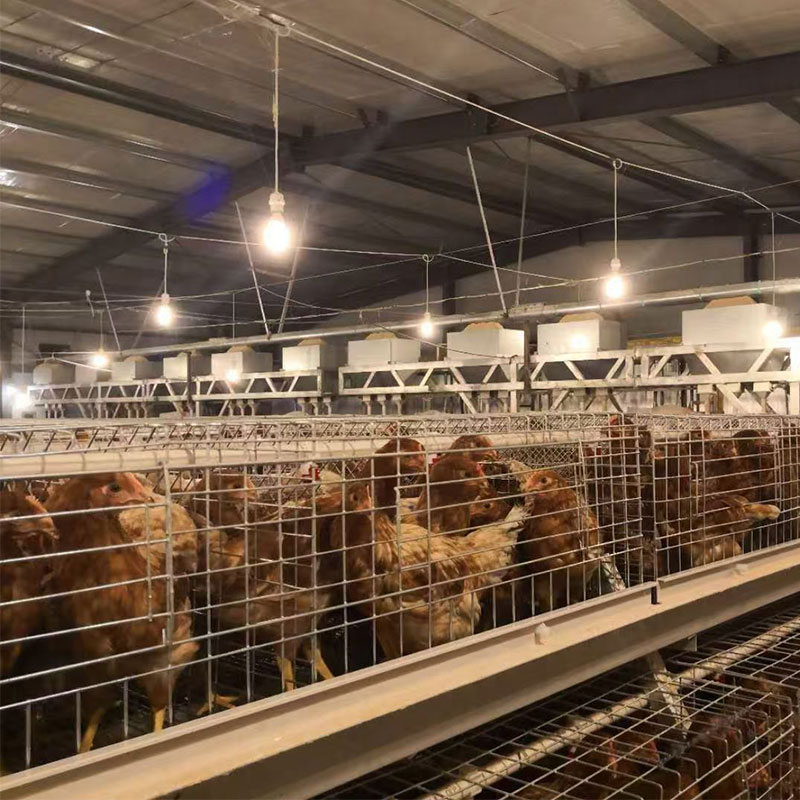
For poultry farmers accustomed to the rigid demands of chicken coops and broiler houses, the concept of a portable, ornamental cage might seem like a departure from standard practice. However, the operational principles behind well-designed parrot villas offer significant, transferable benefits for small-scale poultry operations, specialty bird rearing, and farm diversification. These systems are not merely decorative items but represent a different approach to animal housing, prioritizing animal visibility, environmental interaction, and management flexibility.
Rethinking Space and Structure
The term "large space" in these cages is relative to the bird. For a parrot, it means room to fly between perches. For a poultry farmer, this translates to a housing unit that prevents the negative behaviors associated with overcrowding. In a standard confined coop, birds lower in the pecking order can have no escape from more aggressive flock mates, leading to feather pecking, cannibalism, and reduced welfare. A cage designed with vertical space and multiple levels, much like a parrot villa, allows subordinate birds to retreat to a higher or separate platform. This simple architectural change can drastically reduce stress-related injuries without requiring a massive footprint on the farm.
Consider a farmer raising a small batch of specialty silkie chickens or valuable game fowl. Placing them in a traditional, single-level enclosure on the ground can make them vulnerable to dampness and parasites. A parrot villa-style cage, with its elevated base and wire mesh floor, keeps the birds away from direct contact with soiled bedding. Droppings fall through the mesh, keeping the primary living area cleaner and drier. This is not just about cleanliness; it’s a direct intervention against conditions like bumblefoot, a common bacterial infection and swelling on the footpad that occurs when birds stand in wet, dirty litter for prolonged periods.
The construction materials also warrant attention. While chicken wire is common, it is flimsy and can be breached by determined predators. The powder-coated, wrought-iron frames typical of high-end parrot cages offer superior strength and durability. A farmer using such a unit to house a broody hen and her chicks on the porch would have far greater peace of mind against raccoons or stray cats than with a standard wire box. The powder coating is crucial—it prevents rust from forming from morning dew or rain, ensuring the structure doesn’t weaken over a single season.
The Critical Role of Breathability
In poultry housing, ventilation is a matter of life and death. Ammonia from droppings accumulates quickly, damaging birds’ respiratory systems and making them susceptible to diseases like avian influenza. The concept of "breathability" in a parrot cage is the small-scale equivalent of a well-ventilated poultry house. The entire structure is a mesh panel, allowing for a continuous cross-flow of air. This passive ventilation system carries moisture and ammonia away from the birds, replacing stale air with fresh.
Imagine a hot, humid afternoon. Inside a solid-walled coop, the air becomes still, hot, and heavy with moisture, forcing birds to pant excessively to cool down. This panting is a sign of heat stress, which suppresses immune function and reduces weight gain. A highly ventilated cage placed in a shaded area, however, allows the breeze to pass directly through the living space, providing natural cooling. For a few birds being kept for show, for recovery from illness, or for breeding, this constant air exchange is a simple, zero-energy method of maintaining a healthy microenvironment. It prevents the condensation that leads to wet feathers and chilled birds, a common problem in poorly ventilated coops during temperature swings.
Mobility as a Management Tool
The "portable" and "outdoor" aspects of these cages are perhaps their most valuable features for a modern, integrated farm. Portability transforms a static pen into a dynamic management tool. The principle of rotational grazing for cattle and sheep is well-established; it prevents overgrazing, breaks parasite cycles, and fertilizes the land evenly. The same principle can be applied to poultry on a micro-scale using a portable cage.

A farmer can move a robust, portable cage to a fresh patch of lawn every day. The birds inside—whether they are quail, bantams, or young pullets—gain access to fresh grass, insects, and sunshine. They perform their natural foraging behaviors, which improves their diet and mental state. Meanwhile, their droppings are deposited directly onto the pasture, providing a light, natural fertilizer. After a day, the cage is moved, preventing the birds from denuding and contaminating a single area. This system, often called a "chicken tractor" in larger forms, is perfectly executed by a sturdy, portable cage for smaller groups. It integrates the birds into the farm's ecosystem without the damage associated with a fixed run.

This mobility is also invaluable for biosecurity and isolation. When new birds arrive on the farm, they should be quarantined away from the main flock for several weeks to monitor for illness. A portable cage can be placed in a separate shed or a distant part of the yard, creating an instant, secure quarantine unit. Similarly, if a bird is injured, it can be easily isolated in a well-ventilated, peaceful cage to recover without being bullied or having its wounds pecked by others. The cage becomes a mobile hospital ward or isolation room, fundamental to responsible flock management.
Functional Design for Daily Operations
The specific features of a parrot villa are not just ornamental; they have direct parallels in efficient poultry equipment. The large front doors and multiple access points are a lesson in ergonomics. Anyone who has had to reach deep into a coop to retrieve a bird or a waterer knows the struggle. A cage designed with wide-opening doors allows for easy, stress-free access for both the farmer and the bird. Refilling feed cups, changing water, and catching birds for health checks become straightforward tasks that don’t involve contortions or causing a panic in the flock.
Integrated feeding cups and water dispensers that attach to the outside of the cage are a simple but brilliant feature. In a standard pen, feed and water bowls are often placed on the ground, where they are easily kicked over, filled with bedding, or contaminated with droppings. Wall-mounted systems keep the feed clean and reduce waste. For a poultry farmer, this means less time spent cleaning and refilling dishes and more assurance that the birds have constant access to clean food and water. The detachable tray at the bottom of the cage is another key feature. Instead of cleaning the entire enclosure, a farmer can simply slide out this tray, scrape off the droppings, and replace it. This simplifies one of the most labor-intensive chores in poultry keeping.
The inclusion of perches is not merely for aesthetics. In a poultry context, perches are a welfare requirement for many bird types. Chickens have a strong instinct to roost off the ground at night. This makes them feel secure from ground predators and keeps them warmer, as they can fluff their feathers over their feet. Providing sturdy, varied perches in a temporary or special-purpose cage allows the birds to express this natural behavior, reducing stress and promoting better rest. For perching birds like guineafowl or pheasants, this is an absolute necessity.
Practical Applications on the Farm
The true value of this housing system is revealed in its specific applications. A poultry farmer might use it as a brooder for day-old chicks. The wire mesh is typically too large for very small chicks, but by lining the bottom with cardboard or hardware cloth for the first few weeks, the cage becomes a secure, ventilated brooder. Its portability allows the farmer to move the chicks to a sheltered, sunny spot during the day and a more protected area at night, all while keeping them safe from pets and pests.
For the breeder of fancy or show poultry, these cages are ideal for conditioning birds before an exhibition. The excellent ventilation promotes feather quality, the clean environment prevents soiling of white plumage, and the ability to isolate a bird prevents fights and broken feathers. The cage can then double as a transport and showing cage at the fair.
On a homestead, such a cage is perfect for keeping a rooster separated from young pullets until they are old enough to be introduced, or for housing a duck that needs a safe place to lay eggs away from the pond. The "ornamental" quality also has a commercial function. For farm-stay operations or agritourism businesses, having aesthetically pleasing, clean, and visible animal enclosures enhances the guest experience. A beautifully crafted cage with healthy, active birds is far more appealing than a utilitarian wire crate.
The Bird Cage Parrot Villa system, when viewed through the lens of practical poultry management, is a versatile tool that addresses core challenges of animal welfare, operational efficiency, and farm flexibility. Its design principles of ample space, superior ventilation, easy mobility, and thoughtful ergonomics provide tangible solutions for the small-scale poultry farmer looking to improve their practices, protect their birds' health, and integrate their flock more thoughtfully into the daily rhythm of farm life.
1. Drinking system include the water pipes, water pressure adjuster, drinking nipples, Waterline front-end device, dosing system etc, choose them according to customer's needs.
2. High-quality water drinking pipes, pressure regulating valves and water drinking nipples can effectively prevent the water leakage. Drinking system adopt the closed piping system, which can minimize the water pollution.
3. 360-degree drinking nipples provide adequate drinking water for poultry at all stages.
4. The automatic drinking water system mainly adopts the steel ball drinking nipple. lt uses imported high-grad stainless steel, POM resin, and APS engineering material, which is wearing resistant, and the durability can be used for long time.



1. Automatic feeding machine can be chosen between gantry and ladder feeding machine. Gantry type feeding machine is a relatively economical and practical machine with simple operation, remote control walking character, easy to manage.
2. Mechanical transmission device running smoothly, low noise, long service life.
3. With the use of automatic control, the feeding system can adjust the amount of material.
4. Feeding with arched structure, high carrying capacity, not easily deformed.
5. Saving man power, saving feed, greatly improving the efficiency of Large-scale farming.
6. The walking speed of gantry feeding machine is 9--12 m/min.




1. Manure removing system included scraper type and conveyor belt type, Which can reduce the labor intensity and labor cost, keep the chicken shed dry and clean.
2. A type chicken cage can use scraper type or conveyor belt type.


3. The scraper type is suitable for A type cages, which can clean two or three rows. For the starters, this type is a good choice. lt can not only save some labor cost, but also save some investment in the whole project. The cleaning speed is 6-10 meters per minute.
4. Conveyor belt type is more suitable for large scale farming. The manure removing belt we use is high quality PP material (polypropylene). The walking speed is 2-4 meters per minute.



High Quality Pellets Made by Mobile Pellet Machine
1. It has professional designed angle of the blade. After the dynamic balance test one by one, the blade can operate smoothly.
2. The air volume is consistent in the whole life of the fan. Bearings has advantage of high strength, low noise, durable and so on.
1. The cooling pads uses high-quality wet curtain paper and adopts space cross-linking technology, which has the advantages of high water absorption, high water resistance, anti-toxicity and long service life.
2. The cooling efficiency is over 80%, without surfactant, natural water absorption, fast diffusion speed and long-lasting effect.
3. The product does not contain phenol and other chemical substances that are easy to cause skin allergies. It is non-toxic and harmless to the human body and chicken when installed and used. It is green, safe, energy-saving, environmentally friendly, economical, and easy to install.
4. The frame aluminum alloy has high strength, good corrosion resistance, durability and beautiful appearance.
5. Use a special filter for the cooling pad at the upper water to ensure clean water quality and support efficient water circulation components.
6. Combined with a negative pressure fan, it can effectively lower the indoor temperature.
The window is made of special selected high-quality engineering plastic, with high strength and long service life, together with superior anti-aging and anti-UV performance.
Function: Ventilation of the chicken house, usually used in the winter.
This system can adjust the wind speed and direction, thus the cold air will not reach chicken directly , which can effectively prevent the phenomenon of cold stress in chicken.
Environmental control system equipment is suitable for large-scale and intensive farming. According to customer requirements, we can provide various types of smart poultry equipment.
1. Our poultry management system is a modular system that manages all aspects of the chicken house, such as climate, temperature, humidity, ammonia, feeding, feed weighing, lighting and ventilation systems, and can monitor the situation of the chicken house in real time through a computer and mobile phone.
2. The management computer is the heart of the poultry farm, allowing you to easily monitor the entire poultry farm.

 WeChat:+8617838608255