Broiler Battery Cage Systems: A Comprehensive Guide for Poultry Farmers
The quest for efficient, highvolume poultry production has led to the development of various housing systems, with the broiler battery cage system standing as one of the most debated and technically specific. Unlike their layer hen counterparts, broilers—chickens raised for meat—have unique physiological and growth requirements. This deep dive explores the broiler battery cage system in its entirety: its design, operational mechanics, economic rationale, and the significant welfare concerns that have shaped modern poultry farming. Whether you're a seasoned farmer evaluating systems or a stakeholder seeking clarity, this guide provides the expert analysis you need.
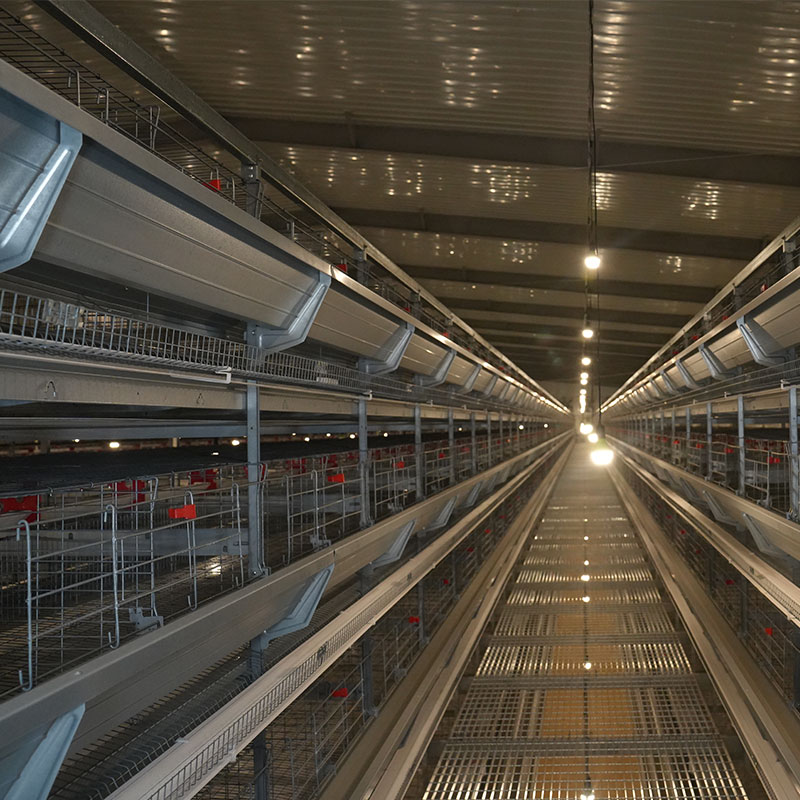
A broiler battery cage system is an intensive housing method where meat chickens (broilers) are confined in stacked rows of cages for the duration of their growout period. The term "battery" refers to the modular, repetitive stacking of identical cage units. Designed for maximum space efficiency and operational control, these systems are engineered to house thousands of birds within a single facility.
Key Design Characteristics:
MultiTiered Stacking: Cages are typically arranged in 35 tiers (Aframe or stairstep configurations) to optimize floor space.
Wire Mesh Flooring: Sloped floors allow manure to drop through onto conveyor belts or into pits below, separating birds from their waste.
Integrated Systems: Automated systems deliver feed via troughs and water via nipple lines directly to each cage.
High Density: Stocking densities are very high, with birds having minimal space to move or exhibit natural behaviors.
Proponents of battery cages for broilers highlight several operational advantages that drive economic efficiency.
The physical separation of birds from their accumulated manure is a primary benefit. This reduces contact with pathogens like E. coli and Salmonella, potentially lowering the incidence of certain bacterial diseases and the need for antibiotics. The closed environment also limits exposure to wild birds and rodents.
By severely limiting movement, caged broilers expend fewer calories on activity. This energy is theoretically redirected toward growth, leading to a more efficient conversion of feed into body mass—a critical metric in profit margins.
Automation is central to this model. Feed, water, ventilation, and lighting are centrally controlled. Egg collection (for breeder flocks) and manure removal are mechanized. This allows a single worker to manage tens of thousands of birds, reducing labor costs significantly.
Birds are easily visible and accessible for health checks, vaccination (if needed), and culling. Uniform environmental conditions (temperature, light) across cages aim to produce uniform bird growth.
Comparison Table: Broiler Battery Cages vs. Alternative Systems
| Feature | Broiler Battery Cage | Deep Litter / Barn System | FreeRange / Pasture System |
| : | : | : | : |
| Stocking Density | Very High | High | Low |
| Labor Requirement | Low (Highly Automated) | Moderate | High |
| Initial Capital Cost | Very High | Moderate | LowModerate |
| Disease Control | Potentially Higher Risk (respiratory) | Lower Risk (respiratory) |
| Feed Efficiency (FCR) | Typically Most Efficient | Moderate | Less Efficient |
| Animal Welfare Score| Lowest (Severe restrictions) | Better (Some mobility) | Highest (Natural behaviors) |
| Product Market | Standard Commercial Meat | Standard & Some Premium Markets | Niche Premium & Ethical Markets |
The use of battery cages for broilers is overwhelmingly criticized by animal welfare scientists, veterinarians, and ethical consumers. These concerns have led many regions to ban or phase out similar systems for laying hens.
Broilers are motivated to perform behaviors they cannot express in cages:
Foraging and Pecking: Unable to scratch or meaningfully explore.
Dust Bathing: Essential for feather maintenance; impossible on wire mesh.
Perching: A strong roosting instinct is completely thwarted.
FullBody Movements: Stretching wings or turning around is often physically impossible.
This leads to chronic stress, frustration, and poor welfare states.
Lameness & Leg Disorders: Rapid growth combined with lack of exercise on hard wire floors exacerbates skeletal disorders like tibial dyschondroplasia.
Contact Dermatitis: Constant contact with wire mesh leads to painful breast blisters, hock burns, and footpad lesions.
Poor Musculoskeletal Health: Lack of movement results in weaker bones and muscles.
Respiratory Issues: High ammonia levels from accumulated manure below can irritate respiratory tracts if ventilation fails.
The barren cage provides no complexity or stimulation—a stark contrast to the varied environment a bird would naturally seek.
Due to these profound welfare issues, pure battery cage systems for broilers are less common than for layers but still exist in some markets focused solely on cost minimization.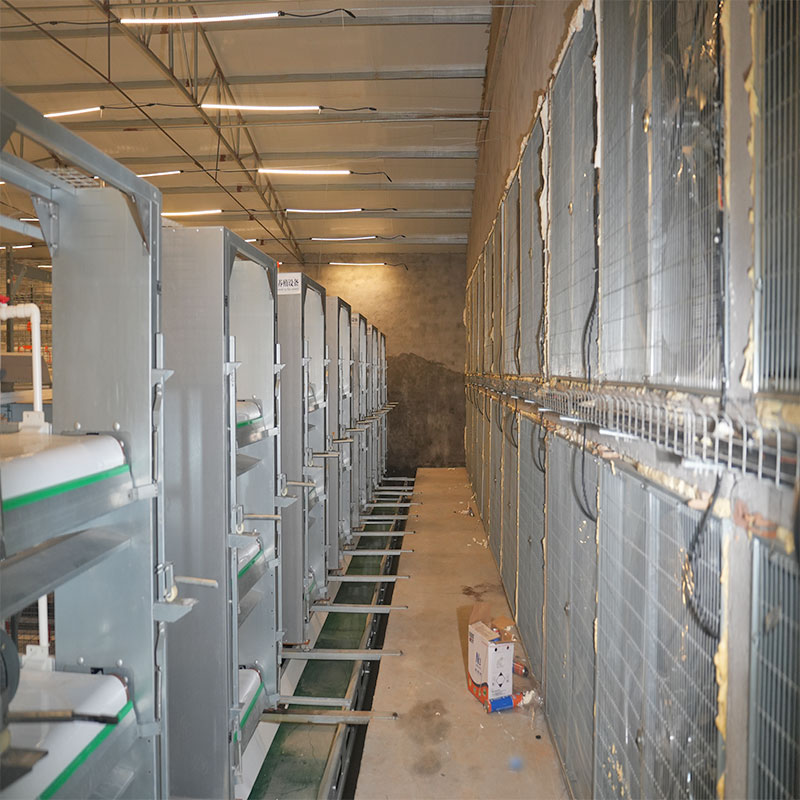
Dominant Global System: The ControlledEnvironment Barn
Most commercial broilers worldwide are raised in large barns on litter (like wood shavings). While still highdensity, this allows for walking, pecking, dust bathing (to a degree), and social interaction. It represents a balance between welfare concerns and commercial scale.
WelfareEnhanced Alternatives:
1. Enriched Systems / Aviaries: Provide perches, platforms,and scratching areas within a barn setting.
2. SlowerGrowth Genetics: Breeds that grow at a more natural pace have better mobilityand health outcomes in any system.
3. Certified Systems: Programs like Global Animal Partnership (GAP) or RSPCA Assured set strict standardsfor space allowance,natural light,and enrichment,moving away from any caged model.
The broiler battery cage system represents the extreme end of industrial efficiency in animal agriculture.Its technical design offers undeniable economic benefitsin biosecurity,labor reduction,and feed conversion.Yet,the cost paid in animal welfare is severeand welldocumented by scientific consensus.The global trendis moving decisively away from such highly restrictive confinement,in response toc consumer demand,scientific evidence,and evolving ethical standards.For forwardthinking farmers,the future liesin investingin higherwelfare barn systemsthat incorporatenatural lightenrichmentand better genetics—systems that balance productivitywith societal expectationsfor responsible farming.The questionis no longer just about maximizing output per square foot,but about creating sustainableand ethically defensiblefood systemsfor the long term.
Q1: Are broiler chickens kept in battery cages?
While less common than for egglaying hens,battery cage systemsfor broilers do exist globallyprimarilyin regionswith minimal animal welfare regulationsHoweverthe vast majorityof commercialbroilersare raisedin large barnson litter floors
Q2: What is the difference between layer cagesand broiler cages?
Layer cagesare designedfor egg collectionwith sloped wireso eggs roll onto aconveyor beltBroiler cagesare designedformaximum weight gainwith robust flooringto supportheavy birdsand oftenlackthe complexegg collectionmechanism
Q3: Why are battery cages badfor broilers?
They prevent nearly all natural behaviorslike walkingstretchingdust bathingand foragingleadingto chronic stressphysical ailmentslike leg disordershock burnsand poor musculoskeletalhealthdue tolackof exercise
Q4: What is an alternative tobattery cagesfor broilers?
The primaryalternativeis the deep litter barn systemwhich allows birdsto move freelypeckat litterand exhibitbasic behaviorsOther alternativesinclude enriched aviary systemsor pasturebasedraisingfor niche markets
Q5: Are battery cages illegal?
Laws varyby countryBattery cagesfor laying hensare bannedor being phased outinthe EUUKCanadaNew Zealandand several USstatesSpecific banson broilerbattery cagesare less commonbut general animal cruelty lawsand market forcesoften restrict their use
Q6: Do chickensin battery cages get sick more often?
It's mixedThey have less contactwith fecalbornebacteriapotentiallyreducing some infectionsHoweverhigh stressammonia fumesfrom manure pitsand lackof movementcan increasesusceptibilityto respiratorydiseaseslamenessand dermatologicalconditions
Q7: How long do broilers livein battery cages?
Broilersare slaughteredat a very young agetypicallybetween5to7 weeksoldregardlessof housing systemThey spendtheir entire short growout periodinthe cageor alternativehousing
Q8: What do farmers feed cagedbroilers?
They receivea highenergyhighproteinpelleted dietdeliveredvia automatedtroughsdesignedto promotemaximum growthrateThe dietis essentiallythe sameasin other intensive systemsjust delivereddifferently
Q9: Is meatfrom cagedbroilers different?
Thereis little evidenceto suggesta consistent differencein tasteornutritional profileMeat qualityis more influencedby geneticsdietage at processingand handlingWelfare concernsarethe main driverfor consumerpreferenceagainstcaged productionnot perceivedmeat quality
Q10: Can you visit afarmthat usesbroiler battery cages?
Commercialpoultry farmswith intensive systemslike battery cagestypicallyhave strict biosecurityprotocolsand rarelyallow public accessto prevent disease introductionAccessis usuallylimitedto essentialpersonnel
1. Drinking system include the water pipes, water pressure adjuster, drinking nipples, Waterline front-end device, dosing system etc, choose them according to customer's needs.
2. High-quality water drinking pipes, pressure regulating valves and water drinking nipples can effectively prevent the water leakage. Drinking system adopt the closed piping system, which can minimize the water pollution.
3. 360-degree drinking nipples provide adequate drinking water for poultry at all stages.
4. The automatic drinking water system mainly adopts the steel ball drinking nipple. lt uses imported high-grad stainless steel, POM resin, and APS engineering material, which is wearing resistant, and the durability can be used for long time.



1. Automatic feeding machine can be chosen between gantry and ladder feeding machine. Gantry type feeding machine is a relatively economical and practical machine with simple operation, remote control walking character, easy to manage.
2. Mechanical transmission device running smoothly, low noise, long service life.
3. With the use of automatic control, the feeding system can adjust the amount of material.
4. Feeding with arched structure, high carrying capacity, not easily deformed.
5. Saving man power, saving feed, greatly improving the efficiency of Large-scale farming.
6. The walking speed of gantry feeding machine is 9--12 m/min.




1. Manure removing system included scraper type and conveyor belt type, Which can reduce the labor intensity and labor cost, keep the chicken shed dry and clean.
2. A type chicken cage can use scraper type or conveyor belt type.


3. The scraper type is suitable for A type cages, which can clean two or three rows. For the starters, this type is a good choice. lt can not only save some labor cost, but also save some investment in the whole project. The cleaning speed is 6-10 meters per minute.
4. Conveyor belt type is more suitable for large scale farming. The manure removing belt we use is high quality PP material (polypropylene). The walking speed is 2-4 meters per minute.



High Quality Pellets Made by Mobile Pellet Machine
1. It has professional designed angle of the blade. After the dynamic balance test one by one, the blade can operate smoothly.
2. The air volume is consistent in the whole life of the fan. Bearings has advantage of high strength, low noise, durable and so on.
1. The cooling pads uses high-quality wet curtain paper and adopts space cross-linking technology, which has the advantages of high water absorption, high water resistance, anti-toxicity and long service life.
2. The cooling efficiency is over 80%, without surfactant, natural water absorption, fast diffusion speed and long-lasting effect.
3. The product does not contain phenol and other chemical substances that are easy to cause skin allergies. It is non-toxic and harmless to the human body and chicken when installed and used. It is green, safe, energy-saving, environmentally friendly, economical, and easy to install.
4. The frame aluminum alloy has high strength, good corrosion resistance, durability and beautiful appearance.
5. Use a special filter for the cooling pad at the upper water to ensure clean water quality and support efficient water circulation components.
6. Combined with a negative pressure fan, it can effectively lower the indoor temperature.
The window is made of special selected high-quality engineering plastic, with high strength and long service life, together with superior anti-aging and anti-UV performance.
Function: Ventilation of the chicken house, usually used in the winter.
This system can adjust the wind speed and direction, thus the cold air will not reach chicken directly , which can effectively prevent the phenomenon of cold stress in chicken.
Environmental control system equipment is suitable for large-scale and intensive farming. According to customer requirements, we can provide various types of smart poultry equipment.
1. Our poultry management system is a modular system that manages all aspects of the chicken house, such as climate, temperature, humidity, ammonia, feeding, feed weighing, lighting and ventilation systems, and can monitor the situation of the chicken house in real time through a computer and mobile phone.
2. The management computer is the heart of the poultry farm, allowing you to easily monitor the entire poultry farm.

 WeChat:+8617838608255