
Broiler Battery Cages: A Comprehensive Analysis of Welfare, Productivity, and Industry Shifts
The term "broiler battery cage" often sparks intense debate among poultry farmers, animal welfare advocates, and consumers. While layer hens have been the primary focus of cagefree movements worldwide, the housing of broiler chickens—raised for meat—presents a distinct set of considerations. Unlike their egglaying counterparts, broilers are not traditionally housed in the vertical, wire "battery cages" familiar to egg production. Instead, the industry has evolved with different systems. This deep dive explores the historical context, current practices, welfare science, economic impacts, and the global shift toward alternative housing for broiler chickens. Understanding this complex topic is crucial for making informed decisions, whether you're a producer optimizing operations or a consumer seeking clarity on your food choices.
First, it's essential to clarify a common point of confusion. The phrase "broiler battery cage" is somewhat of a misnomer in modern industrial poultry farming.
Battery Cages for Layers: These are small, wire cages arranged in rows and tiers (batteries), used primarily for egglaying hens. They maximize space efficiency and egg collection but are widely criticized for severely restricting natural behaviors.
Broiler Housing Systems: Chickens raised for meat (broilers) are almost universally reared in large, openfloor barns or houses. Their primary housing challenge is not vertical stacking but managing density, litter quality, air quality, and growth rates on the floor.
Historically, some experimental or smallscale systems used cages for broilers, but they proved largely impractical due to rapid growth rates, leg health issues, and breast blisters from cage floors. Therefore, when discussing "broiler cages," we are typically referring to intensive indoor confinement, not the classic battery cage structure.
The dominant global system for broiler production is the largescale indoor confinement house.
High Stocking Density: Tens of thousands of birds are housed in a single shed. Space allowance is measured in kilograms per square meter (kg/m²) or square feet per bird.
Controlled Environment: Automated systems manage ventilation, temperature (often starting warm for chicks), lighting cycles (to encourage feeding), and feed/water delivery.
Litter Flooring: Birds live on an absorbent bedding material like wood shavings or rice hulls.
Selective Breeding: Birds are bred for extremely fast growth and high feed conversion ratios.
High Efficiency & Low Cost: Maximizes output per square foot of building space, leading to lower production costs per bird.
Disease & Predator Control: Enclosed environment reduces exposure to wild birds (and avian influenza vectors) and predators.
Environmental Control: Allows for precise management of conditions yearround.
Automation Ease: Suited to automated feeding, watering, and monitoring systems.
1. Limited Mobility & Behavioral Restriction: High density discourages natural behaviors like running, wingflapping (wingloading), foraging, and dustbathing.
2. Leg Health Problems: Rapid growth can outpace skeletal development. Combined with inactivity on often wet litter (hock burn), this leads to high rates of lameness (gait defects).
3. Contact Dermatitis: Ammonia from waste builds up in litter,causing painful footpad dermatitis (FPD) and hock burns.
4. Poor Air Quality: Dust and ammonia levels can be high,potentially affecting both bird and worker respiratory health.
5. Stockmanship Challenges: Monitoring individual bird health in flocks of 2050k+ is extremely difficult.
Animal welfare science uses multifaceted frameworks like the "Five Freedoms" to assess broiler housing:
1. Freedom from Hunger/Thirst
2. Freedom from Discomfort
3. Freedom from Pain/Injury/Disease
4. Freedom to Express Normal Behavior
5. Freedom from Fear/Distress
Intensive confinement systems often score poorly on Freedoms 3 (due to lameness/dermatitis) and 4 (due to space restriction). Key welfare indicators measured by auditors include:
Gait Score
Footpad Dermatitis Prevalence
Mortality Rate
Stocking Density
Environmental Enrichment Presence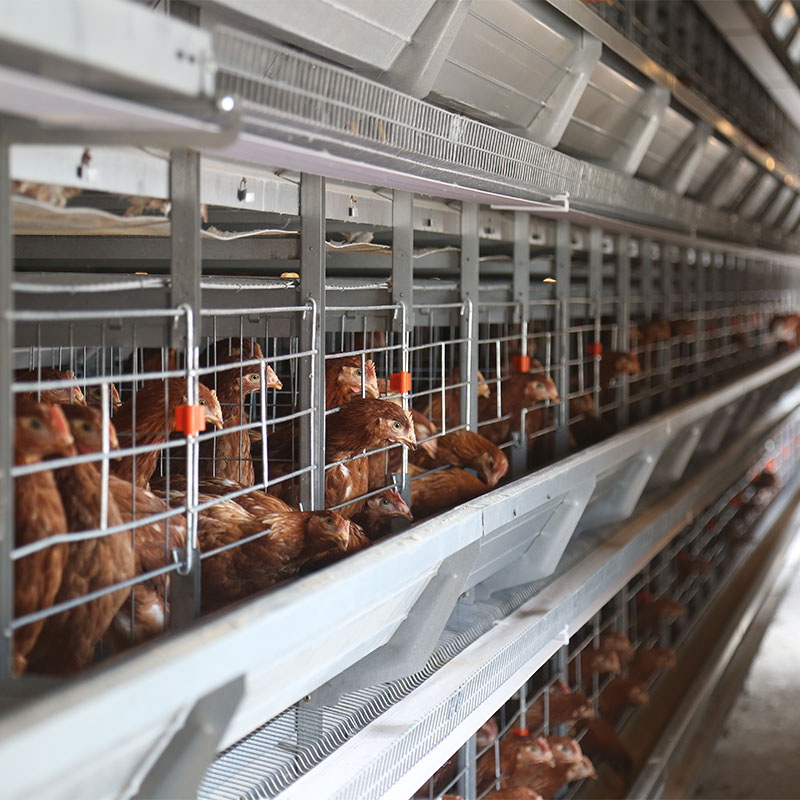
Driven by consumer demand,welfare legislation,and certification programs,the industry is evolving.
| System | Description | Key Welfare Improvements | Production Challenges |
| : | : | : | : |
| LowerDensity Indoor | Reduced birds per m² within standard barns.| Improved mobility,better litter quality,lowers FPD/lameness.| Higher capital cost per bird;requires more land/building space |
| Enriched Indoor / SlowGrowth Breeds | More space + enrichments (perches,bales,pecks). Use of slowergrowing genetics.| Allows natural behaviors;stronger leg health;reduces metabolic disease.| Slower growth = higher feed/fixed costs;lower throughput |
| (Controlled Environment) Barns with Natural Light/Ventilation | Large barns with windows/curtains allowing daylight & fresh air.| Improved light quality & air freshness;more natural diurnal rhythms.| Less precise environmental control;potential biosecurity tradeoffs |
| (FreeRange / PastureRaised) | Birds have daytime access to outdoor range areas.| Highest behavioral expression;foraging opportunities;sunlight exposure.| Highest land/labor needs;predation/weather risks;biosecurity concerns |
Major corporations like Perdue,Tyson,and fastfood giants have committed to sourcing chickens raised under improved welfare standards (Global Animal Partnership,RSPCA Assured) which mandate enrichments,natural light,and slowergrowing breeds.
The transition away from maximumdensity confinement involves complex tradeoffs:
Cost Structure: Alternative systems increase costs per bird due to lower density,higher labor,inputs(like enrichments),and potentially slower growth rates.This translates to higher retail prices.
Land Use: Freerange/pasture systems require significantly more land,causing debates about overall environmental efficiency vs.intensification ("land sparing vs.sharing").
Carbon Footprint: Slowergrowing birds may have a slightly higher carbon footprint per kg of meat due to longer life cycles,but holistic assessments including soil health on pasture can alter this calculation.
The discussion around "broiler battery cages" is ultimately about finding a balance between ethical responsibility,economic viability,and global food security.The trajectory is clear:the market and regulatory environment are moving decisively toward systems that provide more space,better environments,and opportunities for natural behaviors.This shift isn't about reverting to smallscale farming but innovating within largescale agriculture—designing barns that prioritize animal welfare as a core component of sustainability.For producers,the future lies in adapting infrastructure.For consumers,the power lies in understanding these systems behind labels like "organic","freerange",and "welfarecertified",and supporting practices that align with their values.The goal is a resilient poultry industry where productivity does not come at an unacceptable cost to animal wellbeing.
Q1: Are broiler chickens kept in battery cages like egglaying hens?
A1: No,there's a critical distinction.Broilers(meat chickens)are almost never kept in traditional stacked wire battery cages.They are predominantly reared in large openfloor barns.The major welfare concerns relate to stocking density,litter quality,and rapid growth rates within these barns,rather than caging itself.
Q2: What's worse,a battery cage for layers or intensive confinement for broilers?
A2: Both raise serious welfare concerns,but they differ.Battery cages severely restrict nearly all natural behaviors.Intensive broiler housing allows some movement but can lead to high rates of lameness,dermatitis,and restricted behaviors due to crowding.It's less about which is "worse" than understanding that both systems face significant criticism from animal welfare science.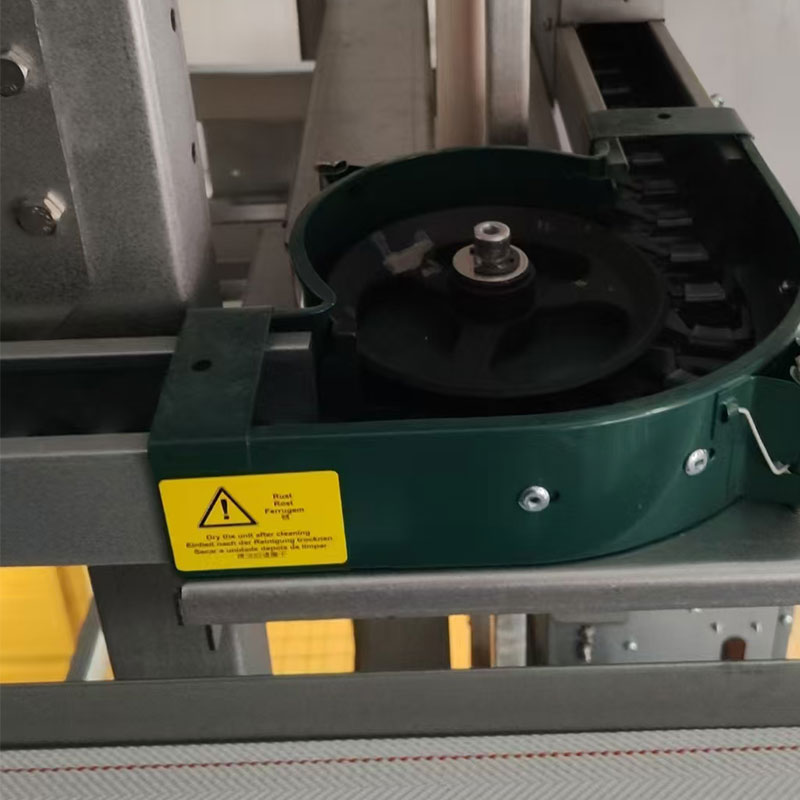
Q3: What does "freerange broiler" actually mean?
A3:"Freerange" typically means birds have continuous daytime access to an outdoor range area(for at least half their life).However,the amount,duration,and quality(vegetated vs.bare dirt)of outdoor access can vary greatly.Certifications like GAP or RSPCA Assured set stricter standards than generic labels.
Q4: Why do broilers grow so fast? Is it hormones?
A4:The extreme growth rate is almost entirely due to decades of selective breeding(genetics),not hormones.The use of hormones in U.S./EU poultry production has been banned since the 1950s.They achieve market weight(~6 lbs)in about 56 weeks through optimized nutrition&genetics.This rapid growth itself contributes significantlyto leg&heart health problems.
Q5:What causes those sores on chicken feet I see sometimes?
A5:Sores or ulcers(footpad dermatitisFPD)are primarily caused by prolonged contact with wet,litter high in ammonia(from urine&feces).It's apainful condition directly linkedto poor litter management&high stocking densities.It's one ofthe keywelfare indicators monitoredin audits.A low FPD prevalence indicates better management&litter quality.
Q6:What does 'slowgrowth' breed mean?Why does it matter?
A6:'Slowgrowth' refers tousing traditionalor specially bred chicken strains that grow at amuch slower rate than conventional Cobb/Ross breeds.They reach slaughter weightin711 weeks insteadof56.This allowsfor stronger skeletal development,much better mobility(lower lameness)&more active behavior.They area cornerstoneofmosthighwelfare certification programsbut cost moretoproduce duetoextra feed&housing time requiredperbird .
This article was crafted basedon current industry practices,welfare research,&market trends.It aims topresent abalanced,factsbased overviewfor informational purposes
1. Drinking system include the water pipes, water pressure adjuster, drinking nipples, Waterline front-end device, dosing system etc, choose them according to customer's needs.
2. High-quality water drinking pipes, pressure regulating valves and water drinking nipples can effectively prevent the water leakage. Drinking system adopt the closed piping system, which can minimize the water pollution.
3. 360-degree drinking nipples provide adequate drinking water for poultry at all stages.
4. The automatic drinking water system mainly adopts the steel ball drinking nipple. lt uses imported high-grad stainless steel, POM resin, and APS engineering material, which is wearing resistant, and the durability can be used for long time.



1. Automatic feeding machine can be chosen between gantry and ladder feeding machine. Gantry type feeding machine is a relatively economical and practical machine with simple operation, remote control walking character, easy to manage.
2. Mechanical transmission device running smoothly, low noise, long service life.
3. With the use of automatic control, the feeding system can adjust the amount of material.
4. Feeding with arched structure, high carrying capacity, not easily deformed.
5. Saving man power, saving feed, greatly improving the efficiency of Large-scale farming.
6. The walking speed of gantry feeding machine is 9--12 m/min.




1. Manure removing system included scraper type and conveyor belt type, Which can reduce the labor intensity and labor cost, keep the chicken shed dry and clean.
2. A type chicken cage can use scraper type or conveyor belt type.


3. The scraper type is suitable for A type cages, which can clean two or three rows. For the starters, this type is a good choice. lt can not only save some labor cost, but also save some investment in the whole project. The cleaning speed is 6-10 meters per minute.
4. Conveyor belt type is more suitable for large scale farming. The manure removing belt we use is high quality PP material (polypropylene). The walking speed is 2-4 meters per minute.



High Quality Pellets Made by Mobile Pellet Machine
1. It has professional designed angle of the blade. After the dynamic balance test one by one, the blade can operate smoothly.
2. The air volume is consistent in the whole life of the fan. Bearings has advantage of high strength, low noise, durable and so on.
1. The cooling pads uses high-quality wet curtain paper and adopts space cross-linking technology, which has the advantages of high water absorption, high water resistance, anti-toxicity and long service life.
2. The cooling efficiency is over 80%, without surfactant, natural water absorption, fast diffusion speed and long-lasting effect.
3. The product does not contain phenol and other chemical substances that are easy to cause skin allergies. It is non-toxic and harmless to the human body and chicken when installed and used. It is green, safe, energy-saving, environmentally friendly, economical, and easy to install.
4. The frame aluminum alloy has high strength, good corrosion resistance, durability and beautiful appearance.
5. Use a special filter for the cooling pad at the upper water to ensure clean water quality and support efficient water circulation components.
6. Combined with a negative pressure fan, it can effectively lower the indoor temperature.
The window is made of special selected high-quality engineering plastic, with high strength and long service life, together with superior anti-aging and anti-UV performance.
Function: Ventilation of the chicken house, usually used in the winter.
This system can adjust the wind speed and direction, thus the cold air will not reach chicken directly , which can effectively prevent the phenomenon of cold stress in chicken.
Environmental control system equipment is suitable for large-scale and intensive farming. According to customer requirements, we can provide various types of smart poultry equipment.
1. Our poultry management system is a modular system that manages all aspects of the chicken house, such as climate, temperature, humidity, ammonia, feeding, feed weighing, lighting and ventilation systems, and can monitor the situation of the chicken house in real time through a computer and mobile phone.
2. The management computer is the heart of the poultry farm, allowing you to easily monitor the entire poultry farm.

 WeChat:+8617838608255