Broiler Cage System Cost: A Comprehensive Investment Guide for Poultry Farmers
For poultry farmers considering scaling their operations or improving efficiency, understanding the broiler cage system cost is a critical first step. This isn't just about the initial price tag of equipment; it's a complex financial equation that encompasses infrastructure, automation, bird welfare compliance, and longterm operational savings. Whether you're a seasoned farmer looking to upgrade or a newcomer planning your first venture, this guide will break down every component of the investment. We'll move beyond simple quotes to explore the factors that truly determine your return on investment (ROI), helping you make an informed decision that balances upfront expenditure with productivity, bird health, and market demands.
Before diving into costs, it's essential to understand the different systems available. The type you choose is the single largest cost determinant and shapes your entire operational model.
Description: Multitiered enclosures where birds are housed in groups within each cage compartment. Less common for broilers due to welfare concerns but used in some regions.
Cost Implication: Often lower initial equipment cost per bird due to high density. However, facing increasing regulatory restrictions and consumer market access issues.
Description: Wirefloored cages or pens raised above a pit where manure drops through. This keeps birds separate from their waste.
Cost Implication: Moderate initial investment. Offers significant savings on litter material (like wood shavings) and reduces labor for cleaning during the growout period.
Description: Complex systems with multiple levels providing feeding, drinking, and resting areas. Designed to meet enhanced welfare standards by allowing more movement.
Cost Implication: Higher upfront capital cost per bird space due to sophisticated engineering and more materials. May improve feed conversion and reduce mortality, impacting longterm profitability.
Description: This isn't a cage type per se but a critical addon. It includes automated feeding lines, nipple drinking systems, ventilation fans, heaters, and cooling pads.
Cost Implication: Can add 3050% or more to the base system cost but is nonnegotiable for modern, largescale operations due to labor savings and improved bird performance.
The total investment can be categorized into four main areas: Equipment & Installation, Housing & Infrastructure, Operational & Bird Costs, and Hidden/Recurring Costs.
This is the most researched aspect of broiler cage system cost.
| Component | Description | Estimated Cost Range (Per Bird Space) | Notes |
| : | : | : | : |
| Cage Structure & Hardware | The physical cages, tiers, supports, gates, and flooring (wire mesh or slats). | $4 $12+ | Varies wildly based on type (simple slatted vs. multitier aviary), material quality (galvanization), and tier levels. |
| Automation Systems | Automated pan/bucket feeders chains/tracks; Nipple drinking lines with regulators; Manure belt systems. | $2 $6+ | Crucial for reducing labor. Manure belts add significant cost but enable cleaner operations and easier waste management. |
| Environmental Control | Tunnel ventilation fans, inlet systems , heaters (brooders), evaporative cooling pads , controllers/thermostats . | $3 $8+ | Scaledependent; cost per bird decreases with larger houses. Essential for bird health and growth efficiency . |
| Installation & Commissioning| Professional assembly , electrical work , plumbing , system calibration .| 1525% of equipment cost| Never overlook this! Improper installation leads to ongoing problems . |
Note on Pricing: These are per bird space estimates. A system with 20,000bird capacity will have a total CAPEX in the tens or hundreds of thousands of dollars . Always get itemized quotes .
The building that houses the cages is often more expensive than the cage system itself.
New Poultry House Construction: $30 $50+ per sq ft, heavily dependent on location, materials,and sophistication of insulation/cladding . A house for 20,000 caged broilers requires significant square footage .
Retrofitting Existing Houses: A lowercost option ($10$25 per sq ft),but must ensure structure can handle added weight ,ventilation needs ,and biosecurity layout .
These are recurring costs influenced by your system choice:
DayOld Chicks (DOC): Market price variable .
Feed: The largest OPEX . Cage systems can improve Feed Conversion Ratio (FCR) by reducing bird activity ,potentially saving tons of feed .
Labor: Automated cage systems can reduce daily labor by 50%+ compared to deep litter ,impacting longterm financials .
Utilities: Increased electricity for ventilation ,feeding lines ,and lighting .
Veterinary/Health: Generally lower medication costs in wellmanaged cage systems due to reduced contact with manure .
1。 Scale of Operation: Economies of scale apply 。 Larger orders reduce perunit equipment costs 。
2。 Level of Automation: From manual feed distribution to fully integrated computercontrolled environments ,each step increases cost but saves labor 。
3。 Material Quality & Durability: Heavygauge galvanized steel lasts longer than lighter materials 。 Cheaper upfront often means higher maintenance/replacement costs 。
4。 Regional Regulations & Welfare Standards: Compliance with standards like RSPCA Assured or Global G.A.P。 may mandate specific space allowances ,enrichments ,or system types ,directly affecting design and cost 。
5。 Supplier/Manufacturer: Imported European systems are typically more expensive than locally manufactured ones 。 Consider aftersales service ,spare parts availability ,and warranty 。
A pure deeplitter floor system has a lower initial CAPEX 。 So why invest in cages?
Higher Stocking Density: Potential for more birds per square foot of building space 。
Improved Productivity: Better FCR ,more uniform growth ,lower mortality rates 。
Significant Labor Reduction: Automation handles feeding ,watering ,and manure collection 。
Enhanced Biosecurity & Bird Health: Separation from manure reduces disease pressure(like coccidiosis)and ammonia burns 。
Efficient Manure Management: Dry,beltcollected manure is easier to handle and has higher resale value as fertilizer 。
A simple payback period calculation should consider:
(Annual Savings in Labor + Feed + Litter + Mortality Reduction + Revenue from increased throughput) vs (Total CAPEX / Annual Depreciation)。
The true broiler cage system cost is a multifaceted figure that extends far beyond the supplier's invoice 。 It encompasses housing,automation,and the ongoing balance between operational savings and capital debt 。 For modern poultry farmers focused on efficiency,scale,and controlled production environments,the higher initial investment in a welldesigned cage system often justifies itself through superior performance metrics和longterm sustainability。
The key is meticulous planning: define your welfare/compliance goals,get multiple detailed quotes that include installation,run realistic ROI projections based on your specific input costs,and never compromise on critical components like ventilation。 Invest not just in metal和plastic,but in a system that will enhance your farm's productivity和resilience for years to come。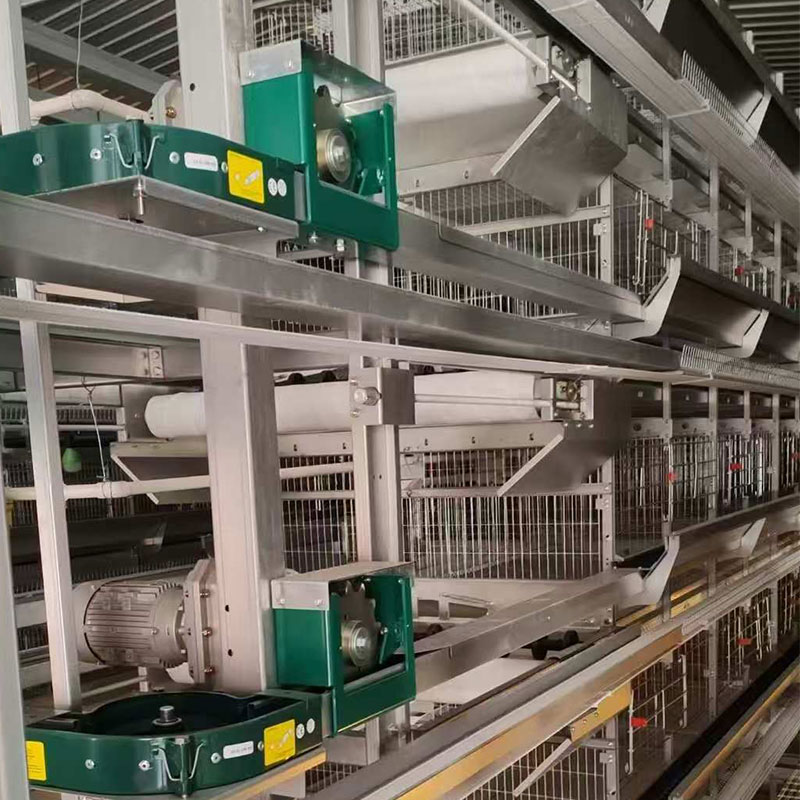
Q1: What is the average total cost per bird for a fully automated broiler cage system?
A: There's no true "average," as it varies globally 。 However,a complete turnkey setup including housing,,cages,,automation,,and environmental control can range from $15 to $30+ per bird space 。 Simpler semiautomated systems in existing buildings may start around $8$12 per bird space 。
Q2: Are broiler cages banned? Does this affect my investment?
A: Regulations vary by country和region 。 In some places(like parts of Europe),conventional battery cages are restricted 。 However,"enriched"或raised floor systems designed for broilers are often still permitted 。 Always check your national和local animal welfare codes before investing 。
Q3: What are cheaper alternatives?
A: Deeplitter floor rearing has the lowest initial capital cost 。 However,it typically has higher ongoing labor,,litter material,,feed,,and medication costs compared to efficient cage systems 。
Q4: How much does automation specifically add?
A: Core automation(auto feeders,,drinkers,,basic ventilation)can add ~$4$8 per bird space over a manual setup 。 Full automation including manure belts,,advanced climate computers,,and data monitoring adds more but maximizes labor savings 。
Q5: Can I get government grants或loans for this investment?
A: In many countries,,yes 。 Agricultural development banks often offer loans for modernizing farm infrastructure 。 Some regions also have grants promoting animal welfare upgrades或energyefficient equipment—research programs available in your area 。
Q6: What percentage of total project cost should go towards environmental control?
A: For a climatecontrolled house,,ventilation,,heating,,and cooling can constitute 2535% of the total equipment和installation budget—it's one of most critical investments for bird health 。
Q7: How long does installation take?
A: For a mediumsized house(e.g。,20k birds),professional installation can take between 4到8 weeks after all materials arrive on site—this delay must be factored into production planning 。
Q8: What maintenance costs should I expect annually?
A: Budget approximately 35% of initial equipment value annually。。 This covers replacing worn nipples/feed pans,,servicing motors/fans,,belt repairs等。
Q9: Do I need special training operate these systems?
A Yes! Operator training is crucial。。 Most reputable suppliers offer training。。 Mismanagement sophisticated environment controls lead poor results even best equipment。。
Q10 How calculate right size/capacity my farm?
Consider land availability building codes local market demand cash flow Start realistic expansion plan avoid overcapitalizing initially。
Q11 Are used broiler cage systems good option save money?
Can be但requires extreme caution Inspect structural rust wear tear outdated technology ensure spare parts available Factor disassembly transport reassembly costs may negate savings。
Q12 What hidden costs most forget budget?
Often overlooked Electrical upgrade handle increased load water filtration/pressure regulation backup power generator insurance premiums professional fees permits
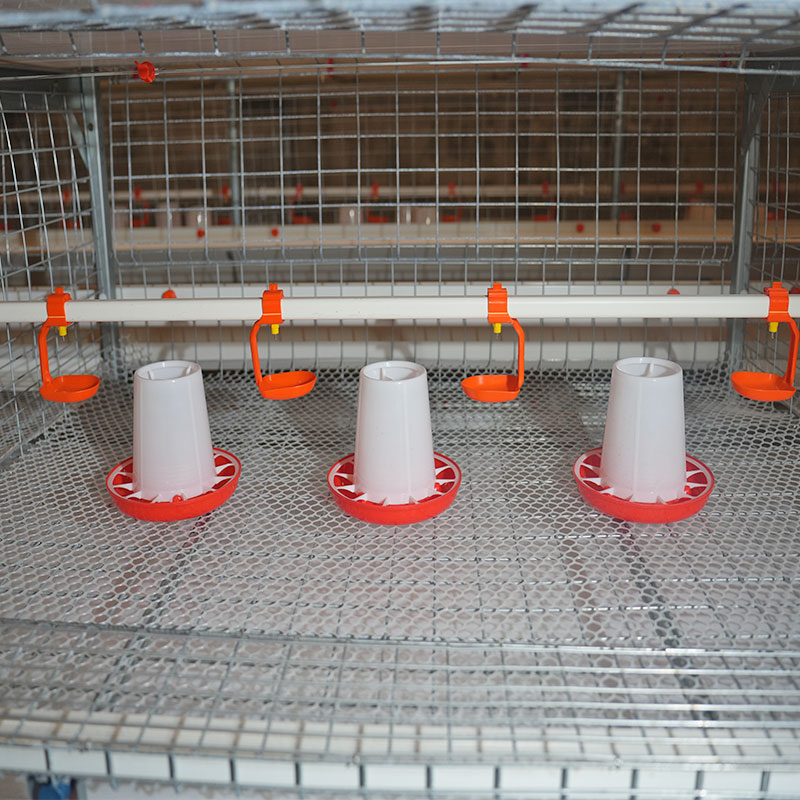
1. Drinking system include the water pipes, water pressure adjuster, drinking nipples, Waterline front-end device, dosing system etc, choose them according to customer's needs.
2. High-quality water drinking pipes, pressure regulating valves and water drinking nipples can effectively prevent the water leakage. Drinking system adopt the closed piping system, which can minimize the water pollution.
3. 360-degree drinking nipples provide adequate drinking water for poultry at all stages.
4. The automatic drinking water system mainly adopts the steel ball drinking nipple. lt uses imported high-grad stainless steel, POM resin, and APS engineering material, which is wearing resistant, and the durability can be used for long time.



1. Automatic feeding machine can be chosen between gantry and ladder feeding machine. Gantry type feeding machine is a relatively economical and practical machine with simple operation, remote control walking character, easy to manage.
2. Mechanical transmission device running smoothly, low noise, long service life.
3. With the use of automatic control, the feeding system can adjust the amount of material.
4. Feeding with arched structure, high carrying capacity, not easily deformed.
5. Saving man power, saving feed, greatly improving the efficiency of Large-scale farming.
6. The walking speed of gantry feeding machine is 9--12 m/min.




1. Manure removing system included scraper type and conveyor belt type, Which can reduce the labor intensity and labor cost, keep the chicken shed dry and clean.
2. A type chicken cage can use scraper type or conveyor belt type.


3. The scraper type is suitable for A type cages, which can clean two or three rows. For the starters, this type is a good choice. lt can not only save some labor cost, but also save some investment in the whole project. The cleaning speed is 6-10 meters per minute.
4. Conveyor belt type is more suitable for large scale farming. The manure removing belt we use is high quality PP material (polypropylene). The walking speed is 2-4 meters per minute.



High Quality Pellets Made by Mobile Pellet Machine
1. It has professional designed angle of the blade. After the dynamic balance test one by one, the blade can operate smoothly.
2. The air volume is consistent in the whole life of the fan. Bearings has advantage of high strength, low noise, durable and so on.
1. The cooling pads uses high-quality wet curtain paper and adopts space cross-linking technology, which has the advantages of high water absorption, high water resistance, anti-toxicity and long service life.
2. The cooling efficiency is over 80%, without surfactant, natural water absorption, fast diffusion speed and long-lasting effect.
3. The product does not contain phenol and other chemical substances that are easy to cause skin allergies. It is non-toxic and harmless to the human body and chicken when installed and used. It is green, safe, energy-saving, environmentally friendly, economical, and easy to install.
4. The frame aluminum alloy has high strength, good corrosion resistance, durability and beautiful appearance.
5. Use a special filter for the cooling pad at the upper water to ensure clean water quality and support efficient water circulation components.
6. Combined with a negative pressure fan, it can effectively lower the indoor temperature.
The window is made of special selected high-quality engineering plastic, with high strength and long service life, together with superior anti-aging and anti-UV performance.
Function: Ventilation of the chicken house, usually used in the winter.
This system can adjust the wind speed and direction, thus the cold air will not reach chicken directly , which can effectively prevent the phenomenon of cold stress in chicken.
Environmental control system equipment is suitable for large-scale and intensive farming. According to customer requirements, we can provide various types of smart poultry equipment.
1. Our poultry management system is a modular system that manages all aspects of the chicken house, such as climate, temperature, humidity, ammonia, feeding, feed weighing, lighting and ventilation systems, and can monitor the situation of the chicken house in real time through a computer and mobile phone.
2. The management computer is the heart of the poultry farm, allowing you to easily monitor the entire poultry farm.

 WeChat:+8617838608255