The term "broiler cages" often sparks intense debate. For poultry farmers, it represents a method of efficient meat production. For animal welfare advocates, it symbolizes confinement. But beyond the headlines lies a complex reality of evolving technology, stringent regulations, and shifting consumer demands. This comprehensive guide delves deep into the world of broiler housing systems, moving beyond simplistic definitions to explore the practicalities, welfare considerations, and future of raising chickens for meat.
First, a critical distinction: Traditional "battery cages," common in egg production, are almost universally not used for modern broiler chickens (meat chickens). Broilers are bred for rapid growth and high feed conversion, and their housing needs differ significantly from laying hens.
When people refer to "broiler cages," they are typically describing one of two things:
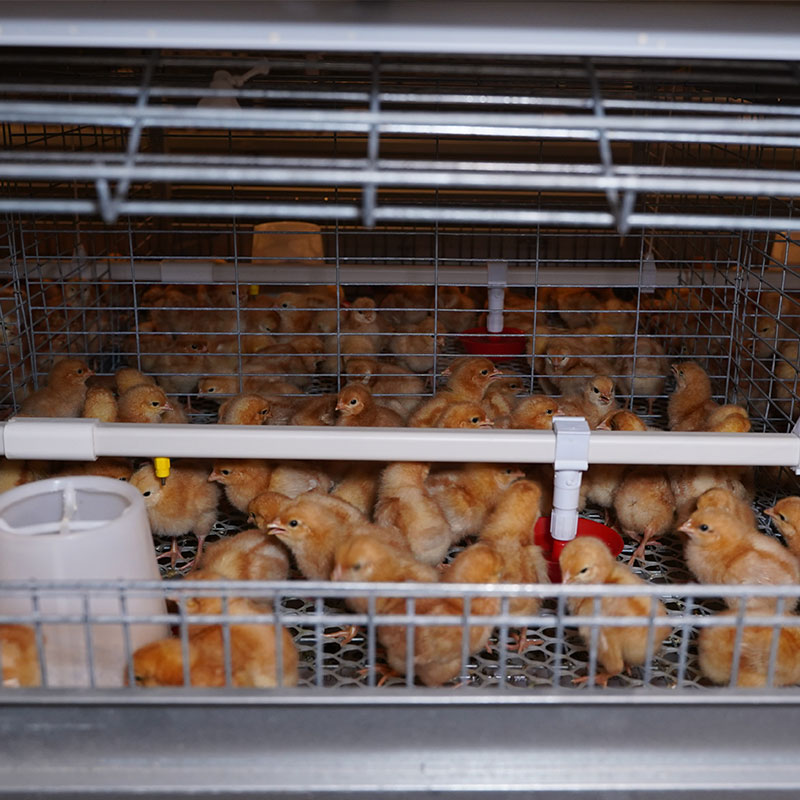
1. ClosedSystem Rearing Cages for Chicks: Used only during the initial brooding phase (first 714 days) to provide precise heat, water, and feed in a protected environment before moving birds to the main growout house.
2. MultiTiered Indoor Systems (Avian or Colony Systems): These are modern, complex structures sometimes colloquially called "cages." They are more accurately described as controlledenvironment housing with slatted or wire floors over manure pits, often featuring multiple levels (tiers) to maximize space utilization within a building.
The global industry standard for broiler growout is largescale floor barns, where birds roam freely on litter (like wood shavings). However, multitiered systems are gaining traction in certain regions due to land and efficiency pressures.
To make an informed decision or understand the industry landscape, one must compare the primary systems.
This is the most widespread system globally.
How it Works: Thousands of birds are housed in a single large shed on an absorbent litter floor. Environment is controlled via ventilation, heating, and cooling systems.
Pros: Allows for natural behaviors like dustbathing, scratching, and wingflapping. Lower initial capital investment per house compared to complex multitier systems. Wellunderstood management protocols.
Cons: Requires significant land footprint. Litter management is crucial to prevent footpad dermatitis and ammonia burns. Higher risk of contact with manureborne pathogens. Stocking density is a key welfare variable.
These are capitalintensive, technologydriven environments.
How it Works: Birds are housed on multiple stacked levels (tiers) within a climatecontrolled building. Each tier has wire or slatted flooring, allowing manure to drop through to a belt or pit below for frequent removal. Automated systems deliver feed and water.
Pros: Dramatically improved manure management leading to better air quality (lower ammonia). Potentially better biosecurity by separating birds from waste. Higher stocking density per building footprint can reduce land use. Easier bird catching at harvest.
Cons: Very high initial investment. Restricts some natural behaviors like full dustbathing and foraging. Reliance on constant mechanical systems (ventilation, feeding) – power failure is critical. Welfare depends heavily on design specifics (perch space, platform availability).
FreeRange/Outdoor Access: Requires smaller flock sizes in mobile houses or fixed houses with popholes. Birds have access to pasture during part of their life cycle.
Organic Systems: Combines freerange access with organic feed and restrictions on medication use.
Pastured Poultry: Very smallscale; mobile pens are moved daily onto fresh grass.
Comparison Table: Key Housing System Characteristics
| Feature | Conventional Floor Barn | MultiTiered Indoor System | FreeRange |
| : | : | : | : |
| Space Utilization | High land use | High building volume use | Very high land use |
| Litter/Manure Mgmt.| Litter amended & cleaned out between flocks | Manure removed continuously via belts/pits | Manure distributed on pasture |
| Air Quality Control| Challenging; depends on ventilation & litter moisture | Typically superior due to manure separation | Excellent with outdoor access |
| Natural Behaviors| Supports scratching, dustbathing (if litter dry) | Limited; may include perches & pecking substrates | Fully supported with range access |
| Biosecurity Risk| Moderate (exposure to litter) | Potentially lower (separation from manure) | Higher (exposure to wildlife/soil) |
| Primary Welfare Focus| Litter quality, stocking density | System design & enrichment provision | Predator protection & range quality |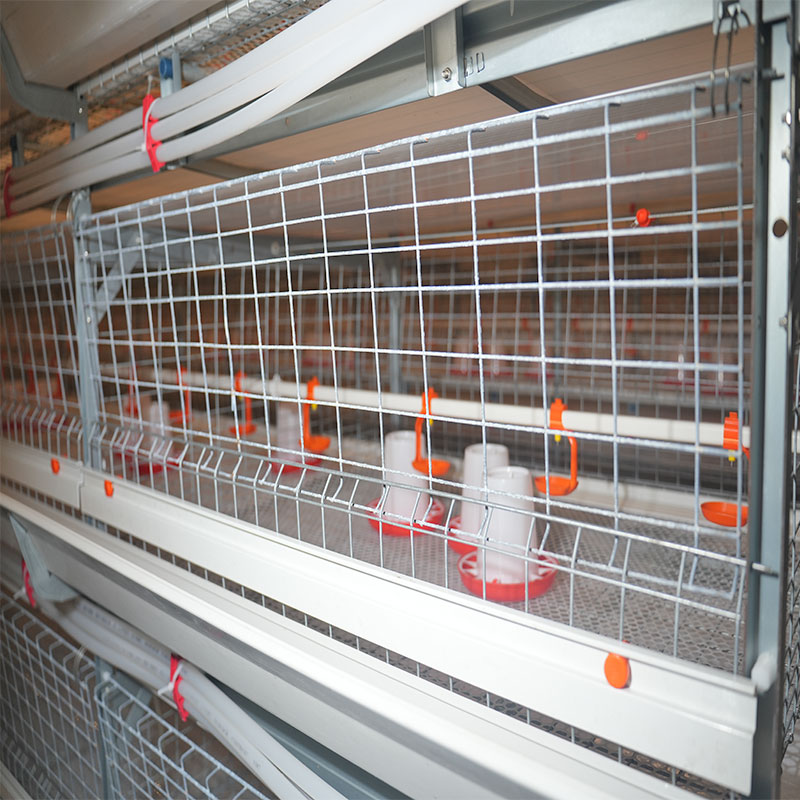
Welfare is assessed across five freedoms: freedom from hunger/thirst; discomfort; pain/injury/disease; fear/distress; and freedom to express normal behavior.
Health & Hygiene: Multitiered systems often score well on footpad health (dry floors) and respiratory health (low ammonia). Floor systems require excellent management to maintain dry litter and prevent hock burns.
Behavioral Expression: This is the core critique of confined systems. While modern multitier designs incorporate enrichments like pecking blocks, perches, and platforms, they cannot fully replicate the behavioral complexity afforded by good litter or outdoor access.
Stocking Density: This is arguably more critical than system type itself. Overcrowding in any system leads to welfare issues—increased heat stress, aggression, poor air quality, and reduced mobility.
Legislation is actively shaping broiler farming:
EU & UK: Strict directives govern maximum stocking density (~33 kg/m²), light programs, enrichment requirements (pecking substrates), and monitoring for leg health and mortality.
US: Less prescriptive federal law but major buyers (via National Chicken Council Animal Welfare Guidelines) set standards for lighting (<4hrs darkness), air quality monitoring (<25 ppm ammonia), auditing programs etc..
The trend is clear: toward lower densities,better environmental control,and provision of enrichment regardless of housing type.
The future isn't one system but diversification driven by:
1.Precision Livestock Farming(PLF): Sensors will monitor air quality,temperature,bird weight,and even vocalizations(coughing/distress calls)in realtime across all systems allowing proactive management adjustments
2.Genetics & Nutrition Integration: Breeding slowergrowing breeds that thrive in enriched environments alongside specialized feeds will become more common responding directly retailer commitments(e.g.,Global Animal Partnership)
3.Hybrid Designs: Innovations like partially slatted floors within barns combine benefits both litter areas(for dustbathing)and clean resting slats
4.ConsumerLed Shift: Demand transparency continues pushing producers toward certified welfare schemes(RSPCA Assured,Bred Well Raised Well etc.)which often mandate enrichments lower densities regardless whether barnbased tiered
Ultimately choice between housing involves balancing economics resource availability regulatory environment target market priorities There no perfect solution only series tradeoffs managed under principle continuous improvement bird welfare remains paramount metric success
Here are answers to some of the most commonly searched questions about broiler housing.
Q1: Are broilers kept in cages like egglaying hens?
A: No.The small wire battery cages iconic egg industry almost never used raising broilers(meat chickens).Broilers typically raised large floor barns litter increasingly multitiered indoor systems which different design function than traditional battery cages
Q2: What is the difference between a cagefree broiler and a regular one?
A:"Cagefree" specifically refers absence traditional battery cages.Since broilers aren't raised those anyway term less defined meat chickens context market often uses "cagefree" imply raised floor barn without multitiered aviarytype system However true welfare distinction comes factors like stocking density enrichment not just absence particular structure
Q3: What are the advantages of multitiered systems for broilers?
A:Key potential advantages include superior manure management leading better air quality(lower ammonia),improved footpad health(dry floors),enhanced biosecurity separating birds waste stream increased efficiency land use building footprint Automated feeding watering also precise
Q4:What are animal welfare concerns with confined broiler systems?
A:The primary concern restriction natural behaviors full dustbatching foraging unrestricted movement Modern designs address adding enrichments(perches pecking blocks platforms)but debate continues adequacy Additionally reliance mechanical ventilation means power failure catastrophic Welfare any system heavily dependent good management appropriate stocking density
Q5:What does "stocking density" mean why important?
A Stocking density measured weight birds per square meter(e.g.,kg/m²).It critical determinant welfare Overcrowding leads heat stress poor air quality increased contact moisture manure reduced mobility higher injury rates Major welfare schemes regulate maximum densities ensure adequate space
Q6 How does housing affect chicken meat quality?
A Housing itself has less direct impact meat quality than factors genetics nutrition processing However stress poor health resulting any housing system can lead higher condemnations carcass downgrades Good welfare generally correlates better overall product quality consistency
Q7 Are freerange broilers healthier taste better?
A Freerange birds generally get exercise develop stronger bone muscle structure may impact texture Some consumers perceive flavor difference due varied diet(insects plants) possible slower growth rates However nutritional content protein fat similar conventionally raised chicken Taste subjective influenced many factors cooking method primarily
Q8 What certifications should I look for ensure higher welfare broilers?
A Look thirdparty audited certifications like Global Animal Partnership(Step rated),RSPCA Assured Certified Humane Raised Handled These programs set specific requirements enrichment stocking density breed selection outdoor access depending level going beyond basic industry practice
1. Drinking system include the water pipes, water pressure adjuster, drinking nipples, Waterline front-end device, dosing system etc, choose them according to customer's needs.
2. High-quality water drinking pipes, pressure regulating valves and water drinking nipples can effectively prevent the water leakage. Drinking system adopt the closed piping system, which can minimize the water pollution.
3. 360-degree drinking nipples provide adequate drinking water for poultry at all stages.
4. The automatic drinking water system mainly adopts the steel ball drinking nipple. lt uses imported high-grad stainless steel, POM resin, and APS engineering material, which is wearing resistant, and the durability can be used for long time.



1. Automatic feeding machine can be chosen between gantry and ladder feeding machine. Gantry type feeding machine is a relatively economical and practical machine with simple operation, remote control walking character, easy to manage.
2. Mechanical transmission device running smoothly, low noise, long service life.
3. With the use of automatic control, the feeding system can adjust the amount of material.
4. Feeding with arched structure, high carrying capacity, not easily deformed.
5. Saving man power, saving feed, greatly improving the efficiency of Large-scale farming.
6. The walking speed of gantry feeding machine is 9--12 m/min.




1. Manure removing system included scraper type and conveyor belt type, Which can reduce the labor intensity and labor cost, keep the chicken shed dry and clean.
2. A type chicken cage can use scraper type or conveyor belt type.


3. The scraper type is suitable for A type cages, which can clean two or three rows. For the starters, this type is a good choice. lt can not only save some labor cost, but also save some investment in the whole project. The cleaning speed is 6-10 meters per minute.
4. Conveyor belt type is more suitable for large scale farming. The manure removing belt we use is high quality PP material (polypropylene). The walking speed is 2-4 meters per minute.



High Quality Pellets Made by Mobile Pellet Machine
1. It has professional designed angle of the blade. After the dynamic balance test one by one, the blade can operate smoothly.
2. The air volume is consistent in the whole life of the fan. Bearings has advantage of high strength, low noise, durable and so on.
1. The cooling pads uses high-quality wet curtain paper and adopts space cross-linking technology, which has the advantages of high water absorption, high water resistance, anti-toxicity and long service life.
2. The cooling efficiency is over 80%, without surfactant, natural water absorption, fast diffusion speed and long-lasting effect.
3. The product does not contain phenol and other chemical substances that are easy to cause skin allergies. It is non-toxic and harmless to the human body and chicken when installed and used. It is green, safe, energy-saving, environmentally friendly, economical, and easy to install.
4. The frame aluminum alloy has high strength, good corrosion resistance, durability and beautiful appearance.
5. Use a special filter for the cooling pad at the upper water to ensure clean water quality and support efficient water circulation components.
6. Combined with a negative pressure fan, it can effectively lower the indoor temperature.
The window is made of special selected high-quality engineering plastic, with high strength and long service life, together with superior anti-aging and anti-UV performance.
Function: Ventilation of the chicken house, usually used in the winter.
This system can adjust the wind speed and direction, thus the cold air will not reach chicken directly , which can effectively prevent the phenomenon of cold stress in chicken.
Environmental control system equipment is suitable for large-scale and intensive farming. According to customer requirements, we can provide various types of smart poultry equipment.
1. Our poultry management system is a modular system that manages all aspects of the chicken house, such as climate, temperature, humidity, ammonia, feeding, feed weighing, lighting and ventilation systems, and can monitor the situation of the chicken house in real time through a computer and mobile phone.
2. The management computer is the heart of the poultry farm, allowing you to easily monitor the entire poultry farm.

 WeChat:+8617838608255