The rhythmic hum of ventilation fans mixes with the steady rustle of thousands of birds. This is the sound of a modern broiler operation hitting its key performance indicators. For generations, the image of chickens roaming freely on litter was the industry standard, but a quiet revolution has been reshaping poultry production. The shift toward cage systems, specifically broiler cages for sale, represents a fundamental change in how farmers approach density, bird health, and ultimately, profitability.
This isn’t about simply confining birds. It’s about creating a controlled microenvironment for each bird, an approach that stands in stark contrast to the single, large environment of a litter floor. The decision to transition is significant, touching every aspect of the operation from bird placement to the final load heading to processing. Understanding the nuances of these systems is critical for any farmer looking to improve efficiency and secure a more predictable bottom line.
The Core Mechanics: Beyond the Wire
At first glance, a broiler cage system appears as a series of tiered enclosures. But its true value is found in the engineering details that address the primary challenges of floor rearing.
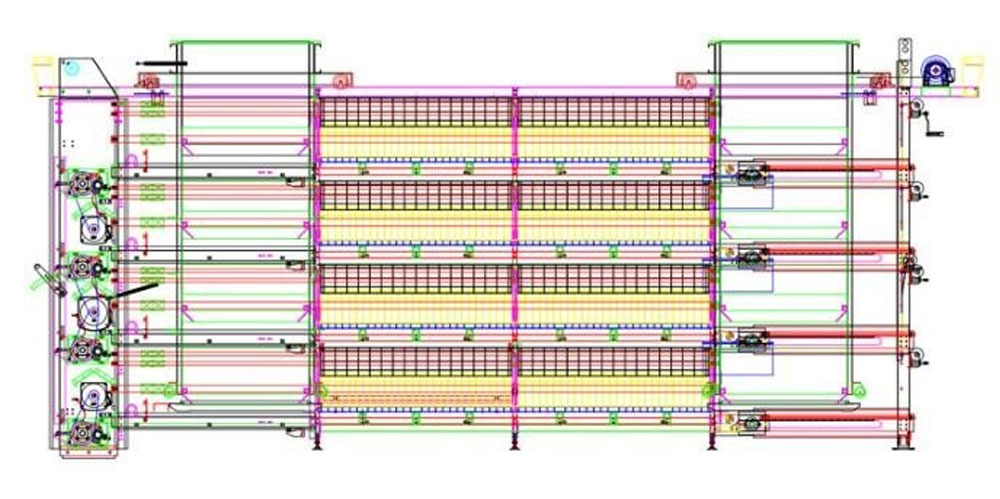
Take manure management, for instance. In a litter-based house, manure is distributed, mixed with bedding, and walked on by the entire flock. This creates a constant battle against ammonia levels, footpad dermatitis, and coccidiosis cycles. A cage system with a manure belt fundamentally changes this dynamic. Each tier has a continuous belt running beneath the wire floor. Instead of accumulating, droppings fall onto this belt. On a pre-programmed schedule, the belts engage, transporting the waste directly out of the bird-occupied space and into a sealed collection system or cross-conveyor. A farmer who used to walk the house smelling for ammonia spikes now monitors a digital gauge. The litter-related burn on hocks and footpads that can downgrade carcasses is dramatically reduced because the birds are standing on clean wire, not on damp, fermenting litter.
Feeding and watering are similarly transformed from communal activities to individualized provisions. In a floor system, aggressive birds can dominate pan feeders and drinker lines, limiting the access of more passive birds and creating inconsistent growth rates within the same flock. Cage systems compartmentalize the flock into smaller groups. Each cage has its own nipple drinker line and often a dedicated feed trough or pan system running along its length. This eliminates the concept of "boss birds" monopolizing resources. Every bird has virtually identical access to feed and water, leading to a stunning uniformity at harvest. When the catching crew arrives, they find a house of birds that are all within a very tight weight range, a key factor for processor satisfaction and premium pricing.
Ventilation efficiency is another unsung advantage. Heating and cooling a large volume of air from the ceiling down to the litter level is inherently inefficient. Hot air rises, leaving cooler, potentially damp air at bird level. In a multi-tier cage system, the birds themselves are stacked, effectively creating multiple smaller houses within the same building envelope. Airflow can be managed more precisely between and around the tiers, ensuring each bird, whether on the top row or the bottom, experiences the same temperature and humidity. This eliminates cold spots and drafts at floor level, reducing the energy spent on heating and the incidence of respiratory issues caused by environmental stress.
Evaluating System Types: Matching Technology to Goals
Not all cage systems are built the same. The market offers options, and the right choice depends heavily on a farmer’s specific goals, infrastructure, and labor capacity.
The most common entry point is the static cage system. These are fixed structures, typically three or four tiers high. They are the workhorses of the caged broiler world: robust, mechanically simpler, and often more affordable in terms of initial investment. Their operation is straightforward. Manure belts remove waste, and birds are placed and harvested in place. The primary consideration with static systems is the human factor. Accessing birds in the top tiers for routine health checks or removing mortality requires a platform or a careful climb, which can be a significant ergonomic challenge for workers. For a well-staffed operation with a focus on capital expenditure control, static cages offer proven reliability.
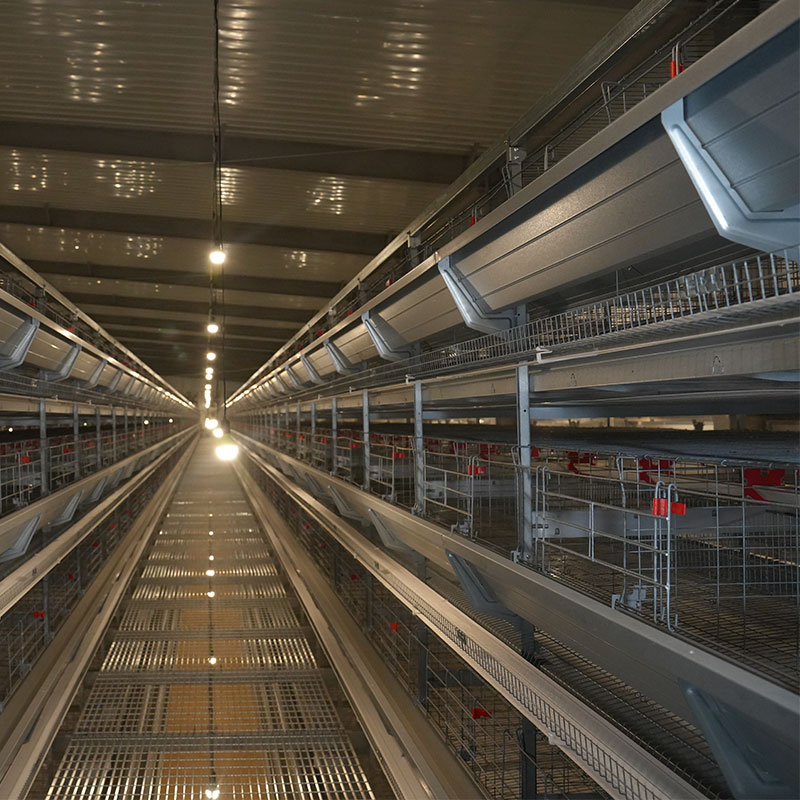
For operations prioritizing animal welfare outcomes and labor efficiency, automated climate cages represent the next tier. These systems incorporate the manure belts and feeding systems of static cages but add a critical layer of environmental control. They often feature insulated panels and integrated ventilation systems for each tier or module, creating that precise microenvironment. Some advanced models allow for the adjustment of light intensity per tier to further fine-tune bird behavior and growth. The major logistical advantage, however, is the tilting cage. This feature allows an entire tier of cages to be gently tilted, bringing the birds within easy, ergonomic reach of workers on the ground. This eliminates the need for ladders or platforms for health monitoring and vaccination, reducing labor strain and improving the thoroughness of bird care. The trade-off is a higher initial cost and more complex systems to maintain.
Pushing the boundary further are fully automated robotic systems. Here, the level of technology integration is profound. These systems may employ autonomous robots that run on tracks between the tiers, constantly monitoring bird weight using specialized scales, checking water pressure, and even identifying and removing mortality without human intervention. This data is fed into a central management system that can adjust feeding curves in real-time based on actual bird performance, not just a pre-set schedule. This is the pinnacle of data-driven farming, turning the poultry house into a precision-controlled biological factory. The investment is substantial, making it most suitable for large integrators or progressive farmers focused on maximizing data and minimizing direct labor costs.
The Business Case: Calculating the Return
The decision to invest in a cage system cannot be based on observation alone; it must be driven by a hard-nosed financial analysis. The capital outlay is undeniably higher than for a conventional litter house. However, the return is generated through multiple, compounding efficiencies.

The most immediate impact is on feed conversion ratio (FCR). Because birds expend less energy maintaining body temperature in a draft-free environment and have no opportunity to scratch and waste feed, FCR improvements of several points are standard. On a 50,000-bird placement, a 0.05 improvement in FCR translates to tens of thousands of pounds of feed saved per growout. At current feed prices, this saving alone can form a significant part of the loan payment for the new system.
Stocking density is another powerful lever. A well-designed cage system can safely hold more kilograms of live weight per square meter of floor space than a litter system. This isn’t about cramming more birds in; it’s about utilizing the vertical airspace of the building that was previously empty. By stacking the production vertically, a farmer can significantly increase total output without pouring a new foundation or erecting a new building shell. This makes existing assets more productive.
Livability and condemnations directly affect revenue. Reduced contact with manure means lower pathogen loads, leading to fewer disease challenges and higher survival rates. The dramatic reduction in contact dermatitis—a major cause of carcass downgrades—means more birds qualify for the premium whole-bird market instead of being relegated to cut-up or further processing lines. This directly increases the value of every kilogram produced.
Finally, labor efficiency undergoes a step-change. Tasks like manure cleaning, which required a tractor and a week of labor between flocks, are eliminated. Bird catching, a notoriously difficult and labor-intensive process, becomes more streamlined as birds are easily accessed from aisles. The time from last feed to first bird on the truck—a period that impacts bird quality and yield—can be drastically shortened.
The Transition: Planning for Success
Adopting a cage system is a strategic operation, not just a purchase. It requires meticulous planning. The first step is a thorough assessment of existing infrastructure. Does the current house have the roof height to accommodate three or four tiers of cages while maintaining the required airspace above them? Is the foundation and structure strong enough to bear the significant weight of the system, the birds, and the feed? Electrical systems must be upgraded to handle the increased load from motors driving manure and feed systems. Ventilation must be re-evaluated; while the cages help manage microclimates, the house’s primary fans and heaters must still be capable of creating the right conditions.
Perhaps the most critical adjustment is in management mentality. A farmer can no longer simply "walk the flock" by looking out across a sea of birds. Management becomes more data-centric. Monitoring involves checking belt operation times, ensuring water pressure is consistent at every tier, and observing bird behavior in specific cages rather than the general population. It’s a more precise, more technical form of husbandry. Training for farm staff is non-negotiable; they must understand the mechanics of the new system to perform basic maintenance and identify problems before they affect bird performance.
The market for broiler cages is robust, with several major international manufacturers offering systems. The key is to partner with a supplier that doesn’t just sell equipment but provides comprehensive support. This includes detailed layout and engineering plans for your specific buildings, installation supervision, and, most importantly, reliable after-sales service and parts availability. A broken manure belt motor during a growout is an emergency that requires a rapid response.
The journey from a litter-based system to a modern cage operation is a profound one. It demands capital, planning, and a willingness to adopt new methods. The evidence from those who have made the transition, however, points to a compelling outcome: a more controlled, efficient, and profitable enterprise. In an industry where margins are perpetually tight, the ability to exert greater command over the production environment is no longer a luxury; it is a strategic imperative for those intending to compete and thrive in the future of poultry farming.
1. Drinking system include the water pipes, water pressure adjuster, drinking nipples, Waterline front-end device, dosing system etc, choose them according to customer's needs.
2. High-quality water drinking pipes, pressure regulating valves and water drinking nipples can effectively prevent the water leakage. Drinking system adopt the closed piping system, which can minimize the water pollution.
3. 360-degree drinking nipples provide adequate drinking water for poultry at all stages.
4. The automatic drinking water system mainly adopts the steel ball drinking nipple. lt uses imported high-grad stainless steel, POM resin, and APS engineering material, which is wearing resistant, and the durability can be used for long time.



1. Automatic feeding machine can be chosen between gantry and ladder feeding machine. Gantry type feeding machine is a relatively economical and practical machine with simple operation, remote control walking character, easy to manage.
2. Mechanical transmission device running smoothly, low noise, long service life.
3. With the use of automatic control, the feeding system can adjust the amount of material.
4. Feeding with arched structure, high carrying capacity, not easily deformed.
5. Saving man power, saving feed, greatly improving the efficiency of Large-scale farming.
6. The walking speed of gantry feeding machine is 9--12 m/min.




1. Manure removing system included scraper type and conveyor belt type, Which can reduce the labor intensity and labor cost, keep the chicken shed dry and clean.
2. A type chicken cage can use scraper type or conveyor belt type.


3. The scraper type is suitable for A type cages, which can clean two or three rows. For the starters, this type is a good choice. lt can not only save some labor cost, but also save some investment in the whole project. The cleaning speed is 6-10 meters per minute.
4. Conveyor belt type is more suitable for large scale farming. The manure removing belt we use is high quality PP material (polypropylene). The walking speed is 2-4 meters per minute.



High Quality Pellets Made by Mobile Pellet Machine
1. It has professional designed angle of the blade. After the dynamic balance test one by one, the blade can operate smoothly.
2. The air volume is consistent in the whole life of the fan. Bearings has advantage of high strength, low noise, durable and so on.
1. The cooling pads uses high-quality wet curtain paper and adopts space cross-linking technology, which has the advantages of high water absorption, high water resistance, anti-toxicity and long service life.
2. The cooling efficiency is over 80%, without surfactant, natural water absorption, fast diffusion speed and long-lasting effect.
3. The product does not contain phenol and other chemical substances that are easy to cause skin allergies. It is non-toxic and harmless to the human body and chicken when installed and used. It is green, safe, energy-saving, environmentally friendly, economical, and easy to install.
4. The frame aluminum alloy has high strength, good corrosion resistance, durability and beautiful appearance.
5. Use a special filter for the cooling pad at the upper water to ensure clean water quality and support efficient water circulation components.
6. Combined with a negative pressure fan, it can effectively lower the indoor temperature.
The window is made of special selected high-quality engineering plastic, with high strength and long service life, together with superior anti-aging and anti-UV performance.
Function: Ventilation of the chicken house, usually used in the winter.
This system can adjust the wind speed and direction, thus the cold air will not reach chicken directly , which can effectively prevent the phenomenon of cold stress in chicken.
Environmental control system equipment is suitable for large-scale and intensive farming. According to customer requirements, we can provide various types of smart poultry equipment.
1. Our poultry management system is a modular system that manages all aspects of the chicken house, such as climate, temperature, humidity, ammonia, feeding, feed weighing, lighting and ventilation systems, and can monitor the situation of the chicken house in real time through a computer and mobile phone.
2. The management computer is the heart of the poultry farm, allowing you to easily monitor the entire poultry farm.

 WeChat:+8617838608255