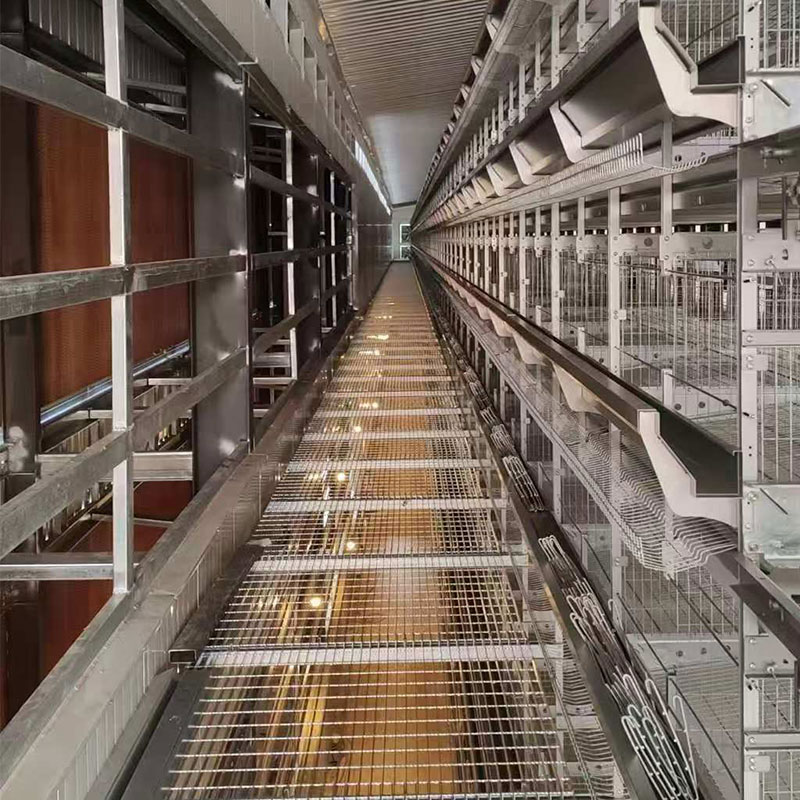
The financial decision surrounding broiler cage systems represents one of the most significant capital investments a poultry operation will make. The initial price tag is just the entry point; the true cost is woven into the system's durability, operational efficiency, and impact on bird performance. Understanding the variables that dictate these prices is critical for making a purchase that aligns with both your budget and long-term production goals.
Broiler cages, distinct from the open-floor systems of the past, are structured enclosures designed to house birds from arrival to processing. The market offers a spectrum of options, broadly categorized by their level of automation and material construction, each commanding a different price point and offering a unique return on investment.
The Core Determinants of Price: Materials and Mechanics
The most immediate factor influencing cost is the physical construction of the cage system itself. The choice of materials directly impacts longevity, maintenance needs, and bird safety.
Galvanized steel remains the industry standard for its resilience against moisture, ammonia, and the general wear and tear of a poultry house environment. A farmer might pay a premium for a system with a higher-grade, hot-dipped galvanization. While a cheaper, electroplated alternative might save money upfront, it could show signs of rust within a few years, leading to weakened structures, increased cleaning difficulty, and potential injury to birds from sharp, corroded edges. The thickness of the wire gauge is another crucial consideration. A 4mm wire might cost less than a 5mm wire, but the thinner gauge will be more susceptible to bending under the weight of mature broilers or during aggressive cleaning, compromising the system's structural integrity over time.
The design of the cage floor, or the slats, is a prime example of engineering impacting price. Traditional welded mesh floors are less expensive to manufacture. However, modern plastic-coated wire floors or integrated plastic slat systems command a higher price. The practical benefit is twofold: bird welfare and labor savings. A plastic-coated surface is warmer and provides better footing for the birds, which can reduce instances of breast blisters and footpad dermatitis—quality defects that directly downgrade carcass value at the processing plant. For the operator, manure sheds more cleanly from a non-stick plastic surface compared to a bare wire mesh, reducing the time and power required for washing down between flocks.
The Automation Spectrum: From Manual to Fully Integrated
The degree of automation integrated into the cage system is the single greatest driver of overall cost. This is where the investment shifts from simple housing to a comprehensive management tool.
Tiered Cage Systems: These are the fundamental structures, often arranged in three or four levels (A-type or H-type configurations) to maximize bird density per square foot of house space. A basic, manually operated tiered system involves significant labor. Workers must manually check and adjust feed lines and water nipples, collect eggs if applicable, and physically handle birds during vaccination or inspection. The initial price for the cages alone is the lowest on the spectrum, but the ongoing labor cost is the highest. For a farmer with reliable and affordable labor, this can be a viable, lower-capital entry point.
Semi-Automated Systems represent a middle ground. Here, the core utilities—feeding and watering—are automated. A central control panel triggers augers that deliver feed from a bulk bin through troughs running the length of each row. Similarly, a closed-loop water system with pressure regulators and nipple drinkers provides a constant supply. The price increases to include these motors, sensors, and control units. The return is realized in labor savings; one worker can manage the feeding for an entire house with the push of a button, ensuring consistent delivery and reducing feed waste from spillage. It also allows for more precise feeding schedules, which can improve Feed Conversion Ratio (FCR).

Fully Automated Systems sit at the top of the price range. These are turnkey environments that minimize human intervention in daily routines. Beyond automated feeding and watering, they include:
Manure Belt Systems: Instead of manure dropping to a pit below, conveyor belts run beneath each tier of cages. These are programmed to run at set intervals, continuously removing waste from the bird environment. This dramatically improves air quality by reducing ammonia levels, which is a key factor in respiratory health and weight gain. The cost of the belts, drives, and collection mechanisms is substantial, but the benefits are measurable: healthier birds, a drier house, and the elimination of the labor-intensive task of pit clean-out after each flock.
Environmental Control Integration: High-end systems are designed to interface directly with the house’s ventilation, heating, and cooling systems. Sensors within the cages monitor temperature and humidity at the bird level, not just at the ceiling, providing data to the environmental computers to make micro-adjustments. This creates an optimal climate, reducing stress and promoting uniform growth. The price includes sophisticated sensor networks and software integration.

Centralized Monitoring: All systems—feed, water, manure belts, environment—are managed from a single computer terminal, often accessible remotely via smartphone. Alerts can be sent for malfunctions, like a blocked water line or a feed bin running low. This constant data stream allows for proactive management rather than reactive problem-solving.
The price jump from a manual to a fully automated system is significant, often representing a difference of tens of thousands of dollars per house. However, the calculation must factor in the dramatic reduction in required labor, the improvement in key performance indicators like mortality rate and FCR, and the enhanced consistency of the final product.
Beyond the Unit: Ancillary Costs and Considerations
The quoted price per bird or per cage unit is rarely the final figure. Several ancillary costs must be factored into the total investment.
Delivery and Installation: These are rarely DIY projects. The complexity of aligning hundreds of meters of feed troughs, water lines, and manure belts requires specialized technicians provided by the supplier. Installation costs can be a substantial percentage of the equipment price, especially for complex automated systems. Geography matters; a farm located far from a port or the supplier’s warehouse will incur higher freight charges for the often-bulky materials.
Infrastructure Modifications: Your existing poultry house may require significant upgrades to support a new cage system. A basic open-floor house might not have the electrical capacity to run dozens of motors for feeding and manure belts. The structural supports of the building itself must be evaluated; a four-tier H-type system filled with 5kg broilers represents a tremendous weight load that the trusses and foundations must be able to bear. Reinforcing a house or pouring new concrete foundations are hidden costs that can surprise an unprepared buyer.
Training and Maintenance: A sophisticated system is only as good as the operator running it. Suppliers typically include basic training, but understanding the nuances of the control software and performing routine maintenance is an ongoing requirement. Establishing a relationship with the supplier for spare parts—like specific nylon gears for the feed augers or replacement manure belts—is essential. Downtime during a flock cycle is catastrophic, so having a maintenance protocol and access to parts is a non-negotiable part of the investment.
Navigating the Market and Supplier Selection
The global market for poultry equipment is diverse, with manufacturers ranging from established Western European and North American brands to emerging suppliers from Asia and the Middle East. Each offers different value propositions.
Established brands often come with a higher initial price, justified by decades of R&D, proven durability, and extensive dealer networks for support and service. Their systems are thoroughly tested, and they typically offer comprehensive warranties. Choosing such a brand is often seen as a lower-risk option for large-scale integrators who cannot afford systemic failures.
Newer manufacturers frequently compete on price, offering seemingly similar systems for 20-30% less. The potential savings are attractive, but due diligence is paramount. A farmer should request client references and, if possible, visit existing installations to see the equipment in operation after several flocks. It is critical to inspect the quality of the galvanization, the robustness of the welding, and the performance of the automation. Questions about the availability of spare parts and the responsiveness of their technical support team are essential. A cheaper system that requires frequent repairs and has poor parts availability will quickly erase any initial savings and create immense operational headaches.
The most effective strategy is to provide multiple suppliers with a detailed specification of your house dimensions, target bird capacity, and desired level of automation. This allows for a like-for-like quotation comparison. Scrutinize each quote to ensure it includes all necessary components—from the main cages to the control panels and the first set of spare parts. The cheapest quote may have excluded installation or essential sensors.
The Long-Term Financial Perspective: Total Cost of Ownership
The smartest purchasing decision is never based on the initial price alone. It is based on a analysis of the Total Cost of Ownership (TCO) over the expected lifespan of the equipment, which should be a minimum of 15 years.
A well-built, automated system with a high upfront cost will show its value through consistently lower operating expenses. For example, a system with precise feeder adjustments can reduce feed waste by 2-3%. On a farm placing 100,000 birds per flock, that saved feed translates into thousands of dollars in savings per year, directly paying down the investment. Similarly, improved manure management leads to better bird health. Reducing mortality by even half a percent or improving FCR by a few points generates substantial annual revenue that a less efficient system would leave on the table.
Furthermore, the labor savings from automation are a direct financial benefit. Automating feeding, watering, and manure handling can reduce the required manpower per house by 60% or more. In regions where labor is scarce or wages are rising, this is not just a convenience; it is a financial imperative for remaining competitive.
The decision is a balance of capital expenditure versus operational expenditure. A higher investment upfront buys lower running costs for the next decade and a half. A lower investment upfront often results in higher labor, feed, and maintenance costs for the life of the system. Calculating your own operational data—current feed costs, labor wages, mortality rates—and projecting the improvements a new system could bring is the most accurate way to determine the true value and justified price of a new broiler cage system. It transforms the purchase from a simple equipment buy into a strategic investment in the future efficiency and profitability of your operation.
1. Drinking system include the water pipes, water pressure adjuster, drinking nipples, Waterline front-end device, dosing system etc, choose them according to customer's needs.
2. High-quality water drinking pipes, pressure regulating valves and water drinking nipples can effectively prevent the water leakage. Drinking system adopt the closed piping system, which can minimize the water pollution.
3. 360-degree drinking nipples provide adequate drinking water for poultry at all stages.
4. The automatic drinking water system mainly adopts the steel ball drinking nipple. lt uses imported high-grad stainless steel, POM resin, and APS engineering material, which is wearing resistant, and the durability can be used for long time.



1. Automatic feeding machine can be chosen between gantry and ladder feeding machine. Gantry type feeding machine is a relatively economical and practical machine with simple operation, remote control walking character, easy to manage.
2. Mechanical transmission device running smoothly, low noise, long service life.
3. With the use of automatic control, the feeding system can adjust the amount of material.
4. Feeding with arched structure, high carrying capacity, not easily deformed.
5. Saving man power, saving feed, greatly improving the efficiency of Large-scale farming.
6. The walking speed of gantry feeding machine is 9--12 m/min.




1. Manure removing system included scraper type and conveyor belt type, Which can reduce the labor intensity and labor cost, keep the chicken shed dry and clean.
2. A type chicken cage can use scraper type or conveyor belt type.


3. The scraper type is suitable for A type cages, which can clean two or three rows. For the starters, this type is a good choice. lt can not only save some labor cost, but also save some investment in the whole project. The cleaning speed is 6-10 meters per minute.
4. Conveyor belt type is more suitable for large scale farming. The manure removing belt we use is high quality PP material (polypropylene). The walking speed is 2-4 meters per minute.



High Quality Pellets Made by Mobile Pellet Machine
1. It has professional designed angle of the blade. After the dynamic balance test one by one, the blade can operate smoothly.
2. The air volume is consistent in the whole life of the fan. Bearings has advantage of high strength, low noise, durable and so on.
1. The cooling pads uses high-quality wet curtain paper and adopts space cross-linking technology, which has the advantages of high water absorption, high water resistance, anti-toxicity and long service life.
2. The cooling efficiency is over 80%, without surfactant, natural water absorption, fast diffusion speed and long-lasting effect.
3. The product does not contain phenol and other chemical substances that are easy to cause skin allergies. It is non-toxic and harmless to the human body and chicken when installed and used. It is green, safe, energy-saving, environmentally friendly, economical, and easy to install.
4. The frame aluminum alloy has high strength, good corrosion resistance, durability and beautiful appearance.
5. Use a special filter for the cooling pad at the upper water to ensure clean water quality and support efficient water circulation components.
6. Combined with a negative pressure fan, it can effectively lower the indoor temperature.
The window is made of special selected high-quality engineering plastic, with high strength and long service life, together with superior anti-aging and anti-UV performance.
Function: Ventilation of the chicken house, usually used in the winter.
This system can adjust the wind speed and direction, thus the cold air will not reach chicken directly , which can effectively prevent the phenomenon of cold stress in chicken.
Environmental control system equipment is suitable for large-scale and intensive farming. According to customer requirements, we can provide various types of smart poultry equipment.
1. Our poultry management system is a modular system that manages all aspects of the chicken house, such as climate, temperature, humidity, ammonia, feeding, feed weighing, lighting and ventilation systems, and can monitor the situation of the chicken house in real time through a computer and mobile phone.
2. The management computer is the heart of the poultry farm, allowing you to easily monitor the entire poultry farm.

 WeChat:+8617838608255