
The steel frame rises three tiers high, a complex geometry of feeders, water lines, and slatted floors. At dawn, the automated feed system whirs to life, its chain dragging a fresh wave of nutrition the length of the building. Below, manure belts slide silently, carrying waste away from the birds before it can release ammonia into the air. This is the modern broiler cage, a system that has moved far beyond the simple wire enclosures of the past. For a poultry farmer, the decision to adopt such a system is not merely about purchasing equipment; it’s a fundamental shift in operational philosophy, with profound implications for bird health, labor efficiency, and the bottom line.
The core principle of a cage system is vertical integration. Instead of managing a single, ground-level flock, you are effectively managing multiple flocks stacked atop one another. This spatial efficiency is its most immediate advantage. A house that once held 20,000 birds on litter can potentially hold 60,000 or more in a three-tier cage system, dramatically increasing output per square foot of building. This isn’t just about squeezing in more birds; it’s about maximizing the return on your significant investment in real estate, climate control, and biosecurity infrastructure. The building itself becomes a more productive asset.
This density is only possible because the cage environment separates the bird from its waste. In a litter-based system, birds spend their entire grow-out period in contact with their own manure. As that manure breaks down, it releases ammonia, a gas that irritates the respiratory tracts of both birds and workers. High ammonia levels can lead to condemnations at the processing plant due to airsacculitis, a condition that directly cuts into your profit. The cage system’s manure removal belts, which can be programmed to run multiple times a day, solve this problem at the source. The waste is conveyed out of the house and into a dedicated storage or composting area, keeping the air inside remarkably clean. You notice the difference the moment you walk in; the sharp, pungent smell of ammonia is replaced by the milder odor of feed and feathers. This single feature has a cascading positive effect on bird health, reducing the incidence of footpad dermatitis (a key animal welfare audit metric) and respiratory challenges, which in turn can lessen your reliance on veterinary interventions.
The control extends beyond manure. Every bird in a cage has guaranteed access to feed and water. There is no competition at the pan feeders or nipple drinkers. In a litter system, dominant birds can monopolize resources, leading to uneven flock growth. At harvest, you might see a wide variation in bird weights, which is a headache for meeting processor contracts that often specify tight weight ranges. The cage system promotes flock uniformity. Because each bird can eat and drink without intimidation, their growth rates align more closely. This uniformity simplifies catching and processing, maximizes the percentage of birds that fall within the premium weight bracket, and provides a more predictable product for your buyers. It turns a variable outcome into a consistent one.
Automation is the nervous system of the modern cage unit. It’s what makes managing the increased bird density not just possible, but manageable. The feed system is a prime example. Augers or chains deliver a precisely formulated diet directly to the trough running along the front of each cage. You can program the feeder to run at specific intervals, stimulating appetite and ensuring the feed remains fresh. There’s no need for tractors or manual feeding, eliminating a significant daily labor task and reducing feed waste from spillage. Similarly, the water lines are pressurized and closed, reducing the risk of bacterial contamination compared to open bell drinkers.
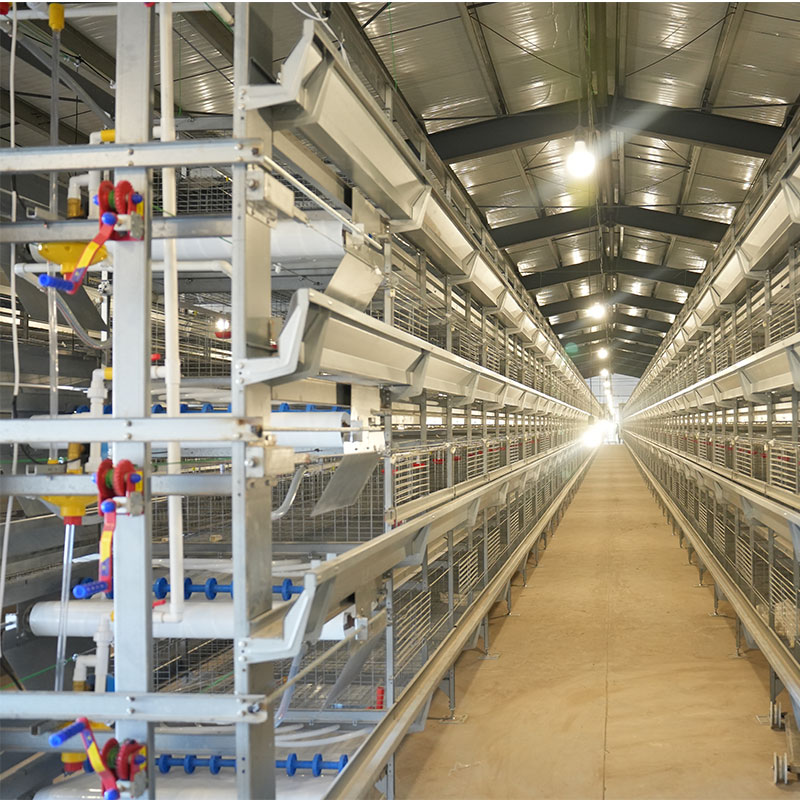
The climate control system also works more efficiently. In a cage system, air moves freely around the tiers, and the absence of wet litter gives you a much drier environment to manage. Your ventilation fans and evaporative cooling pads can maintain the ideal temperature and humidity with greater precision because they are not fighting the moisture load from a vast floor of litter. This precise environmental control is critical during periods of extreme weather, helping to prevent heat stress in summer, which can cause catastrophic mortality, and ensuring even temperatures in winter without creating damp, cold spots where birds would huddle.
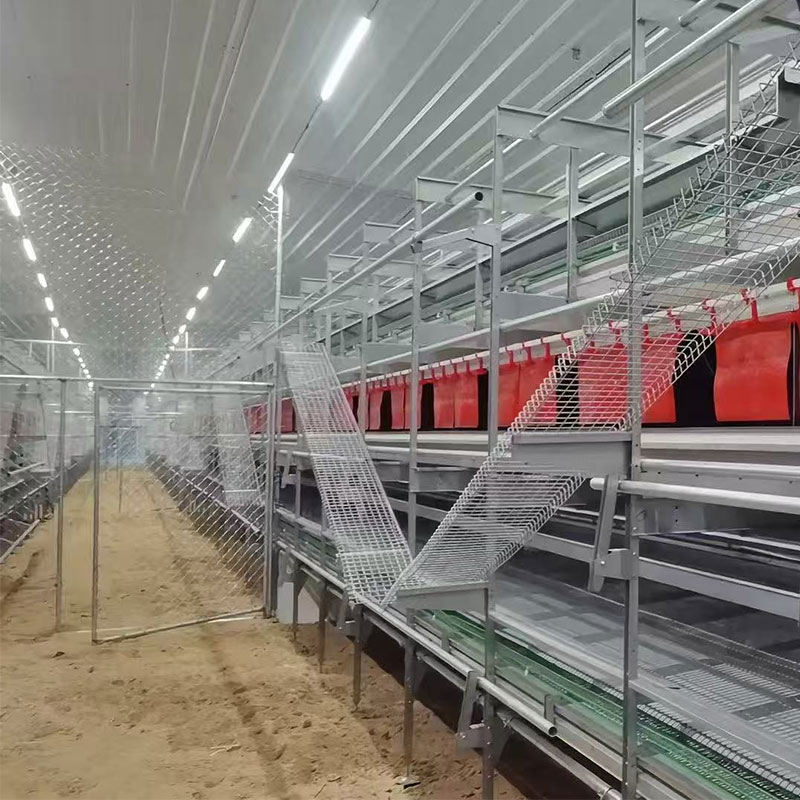
However, this level of control requires a different kind of skill from the stockperson. Your role evolves from one of physical labor to one of data interpretation and mechanical oversight. Instead of walking the flock to check for signs of stress, you are monitoring control panels, watching amp draws on motors, and listening for the tell-tale sounds of a malfunctioning drive chain. A failure in an automated system in a cage house is a crisis affecting tens of thousands of birds simultaneously. A stopped feed chain for six hours has immediate and severe consequences. Therefore, robust maintenance schedules and a sharp eye for detail are non-negotiable. Your backup systems—standby generators, critical spare parts—become as important as your primary equipment.
The transition to cages represents a major capital investment. The cost per bird space is significantly higher than the cost of building a conventional litter house. This capital outlay must be carefully weighed against the long-term operational savings and potential for increased revenue. The savings manifest in reduced labor costs; one person can manage a much larger flock. There are savings on litter, which has become a volatile and expensive line item. There may be savings on medications and vaccines due to improved bird health. The revenue increase comes from the higher stocking density and improved feed conversion ratios, as birds in a controlled environment expend less energy maintaining body temperature and competing for resources.
Bird welfare is a complex and critical aspect of this discussion. The industry and consumer perceptions are constantly evolving. While cages excel in hygiene and resource access, they inherently restrict natural behaviors like foraging, dustbathing, and full-wing stretching. This has led to significant market pressure, with major food retailers and restaurants increasingly committing to cage-free sourcing policies. This is not just an ethical consideration; it is a commercial one. Adopting a cage system now could potentially limit your market access in the future if your primary processors are shifting their supply chains to meet this demand. Some cage manufacturers have responded with “enriched” or “furnished” cage designs that include perches, scratch pads, and designated nesting areas. These systems aim to strike a balance, retaining the hygiene and management benefits of cages while providing for more of the birds’ behavioral needs.
The day-to-day management rhythm in a cage house is different. There is no litter to manage, no need to windrow or decake between flocks. The turnaround time, the period between sending one flock to processing and placing the next batch of chicks, can be shorter. The cleaning process is highly mechanized: after the birds are caught, the manure belts make a final run to clear most of the waste. The entire system, including the cages, feeders, and water lines, is then washed down with high-pressure systems. This is a wet, intensive process, but it allows for a profound level of biosecurity, eliminating the disease cycle that can persist in built-up litter.
Catching the birds for processing is another operational contrast. In a litter house, catching crews must navigate a sea of birds on the floor, a process that is stressful for the birds and labor-intensive. In a cage system, the process is more orderly. Workers can access birds directly from the cages, which can reduce smothering and panic. The birds are also cleaner, having had no contact with litter during their grow-out, which can result in a higher-quality carcass with fewer downgrades at the plant.
Ultimately, the decision to invest in a broiler cage system is a strategic calculation. It is not the right choice for every operation. It demands a significant upfront financial commitment, a higher degree of technical aptitude, and a careful analysis of future market trends. For a large-scale producer focused on efficiency, cost control, and producing a consistent, high-health product for a specific market, the advantages can be compelling. The improved biosecurity, the dramatic reduction in ammonia, the labor savings, and the superior feed conversion are powerful arguments. However, the constraints on natural bird behavior and the shifting tides of consumer preference are serious counterweights. The modern broiler cage is a tool of remarkable engineering, offering a level of environmental control that was unimaginable a generation ago. Its adoption is a statement about a farmer’s priorities, resources, and vision for the future of their operation. It is the difference between working the land and operating a precision bio-production facility.
1. Drinking system include the water pipes, water pressure adjuster, drinking nipples, Waterline front-end device, dosing system etc, choose them according to customer's needs.
2. High-quality water drinking pipes, pressure regulating valves and water drinking nipples can effectively prevent the water leakage. Drinking system adopt the closed piping system, which can minimize the water pollution.
3. 360-degree drinking nipples provide adequate drinking water for poultry at all stages.
4. The automatic drinking water system mainly adopts the steel ball drinking nipple. lt uses imported high-grad stainless steel, POM resin, and APS engineering material, which is wearing resistant, and the durability can be used for long time.



1. Automatic feeding machine can be chosen between gantry and ladder feeding machine. Gantry type feeding machine is a relatively economical and practical machine with simple operation, remote control walking character, easy to manage.
2. Mechanical transmission device running smoothly, low noise, long service life.
3. With the use of automatic control, the feeding system can adjust the amount of material.
4. Feeding with arched structure, high carrying capacity, not easily deformed.
5. Saving man power, saving feed, greatly improving the efficiency of Large-scale farming.
6. The walking speed of gantry feeding machine is 9--12 m/min.




1. Manure removing system included scraper type and conveyor belt type, Which can reduce the labor intensity and labor cost, keep the chicken shed dry and clean.
2. A type chicken cage can use scraper type or conveyor belt type.


3. The scraper type is suitable for A type cages, which can clean two or three rows. For the starters, this type is a good choice. lt can not only save some labor cost, but also save some investment in the whole project. The cleaning speed is 6-10 meters per minute.
4. Conveyor belt type is more suitable for large scale farming. The manure removing belt we use is high quality PP material (polypropylene). The walking speed is 2-4 meters per minute.



High Quality Pellets Made by Mobile Pellet Machine
1. It has professional designed angle of the blade. After the dynamic balance test one by one, the blade can operate smoothly.
2. The air volume is consistent in the whole life of the fan. Bearings has advantage of high strength, low noise, durable and so on.
1. The cooling pads uses high-quality wet curtain paper and adopts space cross-linking technology, which has the advantages of high water absorption, high water resistance, anti-toxicity and long service life.
2. The cooling efficiency is over 80%, without surfactant, natural water absorption, fast diffusion speed and long-lasting effect.
3. The product does not contain phenol and other chemical substances that are easy to cause skin allergies. It is non-toxic and harmless to the human body and chicken when installed and used. It is green, safe, energy-saving, environmentally friendly, economical, and easy to install.
4. The frame aluminum alloy has high strength, good corrosion resistance, durability and beautiful appearance.
5. Use a special filter for the cooling pad at the upper water to ensure clean water quality and support efficient water circulation components.
6. Combined with a negative pressure fan, it can effectively lower the indoor temperature.
The window is made of special selected high-quality engineering plastic, with high strength and long service life, together with superior anti-aging and anti-UV performance.
Function: Ventilation of the chicken house, usually used in the winter.
This system can adjust the wind speed and direction, thus the cold air will not reach chicken directly , which can effectively prevent the phenomenon of cold stress in chicken.
Environmental control system equipment is suitable for large-scale and intensive farming. According to customer requirements, we can provide various types of smart poultry equipment.
1. Our poultry management system is a modular system that manages all aspects of the chicken house, such as climate, temperature, humidity, ammonia, feeding, feed weighing, lighting and ventilation systems, and can monitor the situation of the chicken house in real time through a computer and mobile phone.
2. The management computer is the heart of the poultry farm, allowing you to easily monitor the entire poultry farm.

 WeChat:+8617838608255