Title: The Complete Buyer's Guide to Broiler Chicken Cages for Sale: Types, Costs & Best Practices
Introduction
Investing in broiler chicken cages is a significant decision that directly impacts your farm's efficiency, bird welfare, and bottom line. Whether you're scaling an existing operation or starting new, navigating the market for "broiler chicken cages for sale" can be overwhelming. This comprehensive guide cuts through the noise. Written from an industry perspective, we'll move beyond basic product listings to provide the critical analysis you need. We'll explore the different cage systems, weigh their pros and cons against modern welfare considerations, discuss key purchasing factors, and outline best practices for implementation. Our goal is to equip you with the knowledge to make an informed, strategic investment that aligns with your production goals and ethical standards.
Understanding Broiler Cage Systems: Types and Applications
The term "cage" encompasses various systems. Choosing the right one depends on your scale, location, labor availability, and target market specifications.
H2: Primary Types of Broiler Cages for Sale
H3: 1. Conventional Battery Cages (MultiTier Systems)
These are stacked cages designed for maximum space efficiency in a controlled environment.
Structure: Typically 35 tiers high with automated feeding, watering, and manure belts.
Best For: Largescale commercial operations focused on highdensity production with controlled input costs.
Key Considerations: Faces increasing regulatory restrictions and market rejection in many regions due to animal welfare concerns.
H3: 2. Enhanced or Furnished Cage Systems
An evolution of battery cages designed to meet improved welfare standards.
Features: Include perches, scratch pads, and designated nesting areas. They often provide slightly more space per bird.
Best For: Producers in regions transitioning away from conventional cages who need to maintain a housed system while addressing welfare criteria.
Key Considerations: Higher initial cost than conventional cages but can offer a compromise between efficiency and improved bird behavior expression.
H3: 3. Floor Pens vs. Cage Systems
It's crucial to understand the alternative. While this guide focuses on cages, most "broiler" chickens globally are raised in openfloor barns.
The Comparison: Floor systems allow for natural behaviors like dustbathing and fullrange movement but require more space, different management of litter quality, and can have higher disease transmission risks.
Decision Point: Your choice between cages and floor pens will define your equipment needs entirely.
H2: Critical Factors to Evaluate Before You Buy
Don't just look at the price tag. Assess these technical and operational aspects.
H3: 1. Material Quality & Durability
Cages endure a corrosive environment.
Galvanization: Hotdip galvanized steel is the industry standard for corrosion resistance. Check coating thickness (e.g., Z275 grade).
Wire Gauge & Strength: Heavier gauge wire withstands wear better. Floor wire must support growing bird weight without sagging.
H3: 2. Design for Bird Welfare & Productivity
Design impacts health outcomes.
Floor Slope & Design: A proper slope allows eggs (if applicable) to roll away and manure to fall through. The wire mesh must be smooth to prevent footpad lesions.
Feeder & Drinker Access: Ensure all birds have simultaneous access without competition. Nipple drinker systems within cages are preferred for water hygiene.
Ventilation & Manure Management: Integrated manure belts or deeppit systems are essential for air quality. The cage design must not obstruct airflow in the house.
H3: 3. Automation Integration Compatibility
Modern farming relies on automation.
Ask About: Compatibility with automated feeding chains or pans, central watering lines, egg collection belts (for breeder broilers), and manure removal systems.
FutureProofing: Can the system be easily expanded or integrated with climate control computers?
H2: The Cost Analysis: Investment vs. LongTerm ROI
Purchasing cages is a capital expenditure with ongoing operational implications.
| Cost Component | Description | Consideration |
| : | : | : |
| Initial Purchase Price | Per bird or per cage unit cost from supplier. | Cheaper isn't better if it compromises durability or welfare compliance. |
| Shipping & Installation | Often a significant added cost for large systems. | Get quotes that include professional installation; improper setup causes problems. |
| Operational Efficiency | Labor savings from automation vs manual floor systems.| Cages can reduce labor for feeding/watering but require skilled maintenance. |
| Bird Performance Metrics | Feed Conversion Ratio (FCR), mortality rate, weight gain.| A welldesigned system improves FCR by limiting unnecessary movement; poor design increases mortality from injury/disease. |
| Compliance Longevity | Will this system meet anticipated animal welfare laws? | Investing in soontobeoutlawed technology is a financial risk |
Implementing Your Cage System: Best Practices
1. Professional Layout Planning: Work with the supplier or an agricultural engineer to design the house layout for optimal ventilation, workflow, and bird access.
2. Thorough Staff Training: Operators must understand daily checks for equipment function (feeders, waterers), bird behavior monitoring within cages,and emergency procedures.
3. Biosecurity Protocol Adaptation: Cages change how you manage disease risk.Establish protocols for cleaning/disinfecting between flocks that address all cage surfaces effectively.
4. DataDriven Management: Use the controlled environment to closely track feed intake,bird weight,and health indicators.Small issues become visible faster in a cage system.
Conclusion
Selecting broiler chicken cages is not merely a purchase; it's a longterm strategic commitment to a specific production model.The market offers solutions ranging from highefficiency tiered systems to more welfarecentric designs.The most informed buyers balance material durability,bird physiology,and operational logistics against their economic models.Before requesting quotes,document your specific goals,barn dimensions,and future plans.Invest time in visiting working farms using different systems.Ultimately,the right cage system is one that safeguards animal health,upholds compliance,eases management burden,and delivers a consistent return on investment.Prioritize suppliers who demonstrate deep expertise and offer robust aftersales support—your partner in this investment is as important as the equipment itself.
Here are answers to common questions people ask when searching for broiler chicken cages:
1.Are broiler chickens raised in cages?
While common for laying hens,cage rearing of broilers(meat chickens)is less prevalent globally than openfloor barns.It exists primarily in some largescale operations seeking high density control,but faces significant scrutiny due to welfare concerns.Most broilers worldwide are raised on litter floors.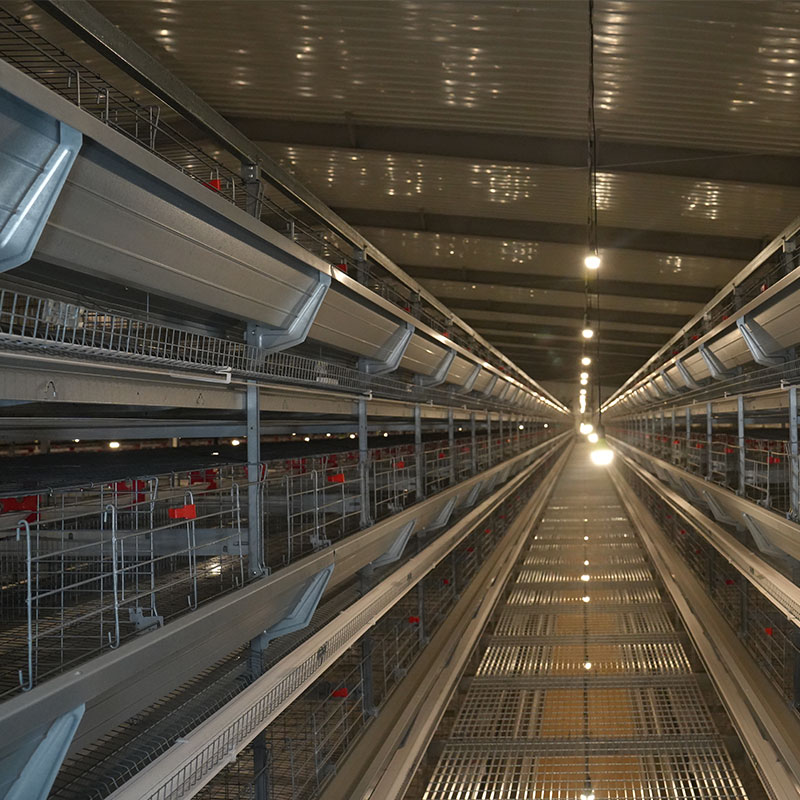
2.What is better battery cages or deep litter system?
There's no universal "better." Battery cages offer superior feed conversion(FCR),easier manure management,and lower labor costs but severely restrict natural behaviors.The deep litter system allows foraging/dustbathing but requires more space,litter management,and has higher disease pressure.The choice depends on your priorities:welfare marketing vs.input cost control.
3.What are furnished broiler chicken cages?
Furnished(or enriched)cages provide amenities like perches,nesting areas,and scratch pads within a caged environment.They aim to allow expression of more natural behaviors comparedto conventional barren battery cages.They represent amiddleground solution evolvingin some markets.
4.How much does a broiler cage cost?
Costs vary widely by type,material,and automation.A simple singletier galvanized cage might cost $10$20 per bird space.A multitier automated system with manure belts can exceed $50 per bird.Include shipping,support structure,and installationin your budget—these candouble equipment costs
5.How many broilers fit in one cage?
Density depends on local laws(whichare tightening)and final bird weight.Traditional metrics like square inches per bird are being replaced by requirements like kg/m².A common range might be ~3040 kg live weight per m²,but you MUST consult your nationaland buyerspecificwelfare codes(e.g.,RSPCA,GAP).
6.What material is bestfor poultrycage flooring?
Heavygauge,welded,smooth hotdip galvanized steel wireis standard.The smooth finish prevents footpad lesions,a keywelfare indicator.Thegalvanization(Z275+)fights corrosionfrom manure gases.Extruded plastic flooringis emergingas awelfarefriendlyalternativebut hasdifferent cleaningrequirements
7.Can I automate feedingwithbroilercages?
Yes,in factmost commercialcage systemsare designedfor automation.They integratewithcentralfeed binsviafill systemsand featurecontinuouschain feedersor pans running along each row.This ensuresconsistentfeed accessand drasticallyreduceslabor
8.How do you manage manurein multitiercage systems?
Modernsystems useoneoftwo methods:(1)Manure Belts:Conveyor beltsunder each tierthat remove droppings dailyto acentralcollection pointkeepingthe housedry.(2)Deep Pit:The entirecage bankis installedovera deep concrete pit;manure accumulatesfor an entireproduction cycle.This requirespowerfulventilationto controlammonia
9.Are there alternatives tocagesfor highdensitybroilerproduction?
Yes.Multitier aviaryor platformsystemsare gainingtraction.Birds have accessto multiplelevels(not enclosedcages)withlitter areasbelow.They allowflight/hoppingwhile maintaininghigh stockingdensityand automatedfeedingon upperlevels.Thisis complexbut addresseskeywelfare criticisms
10.What questionsshould I aska supplierbefore buyingbroilercages?
Askforgalvanizationspecs(Zcoating),wiregauge,warrantyperiod.Compatibilitywithyourexistingautomation(water/feed)?Providereferencesfromfarmsinyourclimate.Requestadetailedlayoutplan.Canyoudemonstratecompliancewith[insertyourcountry]welfareregulations?Whatistheleadtimeandinstallationsupport?
11.How do I cleanand disinfectbroilercagesbetweenflocks?
It'sa rigorousprocess.Removeallbirds&debris.Drycleanmanurebelts/pits.Usealowpressurewater soakto loosenmaterial.Applyadetergentfoam.Scrubmanuallywhereneeded.Rinse thoroughly.Applyapproveddisinfectantviafogormist.Allowpropertcontacttime.DryCOMPLETELYbeforeplacingnewlitterorchicks.Moistureresidualisanenemy
12.Do buyerslike supermarketsacceptchickenfromcagedsystems?
Thisisthemostcriticalmarketquestion.Majorretailers,foodservicechains,&restaurantsgloballyare rapidlyphasingoutsupplyfromconventionalcage systems.ManynowrequirecertifiedhigherwelfarestandardslikeGlobalAnimalPartnership(GAP)orRSPCAAssuredwhichprohibitcaging.YouMUSTknowyourbuyer'sspecificationsbeforeinvesting
1. Drinking system include the water pipes, water pressure adjuster, drinking nipples, Waterline front-end device, dosing system etc, choose them according to customer's needs.
2. High-quality water drinking pipes, pressure regulating valves and water drinking nipples can effectively prevent the water leakage. Drinking system adopt the closed piping system, which can minimize the water pollution.
3. 360-degree drinking nipples provide adequate drinking water for poultry at all stages.
4. The automatic drinking water system mainly adopts the steel ball drinking nipple. lt uses imported high-grad stainless steel, POM resin, and APS engineering material, which is wearing resistant, and the durability can be used for long time.



1. Automatic feeding machine can be chosen between gantry and ladder feeding machine. Gantry type feeding machine is a relatively economical and practical machine with simple operation, remote control walking character, easy to manage.
2. Mechanical transmission device running smoothly, low noise, long service life.
3. With the use of automatic control, the feeding system can adjust the amount of material.
4. Feeding with arched structure, high carrying capacity, not easily deformed.
5. Saving man power, saving feed, greatly improving the efficiency of Large-scale farming.
6. The walking speed of gantry feeding machine is 9--12 m/min.




1. Manure removing system included scraper type and conveyor belt type, Which can reduce the labor intensity and labor cost, keep the chicken shed dry and clean.
2. A type chicken cage can use scraper type or conveyor belt type.


3. The scraper type is suitable for A type cages, which can clean two or three rows. For the starters, this type is a good choice. lt can not only save some labor cost, but also save some investment in the whole project. The cleaning speed is 6-10 meters per minute.
4. Conveyor belt type is more suitable for large scale farming. The manure removing belt we use is high quality PP material (polypropylene). The walking speed is 2-4 meters per minute.



High Quality Pellets Made by Mobile Pellet Machine
1. It has professional designed angle of the blade. After the dynamic balance test one by one, the blade can operate smoothly.
2. The air volume is consistent in the whole life of the fan. Bearings has advantage of high strength, low noise, durable and so on.
1. The cooling pads uses high-quality wet curtain paper and adopts space cross-linking technology, which has the advantages of high water absorption, high water resistance, anti-toxicity and long service life.
2. The cooling efficiency is over 80%, without surfactant, natural water absorption, fast diffusion speed and long-lasting effect.
3. The product does not contain phenol and other chemical substances that are easy to cause skin allergies. It is non-toxic and harmless to the human body and chicken when installed and used. It is green, safe, energy-saving, environmentally friendly, economical, and easy to install.
4. The frame aluminum alloy has high strength, good corrosion resistance, durability and beautiful appearance.
5. Use a special filter for the cooling pad at the upper water to ensure clean water quality and support efficient water circulation components.
6. Combined with a negative pressure fan, it can effectively lower the indoor temperature.
The window is made of special selected high-quality engineering plastic, with high strength and long service life, together with superior anti-aging and anti-UV performance.
Function: Ventilation of the chicken house, usually used in the winter.
This system can adjust the wind speed and direction, thus the cold air will not reach chicken directly , which can effectively prevent the phenomenon of cold stress in chicken.
Environmental control system equipment is suitable for large-scale and intensive farming. According to customer requirements, we can provide various types of smart poultry equipment.
1. Our poultry management system is a modular system that manages all aspects of the chicken house, such as climate, temperature, humidity, ammonia, feeding, feed weighing, lighting and ventilation systems, and can monitor the situation of the chicken house in real time through a computer and mobile phone.
2. The management computer is the heart of the poultry farm, allowing you to easily monitor the entire poultry farm.

 WeChat:+8617838608255