The morning sun hasn’t yet crested the horizon, but the low hum of ventilation fans is already the dominant sound on a modern broiler farm. For decades, the rhythm of this life was dictated by the labor-intensive cycle of litter management: the spreading of fresh bedding, the constant monitoring of moisture, the frantic scramble during depopulation, and the arduous, dusty clean-out. Each flock cycle ended with a days-long process of removing tons of wet litter, disinfecting the entire house, and laying down new bedding, all while the building sat empty and non-productive.
This traditional method, while familiar, introduced a cascade of variables that directly impacted the bottom line. Ammonia levels could spike overnight, challenging bird respiratory health and requiring increased fuel costs for ventilation. Litter moisture created an environment where pododermatitis (footpad lesions) could flourish, potentially leading to condemnations at the processing plant. The sheer physicality of managing floor-based systems placed a ceiling on operational scale; expanding often meant a proportional increase in labor and time, not just birds.
A significant shift is underway, moving the industry from managing a floor to managing a system. The adoption of broiler cage systems, specifically multi-tiered aviary designs, represents a fundamental re-engineering of the production environment. This isn’t merely a change of equipment; it’s a change of philosophy, prioritizing controlled welfare, operational efficiency, and data-driven management over traditional practices.
The Architectural Shift: From Barn to Integrated Habitat
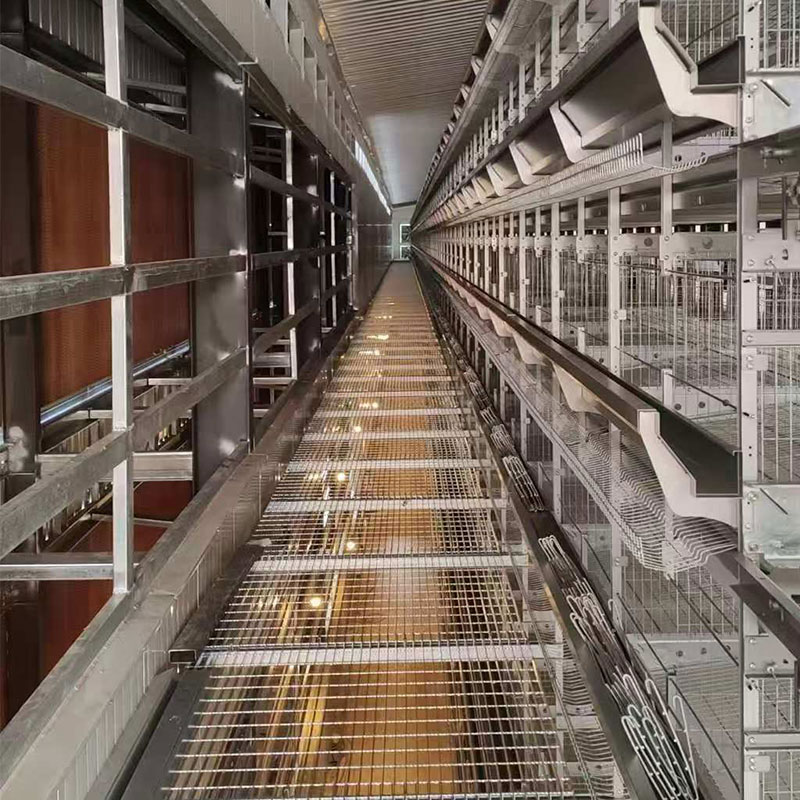
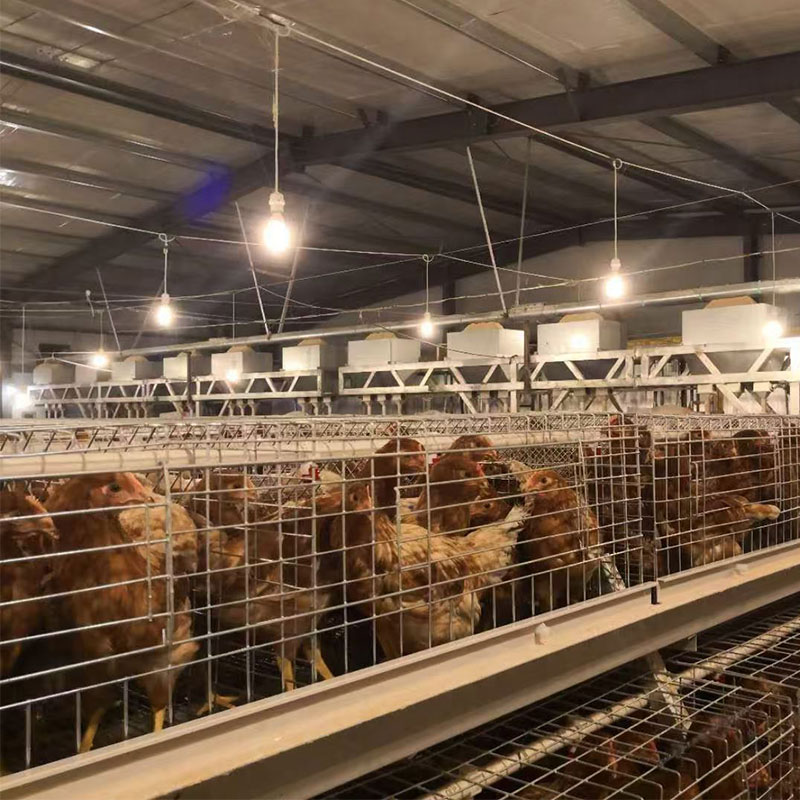
Walking into a house equipped with a modern cage system, the first impression is one of order and structure. Gone is the vast, flat landscape of litter. In its place stands a series of sturdy, galvanized steel frames supporting multiple levels. This is not the battery cage imagery of old; these are open aviary systems designed to cater to the broiler’s life cycle.
The system is typically divided into distinct zones, each serving a specific purpose. The core of the system is the slatted floor tiering. Perforated metal or plastic floors allow manure to drop through, separating the birds from their waste immediately. Below these tiers runs the manure belt system, a continuous loop of durable plastic or rubber that operates like a slow-moving conveyor. Depending on the manufacturer’s design and the farmer’s preference, this belt can be set to run multiple times per day or on a continuous slow cycle, actively removing waste from the bird environment and depositing it into a centralized collection point or an exterior storage container.
This single feature is the catalyst for a multitude of benefits. By removing the manure, the primary driver of ammonia and moisture is eliminated from the living space. A farmer who once had to crank up heaters to ensure sufficient temperature for minimum ventilation rates on a cold, damp night now finds his humidity sensors reading consistently lower. The fuel saved in not having to exchange air solely to remove ammonia is a direct and calculable cost reduction.
Adjacent to the slatted areas are the litter pans. These are not cages but designated, shallow platforms filled with bedding material like wood shavings or rice hulls. They are strategically placed to encourage natural behaviors—dustbathing, scratching, and pecking. This provision is critical for meeting animal welfare audit standards and ensuring the birds’ behavioral needs are met. The key difference from a full-litter house is that these are controlled, smaller zones. They are easier to manage, keep dry, and replace between flocks, drastically reducing both the volume of bedding used and the time spent managing it.
The entire structure is designed with bird movement in mind. Low-power nipple drinker systems and precision feeder lines are integrated seamlessly into each level. The spacing between wires, the angle of ramps, and the height of ledges are all engineered to allow birds easy access to every part of the system without injury, from day-old chicks to fully grown broilers.
The Lifecycle Within the System: A Managed Transition
The success of a cage system hinges on a managed transition of the birds through the vertical space. This process begins on day one.
The Brooding Phase: Chicks arrive and are placed on the solid floor of the system, which is often the top tier. This area is enclosed with chick guards to create a confined, easily heated brooding zone. Heaters, feed, and water are all within pecking distance. The perforated floors in this section may be covered with paper or cardboard for the first few days to provide secure footing and encourage feed consumption. During this period, the system acts as a highly efficient, contained brooder.
The Exploration Phase: As the chicks grow feathers and become more mobile, their world expands. The internal ramps and jumps within the system invite exploration. Farmers will gradually open access points to lower tiers. Birds naturally begin to distribute themselves vertically, utilizing the feeders and drinkers on every level. This gradual migration is less stressful than the sudden movements sometimes required in single-level houses and allows birds to self-select their preferred micro-climates.
The Grow-Out Phase: By the second and third week, the entire vertical volume of the house is in use. The system is now operating at full capacity. Birds are evenly spread across tiers, reducing stocking density on any single level and improving air quality around each bird. The manure belts are in constant operation, and the controlled litter areas see high activity. This is where the labor savings become most apparent. Daily walks through the house shift from checking litter condition to monitoring system performance: ensuring belts are running, checking feed lines, and observing bird behavior.
The Depopulation Advantage: The most dramatic demonstration of efficiency comes at the end of the cycle. In a traditional house, catching crews work on a litter floor, a slow and physically demanding process that can stress both birds and workers. In a multi-tier system, birds are often collected directly from the tiers. The design allows catchers to work in an ergonomic standing position, easily accessing birds. The process is faster, reduces bird stress, and minimizes the potential for injuries like broken wings or legs that can occur during catching on the floor. The time from first bird to empty house is slashed, sometimes by more than half.

Quantifying the Return: Beyond the Initial Investment
The capital outlay for a broiler cage system is undeniably significant. It is a major investment that requires careful financial planning. However, the decision must be evaluated not as a simple equipment purchase, but as an investment in long-term operational overhaul, with returns realized across multiple categories.
Labor and Time Reclamation: The most immediate saving is in labor. The elimination of the clean-out process between flocks cannot be overstated. Instead of a week of intense labor involving heavy machinery to remove litter, power washing, and re-bedding, the turnaround process is dramatically simplified. It involves washing and disinfecting the now-empty system and the concrete pit below. This process can often be completed in two to three days. This faster turnaround means the house can be re-stocked more quickly, potentially allowing for an additional flock per year. For a farm running five flocks annually, adding a sixth flock is a direct 20% increase in revenue potential from that house.
Input Cost Reduction: The savings on inputs are substantial. Bedding costs are reduced by up to 90% because it is only used in the small, dedicated litter pans. Fuel costs drop due to reduced ventilation requirements for moisture and ammonia control. Feed conversion can improve due to a more stable and comfortable environment; birds not expending energy to deal with heat stress or respiratory irritation put more energy into growth. Medication costs may also decrease as the separation from manure reduces the pathogen load and the incidence of diseases like coccidiosis.
Bird Performance and Quality: The end product is improved. Consistent air quality leads to better respiratory health. Dry litter in the pans virtually eliminates footpad dermatitis, a major welfare and quality issue. Processors often pay a premium for birds with perfect footpads, and condemnations related to burns and infections drop. The reduced stress from a more stable environment and easier depopulation can also improve meat quality, potentially reducing instances of pale, soft, and exudative (PSE) meat.
Manure Management: From Waste to Resource: The manure belt system transforms a handling problem into a management opportunity. The manure collected is consistent, relatively dry, and uncontaminated by bedding. This makes it a more homogeneous and valuable product. It can be easily transported and sold as fertilizer with a known nutrient value, creating a new revenue stream. Alternatively, it can be more efficiently composted or even used in anaerobic digesters for energy production, turning a cost center into a potential profit center.
Considerations for Implementation
Adopting this technology is not without its challenges and requires forethought.
Infrastructure Demands: These systems are heavy. The existing house must be evaluated for structural integrity. Concrete foundations and support pillars must be able to bear the significant load of the equipment, birds, feed, and workers during service. Electrical systems must be upgraded to handle the increased load from numerous motors driving belts and feeders. Backup power systems become even more critical, as a prolonged outage could halt manure belts, creating a rapid welfare issue.
Mastering the Management Learning Curve: This is a different style of farming. It requires a higher degree of technical proficiency. Farmers must learn to troubleshoot belt drives, motorized feed systems, and automated controllers. The focus of daily observation shifts from the floor to the birds’ interaction with the equipment. Training for all personnel is essential. A malfunctioning system is worse than no system at all.
Financial Planning: The investment is front-loaded. Securing financing for such a capital-intensive project requires a solid business plan that clearly projects the ROI through the lenses of increased throughput, reduced variable costs, and improved premium potential. Grants or incentives for environmental upgrades may be available in some regions to offset costs.
Bird Health Nuances: While many health challenges are reduced, the environment can create new ones. With birds living on wire, attention must be paid to foot health and feather cover. Stocking density, while improved per square foot of floor space, must be carefully managed per square foot of usable system space. Lighting programs must be designed to encourage vertical movement and ensure birds on lower tiers remain active.
Selecting a System: A Buyer’s Guide
The market offers several reputable manufacturers, each with slight variations in design. The choice depends on specific operational goals.
Tier Configuration: Systems come in two main patterns. Z-shaped systems stack tiers in a zig-zag pattern, often allowing for easier visual inspection across the house. A-shaped or stair-step systems stack more vertically, potentially allowing for greater bird capacity within the same building footprint. The choice affects airflow, light penetration, and catching logistics.
Manure Belt Operation: The frequency and operation of the manure belts differ. Some systems run all belts on a single, continuous motor, while others have independent motors for each level or section. Independent systems offer more control and redundancy; if one belt fails, the others continue to operate.
Integration and Automation: The level of automation varies. Basic systems may have manual controls for feeders and belts. Advanced systems integrate with environmental computers, allowing the farmer to schedule belt runs, monitor feed bin levels, and even track water consumption from a smartphone. This data becomes invaluable for optimizing performance flock after flock.
Durability and Service: The quality of the galvanization on the steel, the thickness of the wire, and the design of moving parts are indicators of longevity. Perhaps more important is the manufacturer’s reputation for after-sales service and parts availability. When a critical component fails on a Saturday night, having access to technical support and spare parts is non-negotiable.
The transition to a contained broiler system is a decisive step for a poultry operation. It is a move away from reactive problem-solving and toward proactive environmental control. It trades the variable costs of labor, bedding, and fuel for a fixed capital cost that promises predictability and scale. For the forward-thinking producer, it is not just a piece of equipment for sale; it is the foundational technology for the next generation of poultry production, building resilience, profitability, and sustainability into the very structure of the business.
1. Drinking system include the water pipes, water pressure adjuster, drinking nipples, Waterline front-end device, dosing system etc, choose them according to customer's needs.
2. High-quality water drinking pipes, pressure regulating valves and water drinking nipples can effectively prevent the water leakage. Drinking system adopt the closed piping system, which can minimize the water pollution.
3. 360-degree drinking nipples provide adequate drinking water for poultry at all stages.
4. The automatic drinking water system mainly adopts the steel ball drinking nipple. lt uses imported high-grad stainless steel, POM resin, and APS engineering material, which is wearing resistant, and the durability can be used for long time.



1. Automatic feeding machine can be chosen between gantry and ladder feeding machine. Gantry type feeding machine is a relatively economical and practical machine with simple operation, remote control walking character, easy to manage.
2. Mechanical transmission device running smoothly, low noise, long service life.
3. With the use of automatic control, the feeding system can adjust the amount of material.
4. Feeding with arched structure, high carrying capacity, not easily deformed.
5. Saving man power, saving feed, greatly improving the efficiency of Large-scale farming.
6. The walking speed of gantry feeding machine is 9--12 m/min.




1. Manure removing system included scraper type and conveyor belt type, Which can reduce the labor intensity and labor cost, keep the chicken shed dry and clean.
2. A type chicken cage can use scraper type or conveyor belt type.


3. The scraper type is suitable for A type cages, which can clean two or three rows. For the starters, this type is a good choice. lt can not only save some labor cost, but also save some investment in the whole project. The cleaning speed is 6-10 meters per minute.
4. Conveyor belt type is more suitable for large scale farming. The manure removing belt we use is high quality PP material (polypropylene). The walking speed is 2-4 meters per minute.



High Quality Pellets Made by Mobile Pellet Machine
1. It has professional designed angle of the blade. After the dynamic balance test one by one, the blade can operate smoothly.
2. The air volume is consistent in the whole life of the fan. Bearings has advantage of high strength, low noise, durable and so on.
1. The cooling pads uses high-quality wet curtain paper and adopts space cross-linking technology, which has the advantages of high water absorption, high water resistance, anti-toxicity and long service life.
2. The cooling efficiency is over 80%, without surfactant, natural water absorption, fast diffusion speed and long-lasting effect.
3. The product does not contain phenol and other chemical substances that are easy to cause skin allergies. It is non-toxic and harmless to the human body and chicken when installed and used. It is green, safe, energy-saving, environmentally friendly, economical, and easy to install.
4. The frame aluminum alloy has high strength, good corrosion resistance, durability and beautiful appearance.
5. Use a special filter for the cooling pad at the upper water to ensure clean water quality and support efficient water circulation components.
6. Combined with a negative pressure fan, it can effectively lower the indoor temperature.
The window is made of special selected high-quality engineering plastic, with high strength and long service life, together with superior anti-aging and anti-UV performance.
Function: Ventilation of the chicken house, usually used in the winter.
This system can adjust the wind speed and direction, thus the cold air will not reach chicken directly , which can effectively prevent the phenomenon of cold stress in chicken.
Environmental control system equipment is suitable for large-scale and intensive farming. According to customer requirements, we can provide various types of smart poultry equipment.
1. Our poultry management system is a modular system that manages all aspects of the chicken house, such as climate, temperature, humidity, ammonia, feeding, feed weighing, lighting and ventilation systems, and can monitor the situation of the chicken house in real time through a computer and mobile phone.
2. The management computer is the heart of the poultry farm, allowing you to easily monitor the entire poultry farm.

 WeChat:+8617838608255