The morning chill still hangs in the air, a reminder that despite the calendar’s claim of spring, the world outside isn’t ready for your newest arrivals. You’ve just unboxed five hundred day-old chicks, a pulsing mass of downy vulnerability. Their cheeps are not yet the confident clucks of the layers they will become; they are the tiny, urgent sounds of life seeking warmth and safety. In the corner of your drafty barn sits the brooder ring you’ve used for years—a circle of corrugated plastic, a heat lamp dangling precariously above it. You know the drill: the frantic scramble every time you step inside, the constant worry about hot spots under the lamp and cold spots at the edges, the inevitable losses from piling or smothering. This year, you’re considering a different approach. This year, you’re looking at brooder cages.
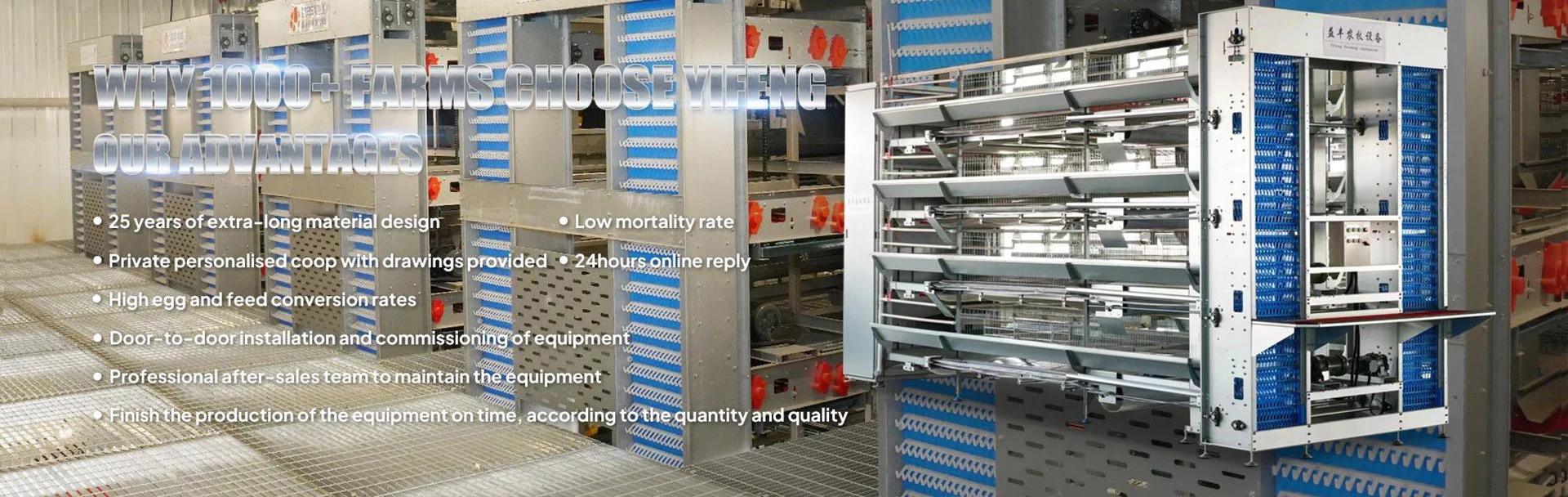
The transition from a traditional floor brooding system to a dedicated cage system is one of the most significant efficiency upgrades a poultry farmer can make. It’s not merely about buying a new piece of equipment; it’s about fundamentally reengineering the first and most critical weeks of a bird’s life. A brooder cage is a multi-tiered enclosure, typically with a wire mesh floor, designed to house chicks from day one through to the point they are ready to transition to a pullet or grow-out facility. The system integrates heat, feed, and water into a controlled, contained environment.
Consider the heat lamp. In a ring, its infrared glow creates a single, intense zone of warmth. Chicks directly underneath can become overheated, panting and dehydrated, while those just a foot away are too cold, huddling for warmth and risking suffocation. A brooder cage replaces that single point of heat with a more sophisticated concept: thermoneutrality. Heat is often provided by radiant tube heaters running the length of each tier or by forced-air heaters that warm the entire air volume of the cage bank. The goal is to create an entire level where the temperature is uniform. You set the thermostat to 95°F for the first week, and every chick on that tier experiences the same 95°F environment, whether it’s in the front of the cage or the back. This eliminates the energy chicks waste moving between hot and cold zones, directing all their calories toward growth instead of temperature regulation.
The wire mesh floor is another pivotal difference. To a new farmer, a solid floor might seem kinder, a more natural surface. But watch a chick in a brooder ring. Spilled water turns bedding into a damp, chilling mat. Manure accumulates, releasing ammonia that burns young eyes and respiratory tracts, stunting development and predisposing birds to disease. The wire floor of a brooder cage acts as a continuous manure belt. Droppings fall through the mesh, away from the birds, either onto a drop pan for periodic removal or onto a conveyor belt that automatically transports waste out of the building. This does more than just keep the birds clean; it severs the cycle of disease. Coccidiosis, a parasitic disease that thrives in damp, manure-laden litter, is dramatically reduced. The air smells cleaner, and the birds’ lungs remain clear. You’re not just raising chicks; you’re protecting their future health before they ever encounter a pathogen.
Accessibility is where brooder cages transform daily labor. Feeding five hundred chicks in a ring is a chore. You must step carefully over the barrier, sprinkle starter feed on paper plates, and hope the stronger birds don’t monopolize the resources. Waterers are constantly kicked over, creating wet spots and leaving chicks without water. A cage system integrates nipple drinkers and feed troughs directly into each tier. The moment chicks are placed in the cage, their beaks bump the shiny pin of a nipple drinker, releasing a drop of water. They learn to drink almost instantly, ensuring immediate hydration. The feed trough runs along the front, its height adjustable as the birds grow. To feed them, you don’t enter their space; you simply turn a hand crank or activate an auger system that fills the trough from a central hopper. What was a twice-daily, fifteen-minute task of navigating a muddy ring becomes a thirty-second walk down the aisle. This efficiency compounds over weeks, freeing up hours for other essential farm management tasks.
When evaluating brooder cages for sale, the specifications can seem like a blur of gauges and dimensions. It’s more practical to think in terms of bird welfare and your own workflow.
Tier Configuration: Most systems come in three or four tiers. A three-tier system might hold 500 chicks per tier, for a total of 1500 birds per cage bank. The choice between three or four tiers isn’t just about capacity; it’s about barn height and air stratification. Heat rises. In a four-tier system, the top tier will naturally be warmer than the bottom. Modern systems counteract this with individually controlled heating elements for each tier or with well-designed ventilation that ensures even air mixing throughout the height of the unit. You need to assess your space—can you accommodate the extra height for a fourth tier while maintaining adequate clearance for heat and air circulation?
Flooring and Manure Management: The gauge of the wire mesh is critical. It must be small enough that tiny chick feet cannot slip through, preventing leg injuries, but large enough to allow manure to pass cleanly. A common design features a ½” by 1” mesh. Below this, the manure management system is key. Drop pans are a lower-cost option but require manual pulling and cleaning every few days—a messy, labor-intensive job. Automated manure belts are a premium feature. A continuous belt runs beneath each tier, removing manure on a set timer, perhaps once a day, and depositing it into a cross-conveyor that takes it directly outside the building. This is a classic example of spending more upfront on equipment to save significantly on recurring labor costs and to vastly improve barn hygiene.
Bird Density and Space Requirements: Overcrowding is the fast track to problems. Reputable manufacturers provide clear space-per-bird guidelines. A good rule of thumb is to allow at least 28 to 30 square inches per chick for the first few weeks. This isn’t arbitrary math. It’s the space required for a chick to move freely to eat, drink, and rest without being constantly jostled. Chronic stress from overcrowding suppresses immune function and leads to uneven growth rates. You’ll end up with a flock where some birds are ready to move on and others are stunted, complicating your entire production schedule. Adequate space is not a luxury; it is a prerequisite for a uniform, healthy batch of pullets.
Integrated Systems: The most advanced brooder cages are ecosystems unto themselves. Look for systems that offer integrated feeding and watering from the start. The feed trough should have adjustable height settings and perhaps a small “baby chick” pan that attaches to it for the first few days, making it easier for them to find the crumbles. Nipple drinkers should have adjustable water pressure. For day-old chicks, you need a very light pressure so a mere touch releases a droplet. As they grow, you increase the pressure to ensure an adequate flow rate. Some systems also incorporate built-in egg scales or monitoring systems that allow you to track feed consumption and bird weight automatically, giving you data-driven insights into flock performance.
The financial calculation for a brooder cage system moves beyond the initial invoice. The upfront cost is undeniably higher than a set of heat lamps and a cardboard ring. You are investing in steel, electronics, and automated systems. However, the return is measured in saved birds, saved labor, and saved utilities.
Mortality rates in well-managed cage systems routinely fall below 2%, compared to 5% or higher in floor systems that are more susceptible to accidents, predation, and disease. If you place 10,000 chicks, a 3% difference in mortality means 300 more birds survive to become productive layers or meat birds. Calculate the value of those 300 birds at point of sale; it will likely cover a substantial portion of your annual equipment financing cost.

Labor is the hidden profit-killer in agriculture. Timing the daily chores of feeding, watering, and checking birds in a floor system can consume hours each week. A cage system with automated feeders, nipple drinkers, and manure belts compresses that daily time commitment into minutes. This reclaimed time isn’t free; it’s a resource you can reinvest in other profit-driving activities: maintenance, marketing, flock health monitoring, or even expansion.

The health dividend is perhaps the most valuable. By virtually eliminating contact with manure, you drastically reduce the pathogen load on your chicks. This means lower veterinary bills and medication costs. But more importantly, it means you are sending robust, healthy pullets to your layer house or grow-out floor. A bird that never had to fight off a case of cocci or a respiratory infection in its first few weeks will have a stronger immune system and better growth potential for its entire life. This translates into more eggs, better feed conversion, and a higher-quality end product.
The decision to install a brooder cage system is a commitment to a modern, precision-based approach to poultry farming. It moves the first stage of life from an artisanal, hands-on process to a controlled, repeatable science. The cheeps of the chicks are the same, but their environment is engineered for their success. The warmth is even, the air is clean, the food and water are always accessible, and the threat of their own waste is removed. You trade the constant, anxious vigilance of the brooder ring for the confident oversight of a system that works with you. The result is not just a batch of chicks, but a uniform, healthy, and profitable flock.
1. Drinking system include the water pipes, water pressure adjuster, drinking nipples, Waterline front-end device, dosing system etc, choose them according to customer's needs.
2. High-quality water drinking pipes, pressure regulating valves and water drinking nipples can effectively prevent the water leakage. Drinking system adopt the closed piping system, which can minimize the water pollution.
3. 360-degree drinking nipples provide adequate drinking water for poultry at all stages.
4. The automatic drinking water system mainly adopts the steel ball drinking nipple. lt uses imported high-grad stainless steel, POM resin, and APS engineering material, which is wearing resistant, and the durability can be used for long time.



1. Automatic feeding machine can be chosen between gantry and ladder feeding machine. Gantry type feeding machine is a relatively economical and practical machine with simple operation, remote control walking character, easy to manage.
2. Mechanical transmission device running smoothly, low noise, long service life.
3. With the use of automatic control, the feeding system can adjust the amount of material.
4. Feeding with arched structure, high carrying capacity, not easily deformed.
5. Saving man power, saving feed, greatly improving the efficiency of Large-scale farming.
6. The walking speed of gantry feeding machine is 9--12 m/min.




1. Manure removing system included scraper type and conveyor belt type, Which can reduce the labor intensity and labor cost, keep the chicken shed dry and clean.
2. A type chicken cage can use scraper type or conveyor belt type.


3. The scraper type is suitable for A type cages, which can clean two or three rows. For the starters, this type is a good choice. lt can not only save some labor cost, but also save some investment in the whole project. The cleaning speed is 6-10 meters per minute.
4. Conveyor belt type is more suitable for large scale farming. The manure removing belt we use is high quality PP material (polypropylene). The walking speed is 2-4 meters per minute.



High Quality Pellets Made by Mobile Pellet Machine
1. It has professional designed angle of the blade. After the dynamic balance test one by one, the blade can operate smoothly.
2. The air volume is consistent in the whole life of the fan. Bearings has advantage of high strength, low noise, durable and so on.
1. The cooling pads uses high-quality wet curtain paper and adopts space cross-linking technology, which has the advantages of high water absorption, high water resistance, anti-toxicity and long service life.
2. The cooling efficiency is over 80%, without surfactant, natural water absorption, fast diffusion speed and long-lasting effect.
3. The product does not contain phenol and other chemical substances that are easy to cause skin allergies. It is non-toxic and harmless to the human body and chicken when installed and used. It is green, safe, energy-saving, environmentally friendly, economical, and easy to install.
4. The frame aluminum alloy has high strength, good corrosion resistance, durability and beautiful appearance.
5. Use a special filter for the cooling pad at the upper water to ensure clean water quality and support efficient water circulation components.
6. Combined with a negative pressure fan, it can effectively lower the indoor temperature.
The window is made of special selected high-quality engineering plastic, with high strength and long service life, together with superior anti-aging and anti-UV performance.
Function: Ventilation of the chicken house, usually used in the winter.
This system can adjust the wind speed and direction, thus the cold air will not reach chicken directly , which can effectively prevent the phenomenon of cold stress in chicken.
Environmental control system equipment is suitable for large-scale and intensive farming. According to customer requirements, we can provide various types of smart poultry equipment.
1. Our poultry management system is a modular system that manages all aspects of the chicken house, such as climate, temperature, humidity, ammonia, feeding, feed weighing, lighting and ventilation systems, and can monitor the situation of the chicken house in real time through a computer and mobile phone.
2. The management computer is the heart of the poultry farm, allowing you to easily monitor the entire poultry farm.

 WeChat:+8617838608255