The first 72 hours after hatch are the most critical period in a broiler’s life. The transition from the controlled, warm, and secure environment of the hatchery to the farm is a profound shock to the chick’s system. Its ability to navigate this transition successfully—to find feed, locate water, and maintain body temperature—directly dictates the final flock’s performance, from livability and uniformity to final processing weights. For decades, the standard practice was to place day-old chicks directly onto litter in a vast, open broiler house. While this method works, it presents significant challenges. The sheer scale of the environment can be overwhelming for a chick weighing barely 40 grams. Heat sources, while plentiful, create gradients, and the chicks’ journey from a warm spot to the feed line and back can be an exhausting trek that burns precious energy needed for growth.
This is the fundamental problem the brooder chicken coop system is engineered to solve. Rather than asking the chick to adapt to its new world, this technology brings a controlled, optimized micro-environment to the chick. It is a targeted intervention designed to manage the bird’s most vulnerable phase with precision, setting the entire flock on a trajectory for superior performance.
The Core Principle: A Coop Within a House
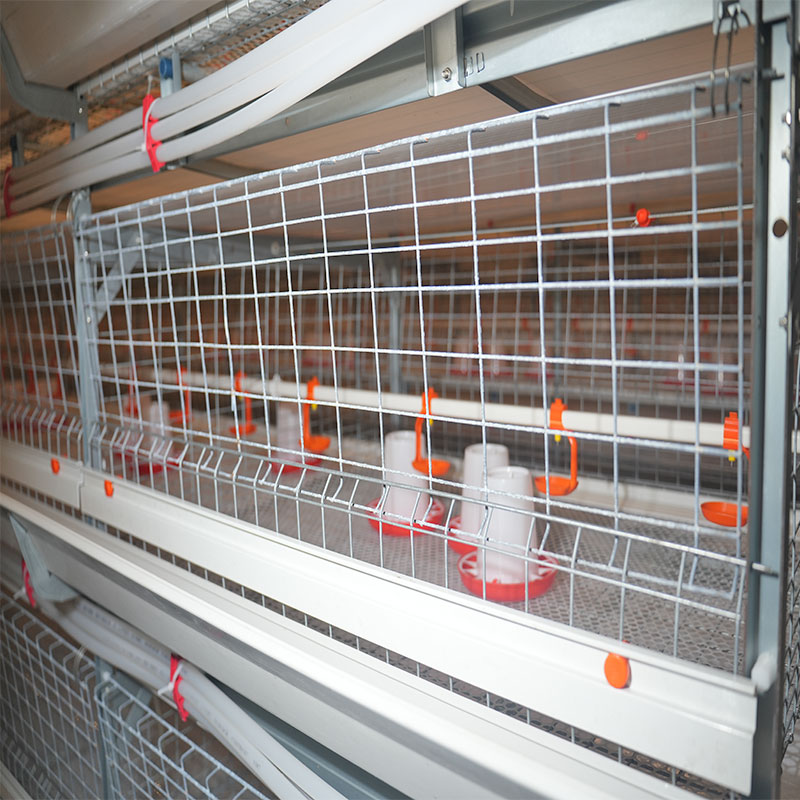
Imagine placing a series of smaller, fully equipped, and meticulously controlled “starter homes” inside your main broiler house. This is the essence of the brooder coop system. These are not just rings or guards; they are fully enclosed cage systems, typically raised off the litter floor on legs, that house the chicks for the first 7 to 14 days of life.

Each unit is a self-contained universe for the birds. It includes its own internal feed lines and nipple drinker systems, adjusted to the perfect height for day-old chicks. Solid panels enclose the sides to eliminate drafts and contain warmth. The flooring is typically a plastic or wire mesh, designed to be comfortable for the chicks’ feet while allowing manure to pass through onto the litter below. This separation is a key health benefit, preventing the chicks from immediate contact with their waste during this susceptible period.
The most crucial element is the integrated heating and ventilation system. Instead of relying on house-wide radiant brooders, each brooder coop has its own thermostatically controlled heating element, often combined with a small fan. This creates a consistent, uniform temperature throughout the entire enclosed space. There are no cold corners or hot spots. The chick’s entire world, from the drinker to the feeder, is within this perfectly climate-controlled zone.
Operational Workflow: From Placement to Release
The process begins before chick placement. The main house is prepared as usual: litter is laid down, and the environment is stabilized. The brooder coops are positioned in their planned locations, often in rows with adequate spacing for future access. Their internal systems—feed, water, heat, and ventilation—are activated and calibrated. Technicians will walk the length of each coop, ensuring every nipple drinker is primed and dripping correctly and that the feed tracks are full. The temperature inside the coop is brought to the optimal placement temperature, usually around 90-92°F (32-33°C), and verified with handheld thermometers at multiple points.
On placement day, chicks are carefully distributed directly into these coops. The confined space means a higher stocking density during this initial phase, but it is a calculated density. It encourages activity and makes the discovery of feed and water almost inevitable. A chick only has to take a few steps to bump into a feeder pan or see another chick drinking from a shiny nipple. This rapid and uniform access is the primary driver behind improved early weight gain and seven-day weights.
For the next week to ten days, the birds live exclusively within this system. Management focuses on maintaining the internal environment. Temperature is gradually decreased according to a planned curve, mimicking the natural reduction in required warmth as the chick grows its feathers. Ventilation within the coop is adjusted to remove moisture and ammonia building up from the chicks’ respiration and the water systems, ensuring air quality remains high inside their immediate environment.
The transition out of the coop, often called “opening up,” is a gradual process. Around day 7-10, the sides of the coops are gradually raised or opened. This allows the now larger, stronger, and more feathered chicks to voluntarily explore the wider house. They can venture out to the main feed lines and drinkers but can always retreat to the familiar warmth and security of their brooder. Over the next few days, as they become accustomed to the full house, the coop’s internal systems are deactivated. Finally, the sides are fully opened or the coops are physically raised toward the ceiling, out of the way, granting the birds complete access to the entire house for the remainder of the grow-out.
Tangible Benefits: Measuring the Difference on the Bottom Line
The investment in a brooder coop system is justified by a cascade of measurable improvements that impact profitability.
The most immediate and noticeable benefit is the dramatic improvement in early weight gain and seven-day body weights. Because every chick has immediate and unimpeded access to feed and water 24/7, they start eating sooner and eat more. It’s the difference between a chick spending its first hours huddled under a heater and a chick eating within minutes of placement. Flocks consistently hit and exceed seven-day weight targets, which is a powerful predictor of final performance. A good seven-day weight correlates strongly with a better feed conversion ratio (FCR) at processing.
This leads directly to the second major benefit: exceptional flock uniformity. In a conventional brooding setup, there are always runts. These are the chicks that get lost, can’t compete effectively for resources, or spend too much energy thermoregulating. They fall behind on day two and never catch up, resulting in a wide spread of weights at harvest. The brooder coop’s controlled environment virtually eliminates this. With no competition and equal access, the entire flock starts on a level playing field. The result at processing is a much tighter weight distribution, which simplifies catching and scheduling and maximizes the percentage of birds within the most valuable weight band for your integrator.
Bird health and livability see significant boosts. The physical barrier between the chick and the litter for the first critical week drastically reduces early exposure to pathogens like coccidia and bacteria such as E. coli and Salmonella. This “sanitary start” lowers the microbial challenge on the chicks’ immature immune systems. Consequently, farmers report lower first-week mortality rates and a reduced need for prophylactic medications. The improved air quality within the coop, free from dust and ammonia drafts, also supports respiratory health.
From a resource management perspective, the systems are highly efficient. The targeted heating of the small coop spaces uses significantly less propane than heating the entire house volume to the same temperature. It’s not uncommon for farmers to report propane savings of 30-50% during the brooding period. This efficiency also extends to water usage, as less is evaporated from the litter due to lower overall house temperatures.
Practical Considerations for Implementation
Adopting this technology is a significant operational decision and requires careful planning. The initial capital investment is substantial. A system to equip a single house represents a major cost that must be weighed against the expected returns in performance efficiency and input savings.
The systems also introduce a new layer of management complexity. Staff must be trained not just on managing the house environment, but on managing the micro-environments within each coop. This includes understanding the specific thermostat controls, checking the dedicated drinker lines, and monitoring bird behavior within the enclosed space. It requires a more hands-on, detail-oriented approach during the brooding period.
Barn layout must be considered. The coops take up floor space and must be arranged to allow for equipment like feed trucks and future catching crews. The process of raising and lowering the systems must be smooth and reliable. Furthermore, the house ventilation strategy must be adapted. The main house temperature can be set lower, but the ventilation system must still manage moisture effectively, even though the primary heat source is now concentrated.
Finally, it is crucial to view the brooder coop not as a standalone silver bullet but as the first component in an integrated production system. The gains achieved in the first week can only be capitalized on if the rest of the grow-out is managed with equal skill. Nutrition, health programs, and main house environmental control must all be aligned to support the accelerated start the chicks have been given.
In essence, the brooder chicken coop system represents a paradigm shift in early broiler management. It moves away from a passive approach—providing resources and hoping the chicks find them—to an active one—delivering those resources directly to the chick in an ideal setting. For poultry farmers focused on optimizing every variable in the production chain, this technology offers a powerful tool to conquer the challenges of the critical brooding phase, turning early-life vulnerability into a foundation for exceptional growth and flock performance.
1. Drinking system include the water pipes, water pressure adjuster, drinking nipples, Waterline front-end device, dosing system etc, choose them according to customer's needs.
2. High-quality water drinking pipes, pressure regulating valves and water drinking nipples can effectively prevent the water leakage. Drinking system adopt the closed piping system, which can minimize the water pollution.
3. 360-degree drinking nipples provide adequate drinking water for poultry at all stages.
4. The automatic drinking water system mainly adopts the steel ball drinking nipple. lt uses imported high-grad stainless steel, POM resin, and APS engineering material, which is wearing resistant, and the durability can be used for long time.



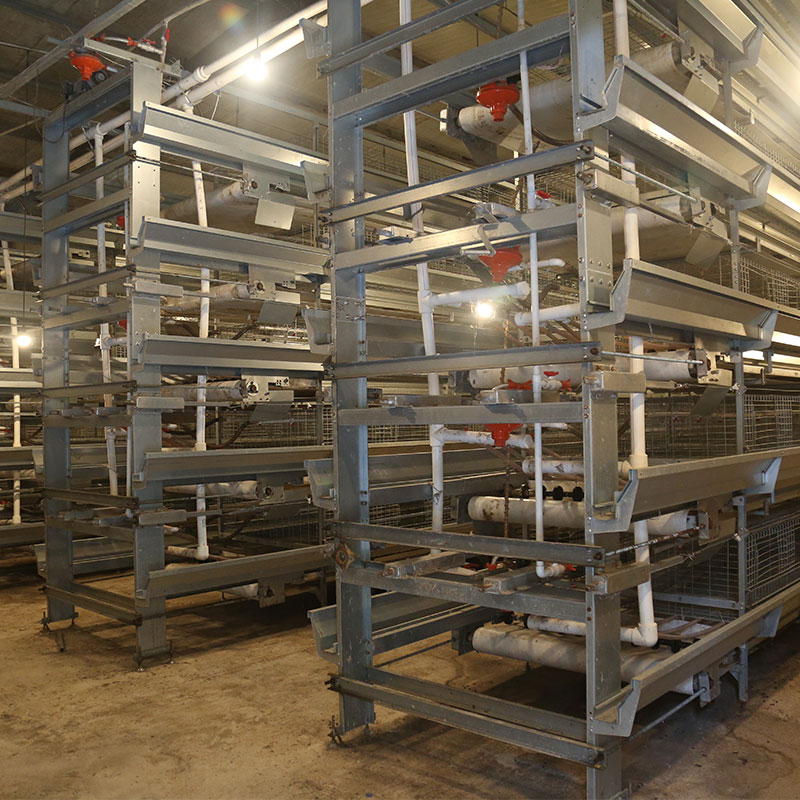
1. Automatic feeding machine can be chosen between gantry and ladder feeding machine. Gantry type feeding machine is a relatively economical and practical machine with simple operation, remote control walking character, easy to manage.
2. Mechanical transmission device running smoothly, low noise, long service life.
3. With the use of automatic control, the feeding system can adjust the amount of material.
4. Feeding with arched structure, high carrying capacity, not easily deformed.
5. Saving man power, saving feed, greatly improving the efficiency of Large-scale farming.
6. The walking speed of gantry feeding machine is 9--12 m/min.




1. Manure removing system included scraper type and conveyor belt type, Which can reduce the labor intensity and labor cost, keep the chicken shed dry and clean.
2. A type chicken cage can use scraper type or conveyor belt type.


3. The scraper type is suitable for A type cages, which can clean two or three rows. For the starters, this type is a good choice. lt can not only save some labor cost, but also save some investment in the whole project. The cleaning speed is 6-10 meters per minute.
4. Conveyor belt type is more suitable for large scale farming. The manure removing belt we use is high quality PP material (polypropylene). The walking speed is 2-4 meters per minute.



High Quality Pellets Made by Mobile Pellet Machine
1. It has professional designed angle of the blade. After the dynamic balance test one by one, the blade can operate smoothly.
2. The air volume is consistent in the whole life of the fan. Bearings has advantage of high strength, low noise, durable and so on.
1. The cooling pads uses high-quality wet curtain paper and adopts space cross-linking technology, which has the advantages of high water absorption, high water resistance, anti-toxicity and long service life.
2. The cooling efficiency is over 80%, without surfactant, natural water absorption, fast diffusion speed and long-lasting effect.
3. The product does not contain phenol and other chemical substances that are easy to cause skin allergies. It is non-toxic and harmless to the human body and chicken when installed and used. It is green, safe, energy-saving, environmentally friendly, economical, and easy to install.
4. The frame aluminum alloy has high strength, good corrosion resistance, durability and beautiful appearance.
5. Use a special filter for the cooling pad at the upper water to ensure clean water quality and support efficient water circulation components.
6. Combined with a negative pressure fan, it can effectively lower the indoor temperature.
The window is made of special selected high-quality engineering plastic, with high strength and long service life, together with superior anti-aging and anti-UV performance.
Function: Ventilation of the chicken house, usually used in the winter.
This system can adjust the wind speed and direction, thus the cold air will not reach chicken directly , which can effectively prevent the phenomenon of cold stress in chicken.
Environmental control system equipment is suitable for large-scale and intensive farming. According to customer requirements, we can provide various types of smart poultry equipment.
1. Our poultry management system is a modular system that manages all aspects of the chicken house, such as climate, temperature, humidity, ammonia, feeding, feed weighing, lighting and ventilation systems, and can monitor the situation of the chicken house in real time through a computer and mobile phone.
2. The management computer is the heart of the poultry farm, allowing you to easily monitor the entire poultry farm.

 WeChat:+8617838608255