
The first 48 hours after chicks arrive on the farm are the most critical in their entire growing cycle. A chick that gets chilled, struggles to find water, or is trampled by flock mates in those initial days will never recover its full genetic potential for growth or feed conversion. This fundamental truth is why the choice of brooding system is not merely an equipment decision, but a direct investment in the final flock’s performance and profitability. For generations, the image of brooding involved sprawling floor pens with circle guards, heat lamps, and paper spread with starter feed. While this method can be successful, it is inherently labor-intensive and inconsistent. The modern poultry operation is increasingly turning to a more engineered solution: dedicated brooding cages.
Brooding cages represent a shift in philosophy, moving from managing a group of birds to managing individual bird start. These are not the grow-out cages used for pullets or layers, but rather specialized enclosures designed to meet the unique biological needs of day-old chicks. The core objective is to create a perfectly controlled micro-environment for every single bird during its most vulnerable stage.
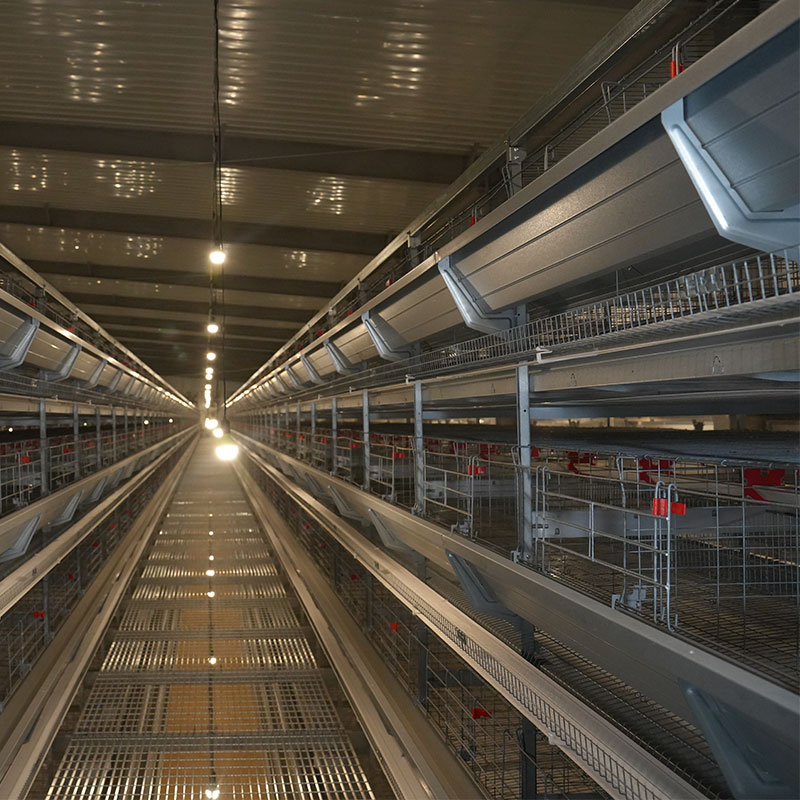
The Architecture of a Successful Start
A typical brooding cage system is a multi-tiered unit, often two or three levels high, constructed from galvanized steel for durability and ease of sanitation. Unlike a single, open floor, this vertical design drastically multiplies the available floor space within the same building footprint. A farmer working with a 40x80-foot broiler house might place 20,000 birds on the floor. That same farmer could install a two-tier brooding cage system and brood 40,000 chicks in half the house space for the first 14-18 days, then transfer them to the full house for grow-out. This practice, known as whole-house brooding or two-stage rearing, is a key driver for adoption.
Each cage level is a self-contained world. The floor is not wire mesh, which would be disastrous for tiny legs and feet, but a solid plastic plate or a very fine-wire mesh with a small aperture that prevents foot injuries and allows droppings to pass through. This is the first major advantage: separation from manure. On the floor, chicks immediately walk in their own waste, which harbors pathogens like coccidia and E. coli. In a cage, the droppings fall onto a manure belt located beneath each tier. This belt runs periodically, removing the waste from the bird environment entirely and depositing it into a central collection system. The difference in litter quality and footpad health at the end of the brooding period is visibly dramatic.
The internal environment of each cage is meticulously managed. Heat is not provided by a few radiant brooders creating hot and cold zones across a wide area. Instead, each cage level has its own thermostatically controlled heating system, often hot water pipes running beneath the solid floor, creating a warm, consistent "floor heat" that mimics a mother hen. The chicks choose their ideal comfort zone by moving slightly away from or closer to the heat source, a behavior that is impossible under a single, intense heat lamp. Supplemental overhead heaters ensure ambient air temperature remains stable. This precision eliminates huddling and piling, which are common causes of smothering mortality in floor operations.
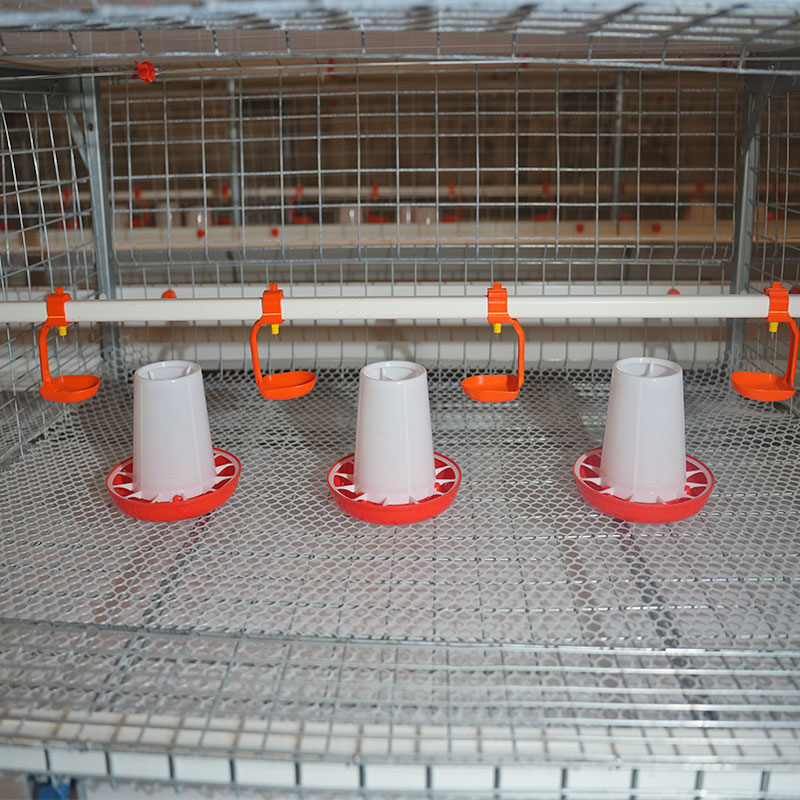
Feed and water are presented with equal precision. Nipple drinker lines run the length of the cage, with small cups or trigger pins placed at precisely the right height for a day-old chick. The water pressure is set to deliver a single, inviting droplet when the chick pecks at it. This teaches them to drink almost immediately and keeps the water clean and free from contaminants. Feed is delivered via a trough that is also easily accessible. Some systems use temporary paper on the cage floor for the first day, but the design ensures every chick is only a few inches from sustenance. There are no "dead zones" where a weak chick might get lost and fail to thrive.
Operational Advantages: Beyond the Chick
The benefits for the birds are clear: a cleaner, safer, and more consistent start. However, the advantages for the poultry farmer are what truly make the business case for investing in a cage brooding system.
The most immediate impact is on labor. A employee checking on floor-brooded chicks must walk the entire house, adjusting brooders, checking for piles, and refreshing paper feed lines. It is physically demanding and time-consuming. Monitoring a cage system is a different task altogether. The worker walks a central aisle and can observe every bird on a tier from a single vantage point. Weak or dehydrated chicks are immediately visible. Mortality removal is a matter of reaching into a single cage rather than wading through thousands of birds. Tasks like adjusting water height are automated for an entire row of cages with a single hand crank. This efficiency translates to a 50% or greater reduction in daily labor hours during the brooding phase.
This management efficiency leads directly to improved flock performance. Because the environment is controlled and stress is minimized, birds achieve a more uniform start. Consider two flocks. Flock A is brooded on the floor. The birds under the brooder are optimal, but those at the edges are slightly cooler and spend more energy maintaining body heat instead of growing. They are smaller at ten days of age. Flock B is brooded in cages, where every bird experiences nearly identical conditions. At ten days, the birds in Flock B will have a significantly tighter weight distribution and a higher average weight. This early uniformity compounds throughout the grow-out period. Uniform birds consume feed at a similar rate, reach processing weight at the same time, and create a more uniform end-product, which is highly valued by processing plants.
The health advantages cannot be overstated. The physical barrier of the cage eliminates contact with manure, dramatically reducing the early challenge from cocci and bacteria. Many farmers who use cage brooding find they can significantly reduce or even eliminate the use of in-feed anticoccidials for the first flock grown on fresh litter after transfer. This is a major step toward antibiotic-free production and reduces drug costs. The closed environment also makes biosecurity more robust. It is far more difficult for pathogens to spread from cage to cage compared to a continuous floor space.
From a facility management perspective, the two-stage rearing process unlocks new potential. By brooding twice as many birds in half the space, a farmer can deeply clean and prepare the other half of the house. After transfer, the cages are power-washed and disinfected, ready for the next batch of chicks. This allows for a tighter turnaround time between flocks and maximizes the utility of the capital asset—the poultry house itself. Furthermore, the concentrated brooding area requires less energy to heat. Instead of heating an entire 40,000-bird house to 90°F, the farmer is only intensively heating the 20,000-bird brooding section, leading to substantial savings on propane or natural gas bills, often cited as 30-40% lower during the brooding phase.
Considerations and Implementation
Adopting a cage brooding system is a significant capital investment. The cost per bird space is higher than the simple infrastructure required for floor brooding. A producer must calculate the Return on Investment (ROI) based on their specific operation: the savings in labor, energy, and medication; the increased revenue from improved feed conversion and uniformity; and the potential to grow more birds per year in the same house.
The process of transferring birds from the cages to the floor at around 14-18 days is a distinct operation that requires planning and careful execution. It is a moment of stress that must be managed correctly. Birds are moved, usually via a conveyor system or by hand in boxes, and distributed evenly across the fresh litter. They need immediate access to water and feed in their new environment. A well-managed transfer results in only a few hours of adjustment before growth resumes normally. The timing of the transfer is also crucial. It must be done before the birds outgrow the cage space but after they are sufficiently feathered to regulate their body temperature without the intense brooding heat.
Training for stockpersons is different. Their skill set shifts from brute-force labor to observation and system management. They need to learn to read the birds' behavior in the cages, understand the mechanical systems for feed, water, and manure belts, and troubleshoot basic issues. This is a more technical role.
Finally, the market must be considered. While the animal welfare outcomes of cage brooding—reduced mortality, improved health, and less smothering—are positive, the term "cage" can be misinterpreted by consumers unfamiliar with poultry production practices. It is essential to differentiate between brooding cages, which are used for a short period for animal welfare reasons, and long-term housing systems. Transparency about the practice is important.
The decision to implement a brooding cage system is a strategic one. It is not for every operation, but for those focused on maximizing efficiency, bird health, and profitability through precision management, it represents the modern standard of care. It is a tool that allows the farmer to exert an unprecedented level of control over the most variable period in a bird's life, turning a high-risk phase into a predictable, optimized foundation for the entire production cycle. The result is not just a healthier chick, but a more resilient and profitable business.
1. Drinking system include the water pipes, water pressure adjuster, drinking nipples, Waterline front-end device, dosing system etc, choose them according to customer's needs.
2. High-quality water drinking pipes, pressure regulating valves and water drinking nipples can effectively prevent the water leakage. Drinking system adopt the closed piping system, which can minimize the water pollution.
3. 360-degree drinking nipples provide adequate drinking water for poultry at all stages.
4. The automatic drinking water system mainly adopts the steel ball drinking nipple. lt uses imported high-grad stainless steel, POM resin, and APS engineering material, which is wearing resistant, and the durability can be used for long time.



1. Automatic feeding machine can be chosen between gantry and ladder feeding machine. Gantry type feeding machine is a relatively economical and practical machine with simple operation, remote control walking character, easy to manage.
2. Mechanical transmission device running smoothly, low noise, long service life.
3. With the use of automatic control, the feeding system can adjust the amount of material.
4. Feeding with arched structure, high carrying capacity, not easily deformed.
5. Saving man power, saving feed, greatly improving the efficiency of Large-scale farming.
6. The walking speed of gantry feeding machine is 9--12 m/min.




1. Manure removing system included scraper type and conveyor belt type, Which can reduce the labor intensity and labor cost, keep the chicken shed dry and clean.
2. A type chicken cage can use scraper type or conveyor belt type.


3. The scraper type is suitable for A type cages, which can clean two or three rows. For the starters, this type is a good choice. lt can not only save some labor cost, but also save some investment in the whole project. The cleaning speed is 6-10 meters per minute.
4. Conveyor belt type is more suitable for large scale farming. The manure removing belt we use is high quality PP material (polypropylene). The walking speed is 2-4 meters per minute.



High Quality Pellets Made by Mobile Pellet Machine
1. It has professional designed angle of the blade. After the dynamic balance test one by one, the blade can operate smoothly.
2. The air volume is consistent in the whole life of the fan. Bearings has advantage of high strength, low noise, durable and so on.
1. The cooling pads uses high-quality wet curtain paper and adopts space cross-linking technology, which has the advantages of high water absorption, high water resistance, anti-toxicity and long service life.
2. The cooling efficiency is over 80%, without surfactant, natural water absorption, fast diffusion speed and long-lasting effect.
3. The product does not contain phenol and other chemical substances that are easy to cause skin allergies. It is non-toxic and harmless to the human body and chicken when installed and used. It is green, safe, energy-saving, environmentally friendly, economical, and easy to install.
4. The frame aluminum alloy has high strength, good corrosion resistance, durability and beautiful appearance.
5. Use a special filter for the cooling pad at the upper water to ensure clean water quality and support efficient water circulation components.
6. Combined with a negative pressure fan, it can effectively lower the indoor temperature.
The window is made of special selected high-quality engineering plastic, with high strength and long service life, together with superior anti-aging and anti-UV performance.
Function: Ventilation of the chicken house, usually used in the winter.
This system can adjust the wind speed and direction, thus the cold air will not reach chicken directly , which can effectively prevent the phenomenon of cold stress in chicken.
Environmental control system equipment is suitable for large-scale and intensive farming. According to customer requirements, we can provide various types of smart poultry equipment.
1. Our poultry management system is a modular system that manages all aspects of the chicken house, such as climate, temperature, humidity, ammonia, feeding, feed weighing, lighting and ventilation systems, and can monitor the situation of the chicken house in real time through a computer and mobile phone.
2. The management computer is the heart of the poultry farm, allowing you to easily monitor the entire poultry farm.

 WeChat:+8617838608255