The rhythmic clucking starts low in the corner of the coop, a persistent, guttural sound you’ve come to recognize instantly. You find her there, puffed up like a feathered bowling ball, planted firmly over a nest of eggs—most of which are wooden decoys she’s commandeered. She hasn’t left for food or water in two days. Her comb has faded from vibrant red to a pale pink. This is your best layer, and for the next three weeks, possibly longer, her productivity is zero. Her sole purpose is now to sit, to incubate, and to defend that nest with a ferocity that makes collecting the real eggs a gauntlet of pecks and angry squawks.
This natural instinct, broodiness, is one of the oldest challenges in small-scale and free-range poultry farming. While a broody hen is essential if you want to hatch chicks naturally, for the farmer focused on egg production, she represents a significant operational bottleneck. It’s not just one hen out of commission; it’s a chain reaction. She occupies a prime nesting box, discouraging other hens from laying there. Her protective aggression can disrupt the flock’s harmony. And perhaps most frustratingly, once she successfully hatches a clutch, her mothering period keeps her from laying for many more weeks.
For generations, the solutions have been folk remedies: dunking her in a cold water bath, isolating her in a wire-bottomed crate with no bedding, or repeatedly removing her from the nest. These methods are stressful for the bird, time-consuming for the farmer, and often ineffective. The broody hen, driven by a powerful hormonal imperative, will often return to her mission the moment she’s released.
This is where a purpose-built broody chicken cage, often called a broody breaker cage, transitions from a simple piece of equipment to a critical management tool. It’s not a punishment box; it’s a climate-controlled reset button for her endocrine system.
The Anatomy of a Reset: Designing the Broody Cage
A typical broody breaker system is deceptively simple in its design, but every feature serves a specific physiological purpose. Understanding why it’s built the way it is reveals the science behind breaking the cycle.
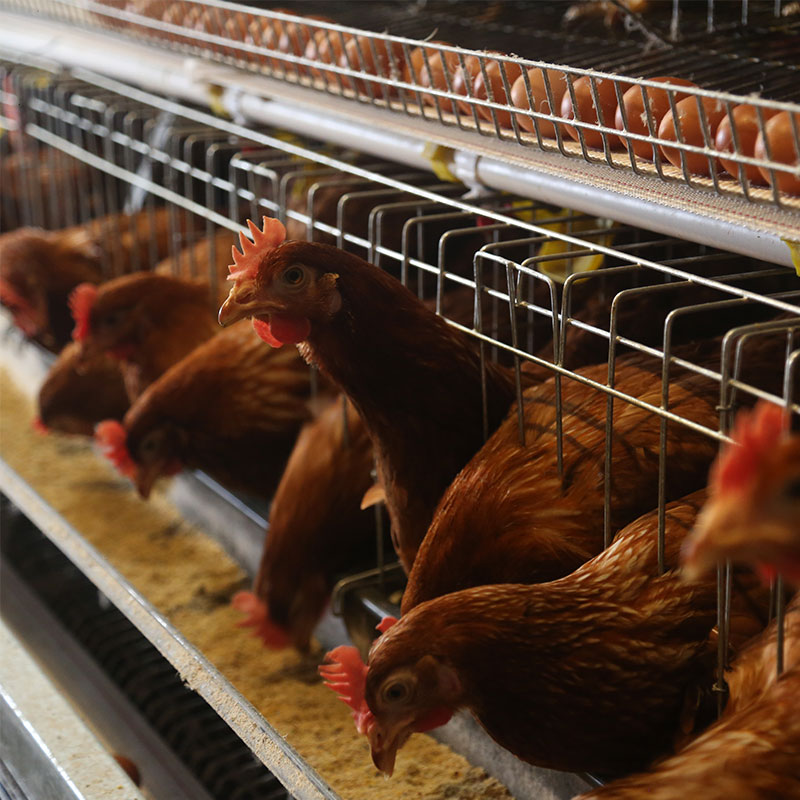
The most critical component is the floor. It is always made of wire mesh, typically ½ inch by 1 inch welded wire. This isn’t just for droppings to fall through, keeping her clean—though that’s a benefit. The primary function is temperature regulation. A broody hen’s instinct is to create a warm, dark, and snug environment for her eggs. The bare wire mesh prevents her from forming a warm, comfortable pocket on her underside. The constant slight airflow beneath her cools her belly, directly counteracting the elevated body temperature that is a hallmark of broodiness. It makes the physical act of sitting deeply uncomfortable and ineffective, signaling to her body that this is not a suitable place for incubation.
The enclosure itself is open on all sides, including the top. It’s a cage, but it’s placed in a well-lit, well-ventilated area, often right inside the main coop or an adjacent pen. This constant exposure to light and the activity of the flock is crucial. Broodiness thrives in dim, secluded privacy. By placing her in a brightly lit, high-traffic area, you bombard her with environmental cues that say, “This is not a quiet, safe nest; this is the middle of the living room.” She remains integrated with the flock visually and audibly, which reduces stress and prevents the social isolation that can sometimes occur when removing a bird.
Size is deliberate. The cage is not large enough for her to nestle down comfortably in a corner. It provides just enough room for her to stand up, turn around, and lie down, but not so much that she can find a dark spot to hunker down and continue her broody behavior. There’s no hiding. Feed and water are provided within the cage, always in open containers, not in deep troughs she could potentially try to sit over.
The Protocol: Implementing the System
Identifying the broody hen early is key. The sooner you intervene, the quicker the process. The signs are unmistakable: she’s parked in a nest box, she fluffs her feathers and emits a distinctive growl when approached, and she may peck or grip the nest material tightly if you try to slide a hand under her.
Once identified, the transfer is straightforward. Gently lift her and place her directly into the prepared broody cage. There’s no need to be rough; a firm, confident move is best. The cage should already be situated in its permanent location with fresh water and a feeder filled with a layer ration—not scratch grains, which provide less nutritional support.

The initial 24 to 48 hours are the test. She will likely continue to exhibit broody behaviors: she may cluck persistently, try to arrange imaginary nesting material, and remain puffed up. This is normal. The environment is working against her instinct.
The transformation usually begins on the second or third day. You’ll notice her spending more time standing rather than sitting. She’ll start pecking at her feed and drinking regularly. The broody cluck will become less frequent and eventually stop. Her comb, which had paled, will begin to regain its rich red color as her hormone levels normalize and she resumes her regular metabolic functions.
The entire process typically takes between 48 and 72 hours. A good rule of thumb is to keep her in the cage for a full 24 hours after all broody behaviors have ceased. If you let her out too early, she may immediately return to her chosen nest box. Once released, she will often preen vigorously, have a large drink of water, and within a week to ten days, she will usually resume laying eggs.
Beyond the Basics: Flock Integration and Space Planning
For a farmer with a larger operation, a single broody cage might not be sufficient during peak seasons. A modular system, perhaps a bank of two or three cages stacked or lined up, is a wise investment. This allows you to address multiple broody hens simultaneously without delay.
Placement of the cage unit within your broader operation requires thought. The ideal location is within the main coop or aviary. This serves two purposes. First, as mentioned, it keeps the hen socially connected, reducing stress. Second, and just as importantly, it acts as a visual deterrent to the other hens. They see their flockmate in this open, wire-bottomed enclosure. While we cannot anthropomorphize and assign complex reasoning to chickens, observational experience suggests that this can have a slight suppressing effect on other hens who might be on the verge of becoming broody themselves. It becomes part of the flock’s environment—a clear signal that certain behaviors lead to a specific outcome.
The broody cage is also an invaluable tool for managing a hen with chicks, if you do want some motherhood in your flock but need to control it. A broody hen with day-old chicks can be placed in a larger, solid-bottomed "mothering pen" or a sectioned-off part of the coop with a heat lamp. This protects the vulnerable chicks from being trampled or bullied by older birds and allows the mother to teach them to eat and drink in safety. After a few weeks, when the chicks are feathered and more robust, the entire family can be reintroduced to the main flock. This controlled integration is far more successful than simply letting a hen hatch eggs in a communal nest and hoping for the best.
Economic Impact and Return on Investment
The financial logic behind dedicating space and resources to a broody breaking system is compelling. Consider the math of a single hen. A good laying hen in peak production can lay an egg every 25 to 26 hours. A broody episode, left unchecked, can last a minimum of 21 days (the incubation period) plus the time it takes for her to return to lay—often another 2 to 3 weeks. That’s over 40 days of lost production. At a rate of 5-6 eggs per week, that’s nearly 35 eggs lost from one hen.
Now, multiply that by the number of broody hens in a flock over a year. Heritage breeds are notoriously prone to broodiness, and a farmer might have several hens go broody multiple times each season. The lost income from those unsold eggs quickly adds up. Furthermore, a non-laying hen is still consuming feed, so you are incurring a cost without any return.
A broody cage, which can be built from simple materials for a very low cost or purchased as a commercial unit, pays for itself after successfully breaking just one or two hens. It transforms a 40-day unproductive period into a 3-day corrective one. The hen returns to the laying roster faster, maintaining the steady output that is the lifeblood of an egg business. It also preserves nesting box real estate for active layers, preventing eggs from being laid on the floor where they are more likely to be broken, dirty, or eaten.
For the poultry farmer, time is a finite resource. The broody cage saves significant labor. Instead of multiple daily trips to the coop to shoo a hen out of a nest, check if she’s gone back, or engage in other time-consuming methods, the farmer makes one intervention. The system does the work autonomously once the hen is placed inside. This reclaimed time can be redirected to other vital tasks like pasture management, customer sales, or flock health monitoring.
The broody chicken cage is a testament to the principle of working with animal biology to improve welfare and productivity. It addresses a deeply ingrained instinct not through force or stress, but by creating an environment that gently persuades the hen’s own body to change course. It is a simple, effective, and economically sound tool that turns a perennial frustration into a manageable, routine part of flock management. By integrating this system, farmers protect their investment in each bird, ensure a consistent supply of eggs, and maintain the steady rhythm of a productive and profitable operation.
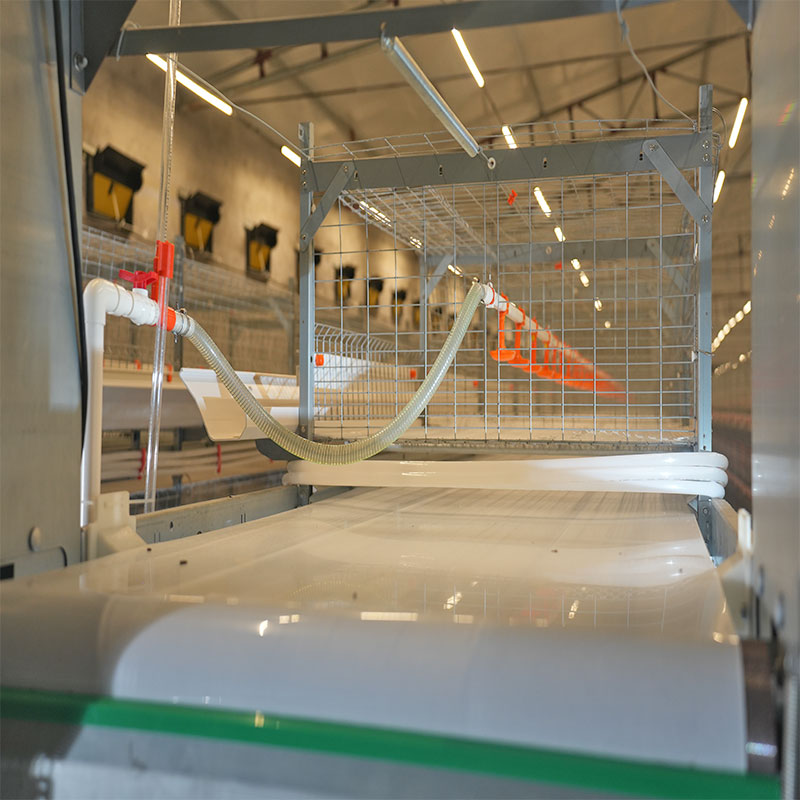
1. Drinking system include the water pipes, water pressure adjuster, drinking nipples, Waterline front-end device, dosing system etc, choose them according to customer's needs.
2. High-quality water drinking pipes, pressure regulating valves and water drinking nipples can effectively prevent the water leakage. Drinking system adopt the closed piping system, which can minimize the water pollution.
3. 360-degree drinking nipples provide adequate drinking water for poultry at all stages.
4. The automatic drinking water system mainly adopts the steel ball drinking nipple. lt uses imported high-grad stainless steel, POM resin, and APS engineering material, which is wearing resistant, and the durability can be used for long time.



1. Automatic feeding machine can be chosen between gantry and ladder feeding machine. Gantry type feeding machine is a relatively economical and practical machine with simple operation, remote control walking character, easy to manage.
2. Mechanical transmission device running smoothly, low noise, long service life.
3. With the use of automatic control, the feeding system can adjust the amount of material.
4. Feeding with arched structure, high carrying capacity, not easily deformed.
5. Saving man power, saving feed, greatly improving the efficiency of Large-scale farming.
6. The walking speed of gantry feeding machine is 9--12 m/min.




1. Manure removing system included scraper type and conveyor belt type, Which can reduce the labor intensity and labor cost, keep the chicken shed dry and clean.
2. A type chicken cage can use scraper type or conveyor belt type.


3. The scraper type is suitable for A type cages, which can clean two or three rows. For the starters, this type is a good choice. lt can not only save some labor cost, but also save some investment in the whole project. The cleaning speed is 6-10 meters per minute.
4. Conveyor belt type is more suitable for large scale farming. The manure removing belt we use is high quality PP material (polypropylene). The walking speed is 2-4 meters per minute.



High Quality Pellets Made by Mobile Pellet Machine
1. It has professional designed angle of the blade. After the dynamic balance test one by one, the blade can operate smoothly.
2. The air volume is consistent in the whole life of the fan. Bearings has advantage of high strength, low noise, durable and so on.
1. The cooling pads uses high-quality wet curtain paper and adopts space cross-linking technology, which has the advantages of high water absorption, high water resistance, anti-toxicity and long service life.
2. The cooling efficiency is over 80%, without surfactant, natural water absorption, fast diffusion speed and long-lasting effect.
3. The product does not contain phenol and other chemical substances that are easy to cause skin allergies. It is non-toxic and harmless to the human body and chicken when installed and used. It is green, safe, energy-saving, environmentally friendly, economical, and easy to install.
4. The frame aluminum alloy has high strength, good corrosion resistance, durability and beautiful appearance.
5. Use a special filter for the cooling pad at the upper water to ensure clean water quality and support efficient water circulation components.
6. Combined with a negative pressure fan, it can effectively lower the indoor temperature.
The window is made of special selected high-quality engineering plastic, with high strength and long service life, together with superior anti-aging and anti-UV performance.
Function: Ventilation of the chicken house, usually used in the winter.
This system can adjust the wind speed and direction, thus the cold air will not reach chicken directly , which can effectively prevent the phenomenon of cold stress in chicken.
Environmental control system equipment is suitable for large-scale and intensive farming. According to customer requirements, we can provide various types of smart poultry equipment.
1. Our poultry management system is a modular system that manages all aspects of the chicken house, such as climate, temperature, humidity, ammonia, feeding, feed weighing, lighting and ventilation systems, and can monitor the situation of the chicken house in real time through a computer and mobile phone.
2. The management computer is the heart of the poultry farm, allowing you to easily monitor the entire poultry farm.

 WeChat:+8617838608255