Cage Free Equipment: The Essential Guide for Modern Poultry Farmers
The shift toward cagefree egg production is more than a trend; it’s a fundamental transformation of the poultry industry. Driven by consumer demand for ethical food, corporate commitments, and evolving regulations, farmers worldwide are adapting their operations. This transition hinges on one critical factor: cage free equipment. Unlike traditional battery cages, cagefree systems require a sophisticated array of structures and tools designed to support bird welfare, productivity, and farm management. This comprehensive guide delves into the essential equipment needed for successful cagefree aviary or barn systems, balancing animal behavior science with practical farming economics.
A cagefree system is not simply an empty barn. It’s a carefully engineered environment that allows hens to express their natural behaviors—perching, scratching, dust bathing, nesting, and foraging. The right equipment doesn’t just facilitate these behaviors; it manages them to ensure bird health, egg quality, and operational efficiency.
Behavioral Fulfillment: Equipment must provide resources for all natural instincts.
Stocking Density: Equipment layout must comply with certified stocking density limits (e.g., Certified Humane®, RSPCA).
Manure Management: Systems must handle manure in a way that maintains air quality and bird health.
Bird Safety & Health: Design must minimize injuries, parasites, and disease transmission.
Labor Efficiency: Equipment should streamline daily tasks like feeding, egg collection, and monitoring.
This is the foundational framework of the operation.
MultiTier Aviary Systems: These complex structures are the heart of most largescale cagefree barns. They consist of multiple tiers or platforms equipped with perches, feeders, and drinkers.
Function: Provides vertical space, encouraging movement and reducing floor eggs. Upper tiers serve as resting areas at night.
Key Features: Robust ladders/ramps for bird access, manure belts under each tier for dry manure removal, and easy human access for bird inspection.
SingleLevel (Floor) Systems: Often used in organic or smallerscale operations where all activities occur on the litter floor.
Function: Relies heavily on distributed floor resources. Requires excellent litter management.
Key Features: Emphasis on spacious pop holes for range access (if freerange), and strategic placement of all other equipment categories across the floor space.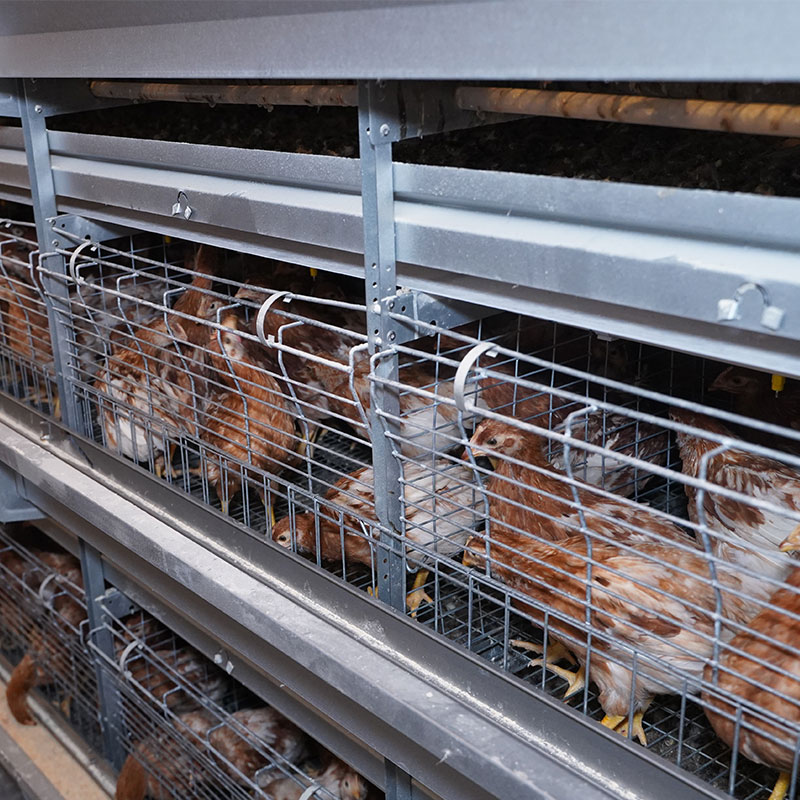
Providing attractive, secluded nesting spaces is crucial for obtaining clean, unbroken eggs.
Communal Nests: Large, darkened areas with soft bedding (e.g., astroturf). Can be automated with egg belts.
Individual Nests: Smaller partitioned spaces. Often preferred for reducing egg contamination.
Design Essentials: Must be darker than the surrounding area, located lower than the highest perches to discourage sleeping in nests (“nest training”), and feature automatic closing curtains to deter overnight roosting.
Perching is a nonnegotiable natural behavior. Adequate perch space reduces stress and aggression.
Perch Types: Round plastic or wooden perches are standard. They must be designed without sharp edges and placed to prevent manure from soiling birds below.
Space Allocation: Most certifications require at least 68 inches of perch space per hen.
Enrichment Tools: This includes pecking blocks (for redirected pecking), dust bathing boxes filled with diatomaceous earth or peat moss, and scattering grains to stimulate foraging.
All birds must have unimpeded access to feed and water without competition.
Feeding Systems:
Chain/Track Feeders: Common in aviary tiers. Ensure chain speed and trough space meet guidelines (e.g., at least 2 inches/bird).
Pan Feeders: Used in floor systems. Require careful placement to avoid traffic jams.
Drinking Systems:
Nipple Drinkers: The most hygienic option. Must have correct water pressure and drip cups.
Bell Drinkers/Cups: Require more frequent cleaning but are easily understood by birds.
Critical Metric: Linear Feeder/Drinker Space. Insufficient access points are a primary cause of uneven flock performance.
The litter area is the "activity floor" for scratching and dust bathing.
Litter Material: Chopped straw wood shavings rice hulls etc
Litter Maintenance Equipment:
Rotary Harrows Regularly turned litter prevents caking reduces ammonia levels
Windrow Composting System Specialized equipment turns litter into long rows promoting heating pathogen reduction between flocks
Cage free barns have different air dynamics due to equipment density
Essential Components
Tunnel Ventilation Fans For heat removal
Circulation Fans Prevent stratification of heat moisture gases
Inlet Systems Properly sized managed inlets ensure even fresh air distribution across complex structures
Heating Brooders Especially critical during brooding phase in pullet barns
Manual collection is labor prohibitive at scale
Types
In Line Nest Belts Eggs roll from nest onto a slow moving belt transported to central collection room
Central Conveyor Belts Multiple collection belts merge onto main conveyor
| System Type | Description | Key Equipment Emphasis | Best For |
| : | : | : | : |
| MultiTier Aviary | Vertical structure with integrated tiers | Aviary framework manure belts multi level feeding drinking | Large scale high density operations maximizing indoor space |
| Single Level Barn All activities on litter floor | Distributed floor equipment robust litter management system | Organic systems free range operations smaller farms |
| Combi System Hybrid of aviary slatted floor over pit | Aviary structure over slatted area separate litter zone | Operations seeking efficient manure handling via deep pit |
1 Conduct a Facility Audit Can your existing barn structure support weight ventilation needs of multi tier systems
2 Flock Source & Rearing Invest in identical pullet rearing equipment Pullets must be trained on perches nipple drinkers before transfer
3 Labor Training Staff need new skills monitoring bird behavior welfare indicators within complex system not just feed water
4 Financial Modeling Beyond equipment cost factor in potential changes feed conversion mortality rates labor shifts slower egg collection initially
5 Certification Goals Align equipment choices precisely with your target program RSPCA Global Animal Partnership etc as standards differ
Investing in the right cage free equipment is an investment in the future viability of your poultry operation It goes beyond purchasing hardware it about designing an entire ecosystem that respects hen biology while maintaining farm productivity Success lies meticulous planning understanding interplay between animal behavior facility design management practices By focusing on creating environment where hens can thrive naturally you not only meet evolving market demands but also build more resilient sustainable business The transition challenging but with correct tools knowledge it pathway toward next era ethical profitable egg production
Q What is most expensive piece cage free equipment invest
A The multi tier aviary system itself typically represents largest capital outlay due its structural complexity integrated systems feeding watering manure belts
Q Can retrofit existing caged layer house cage free system
A Yes retrofitting common but requires significant modification often involving removing old cages reinforcing floors installing new ventilation capable handling different air quality challenges higher dust levels
Q How important perch design shape
A Very Perches should be round diameter ~ inches have slightly textured grip smooth metal slippery Plastic perches antimicrobial properties preferred Sharp edges flat perches can cause foot lesions
Q Do need different drinkers cage free vs caged systems
A While type nipple drinker may same number placement critical Must ensure birds all levels especially bottom tiers have easy access Water pressure must be carefully calibrated prevent leakage wet litter
Q How manage manure cage free aviary system effectively
A Modern aviaries use manure belts under each tier remove manure daily keeping it dry reducing ammonia This dry manure often sold valuable byproduct Belt system essential for bird health air quality
Q What single biggest mistake farmers make when transitioning cage free equipment
A Underestimating importance pullet rearing Not training pullets use perches navigate multi tier systems before they lay results high percentage floor eggs increased mortality due misadventure early lay period 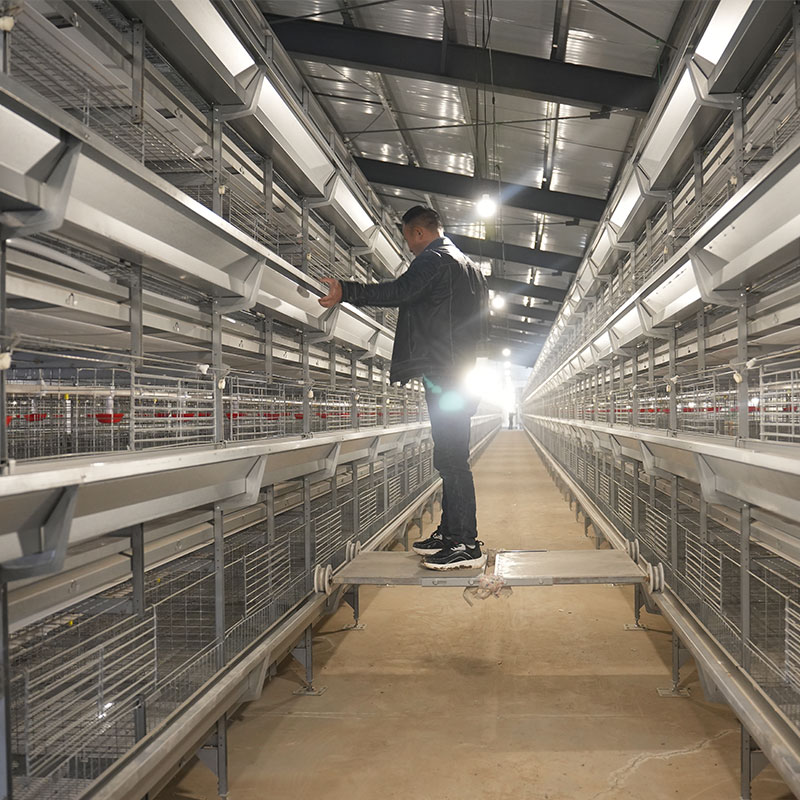
Q How does feeding strategy change cage free system
A More feeder space required prevent competition Strategic feeder placement across tiers encourages movement uniform flock development Scattering feed litter stimulates foraging reduces feather pecking
Q Are automated egg collection systems reliable complex aviaries
A Yes modern systems highly reliable but require diligent maintenance Nest training hens properly ensuring belts aligned clean paramount Collection rates from automated nests can exceed
Q What key biosecurity consideration specific cage free equipment
A Litter management Wet caked litter harbors pathogens parasites Regular turning composting between flocks essential Additionally more complex structures require thorough cleaning disinfection protocols during downtime
1. Drinking system include the water pipes, water pressure adjuster, drinking nipples, Waterline front-end device, dosing system etc, choose them according to customer's needs.
2. High-quality water drinking pipes, pressure regulating valves and water drinking nipples can effectively prevent the water leakage. Drinking system adopt the closed piping system, which can minimize the water pollution.
3. 360-degree drinking nipples provide adequate drinking water for poultry at all stages.
4. The automatic drinking water system mainly adopts the steel ball drinking nipple. lt uses imported high-grad stainless steel, POM resin, and APS engineering material, which is wearing resistant, and the durability can be used for long time.



1. Automatic feeding machine can be chosen between gantry and ladder feeding machine. Gantry type feeding machine is a relatively economical and practical machine with simple operation, remote control walking character, easy to manage.
2. Mechanical transmission device running smoothly, low noise, long service life.
3. With the use of automatic control, the feeding system can adjust the amount of material.
4. Feeding with arched structure, high carrying capacity, not easily deformed.
5. Saving man power, saving feed, greatly improving the efficiency of Large-scale farming.
6. The walking speed of gantry feeding machine is 9--12 m/min.




1. Manure removing system included scraper type and conveyor belt type, Which can reduce the labor intensity and labor cost, keep the chicken shed dry and clean.
2. A type chicken cage can use scraper type or conveyor belt type.


3. The scraper type is suitable for A type cages, which can clean two or three rows. For the starters, this type is a good choice. lt can not only save some labor cost, but also save some investment in the whole project. The cleaning speed is 6-10 meters per minute.
4. Conveyor belt type is more suitable for large scale farming. The manure removing belt we use is high quality PP material (polypropylene). The walking speed is 2-4 meters per minute.



High Quality Pellets Made by Mobile Pellet Machine
1. It has professional designed angle of the blade. After the dynamic balance test one by one, the blade can operate smoothly.
2. The air volume is consistent in the whole life of the fan. Bearings has advantage of high strength, low noise, durable and so on.
1. The cooling pads uses high-quality wet curtain paper and adopts space cross-linking technology, which has the advantages of high water absorption, high water resistance, anti-toxicity and long service life.
2. The cooling efficiency is over 80%, without surfactant, natural water absorption, fast diffusion speed and long-lasting effect.
3. The product does not contain phenol and other chemical substances that are easy to cause skin allergies. It is non-toxic and harmless to the human body and chicken when installed and used. It is green, safe, energy-saving, environmentally friendly, economical, and easy to install.
4. The frame aluminum alloy has high strength, good corrosion resistance, durability and beautiful appearance.
5. Use a special filter for the cooling pad at the upper water to ensure clean water quality and support efficient water circulation components.
6. Combined with a negative pressure fan, it can effectively lower the indoor temperature.
The window is made of special selected high-quality engineering plastic, with high strength and long service life, together with superior anti-aging and anti-UV performance.
Function: Ventilation of the chicken house, usually used in the winter.
This system can adjust the wind speed and direction, thus the cold air will not reach chicken directly , which can effectively prevent the phenomenon of cold stress in chicken.
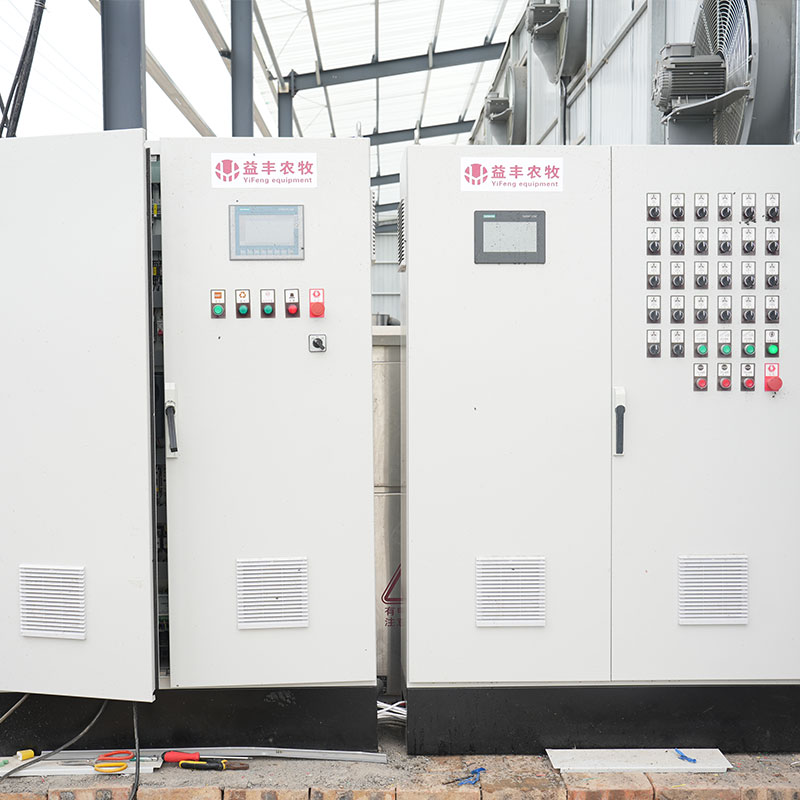
Environmental control system equipment is suitable for large-scale and intensive farming. According to customer requirements, we can provide various types of smart poultry equipment.
1. Our poultry management system is a modular system that manages all aspects of the chicken house, such as climate, temperature, humidity, ammonia, feeding, feed weighing, lighting and ventilation systems, and can monitor the situation of the chicken house in real time through a computer and mobile phone.
2. The management computer is the heart of the poultry farm, allowing you to easily monitor the entire poultry farm.

 WeChat:+8617838608255