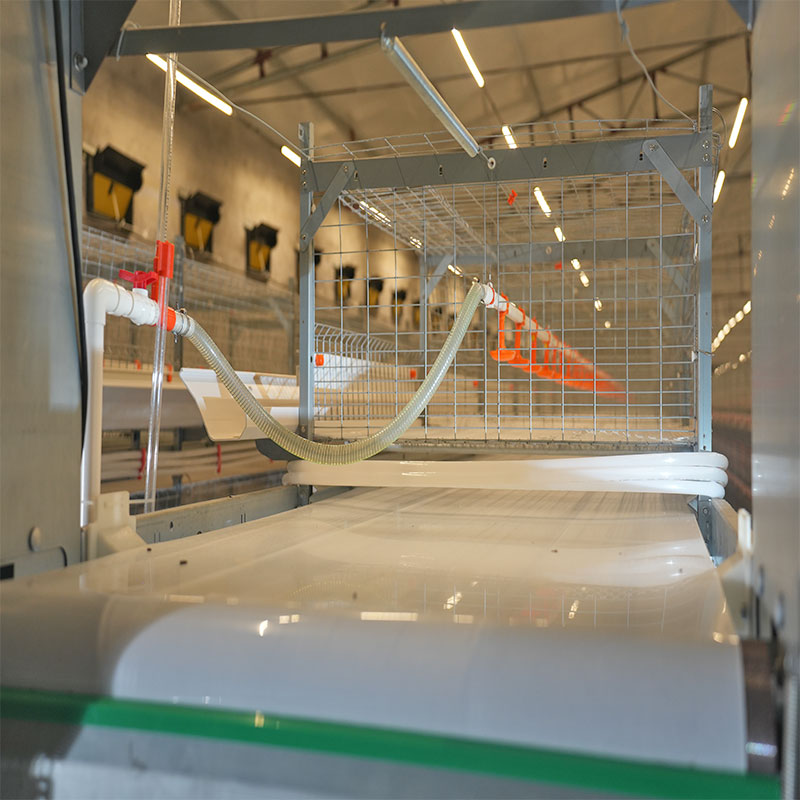
Cage System for Broiler Chicken: A Comprehensive Guide for Modern Poultry Farmers

The cage system for broiler chickens represents a significant evolution in intensive poultry production, designed to maximize efficiency, bird health, and farm profitability. Unlike traditional floor systems, this method involves housing broilers in multitiered wire cages from arrival to processing. While it's a subject of debate within animal welfare circles, its adoption is driven by specific economic and management advantages. This guide delves deep into the mechanics, benefits, challenges, and best practices of broiler cage systems, providing a balanced, expert perspective for farmers and industry stakeholders evaluating their production options.
A broiler cage system is a controlledenvironment housing method where chickens raised for meat are kept in enclosed wire cages, typically arranged in rows and stacked vertically. Each cage unit houses a specific number of birds with automated access to feed and water. This system contrasts sharply with freerange or deeplitter floor systems and is engineered for highdensity rearing.
Cage Batteries: Multitiered structures (usually 34 tiers) made of galvanized wire mesh.
Automated Feeding Systems: Troughs or chains running along each tier.
Nipple Drinking Systems: Providing clean water on demand.
Manure Removal Systems: Conveyor belts or dropping boards beneath each tier for continuous waste removal.
Climate Control Integration: Ventilation, heating, and cooling systems synced with the house environment.
Egg Collection Systems (for breeder broilers): Inclined wire floors to roll eggs to a collection tray.
This system offers distinct operational benefits that contribute to its use in largescale commercial production.
Cages physically separate groups of birds and elevate them from ground level. This drastically reduces contact with manure, minimizing the transmission of parasitic diseases (like coccidiosis) and bacterial infections (like E. coli). It simplifies disease tracking and containment.
Restricted movement means broilers expend less energy on activity and more on growth. Combined with consistent, easy access to feed, this often leads to a better FCR—a critical metric for profitability—compared to some floor systems.
Vertical stacking allows farmers to house significantly more birds per square foot of building space. This high stocking density maximizes the output from expensive infrastructure and land.
Birds are easier to observe individually for signs of illness or distress. Tasks like catching birds for processing ("harvesting") are less laborintensive, faster, and cause less stress to the birds compared to catching from a litter floor.
Since manure falls through the cage floor, birds are not in contact with wet litter. This eliminates issues like breast blisters and hock burns caused by ammonia burns from soiled bedding. It also improves overall air quality inside the house.
The cage system is not without controversy or drawback. A professional assessment must acknowledge these points.
This is the most significant critique. Cages restrict natural behaviors such as wingflapping, dustbathing, foraging, and full perching. This can lead to behavioral frustration and may impact leg health due to lack of exercise on varied surfaces.
The cost of cage batteries, automated systems, and specialized housing is substantially higher than that for a simple deeplitter house setup.
The system relies entirely on functional automation (feeders, waterers, ventilation) and uninterrupted power supply. Any failure can have immediate catastrophic consequences.
Limited movement can contribute to weaker bone structure in some fastgrowing strains if not managed with proper nutrition (calcium/phosphorus balance) and selective breeding.
Growing consumer demand for "cagefree" poultry products has led many retailers and food service companies to phase out sourcing from caged systems, affecting market access.
For farmers committed to this model, adhering to stringent management protocols is essential for success and ethical operation.
Follow or exceed recommended space allowances per bird (e.g., as per NCC Animal Welfare Guidelines). Cages must provide adequate height for birds to stand upright without touching the roof. Floor slope should be minimal (<8 degrees) to prevent leg strain.
Diets must be precisely formulated by a poultry nutritionist to support rapid growth in a lowactivity environment.
Key Focus: Strong skeletal development (Ca:P ratios), prevention of metabolic disorders like Ascites.
Feed Form: Often crumbles or pellets suitable for automated feeding systems.
Precision is nonnegotiable.
Ventilation: Must be excellent to remove moisture and ammonia from manure belts.
Temperature: Strictly controlled; caged birds cannot move away from hot or cold spots as easily as floor birds.
Lighting: Implement lighting programs that encourage feeding while allowing rest periods.
Implement daily individual bird checks where possible.Look for signs of lameness,inactivity,poor feed intake.Use mortality removal protocols promptly.Manure belt observation provides early clues about flock digestive health.
| Feature | Cage System | Deep Litter / Barn System |
| : | : | : |
| Stocking Density | Very High | Moderate |
| Disease Control | Excellent (reduced fecaloral route) | Moderate (requires good litter management) |
| Labor Efficiency | High (automation,easy catching) | Lower (more manual work) |
| Capital Cost | Very High | Lower |
| Operational Cost | Lower FCR can offset utilities | Feed cost may be higher,FCR slightly lower |
| Animal Welfare | Restricts natural behaviors | Allows more natural behaviors(scratching,dust bathing) |
| Market Access | Decreasing in some regions | Increasing ("cagefree" compliant) |
The industry trend in many regions is moving away from conventional cages due to welfare legislation (e.g., EU bans) and market forces.Innovations like "enriched colony systems" which provide more space.perches,and scratching areas are intermediates.The future likely lies in highly automated,but loosehousing,"cagefree" barns with robust environmental controls that balance welfare concerns with production efficiency.Farmers considering new investments must factor in these longterm market trajectories alongside immediate economics.
Choosing a cage system for broiler chicken production is a major strategic decision that hinges on multiple factors: local regulations,cost structures,target markets,and personal farming philosophy.Its unparalleled efficiency.disease control,and management simplicity make it powerful tool in contexts where it remains viable.Nevertheless,the undeniable welfare limitations have shifted global practices.Ultimately.successful modern poultry farming requires balancing economic viability.with responsible animal stewardship.whether within an optimized cage system.or by transitioning towards nextgeneration.alternative housing models.Informed.decisionmaking.based.on comprehensive knowledge.is key.
Q1: Are broiler chickens kept in cages?
Yes.in many commercial operations worldwide.broiler chickens are raised in specialized cage systems.designed specifically.for meat birds.This differs.from battery cages.for laying hens which are now banned.in many countries.For broilers.it remains.a common.practice.in certain regions but faces growing market restrictions。
Q2: What are the main types of poultry cage systems?
The main types include:Conventional Battery Cages(multitiered basic wire cages). Enriched Colony Cages(providing more space.perches.laying area).and Breeder Cages(for parent stock).For broilers.the conventional tiered system.is most common。
Q3: Is the cage system better than the deep litter system?
"It depends.on your metrics."For disease control.feed efficiency.labor use,and space utilization.cage systems often perform better.For animal welfare expression.of natural behaviors.consumer perception,and sometimes lower initial investment.deep litter has advantages.It's.a tradeoff between operational efficiencyandwelfare priorities。
Q4: What is the biggest disadvantage of cage systems?
The most significant disadvantage.is the restriction.of natural chicken behaviors.(like foraging.dustbathing.full wing stretching),which raises serious animal welfare concerns.This has ledto consumer backlashand regulatory changesin numerous countries。
Q5: How does manure management workin cage systems?
Manure falls throughthewire mesh floorofthecage ontoeither:a continuous conveyor beltthat removes itdaily.or onto dropping boards/deflector platesthat are cleanedperiodically.This keeps birds separatedfrom their waste.reducing diseaseand improving air quality。
Q6: What stocking densityis recommendedfor broilersin cages?
Recommendations varyby countryand certification program.Generally.it's expressedas square inchesor cm²per bird.A common benchmarkin some operationsis around~0。60。7 sq。ft。(~550650 cm²)per bird.for standard breeds,but always consult local animal welfare regulationsasthese are becomingmore stringent。
Q7: Do caged broilers grow faster?
They often achievea better Feed Conversion Ratio(FCR),meaning they requireless feedtogainthe same weight comparedto some floorraised birds dueto restricted movement energy expenditure.Whether they grow "faster"in termsof absolute timecan be similar if geneticsand nutritionare equal。
Q8: Are there alternativesto traditional wirefloor cagesfor broilers?
Yes.alternatives include:Deep Litter/Barn Systems. Raised Wire Floor Houses(slatted floors).and Combined Systems. The strongest market trendis toward fully "cagefree"barn systemswith environmental enrichment。
Q9: How do you ensure good leg healthin caged broilers?
Critical measures include:Selecting geneticswith stronger leg conformation. Precise nutritional formulation(especially calcium phosphorus.trace minerals.Vitamin D). Appropriate cage floor design(wire gauge.solidity.slope).and Maintaining ideal body weightthroughdietnot pushingfor excessive weight gaintoo early。
Q10:What happens during power failurein an automated cage house?
Power failureisa critical emergency.Ventilation stops immediately risking heat stress/suffocation.Automated feeders/waterers stop.Backup generatorsare an ABSOLUTE NECESSITYand mustbe regularly tested.They should automatically kickinwithin secondsto maintain lifesupport systems。
1. Drinking system include the water pipes, water pressure adjuster, drinking nipples, Waterline front-end device, dosing system etc, choose them according to customer's needs.
2. High-quality water drinking pipes, pressure regulating valves and water drinking nipples can effectively prevent the water leakage. Drinking system adopt the closed piping system, which can minimize the water pollution.
3. 360-degree drinking nipples provide adequate drinking water for poultry at all stages.
4. The automatic drinking water system mainly adopts the steel ball drinking nipple. lt uses imported high-grad stainless steel, POM resin, and APS engineering material, which is wearing resistant, and the durability can be used for long time.



1. Automatic feeding machine can be chosen between gantry and ladder feeding machine. Gantry type feeding machine is a relatively economical and practical machine with simple operation, remote control walking character, easy to manage.
2. Mechanical transmission device running smoothly, low noise, long service life.
3. With the use of automatic control, the feeding system can adjust the amount of material.
4. Feeding with arched structure, high carrying capacity, not easily deformed.
5. Saving man power, saving feed, greatly improving the efficiency of Large-scale farming.
6. The walking speed of gantry feeding machine is 9--12 m/min.




1. Manure removing system included scraper type and conveyor belt type, Which can reduce the labor intensity and labor cost, keep the chicken shed dry and clean.
2. A type chicken cage can use scraper type or conveyor belt type.


3. The scraper type is suitable for A type cages, which can clean two or three rows. For the starters, this type is a good choice. lt can not only save some labor cost, but also save some investment in the whole project. The cleaning speed is 6-10 meters per minute.
4. Conveyor belt type is more suitable for large scale farming. The manure removing belt we use is high quality PP material (polypropylene). The walking speed is 2-4 meters per minute.



High Quality Pellets Made by Mobile Pellet Machine
1. It has professional designed angle of the blade. After the dynamic balance test one by one, the blade can operate smoothly.
2. The air volume is consistent in the whole life of the fan. Bearings has advantage of high strength, low noise, durable and so on.
1. The cooling pads uses high-quality wet curtain paper and adopts space cross-linking technology, which has the advantages of high water absorption, high water resistance, anti-toxicity and long service life.
2. The cooling efficiency is over 80%, without surfactant, natural water absorption, fast diffusion speed and long-lasting effect.
3. The product does not contain phenol and other chemical substances that are easy to cause skin allergies. It is non-toxic and harmless to the human body and chicken when installed and used. It is green, safe, energy-saving, environmentally friendly, economical, and easy to install.
4. The frame aluminum alloy has high strength, good corrosion resistance, durability and beautiful appearance.
5. Use a special filter for the cooling pad at the upper water to ensure clean water quality and support efficient water circulation components.
6. Combined with a negative pressure fan, it can effectively lower the indoor temperature.
The window is made of special selected high-quality engineering plastic, with high strength and long service life, together with superior anti-aging and anti-UV performance.
Function: Ventilation of the chicken house, usually used in the winter.
This system can adjust the wind speed and direction, thus the cold air will not reach chicken directly , which can effectively prevent the phenomenon of cold stress in chicken.
Environmental control system equipment is suitable for large-scale and intensive farming. According to customer requirements, we can provide various types of smart poultry equipment.
1. Our poultry management system is a modular system that manages all aspects of the chicken house, such as climate, temperature, humidity, ammonia, feeding, feed weighing, lighting and ventilation systems, and can monitor the situation of the chicken house in real time through a computer and mobile phone.
2. The management computer is the heart of the poultry farm, allowing you to easily monitor the entire poultry farm.

 WeChat:+8617838608255