Title: Cage System in Poultry Farming: A Comprehensive Guide to Types, Pros, Cons & Alternatives
Introduction
For decades, the cage system has been the cornerstone of commercial egg and poultry meat production worldwide. Its efficiency and scalability revolutionized the industry, making animal protein more accessible than ever. However, it has also become one of the most debated and scrutinized practices in modern agriculture. Whether you're a farmer evaluating production systems, a student of animal science, or a conscientious consumer seeking clarity, understanding the cage system is crucial. This indepth guide moves beyond simplistic labels to explore the engineering, economics, and ethics of caged poultry farming. We'll dissect its various forms, weigh its undeniable advantages against significant welfare concerns, and place it within the broader context of evolving industry standards and consumer expectations.
Understanding User Intent & Article Structure
The keyword "cage system in poultry farming" indicates a primary intent of informational research. The user is likely seeking a foundational yet comprehensive understanding. They may be comparing farming methods, researching for academic purposes, or making informed purchasing decisions. This article is structured to serve that need by providing factual depth, balanced analysis, and clear comparisons.

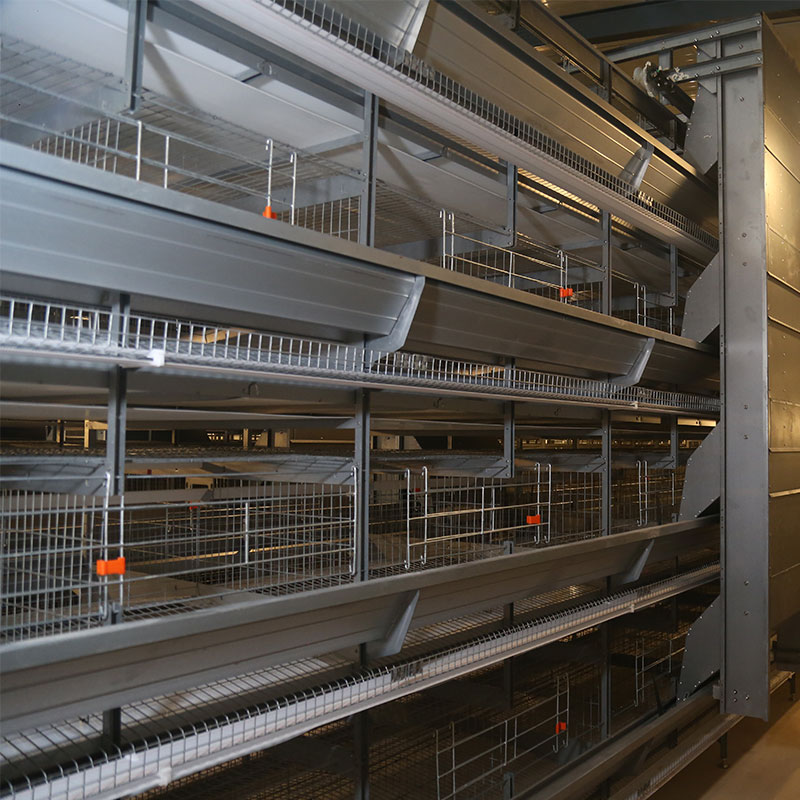
A cage system is a method of housing poultry—primarily laying hens—in enclosures made of wire mesh. Birds are confined to these cages for the duration of their productive life (layers) or growth cycle (broilers, though less common). The system is designed for highdensity housing, mechanization of feeding, watering, and egg collection, and separation of birds from their manure.
The core principle is intensive production: maximizing output (eggs or meat) per unit of space, feed, and labor. It represents a shift from extensive or barn systems to a highly controlled environment.
Not all cages are created equal. The technology has evolved significantly.
This is the traditional image most associate with caged farming.
Design: Multiple tiers (usually 35) of small wire cages stacked in rows. Each cage typically houses 510 hens.
Space Allowance: Historically very limited—often less than 550 cm² per bird (less than an A4 sheet of paper).
Key Features: Automated feed belts run along the front; nipple drinkers are provided; eggs roll forward onto a collection belt; manure drops through the wire floor into a pit or onto belts below.
Status: Banned in the European Union since 2012 and increasingly phased out in many regions due to animal welfare legislation.
Developed as a direct response to welfare concerns and EU bans on battery cages.
Design: Larger enclosures housing larger groups of hens (often 4080 birds per colony).
Space Allowance: Provides at least 750 cm² per hen (EU standard), with total height over 45 cm.
Key Furnishings:
Perches: For roosting.
Nesting Area: A secluded space for laying eggs.
Scratching/DustBathing Area: Often with astroturf or similar substrate.
Claw Shorteners.
Purpose: Allows hens to express more natural behaviors while retaining many efficiencies of caging.
A hybrid system designed for manure drying and management.
Design: Similar stacked tiers but with solid floors (often plasticcoated wire) under each cage level.
Function: Manure drops onto these solid floors where air circulation dries it significantly before it is removed as a crumbly litter. This drastically reduces ammonia emissions and improves air quality within the shed.
From an operational standpoint, cage systems offer compelling benefits that explain their historical dominance:
1. Disease & Parasite Control: Separation from manure dramatically reduces contact with pathogens like E.coli and Salmonella, as well as internal parasites like worms. This lowers mortality rates and medication use.
2. Feed Efficiency: Restricted movement means lower energy expenditure, translating directly into lower feed consumption per dozen eggs produced.
3. Labor & Operational Efficiency: Automation is seamless. Eggs roll away cleanly for easy collection; feeding and watering are automated; manure management is centralized. This allows one worker to manage tens of thousands of birds.
4. Bird Management & Monitoring: Individual or smallgroup health monitoring is easier (feed/water intake observation). Cannibalism and feather pecking—major issues in flock systems—are minimized due to separation.
5. Egg Quality & Safety: Eggs are collected immediately on clean rollers, minimizing cracks and soiling by manure ("floor eggs"). This leads to lower bacterial contamination on shells.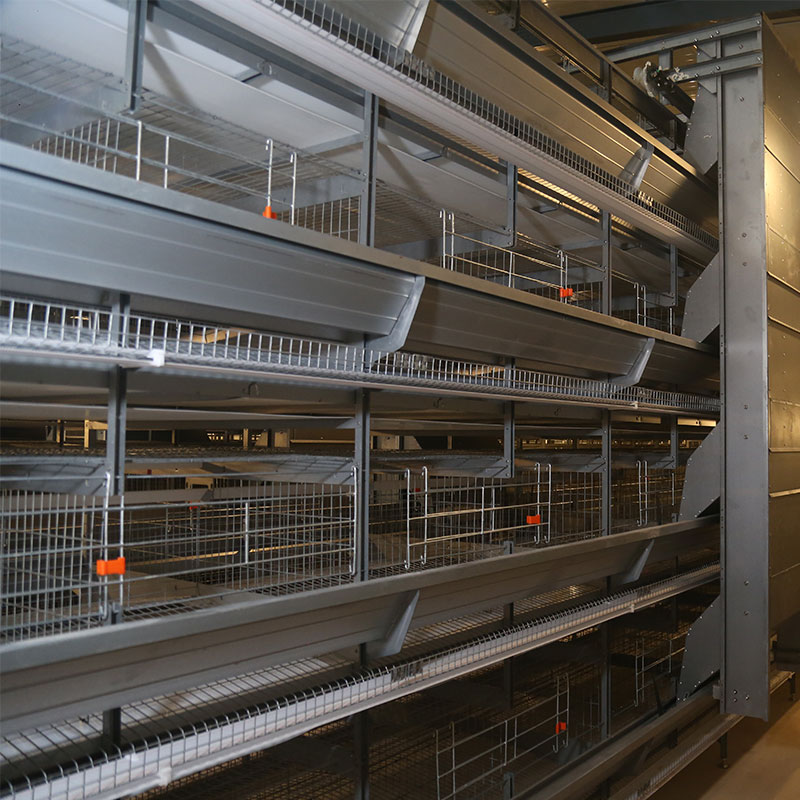
The drawbacks are primarily centered on animal welfare and public perception:
1. Severe Behavioral Restriction: Hens cannot perform fundamental natural behaviors: stretching wings fully, foraging scratching dustbathing nesting in seclusion proper perching or flying
2
3
4
5
6
7
8
9
10
11
12
1. Drinking system include the water pipes, water pressure adjuster, drinking nipples, Waterline front-end device, dosing system etc, choose them according to customer's needs.
2. High-quality water drinking pipes, pressure regulating valves and water drinking nipples can effectively prevent the water leakage. Drinking system adopt the closed piping system, which can minimize the water pollution.
3. 360-degree drinking nipples provide adequate drinking water for poultry at all stages.
4. The automatic drinking water system mainly adopts the steel ball drinking nipple. lt uses imported high-grad stainless steel, POM resin, and APS engineering material, which is wearing resistant, and the durability can be used for long time.



1. Automatic feeding machine can be chosen between gantry and ladder feeding machine. Gantry type feeding machine is a relatively economical and practical machine with simple operation, remote control walking character, easy to manage.
2. Mechanical transmission device running smoothly, low noise, long service life.
3. With the use of automatic control, the feeding system can adjust the amount of material.
4. Feeding with arched structure, high carrying capacity, not easily deformed.
5. Saving man power, saving feed, greatly improving the efficiency of Large-scale farming.
6. The walking speed of gantry feeding machine is 9--12 m/min.




1. Manure removing system included scraper type and conveyor belt type, Which can reduce the labor intensity and labor cost, keep the chicken shed dry and clean.
2. A type chicken cage can use scraper type or conveyor belt type.


3. The scraper type is suitable for A type cages, which can clean two or three rows. For the starters, this type is a good choice. lt can not only save some labor cost, but also save some investment in the whole project. The cleaning speed is 6-10 meters per minute.
4. Conveyor belt type is more suitable for large scale farming. The manure removing belt we use is high quality PP material (polypropylene). The walking speed is 2-4 meters per minute.



High Quality Pellets Made by Mobile Pellet Machine
1. It has professional designed angle of the blade. After the dynamic balance test one by one, the blade can operate smoothly.
2. The air volume is consistent in the whole life of the fan. Bearings has advantage of high strength, low noise, durable and so on.
1. The cooling pads uses high-quality wet curtain paper and adopts space cross-linking technology, which has the advantages of high water absorption, high water resistance, anti-toxicity and long service life.
2. The cooling efficiency is over 80%, without surfactant, natural water absorption, fast diffusion speed and long-lasting effect.
3. The product does not contain phenol and other chemical substances that are easy to cause skin allergies. It is non-toxic and harmless to the human body and chicken when installed and used. It is green, safe, energy-saving, environmentally friendly, economical, and easy to install.
4. The frame aluminum alloy has high strength, good corrosion resistance, durability and beautiful appearance.
5. Use a special filter for the cooling pad at the upper water to ensure clean water quality and support efficient water circulation components.
6. Combined with a negative pressure fan, it can effectively lower the indoor temperature.
The window is made of special selected high-quality engineering plastic, with high strength and long service life, together with superior anti-aging and anti-UV performance.
Function: Ventilation of the chicken house, usually used in the winter.
This system can adjust the wind speed and direction, thus the cold air will not reach chicken directly , which can effectively prevent the phenomenon of cold stress in chicken.
Environmental control system equipment is suitable for large-scale and intensive farming. According to customer requirements, we can provide various types of smart poultry equipment.
1. Our poultry management system is a modular system that manages all aspects of the chicken house, such as climate, temperature, humidity, ammonia, feeding, feed weighing, lighting and ventilation systems, and can monitor the situation of the chicken house in real time through a computer and mobile phone.
2. The management computer is the heart of the poultry farm, allowing you to easily monitor the entire poultry farm.

 WeChat:+8617838608255