The Ultimate Guide to Baby Chick Cages: Setting Up a Safe & Thriving Brooder
Bringing home a batch of fluffy, peeping baby chicks is an exciting moment for any backyard poultry enthusiast or homesteader. However, their survival and healthy development hinge entirely on the environment you provide in those critical first weeks. The term "cage" is often used, but for chicks, we're really talking about a brooder—a carefully controlled enclosure that substitutes for a mother hen. Choosing and setting up the right space isn't just about containment; it's about creating a microclimate that fosters growth, prevents disease, and ensures their wellbeing. This comprehensive guide will walk you through everything you need to know about cages and brooders for baby chicks, blending practical advice with essential husbandry principles.
A baby chick cage, or brooder, serves four vital functions:
1. Warmth: Chicks cannot regulate their body temperature initially.
2. Safety: Protection from drafts, household pets, and accidental injury.
3. Containment: Keeps them in a safe area with easy access to food and water.
4. Sanitation: A manageable space that can be kept clean to prevent illness.
You have several effective options. The best choice depends on your flock size, budget, and available space.
Best For: Small batches of chicks (46), beginners, or temporary setups.
Pros: Inexpensive, readily available. Easy to modify.
Cons: Not durable, can become soggy. Difficult to clean thoroughly. Must ensure adequate ventilation at the top.
Best For: Small to mediumsized flocks.
Pros: Sturdy, easy to clean (smooth sides), chewproof. Excellent draft protection.
Cons: Can be heavy. Smooth sides may require a textured mat for traction.
Best For: Those with woodworking skills or recurring hatches.
Pros: Can be customized to exact size/features (removable lids, builtin ventilation). Excellent insulation.
Cons: Timeconsuming to build. Porous wood can absorb moisture and bacteria if not properly sealed.
Best For: Medium flocks; excellent for transition as chicks grow.
Pros: Provides superb ventilation, easy to access, portable.
Cons: Drafts can be an issue—may need to cover portions with cardboard or cloth initially.
Regardless of enclosure type, these elements are nonnegotiable.
Start with paper towels for the first 23 days so chicks learn what is food and what isn't. Then switch to a proper litter.
| Bedding Type | Pros | Cons |
| : | : | : |
| Pine Shavings | Absorbent, affordable, provides traction. | Can be dusty; chicks may try to eat it initially. |
| Straw | Good insulation if chopped. | Not as absorbent; can mold if wet; slippery when long. |
| Sand | Very easy to clean (sift droppings), good for digestion if gritfree. | Heavy, provides no warmth; must be kept dry. |
Avoid: Cedar shavings (toxic fumes), slippery newspaper alone (can cause spraddle leg), and anything overly dusty.
A proper heat source is critical.Never use heat lamps with standard bulb sockets due to extreme fire risk. Safer alternatives include:
Brooder Plates/Heated Flats: The gold standard.Simulates a mother hen—chicks go underneath to warm up and come out to eat/drink.Reduces fire risk and is energyefficient.
Radiant Heat Panels: Mounted on the side/bottom of the brooder,safe and effective.
Ceramic Heat Emitters (in appropriate fixtures): Provide heat without light.
Temperature Guide by Week:
Place a thermometer at chick level.
Watch chick behavior! If they huddle directly under the heat source,piling up,the brooder is too cold.If they are pressed against the walls away from the heat,panting,and lethargic,the brooder is too hot.Ideal behavior shows them spread evenly throughout the space,busily eating,dinking,and sleeping comfortably.
Use chickspecific bases designed for small beaks.Use at least two of each for up to ten chicks.Place them away from the direct heat source.Elevate them slightly on a small platform or bricks as chicks age(to reduce bedding contamination) but ensure chicks can always reach them.Clean waterers daily.
Overcrowding leads to stress,piling,smothering,and disease.Follow these minimums:
Always provide more space if possible.The brooder should also have enough height(12+ inches)to prevent escape as they grow wings!
A clean brooder is paramount for preventing coccidiosis and other ailments.Perform daily "spot cleaning"of wet bedding around waterers.Perform a full bedding change at least once weekly,moving chicks temporarily into another secure container.Disinfect feeders/waterers during full changes.Avoid dampness at all costs—it's a breeding ground for pathogens.As chicks grow,increase ventilation gradually while avoiding drafts directly on them.
Chicks are ready to move to their adult coop when they are:
1.Fully feathered(no down visible).
2.Tolerating ambient outdoor temperatures without supplemental heat(ensure coop is draftfree but wellventilated).
This typically occurs between5and8weeks of age.Introduce them gradually over several days if possible("hardening off").
Setting up your baby chick cage(brooder)with intention sets your flock up for lifelong health and productivity.It’s far more than just putting up walls—it’s about thoughtfully providing warmth,safety,nutrition,and cleanliness.Remember,the best setup prioritizes safety(from fire hazards,drafts,and disease)and observes chick behavior closely,your most reliable guide.Investing time in creating this optimal start will reward you with vigorous,growing pullets readyto thrive in your backyard coop!
For10chicks from0to4weeks old,a minimum floor space of5square feetis required(e.g.,a2'x2..5'enclosure).However,a larger space(7..5–10sq ft)is highly recommendedto reduce stressand mess.As they grow past4weeks,increase space accordingly toward10+square feet before transitioningtothe coop.
Startwith paper towelsforthe first few days then switchtoa proper litterlike large flake pine shavings(super absorbent,gives traction).Avoid cedar shavings(toxic),newspaper alone(slippery),or anything overly dusty which can cause respiratory issues.Sandisan option but mustbe kept perfectly dryand requires more management..
While traditional clampstyleheat lampswith incandescent bulbs have been usedfor decades they pose asignificant fireriskifthey fall get knocked overor come into contactwith bedding.Safer modern alternatives likebrooder plates(heated flats)and radiantheat panelsare strongly recommended asthey mimic amother henand greatly reduce fire hazard..
Yes absolutely keepingchicksin an indoor broodercageis standard practiceforthe first several weeks untiltheyare fully feathered Ensurethe roomis draft free nottoo humidand hasgoodair circulation withoutbeing directly inthe pathofan air conditioneror fan vent..
Nochicksdo notneedlightatnight Theyrequire periods ofdarknessto sleep properlyand develop natural rhythms Youcan provide supplemental lightduringthedayiftheir areais dimbut turnitoffatnight Aconsistentheat source(e.g.,brooder plate)should stillbe provided regardlessof light..
Performdaily spot cleaningby removing wetclumpybedding especially around waterers Doafullbedding changeatleastonceaweek movingchickstoasecure temporary container Scrapeoutall old litter disinfectthe enclosurewith avinegar solutionor approved animalsafe cleaner letdry completely then addfresh bedding Cleanfeedersand waterersdaily..
Chicksare typically readytoleavethe broodermoveintotheir permanent coopbetween6and8weeksofage Thekey indicatorsare beingcompletelyfully feathered(nofluff visible)and beingabletotolerate outdoor overnight temperatureswithout supplementalheat Acclimatize them graduallyoverafew days beforethe full move..
The ideal temperatureat chick leveldirectly underthe heatsource shouldstartat95°F(35°C)duringtheirfirstweek Lowerthisby approximately5degrees Fahrenheit each subsequentweek untiltheyreach ambient temperature Monitorbehavior closely—huddling means too cold pantingawayfromheat means too hot..
Yesalarge plasticor wire dog crate makesan excellentbrooderenclosure Itprovides greatventilationandeasyaccess Cover portionsinitiallywith cardboardor breathable fabrictoreduce drafts Usecorrugated plasticor plywoodon bottom few inchesto holdbedding Ensurebar spacingissmall enoughthatnewly hatchedchickscannot squeeze through..
Ifyouare feeding only commercialcrumbledorchick starter feedwhichismilled finelythey donotrequiregrit Gritis neededto help birds grind whole grains seedsor other fibrous foods Ifyouoffer any treats kitchen scrapsorswitchto whole grainsyoumustprovide separate insoluble grit(small granite pieces)insmall dish..
1. Drinking system include the water pipes, water pressure adjuster, drinking nipples, Waterline front-end device, dosing system etc, choose them according to customer's needs.
2. High-quality water drinking pipes, pressure regulating valves and water drinking nipples can effectively prevent the water leakage. Drinking system adopt the closed piping system, which can minimize the water pollution.
3. 360-degree drinking nipples provide adequate drinking water for poultry at all stages.
4. The automatic drinking water system mainly adopts the steel ball drinking nipple. lt uses imported high-grad stainless steel, POM resin, and APS engineering material, which is wearing resistant, and the durability can be used for long time.



1. Automatic feeding machine can be chosen between gantry and ladder feeding machine. Gantry type feeding machine is a relatively economical and practical machine with simple operation, remote control walking character, easy to manage.
2. Mechanical transmission device running smoothly, low noise, long service life.
3. With the use of automatic control, the feeding system can adjust the amount of material.
4. Feeding with arched structure, high carrying capacity, not easily deformed.
5. Saving man power, saving feed, greatly improving the efficiency of Large-scale farming.
6. The walking speed of gantry feeding machine is 9--12 m/min.




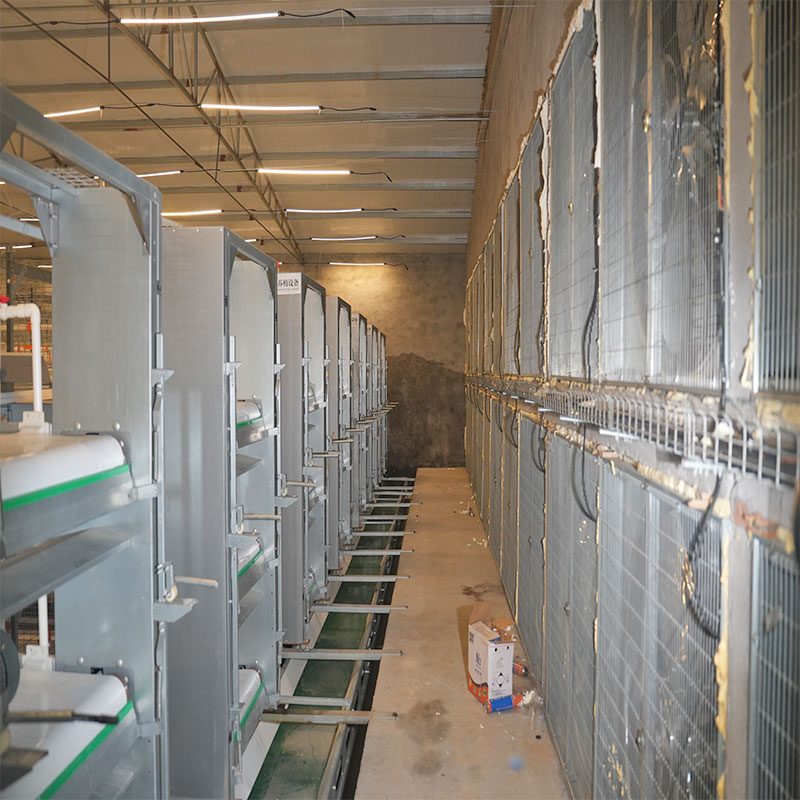
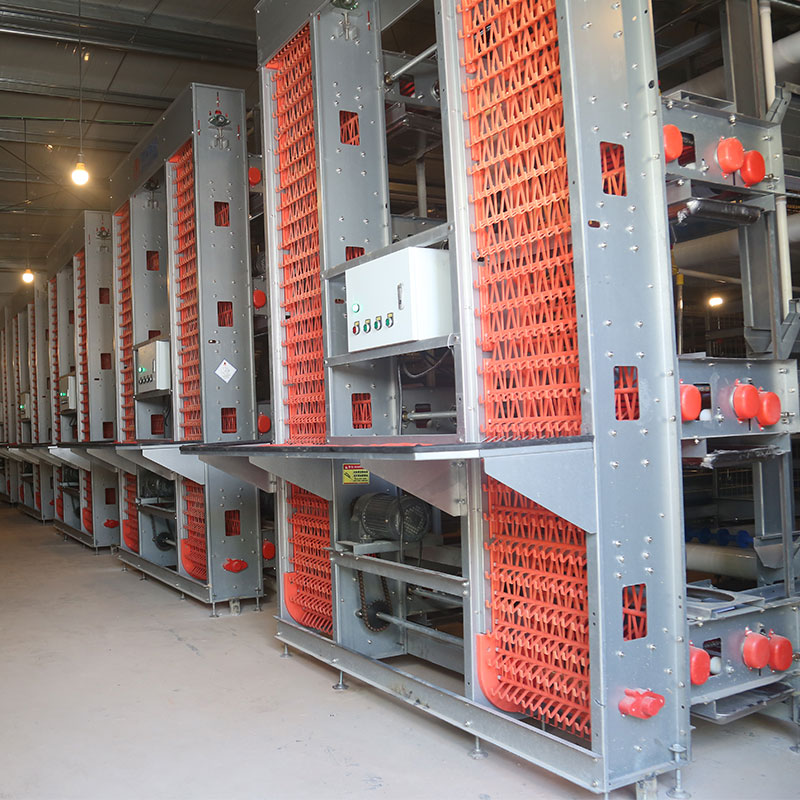
1. Manure removing system included scraper type and conveyor belt type, Which can reduce the labor intensity and labor cost, keep the chicken shed dry and clean.
2. A type chicken cage can use scraper type or conveyor belt type.


3. The scraper type is suitable for A type cages, which can clean two or three rows. For the starters, this type is a good choice. lt can not only save some labor cost, but also save some investment in the whole project. The cleaning speed is 6-10 meters per minute.
4. Conveyor belt type is more suitable for large scale farming. The manure removing belt we use is high quality PP material (polypropylene). The walking speed is 2-4 meters per minute.



High Quality Pellets Made by Mobile Pellet Machine
1. It has professional designed angle of the blade. After the dynamic balance test one by one, the blade can operate smoothly.
2. The air volume is consistent in the whole life of the fan. Bearings has advantage of high strength, low noise, durable and so on.
1. The cooling pads uses high-quality wet curtain paper and adopts space cross-linking technology, which has the advantages of high water absorption, high water resistance, anti-toxicity and long service life.
2. The cooling efficiency is over 80%, without surfactant, natural water absorption, fast diffusion speed and long-lasting effect.
3. The product does not contain phenol and other chemical substances that are easy to cause skin allergies. It is non-toxic and harmless to the human body and chicken when installed and used. It is green, safe, energy-saving, environmentally friendly, economical, and easy to install.
4. The frame aluminum alloy has high strength, good corrosion resistance, durability and beautiful appearance.
5. Use a special filter for the cooling pad at the upper water to ensure clean water quality and support efficient water circulation components.
6. Combined with a negative pressure fan, it can effectively lower the indoor temperature.
The window is made of special selected high-quality engineering plastic, with high strength and long service life, together with superior anti-aging and anti-UV performance.
Function: Ventilation of the chicken house, usually used in the winter.
This system can adjust the wind speed and direction, thus the cold air will not reach chicken directly , which can effectively prevent the phenomenon of cold stress in chicken.
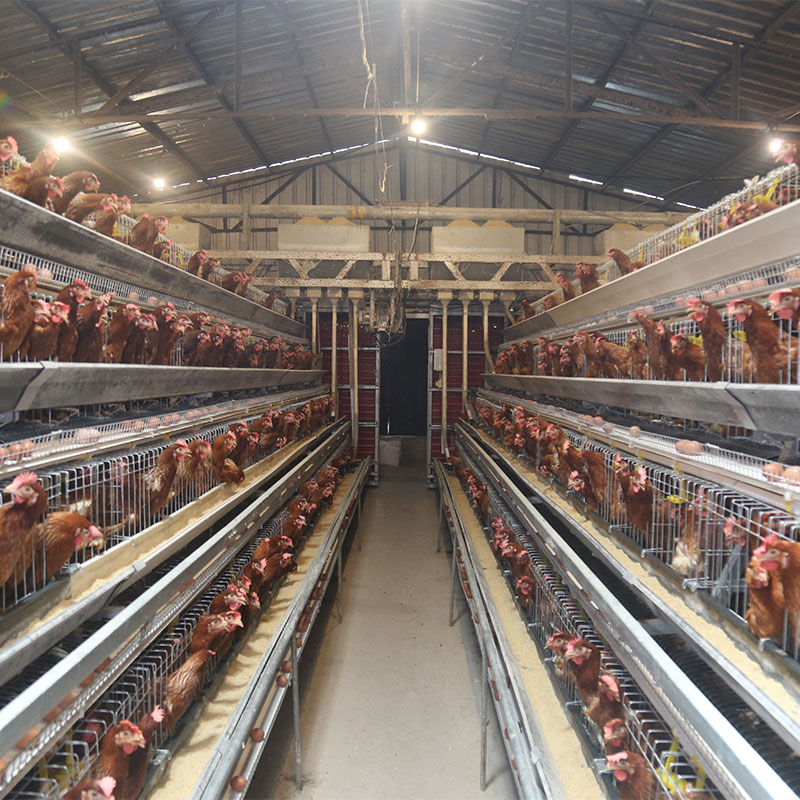
Environmental control system equipment is suitable for large-scale and intensive farming. According to customer requirements, we can provide various types of smart poultry equipment.
1. Our poultry management system is a modular system that manages all aspects of the chicken house, such as climate, temperature, humidity, ammonia, feeding, feed weighing, lighting and ventilation systems, and can monitor the situation of the chicken house in real time through a computer and mobile phone.
2. The management computer is the heart of the poultry farm, allowing you to easily monitor the entire poultry farm.

 WeChat:+8617838608255