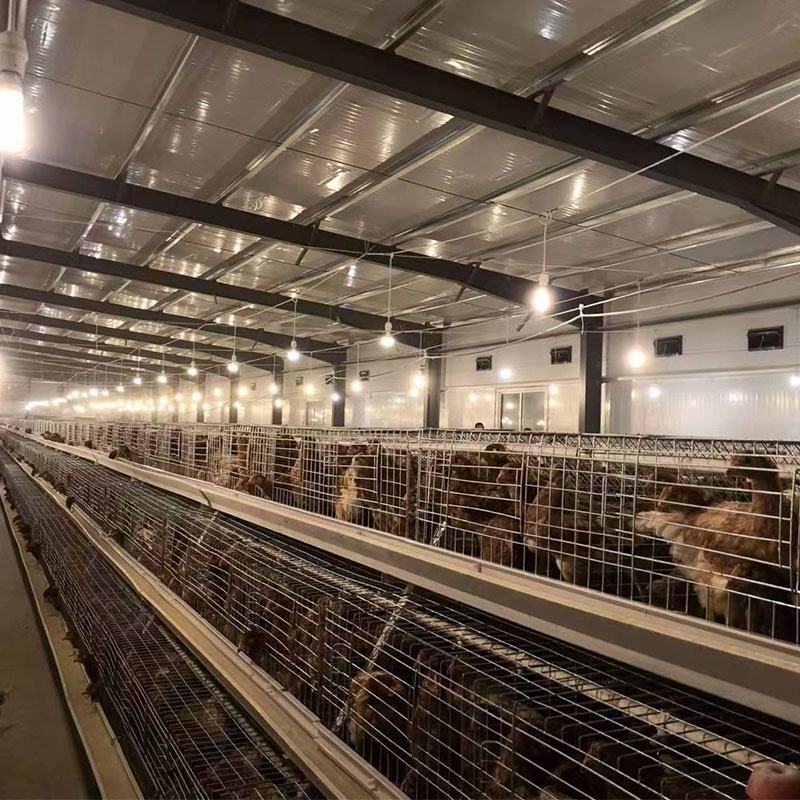
The broiler house at dawn reveals a paradox of modern poultry farming. As lights gradually brighten across the long building, thousands of birds stir not on a litter-covered floor, but on tiered platforms of wire mesh. This shift from ground to grid represents one of the most significant operational changes in broiler production, moving birds into controlled, multi-level environments that challenge decades of conventional wisdom.
Unlike the single-plane reality of floor rearing, cage systems introduce a vertical dimension to broiler management. Farmers walking these aisles no longer navigate through flocks but alongside them, observing birds at eye level across up to four stacked tiers. This architectural shift fundamentally alters everything from ventilation patterns to feeding strategies, creating a production model where environmental control becomes paramount and bird welfare metrics are constantly visible.
Structural Design and Bird Density Considerations
The steel framework of a modern broiler cage system must support not just the weight of birds, but the entire operational infrastructure. A typical three-tier configuration places birds at waist, shoulder, and overhead levels, with each level functioning as an independent production unit. The gauge of the wire mesh matters tremendously – too thin and it lacks durability under the weight of heavy broilers, too thick and it becomes uncomfortable for birds’ feet. Most manufacturers use 4mm diameter wire with 25mm x 50mm rectangular openings, large enough to allow manure passage but small enough to provide secure footing.
Farmers quickly learn that density specifications aren’t just about maximum bird numbers but about managing microclimates. Where floor systems might stock 30kg per square meter, cage systems regularly achieve 40-45kg per square meter of floor space through vertical stacking. However, the critical measurement becomes available bird space within each cage module. A standard module measuring 200cm wide by 100cm deep by 45cm high might accommodate 20-22 birds at final weight, providing approximately 900cm² per bird. This seems constrained until observing how broilers naturally congregate, and how the system prevents the formation of damp litter patches that would occur in floor systems at equivalent densities.
The incline of the cage floor proves more important than most anticipate. A 7-10 degree slope toward the manure belt allows eggs to roll cleanly in breeder operations, but in broiler cages it serves to keep birds positioned optimally for air movement. During summer months, this slight angle prevents birds from piling in corners where heat buildup occurs, instead encouraging even distribution across the available space.
Feeding and Watering Systems Integration
The feeding system represents the circulatory network of the cage operation. Overhead chain feeders snake through each level, their triangular troughs designed to minimize feed wastage. The timing of feed runs becomes more critical than in floor systems – too frequent and birds become sedentary waiting for feed, too infrequent and competition at the trough increases. Most operators run feeders 6-8 times daily, with the final run occurring later in the dark period to stimulate morning appetite.
Trough space allocation often determines flock uniformity. With approximately 3cm of feeding space per bird, dominant birds can monopolize access if management isn’t precise. Farmers learn to watch for telltale signs – if the majority of birds rise simultaneously when feeders start, space is adequate. If only the nearest birds respond, competition is too high and flock uniformity will suffer.
Nipple watering systems in cages require different pressure settings than floor systems. Because birds drink from below rather than reaching up, water pressure must be sufficient to deliver water without dripping, but not so strong that it startles birds. The placement of drip cups beneath each nipple proves essential – not just to keep birds dry, but to provide visual confirmation that lines are functioning properly. A dry drip cup during operation signals a blocked nipple that needs attention.
Manure Management and Environmental Control
The manure belt system running beneath each tier transforms waste management from a periodic chore to a continuous process. These belts typically run once daily, but during high humidity periods or toward flock end, operators might run them twice to prevent ammonia buildup. The timing of belt operation matters – running during the darkest periods minimizes disturbance to birds, while running during daylight allows inspection of manure quality.
Ventilation strategies shift dramatically in cage houses. Whereas floor systems move air across birds, cage systems must move air through them. The stacked configuration creates microclimates on each level, with the top tier experiencing temperatures 1-2°C warmer than the bottom during heating periods. Farmers compensate through adjustable ceiling inlets and tunnel fan staging that creates horizontal air movement through the gaps between cages.
The dryness of manure tells the entire environmental story. Well-managed cage systems produce manure with 25-30% dry matter content, coming off the belts as fractured chunks rather than pasty masses. This occurs through constant air movement around the manure belts, which act as additional drying surfaces. When manure becomes too wet, smart operators first check water system pressure before adjusting ventilation, as overwatering is often the culprit.
Bird Health and Welfare Observations
The visibility of birds in cage systems allows for health monitoring that would be impossible in floor operations. Walking the aisles provides a cross-section view of the entire flock, with each bird individually observable. This reveals early signs of illness or stress long before floor birds would show symptoms. Leg health assessments become particularly valuable – when birds rise for feeding, operators can quickly identify any reluctant to bear weight or showing abnormal gait.
The incidence of footpad dermatitis often decreases in well-managed cage systems because birds aren’t contacting litter moisture. However, the wire mesh itself can cause problems if not properly specified. Farmers should regularly sample birds to check for footpad lesions, particularly on the rear pads where pressure is greatest. The ideal mesh leaves a slight pattern impression without causing redness or swelling.
Stocking density adjustments prove more responsive in cages than floor systems. If birds appear too crowded, operators can sometimes remove divider panels between sections to create larger social groups. This flexibility allows for mid-flock adjustments based on actual bird behavior rather than predetermined formulas.
Economic Considerations and Operational Efficiency
The capital investment for cage systems runs significantly higher than floor systems – often 2-3 times more per bird place. However, the operational efficiencies create a different economic model. Labor requirements drop substantially, with one worker able to manage 50,000 birds in cages compared to 30,000 in floor systems. This isn’t just about reduced walking time, but about the automation of feeding, watering, and manure removal.
Feed conversion ratios typically improve by 2-4 points in cage systems because birds expend less energy moving to feeders and waterers, and because feed wastage is virtually eliminated. For a 50,000-bird house turning 5.5 flocks annually, this can mean 60-80 tons less feed consumed yearly compared to floor operations.
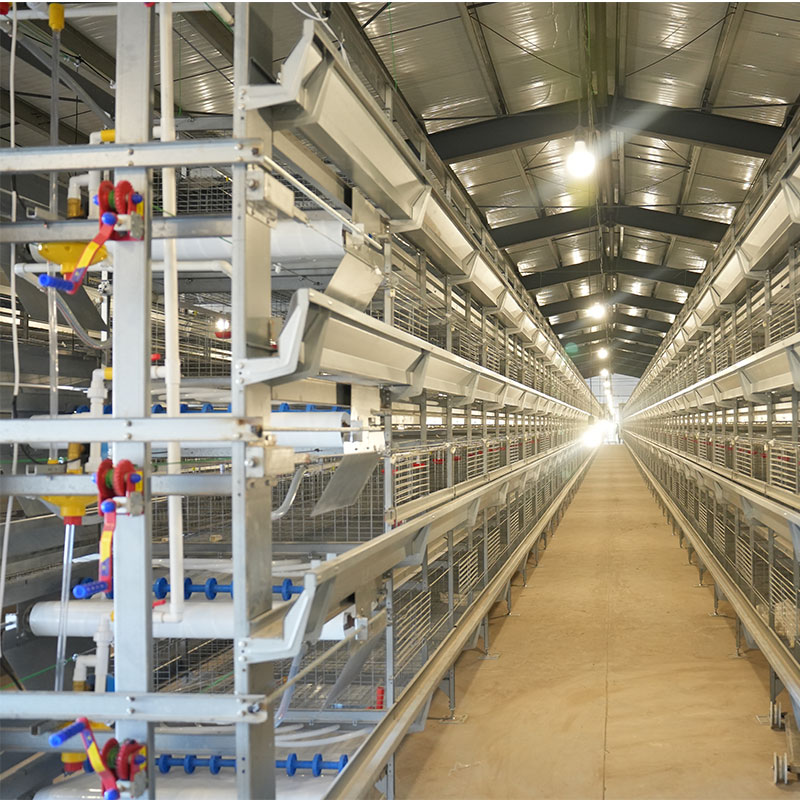
The vertical configuration reduces the building footprint required for production. A three-tier cage house produces the same bird numbers as a floor house three times its size, reducing heating costs, land use, and construction costs per bird. This makes cage systems particularly valuable in areas where land prices are high or where expansion space is limited.
Transition Management from Floor to Cage Systems
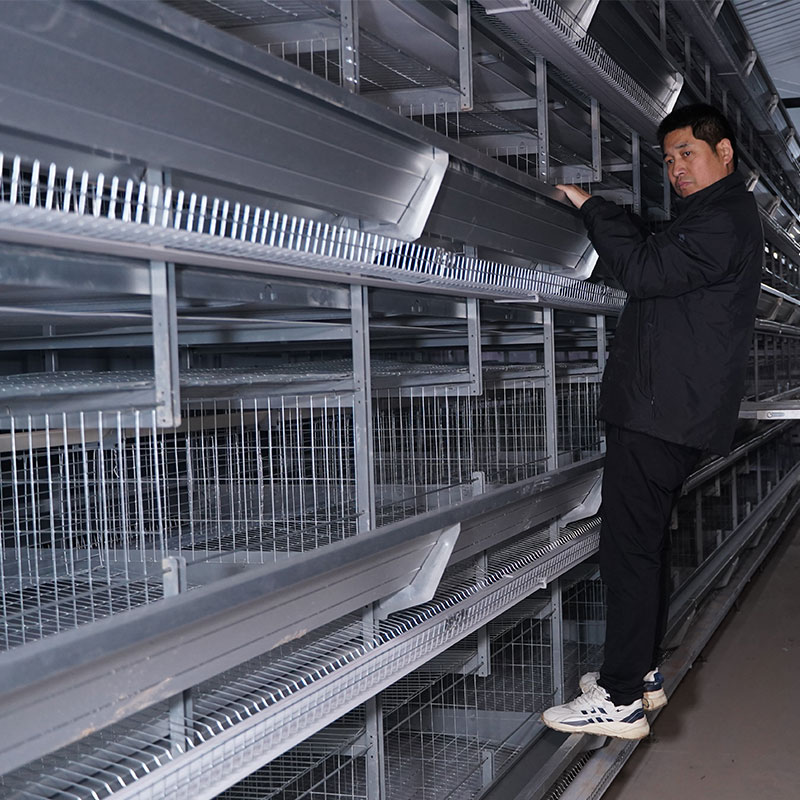
Farmers moving from floor to cage production often underestimate the learning curve. The first flocks typically underperform expectations as operators adjust to the new management rhythm. Ventilation settings that worked perfectly in floor houses cause problems in cages, and feeding schedules need complete recalibration.
The most successful transitions involve gradual implementation – converting one house first while maintaining floor production in others. This allows comparison of performance metrics and avoids enterprise-wide risk during the learning period. Many operators keep detailed comparison records for the first year, tracking differences in mortality, feed conversion, and labor hours.
Bird behavior differs noticeably in cages. Without the opportunity for ranging or dust bathing, birds display different activity patterns. Successful operators provide environmental enrichment such as pecking objects or occasional perches to encourage natural behaviors. The placement of these enrichments matters – located too high and smaller birds can’t access them, too low and they interfere with manure belts.
Technical Monitoring and Data Collection
Modern cage systems generate enormous amounts of operational data. Each tier can be monitored separately for temperature, humidity, and air velocity, creating a three-dimensional map of the house environment. Smart systems can adjust inlet openings and fan staging by zone rather than treating the entire house as a single environment.
The manure belt system provides daily feedback on flock health. Changes in manure consistency often precede clinical signs of disease. Water consumption monitoring proves more accurate in cage systems since evaporation from open water sources is eliminated. A sudden 10% increase in water consumption might indicate rising temperatures or health issues before other signs appear.
Weight monitoring becomes more systematic in cages. Many operations install scales on sample cages that automatically record bird weights daily. This eliminates the stress of catching birds for weighing and provides continuous growth curve data. When growth deviates from expected curves, operators can investigate environmental conditions or health status immediately rather than waiting for weekly measurements.
The evolution from floor to cage production represents more than just physical infrastructure change – it requires a fundamental shift in management philosophy. Success comes not from simply placing birds in cages, but from understanding the intricate relationships between density, environment, and behavior that these systems reveal. The most skilled operators leverage the visibility and control of cage systems to achieve performance levels that floor production cannot match, while maintaining rigorous welfare standards through constant observation and adjustment.
1. Drinking system include the water pipes, water pressure adjuster, drinking nipples, Waterline front-end device, dosing system etc, choose them according to customer's needs.
2. High-quality water drinking pipes, pressure regulating valves and water drinking nipples can effectively prevent the water leakage. Drinking system adopt the closed piping system, which can minimize the water pollution.
3. 360-degree drinking nipples provide adequate drinking water for poultry at all stages.
4. The automatic drinking water system mainly adopts the steel ball drinking nipple. lt uses imported high-grad stainless steel, POM resin, and APS engineering material, which is wearing resistant, and the durability can be used for long time.



1. Automatic feeding machine can be chosen between gantry and ladder feeding machine. Gantry type feeding machine is a relatively economical and practical machine with simple operation, remote control walking character, easy to manage.
2. Mechanical transmission device running smoothly, low noise, long service life.
3. With the use of automatic control, the feeding system can adjust the amount of material.
4. Feeding with arched structure, high carrying capacity, not easily deformed.
5. Saving man power, saving feed, greatly improving the efficiency of Large-scale farming.
6. The walking speed of gantry feeding machine is 9--12 m/min.




1. Manure removing system included scraper type and conveyor belt type, Which can reduce the labor intensity and labor cost, keep the chicken shed dry and clean.
2. A type chicken cage can use scraper type or conveyor belt type.


3. The scraper type is suitable for A type cages, which can clean two or three rows. For the starters, this type is a good choice. lt can not only save some labor cost, but also save some investment in the whole project. The cleaning speed is 6-10 meters per minute.
4. Conveyor belt type is more suitable for large scale farming. The manure removing belt we use is high quality PP material (polypropylene). The walking speed is 2-4 meters per minute.



High Quality Pellets Made by Mobile Pellet Machine
1. It has professional designed angle of the blade. After the dynamic balance test one by one, the blade can operate smoothly.
2. The air volume is consistent in the whole life of the fan. Bearings has advantage of high strength, low noise, durable and so on.
1. The cooling pads uses high-quality wet curtain paper and adopts space cross-linking technology, which has the advantages of high water absorption, high water resistance, anti-toxicity and long service life.
2. The cooling efficiency is over 80%, without surfactant, natural water absorption, fast diffusion speed and long-lasting effect.
3. The product does not contain phenol and other chemical substances that are easy to cause skin allergies. It is non-toxic and harmless to the human body and chicken when installed and used. It is green, safe, energy-saving, environmentally friendly, economical, and easy to install.
4. The frame aluminum alloy has high strength, good corrosion resistance, durability and beautiful appearance.
5. Use a special filter for the cooling pad at the upper water to ensure clean water quality and support efficient water circulation components.
6. Combined with a negative pressure fan, it can effectively lower the indoor temperature.
The window is made of special selected high-quality engineering plastic, with high strength and long service life, together with superior anti-aging and anti-UV performance.
Function: Ventilation of the chicken house, usually used in the winter.
This system can adjust the wind speed and direction, thus the cold air will not reach chicken directly , which can effectively prevent the phenomenon of cold stress in chicken.
Environmental control system equipment is suitable for large-scale and intensive farming. According to customer requirements, we can provide various types of smart poultry equipment.
1. Our poultry management system is a modular system that manages all aspects of the chicken house, such as climate, temperature, humidity, ammonia, feeding, feed weighing, lighting and ventilation systems, and can monitor the situation of the chicken house in real time through a computer and mobile phone.
2. The management computer is the heart of the poultry farm, allowing you to easily monitor the entire poultry farm.

 WeChat:+8617838608255