The morning sun hasn’t yet broken over the horizon, but the low hum of activity is already building in the poultry shed. For the modern farmer, these first hours are critical. They set the tone for the entire day’s operation, from flock health to feed conversion rates and, ultimately, the bottom line. The choice of housing—the very infrastructure that contains and supports the flock—is arguably the most significant long-term decision a producer will make. It’s not merely about buying cages for chickens; it’s about investing in a complete operational framework that will dictate workflow, bird welfare, and profitability for years to come.
The market offers a spectrum of cage systems, each engineered to address specific production goals, scales, and ethical considerations. Understanding the nuances between them is not an academic exercise; it’s a practical necessity for running a competitive and sustainable operation.
The Foundation: Battery Cage Systems
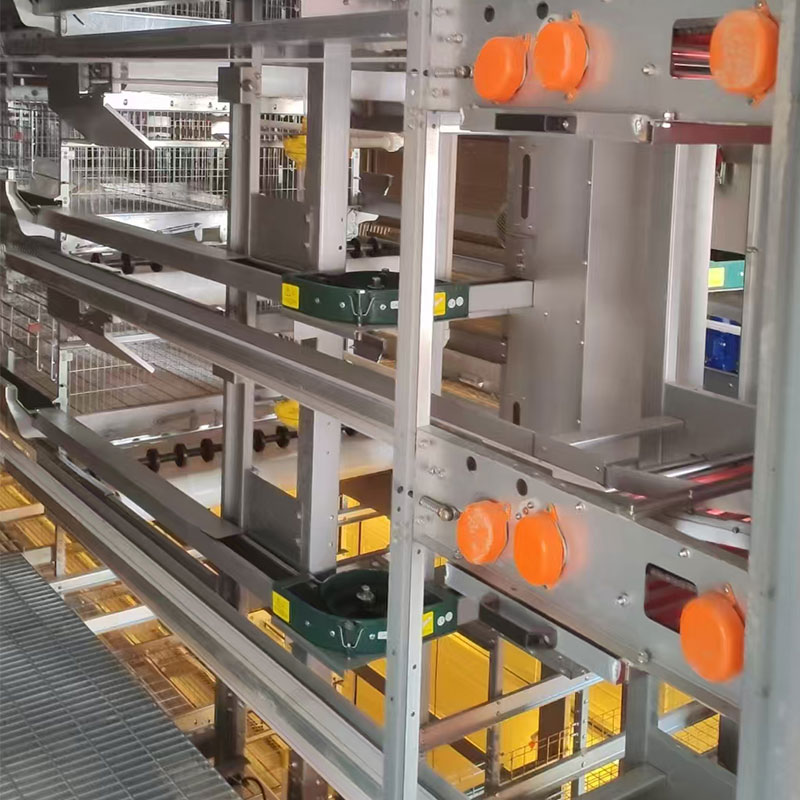
The term “battery cage” often evokes a strong image, but for many high-volume egg producers, it represents a model of efficiency that has been refined over decades. A traditional battery system is a series of identical small cages stacked in tiers, sometimes four or five high, connected by automated systems for feeding, watering, and egg collection.
Consider a farmer with a flock of 100,000 laying hens. Their primary challenges are feed cost, labor for egg collection, and managing manure. A modern battery system addresses these directly. A feed trolley runs on a track along each row of cages at precisely timed intervals, delivering a nutritionally complete ration. This isn’t just about convenience; it minimizes feed waste from spillage or soiling, a critical factor when feed constitutes up to 70% of production costs. As the hens lay, the eggs roll gently out of the cage onto a conveyor belt. This belt runs several times a day, carrying the eggs directly to a central packing station. This eliminates the need for manual gathering from nests, drastically reducing labor hours and minimizing egg breakage and hairline cracks that can lead to spoilage.
Manure management is handled through the open wire mesh floor of the cages. Droppings fall through onto a belt or into a pit below. In advanced systems, manure belts remove waste daily, significantly reducing ammonia levels in the shed. Lower ammonia means better respiratory health for the birds, which translates to less medication, lower mortality rates, and a more stable production curve.
The primary critique of this system revolves around space allowance and behavioral restriction for the hen. In response to both welfare concerns and market demands, many regions are phasing out conventional battery cages in favor of enriched or colony systems.
The Evolution: Enriched Colony Cages
Enriched colony systems represent a substantial shift in design philosophy. They provide more space per bird and, crucially, include specific furnishings that allow for the expression of natural behaviors. Think of it as moving from a basic room to one with dedicated areas for sleeping, eating, and exercising.
A farmer transitioning to an enriched system will notice the cages are larger, housing smaller groups of birds—often 40 to 80 hens per enclosure. Within this space are key features:
A Perching Area: Raised bars running the length of the cage give hens a place to roost at night. This isn’t just for their comfort; it keeps them off the wire floor, which can help reduce footpad lesions and allows manure to fall away more cleanly.
A Scratch Pad: A matted or astroturf area provides a different texture. Hens are instinctively driven to scratch and forage. This designated area satisfies that urge, reducing feather pecking and aggression that can arise from boredom or frustration.
A Private Nesting Box: This is a game-changer for egg quality. In a battery system, eggs roll into a common area. In an enriched system, a darkened, secluded nest box gives the hen a private place to lay. This dramatically reduces the incidence of “floor eggs” (laid outside the nest) and minimizes stress during the laying process, which can improve shell strength. The eggs are then collected automatically, just as in a battery system, preserving labor efficiency.
For a producer, the calculation is clear: slightly higher initial investment and a marginal reduction in bird density are traded for improved animal welfare outcomes, which align with consumer expectations and often stricter legislation. The result can be a premium product that commands a better price point.
The Specialized Choice: Brooder Cages and Pullet Rearing
While much attention is on layers, the early life of a chick is where its future productivity is forged. Brooder cages are specialized systems designed for the first few weeks of a chick’s life. They are not about confinement but about creating a micro-climate of perfect conditions.
Day-old chicks cannot regulate their body temperature effectively. A brooder cage has a solid floor, often with paper lining for grip, and an integrated heating plate or canopy. The heat source is localized, allowing the chicks to move freely between warmer and cooler areas to find their comfort zone. This is far more efficient and natural than heating an entire shed. Feed and water are provided in shallow, easily accessible trays within this secure environment. The controlled space prevents chicks from wandering away from food, heat, and water, leading to more uniform growth and a stronger start. After 3-4 weeks, the chicks, now stronger and feathered, are transferred to their grow-out or layer pullet cages.
Beyond Layers: Cages for Meat Birds and Breeding Stock
Cage systems are not exclusive to the egg industry. Certain broiler (meat bird) operations, particularly those focused on breeding stock, utilize cage systems for precise management.
Managing broiler breeders—the parent birds of meat chickens—is a complex balancing act. They have a voracious appetite genetically geared for rapid growth, but they must be kept lean and fit for optimal fertility and egg production. Keeping them in cage systems allows for individual feeding. Each bird receives a exact, scientifically formulated ration via a trough that only opens for its designated bird (often identified by a RFID tag). This prevents dominant birds from overeating and shyer birds from being underfed, ensuring the entire flock maintains ideal body condition. This level of precision in nutrition management is nearly impossible to achieve in a floor-based system.

The Critical Considerations: A Buyer’s Checklist
Selecting a system is a complex decision. It extends far beyond the per-bird price tag of the cage itself.
1. Space Allocation and Stocking Density: This is the first and most regulated specification. Know your local laws and any certification programs (like United Egg Producers in the U.S.) you plan to adhere to. The space required per hen in an enriched colony is significantly greater than in a traditional battery cage. Calculate your total bird capacity based on the system’s footprint, not just the vendor’s claims.
2. Automation Integration: The cage is the hardware, but the automation is the software that makes it profitable. Assess the compatibility and reliability of:
Feeding Systems: Are they nipple drinkers or troughs? Nipple drinkers keep water cleaner but require birds to learn to use them. Troughs are simpler but can become soiled. Look for robust, corrosion-resistant materials.
Egg Collection: Is it a central conveyor or in-cage belts? How gentle is the system on the eggs? What is the maintenance schedule for belts and rollers?
Manure Management: Belt systems that remove manure daily are superior for air quality but have higher upfront and maintenance costs. Deep-pit systems require less daily machinery but need periodic full clean-outs.

3. Durability and Materials: Poultry houses are corrosive environments due to ammonia and moisture. Galvanized steel is standard, but the quality and thickness of the galvanization vary. Flimsy wire will bend and break, creating maintenance nightmares and potential injury points for birds. Heavy-gauge, well-welded wire, while more expensive, will last for multiple flock cycles.
4. Bird Welfare Features: This is both an ethical and a marketing imperative. Look for designs that promote foot health, such as gently sloped floors to facilitate egg roll-out without stressing the hen’s feet. Rounded edges on feeders and drinkers prevent injuries. Easy access to all parts of the system for health checks and bird removal is essential.
5. Supplier Reputation and Support: The relationship with your equipment supplier does not end at delivery. How quickly can they ship spare parts? Do they offer technical support? Can they provide references from other farms of a similar size? A slightly cheaper system from an unreliable supplier can become the most expensive asset you own if it fails during a critical production period.
The transition to a new housing system is a capital-intensive project that requires meticulous planning. It involves assessing not just the cost of the cages, but the necessary modifications to the barn—electrical work for automation, plumbing for water lines, and ventilation upgrades to handle the different moisture and heat loads. The return on investment is realized over time through reduced labor costs, improved feed efficiency, higher egg quality, lower mortality, and the ability to meet market standards that increasingly favor higher welfare production methods. The right cage system is not a constraint; it is the architecture of a successful, modern poultry enterprise.
1. Drinking system include the water pipes, water pressure adjuster, drinking nipples, Waterline front-end device, dosing system etc, choose them according to customer's needs.
2. High-quality water drinking pipes, pressure regulating valves and water drinking nipples can effectively prevent the water leakage. Drinking system adopt the closed piping system, which can minimize the water pollution.
3. 360-degree drinking nipples provide adequate drinking water for poultry at all stages.
4. The automatic drinking water system mainly adopts the steel ball drinking nipple. lt uses imported high-grad stainless steel, POM resin, and APS engineering material, which is wearing resistant, and the durability can be used for long time.



1. Automatic feeding machine can be chosen between gantry and ladder feeding machine. Gantry type feeding machine is a relatively economical and practical machine with simple operation, remote control walking character, easy to manage.
2. Mechanical transmission device running smoothly, low noise, long service life.
3. With the use of automatic control, the feeding system can adjust the amount of material.
4. Feeding with arched structure, high carrying capacity, not easily deformed.
5. Saving man power, saving feed, greatly improving the efficiency of Large-scale farming.
6. The walking speed of gantry feeding machine is 9--12 m/min.




1. Manure removing system included scraper type and conveyor belt type, Which can reduce the labor intensity and labor cost, keep the chicken shed dry and clean.
2. A type chicken cage can use scraper type or conveyor belt type.


3. The scraper type is suitable for A type cages, which can clean two or three rows. For the starters, this type is a good choice. lt can not only save some labor cost, but also save some investment in the whole project. The cleaning speed is 6-10 meters per minute.
4. Conveyor belt type is more suitable for large scale farming. The manure removing belt we use is high quality PP material (polypropylene). The walking speed is 2-4 meters per minute.



High Quality Pellets Made by Mobile Pellet Machine
1. It has professional designed angle of the blade. After the dynamic balance test one by one, the blade can operate smoothly.
2. The air volume is consistent in the whole life of the fan. Bearings has advantage of high strength, low noise, durable and so on.
1. The cooling pads uses high-quality wet curtain paper and adopts space cross-linking technology, which has the advantages of high water absorption, high water resistance, anti-toxicity and long service life.
2. The cooling efficiency is over 80%, without surfactant, natural water absorption, fast diffusion speed and long-lasting effect.
3. The product does not contain phenol and other chemical substances that are easy to cause skin allergies. It is non-toxic and harmless to the human body and chicken when installed and used. It is green, safe, energy-saving, environmentally friendly, economical, and easy to install.
4. The frame aluminum alloy has high strength, good corrosion resistance, durability and beautiful appearance.
5. Use a special filter for the cooling pad at the upper water to ensure clean water quality and support efficient water circulation components.
6. Combined with a negative pressure fan, it can effectively lower the indoor temperature.
The window is made of special selected high-quality engineering plastic, with high strength and long service life, together with superior anti-aging and anti-UV performance.
Function: Ventilation of the chicken house, usually used in the winter.
This system can adjust the wind speed and direction, thus the cold air will not reach chicken directly , which can effectively prevent the phenomenon of cold stress in chicken.
Environmental control system equipment is suitable for large-scale and intensive farming. According to customer requirements, we can provide various types of smart poultry equipment.
1. Our poultry management system is a modular system that manages all aspects of the chicken house, such as climate, temperature, humidity, ammonia, feeding, feed weighing, lighting and ventilation systems, and can monitor the situation of the chicken house in real time through a computer and mobile phone.
2. The management computer is the heart of the poultry farm, allowing you to easily monitor the entire poultry farm.

 WeChat:+8617838608255