The Complete Guide to Laying Hen Cages: Choosing the Right Housing for Your Flock
For poultry keepers, from smallscale homesteaders to commercial egg producers, the choice of housing is one of the most critical decisions impacting hen welfare, egg quality, and operational efficiency. Laying hen cages have been a cornerstone of egg production for decades, yet they are also at the center of significant debate and evolving standards. This comprehensive guide cuts through the noise to provide a detailed, objective look at modern laying hen cages. We'll explore the different systems available, weigh their pros and cons against animal welfare and productivity metrics, and provide the essential knowledge you need to make an informed, responsible choice for your flock. Whether you're building a new setup or reevaluating your current one, understanding the intricacies of hen housing is paramount.
The term "cage" often conjures a single image, but modern poultry science has developed a spectrum of systems. Choosing the right one requires balancing hen behavior, health outcomes, labor requirements, and economic viability.
Description: The traditional system consisting of rows and tiers of wire enclosures. Each cage typically houses multiple hens with limited space per bird.
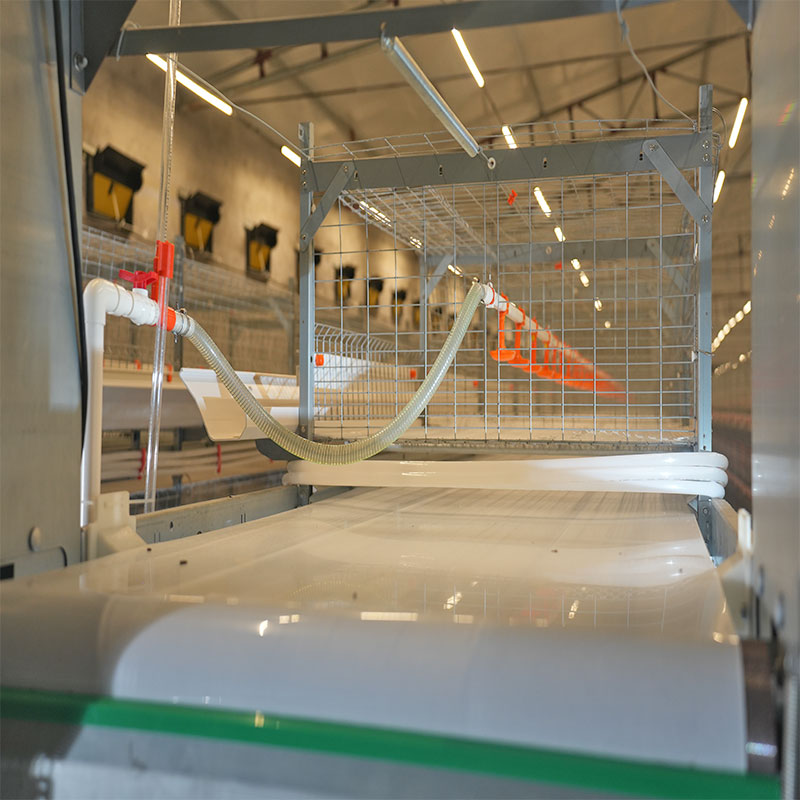
Key Features: Automated feeding and watering belts run along the cages; eggs roll onto a collection tray; manure drops through the wire floor into a pit or onto a belt below.
Current Status: Phased out or heavily restricted in the European Union, UK, Canada, and several U.S. states due to animal welfare legislation. Their use is declining globally in favor of enriched systems.
Description: The modern evolution of the cage system, designed to address key behavioral needs.
Key Features: Provide significantly more space per hen than conventional cages. By law (in regions where mandated), they must include:
A nesting area for private egglaying.
Perches for roosting.
A scratching area (often astroturf or similar mat) and litter for dustbathing.
Clawshortening devices.
Advantages over Conventional: Allows for expression of more natural behaviors, can lead to better bone strength due to perch use, and generally results in lower mortality and feather pecking than some noncage systems.
Description: This is an umbrella term for housing where hens can move freely within a building. It does not mean they have outdoor access (that would be "freerange").
Key Subtypes:
Aviaries: Multitiered structures with platforms, perches, and nests. Hens have full use of the floor space and can fly/jump between levels.
Barn/Roofed Systems: Singlelevel housing where hens roam freely on littercovered floors with access to nest boxes and perches.
Description: Cagefree systems that also provide varying degrees of regulated outdoor access.
Considerations: Requires significant land management, provides protection from predators, and exposes hens to weather elements. Often associated with different nutritional profiles in eggs (e.g., higher Omega3s).
The following table summarizes core differences from management and welfare perspectives.
| Feature | Enriched Cage Systems | CageFree (Aviary/Barn) Systems |
| : | : | : |
| Space & Movement | Confined to colony area but with vertical space use via perches. Controlled movement. | Unrestricted horizontal & vertical movement within barn. More flight/exploration. |
| Behavioral Expression | Provides key behaviors: nesting, perching, scratching. Restricted foraging/dustbathing space. | Full range of behaviors possible: extensive dustbathing, foraging, wingflapping, social dynamics. |
| Health & Mortality | Generally lower mortality & cannibalism due to controlled environment & separation from manure.
Risk of weaker bones if perches not used; keel bone fractures possible.
Low parasite load (coccidia). | Higher risk of feather pecking & cannibalism requiring beak treatment/management.
Higher risk of keel bone fractures from falls/jumps.
Higher parasite load requires proactive management.
Generally stronger bones from increased activity. |
| Egg Quality & Safety | Eggs collected automatically; clean shells; low bacterial contamination risk; consistent quality.
Eggs are always gathered promptly.| Eggs laid in nest boxes or sometimes on floor; higher risk of dirty/cracked eggs; requires frequent manual collection.
Higher risk of bacterial exposure if litter is damp/managed poorly.. |
| Management & Labor | Highly automated feeding/watering/egg collection/manure removal.
Easier individual bird monitoring?
Lower feed consumption due to restricted movement.| More laborintensive: manual egg collection from multiple sites/litter management/flock observation.
Higher feed consumption due to activity.
Requires skilled stockmanship to manage behavior.. |
| Environmental Impact | Manure is concentrated & often managed as dry waste; can be easier to handle/compost.
Lower direct land use.| Manure is mixed with litter; creates deep litter compost in situ.
Higher ammonia levels if ventilation/litter management is poor.
Greater land footprint for housing itself.. |
Choosing isn't just about cage vs nocage; it's about aligning your system with your core priorities.
1. Animal Welfare Commitments: Define what "welfare" means for your operation.Is it freedom from disease/injury? Or freedom to express natural behaviors? Enriched cages excel at the former; wellmanaged cagefree systems aim for both.
2. Scale & Investment: Enriched cage systems have high upfront capital costs but can offer lower ongoing labor costs.Cagefree systems may have lower initial infrastructure costs but higher daily laborand feed costs.Consider return on investment carefully.
3.Labor Availability & Skill: Do you have reliable,l skilled labor capableof reading subtle flock behavior cues essential in cagefree management?Enriched cages offer more predictable workflows..
4.Market Demands & Premiums:: What does your consumer or buyer require?Are you selling under a certified program (e.g.,American Humane Certified,Certified Humane,, USDA Organic)?These programs have strict,housing requirements that will dictate your choice..
5.Biosecurity & Disease Control:: Cages offer superior separationfrom manure,a major disease vector.Cagefree operations requirevigilant litter managementand vaccination programsto control parasiteslike coccidia..

Regardlessof system,the foundationof successis excellentmanagement..
The futureof layer housingliesin integratingtechnologyto enhancewelfareand precisionmanagement.Smart sensorscan monitorammonia levels,temperature,and humidityin real time..Camera systemswith AIcan trackflock movement,density,and evenidentify sickbirds early.Automatedenvironmental enrichmentdevicesare being developed.Furthermore,welfare outcomebased assessments(rather thanjust inputbased standards)are becomingthe benchmark,pushingall systemdesignerstocontinuouslyimprove..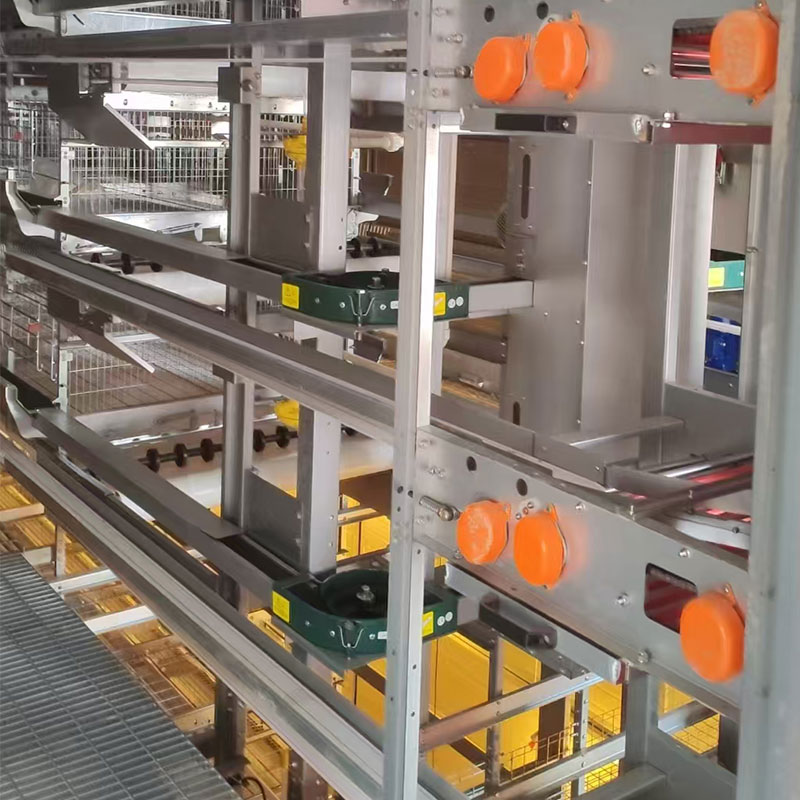
Selectingthe rightlaying hen housingis a complexdecisionwith profoundimplications.Thereis no universally"perfect"system.Enriched cage systemsoffer controlled biosecurity,efficient production,and improvedwelfareover conventionalcages.Wellmanagedcagefreeavariessupporta wider rangeof naturalbehaviorsbut demandhigher skilland managementsavvy.Ultimately,your choiceshouldbe guidedbya clearunderstandingof your ethicalpriorities,labor resources,target market,and unwaveringcommitmentto excellentstockmanshipwithin thatsystem.The goalacrossall systemsshouldbe identical:a healthyhen thatproducesa qualityegg whileexperiencinga good life..
Q1: What is an enriched colony cage for laying hens?
A1: An enriched colony cage is a modern housing system that provides more space per hen than old conventional cages.It is requiredto include specificfurnishings:a private nesting area,a perchfor roosting,a scratchingarea,and clawshorteningdevices.This designallowshens to expresskey naturalbehaviorswhile maintainingmany benefitsof a controlledenvironment..
Q2: Are battery cages illegal?
A2: In many regions,yes.The EuropeanUnion bannedconventionalbattery cagesin 2012.Canada'sphaseoutwas completedin 2017.SeveralU.S.states(includingCalifornia,Massachusetts,Washington)have passedlaws phasingthem out.Many largeegg buyersand retailersalso require suppliersto move awayfrom them.Globally,the trendis towardenrichedor cagefreesystems..
Q3: What are the main advantagesof using cagesfor laying hens?
A3: Primary advantagesinclude superiorbiosecurity(hens are separatedfrom their manure),lower incidenceof parasiticdiseases,easierindividualbird monitoring/more efficientvaccination,much lower feed consumptiondue to restrictedmovement,significantlylower mortalityfrom cannibalismor smothering,and cleanereggswith automatedcollectionleadingto reducedbacterialcontamination..
Q4:What arethe biggestwelfare concernsabout cagedsystems?
A4:The primaryconcernhistoricallyhas been behavioralrestriction—the inabilityto performnaturalbehaviorslike full dustbathing,wingspreading,running,and foraging.Modernenrichedcagesaddresssome,but not all.of these.Evenin enrichedsystems,thereare concernsover limitedspacefor movementwhichcan impactbone strengthover timeif not designedwith adequateperching.Keel bone injuriescan also occur..
Q5:What size shoulda laying hen cage be?
A5:Sizedependson local regulationsandsystem type.For example,the EU standardforenrichedcoloniesmandatesat least750 cm²of usablearea perhen(about116 sq.inches),witha nestingarea,a perch(15cm perhen),anda scratchingarea.U.S.certifiedhumane programsmay havedifferentrequirements.It'scriticalto checkyour local lawsand any certificationprogramstandardsyou planto follow..
Q6:Dolayersneednestboxesif they'reincages?
A6:Hensin conventionalcagesdidnot havenestboxes.Modernenrichedcolonycagemustinclude adesignated,darkenednestingarea.This allowsthehento layher eggprivatelyandreduceseffortresswhichcan leadto floor eggsor erraticlayingpatterns.The nestis oftenlinedwithartificialgrassora similarmaterial..
Q7:Arelayercageseasier tomaintainthan freerangesystems?
A7:In termsof daily labor,cagesystemswithfull automation(feed.water.eggcollectionmanureremoval)can belesslaborintensive.Freerangesystemsrequiremore handsonmanagement:dailyeggcollectionfrommultiplelocations.littermonitoring.foragingareamanagement,andmore vigilantflockobservationfordiseaseor behavioralissues.Biosecurityprotocolsmayalso bemore complexto implementinfreerangesettings..
Q8:What happens tohousingwhenhens moltorstoplaying?
A8:A commonpracticeespeciallyin commercialsettingsisthe practiceofforcedmoltingwherelight.food.or waterarerestrictedtostimulatethehentoshedold feathersandrenewher reproductivecycle.This practiceis controversialandincreasinglyregulated.Many welfarecertifiedprogramsprohibitit.In suchsystems.flocksaretypicallyreplaced("depopulated")afterasinglelayingcycle(around7280weeksold)andnewpulletsare broughtintothehousingafterthoroughcleaningandsanitation..
Q9:Canyou keeplayinghensindoorsallthetimeincagedsystems?
A9:Yes,bothconventionalandenrichedcagesystemsaredesignedasindoor,environmentallycontrolledhousing.Hensdonothaveaccesstotheoutdoors.Ventilation,lighting,temperature,andhumidityareallmanagedmechanicallytoprovideaconsistentenvironmentyearround.Thiscontrolisamajorfactorintheirproductionconsistencyandefficiency。
1. Drinking system include the water pipes, water pressure adjuster, drinking nipples, Waterline front-end device, dosing system etc, choose them according to customer's needs.
2. High-quality water drinking pipes, pressure regulating valves and water drinking nipples can effectively prevent the water leakage. Drinking system adopt the closed piping system, which can minimize the water pollution.
3. 360-degree drinking nipples provide adequate drinking water for poultry at all stages.
4. The automatic drinking water system mainly adopts the steel ball drinking nipple. lt uses imported high-grad stainless steel, POM resin, and APS engineering material, which is wearing resistant, and the durability can be used for long time.



1. Automatic feeding machine can be chosen between gantry and ladder feeding machine. Gantry type feeding machine is a relatively economical and practical machine with simple operation, remote control walking character, easy to manage.
2. Mechanical transmission device running smoothly, low noise, long service life.
3. With the use of automatic control, the feeding system can adjust the amount of material.
4. Feeding with arched structure, high carrying capacity, not easily deformed.
5. Saving man power, saving feed, greatly improving the efficiency of Large-scale farming.
6. The walking speed of gantry feeding machine is 9--12 m/min.




1. Manure removing system included scraper type and conveyor belt type, Which can reduce the labor intensity and labor cost, keep the chicken shed dry and clean.
2. A type chicken cage can use scraper type or conveyor belt type.


3. The scraper type is suitable for A type cages, which can clean two or three rows. For the starters, this type is a good choice. lt can not only save some labor cost, but also save some investment in the whole project. The cleaning speed is 6-10 meters per minute.
4. Conveyor belt type is more suitable for large scale farming. The manure removing belt we use is high quality PP material (polypropylene). The walking speed is 2-4 meters per minute.



High Quality Pellets Made by Mobile Pellet Machine
1. It has professional designed angle of the blade. After the dynamic balance test one by one, the blade can operate smoothly.
2. The air volume is consistent in the whole life of the fan. Bearings has advantage of high strength, low noise, durable and so on.
1. The cooling pads uses high-quality wet curtain paper and adopts space cross-linking technology, which has the advantages of high water absorption, high water resistance, anti-toxicity and long service life.
2. The cooling efficiency is over 80%, without surfactant, natural water absorption, fast diffusion speed and long-lasting effect.
3. The product does not contain phenol and other chemical substances that are easy to cause skin allergies. It is non-toxic and harmless to the human body and chicken when installed and used. It is green, safe, energy-saving, environmentally friendly, economical, and easy to install.
4. The frame aluminum alloy has high strength, good corrosion resistance, durability and beautiful appearance.
5. Use a special filter for the cooling pad at the upper water to ensure clean water quality and support efficient water circulation components.
6. Combined with a negative pressure fan, it can effectively lower the indoor temperature.
The window is made of special selected high-quality engineering plastic, with high strength and long service life, together with superior anti-aging and anti-UV performance.
Function: Ventilation of the chicken house, usually used in the winter.
This system can adjust the wind speed and direction, thus the cold air will not reach chicken directly , which can effectively prevent the phenomenon of cold stress in chicken.
Environmental control system equipment is suitable for large-scale and intensive farming. According to customer requirements, we can provide various types of smart poultry equipment.
1. Our poultry management system is a modular system that manages all aspects of the chicken house, such as climate, temperature, humidity, ammonia, feeding, feed weighing, lighting and ventilation systems, and can monitor the situation of the chicken house in real time through a computer and mobile phone.
2. The management computer is the heart of the poultry farm, allowing you to easily monitor the entire poultry farm.

 WeChat:+8617838608255