For poultry farmers eyeing expansion or replacement of aging infrastructure, the decision of what to build with is a primary financial and operational calculation. The traditional image of a wooden barn or a concrete block building often comes with a lengthy construction timeline and a budget that can spiral unexpectedly. A steel structure shed presents a compelling alternative, merging upfront cost efficiency with long-term durability in a way that directly impacts the bottom line.
The core advantage of a steel frame building is its predictability. When a farmer orders a pre-engineered steel kit, they are receiving a complete structural package. The main frames, roof purlins, wall girts, and bracing are all fabricated to precise dimensions. This is fundamentally different from sourcing lumber, where warping, inconsistent dimensions, and fluctuating prices can disrupt a project. On-site, the assembly process resembles a systematic erecting of a large-scale model. Crews bolt together the primary rigid frames, which form the skeleton of the building. These frames are then connected by the purlins and girts, which are the horizontal members that provide a secure base for the outer cladding. This method drastically reduces the skilled labor required for tasks like cutting and fitting complex wooden trusses. A building that might take months to frame with traditional materials can often be enclosed and weather-tight in a matter of weeks with a steel system.
This speed translates directly into cost savings. Reduced labor hours mean lower overall construction bills. Furthermore, the predictability of the material cost for the main structure allows for more accurate budgeting. There are no surprise price hikes for framing lumber midway through the project. The term "cheap" in this context should not be mistaken for flimsy. A well-designed steel structure is an exercise in efficient material use. The high strength-to-weight ratio of steel allows for wide, clear-span interiors without the need for internal support columns. This unobstructed space is a significant operational advantage. Imagine being able to drive a feed truck or a manure spreader in a straight line from one end of the house to the other, or being able to reconfigure your cage rows or feeding lines without working around posts. This flexibility maximizes the usable floor area and streamlines daily routines.
The durability of a galvanized steel structure addresses one of the most persistent enemies of any farm building: moisture. The poultry environment is one of high humidity, ammonia, and constant cleaning. A wooden frame exposed to these conditions will inevitably rot, and the nails and fasteners will corrode. A steel frame with a hot-dip galvanized coating is effectively inert in this atmosphere. The zinc coating sacrificially protects the underlying steel, meaning it will corrode first, providing a barrier that can last for decades. This eliminates the recurring cost and headache of replacing rotten sills or wall studs, a common maintenance issue in older poultry houses. The building itself becomes a more permanent asset on the farm's balance sheet.
Once the structural shell is complete, the focus shifts to the interior systems that will define the productivity of the operation. For commercial egg production, the cage system is the heart of the house, and its integration with the building is critical. Modern commercial cage systems, often called aviaries or enriched colonies in some markets, are complex structures in their own right. They are multi-tiered to maximize bird density per square foot of floor space, and every component must work in harmony with the building that contains it.

Ventilation is the single most important management system in a poultry house, and its effectiveness is heavily influenced by the building's design. A steel structure facilitates the installation of a modern, negative-pressure tunnel ventilation system. The long, straight sidewalls of a typical clear-span building are ideal for mounting large, automated inlet panels. During cold weather, these inlets open just a crack to allow fresh air to enter high up along the ceiling, where it mixes with the warmer air inside before descending to bird level. This prevents drafts. In hot weather, the system transforms. The side inlets close, and large tunnel fans at one end of the building pull air the entire length of the house, creating a wind-chill effect that cools the birds. The tight seal of a steel building is crucial for this to work efficiently; air cannot leak in through gaps in the walls, so it is forced to enter through the controlled inlets, ensuring an even, predictable airflow across all cages. A poorly sealed building will have stagnant pockets and uneven temperatures, leading to stress and reduced egg production.

The choice of cage system dictates the layout of feed and water lines, manure handling, and egg collection. A tiered cage system requires a robust feed delivery system, typically a chain-and-hopper mechanism that runs the length of each row. The building's structure must be capable of supporting the immense weight of these systems when fully loaded with feed. The steel roof purlins are often used as the anchor points for the suspension cables or rods that hold the cages and the associated infrastructure. This is a key reason why the building and the cage system should be planned together. Trying to retrofit a heavy, multi-tiered cage system into a building not designed for the point loads can be problematic.
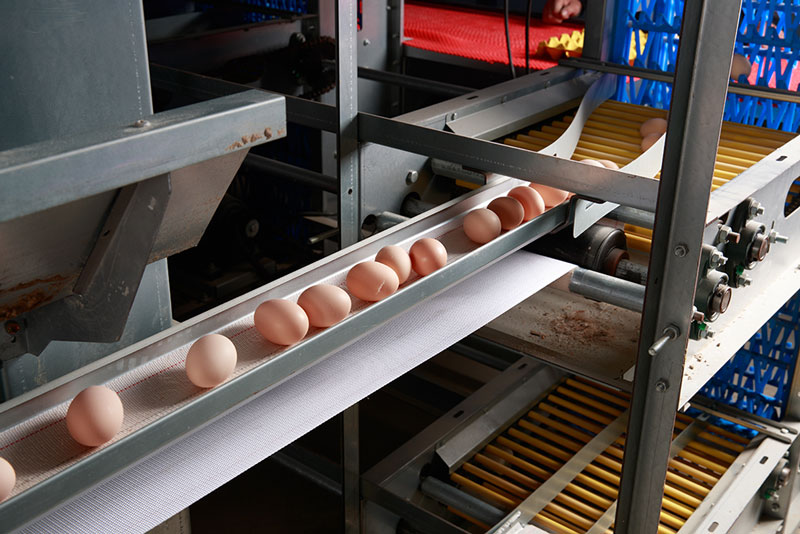
Manure management is another area where building and system intersect. Beneath the cages, manure belts run continuously or at scheduled intervals. These belts carry the manure to a cross-conveyor at the end of the building, which then transfers it outside to a storage or processing area. The building design must accommodate the path of this cross-conveyor, often requiring a specially designed opening in the end wall. The highly corrosive nature of poultry manure makes the corrosion resistance of the steel structure even more valuable, particularly in the areas where moisture from the manure can accumulate.
Lighting is a primary tool for managing a flock's laying cycle. In a commercial egg house, uniform light intensity is essential to stimulate consistent production across all birds, regardless of whether their cage is near a wall or in the center of the building. The open, column-free interior of a steel shed allows for a grid of energy-efficient LED lights to be suspended from the ceiling, providing even illumination without shadows. The white, reflective interior surfaces often used in these buildings help to amplify the light, reducing the number of fixtures and the energy required.
When considering the purchase of such a package, the evaluation must extend beyond the initial price per square foot. A reputable supplier will provide a complete package that includes not just the steel building kit, but also the engineering drawings stamped by a professional engineer. These drawings are not just for obtaining a building permit; they are the master plan that ensures the structure can handle the snow loads common in your region, the wind speeds, and the dead and live loads of the fully equipped interior. A farmer in a northern climate needs a building designed for a heavy, wet snow load, which requires stronger frames and closer purlin spacing. A farmer in a coastal area needs a structure rated for high-wind events. The "cheap" option that fails to account for these local conditions is no bargain.
The quality of the secondary components is another differentiator. The thickness, or gauge, of the steel used for the purlins and girts matters. A heavier gauge will be more resistant to damage and will provide a more rigid base for the wall and roof sheeting. The cladding itself, the colored sheets that form the skin of the building, should have a high-quality paint system designed for agricultural use. A good paint system will resist fading and chalking from UV exposure and will have the flexibility to withstand thermal expansion and contraction without cracking.
Finally, the integration of the cage system with the building's environmental controls is where modern poultry farming truly operates. The best buildings are designed with a central control panel that acts as the brain of the operation. This computer integrates data from temperature and humidity sensors placed throughout the house. It then commands the ventilation fans to speed up or slow down, the inlet openings to adjust, the heaters to kick on, and the lighting schedule to be maintained. When the building, ventilation, and cage system are conceived as a single, integrated unit, the farmer gains a level of environmental precision that was unimaginable a generation ago. This precision directly translates into bird welfare, feed conversion efficiency, and ultimately, the consistent production of high-quality eggs.
The decision to invest in a steel structure poultry house is a strategic one. It is a choice for a durable, low-maintenance asset that enables the implementation of high-efficiency production systems. The initial cost savings in construction are real, but the greater value is often found in the operational savings over the life of the building: reduced energy costs through efficient ventilation, lower maintenance costs due to corrosion-resistant materials, and higher revenue from a production environment that can be finely tuned for optimal flock performance. For the commercial egg producer, the building is not just a shelter; it is the most critical piece of equipment on the farm.
1. Drinking system include the water pipes, water pressure adjuster, drinking nipples, Waterline front-end device, dosing system etc, choose them according to customer's needs.
2. High-quality water drinking pipes, pressure regulating valves and water drinking nipples can effectively prevent the water leakage. Drinking system adopt the closed piping system, which can minimize the water pollution.
3. 360-degree drinking nipples provide adequate drinking water for poultry at all stages.
4. The automatic drinking water system mainly adopts the steel ball drinking nipple. lt uses imported high-grad stainless steel, POM resin, and APS engineering material, which is wearing resistant, and the durability can be used for long time.



1. Automatic feeding machine can be chosen between gantry and ladder feeding machine. Gantry type feeding machine is a relatively economical and practical machine with simple operation, remote control walking character, easy to manage.
2. Mechanical transmission device running smoothly, low noise, long service life.
3. With the use of automatic control, the feeding system can adjust the amount of material.
4. Feeding with arched structure, high carrying capacity, not easily deformed.
5. Saving man power, saving feed, greatly improving the efficiency of Large-scale farming.
6. The walking speed of gantry feeding machine is 9--12 m/min.




1. Manure removing system included scraper type and conveyor belt type, Which can reduce the labor intensity and labor cost, keep the chicken shed dry and clean.
2. A type chicken cage can use scraper type or conveyor belt type.


3. The scraper type is suitable for A type cages, which can clean two or three rows. For the starters, this type is a good choice. lt can not only save some labor cost, but also save some investment in the whole project. The cleaning speed is 6-10 meters per minute.
4. Conveyor belt type is more suitable for large scale farming. The manure removing belt we use is high quality PP material (polypropylene). The walking speed is 2-4 meters per minute.



High Quality Pellets Made by Mobile Pellet Machine
1. It has professional designed angle of the blade. After the dynamic balance test one by one, the blade can operate smoothly.
2. The air volume is consistent in the whole life of the fan. Bearings has advantage of high strength, low noise, durable and so on.
1. The cooling pads uses high-quality wet curtain paper and adopts space cross-linking technology, which has the advantages of high water absorption, high water resistance, anti-toxicity and long service life.
2. The cooling efficiency is over 80%, without surfactant, natural water absorption, fast diffusion speed and long-lasting effect.
3. The product does not contain phenol and other chemical substances that are easy to cause skin allergies. It is non-toxic and harmless to the human body and chicken when installed and used. It is green, safe, energy-saving, environmentally friendly, economical, and easy to install.
4. The frame aluminum alloy has high strength, good corrosion resistance, durability and beautiful appearance.
5. Use a special filter for the cooling pad at the upper water to ensure clean water quality and support efficient water circulation components.
6. Combined with a negative pressure fan, it can effectively lower the indoor temperature.
The window is made of special selected high-quality engineering plastic, with high strength and long service life, together with superior anti-aging and anti-UV performance.
Function: Ventilation of the chicken house, usually used in the winter.
This system can adjust the wind speed and direction, thus the cold air will not reach chicken directly , which can effectively prevent the phenomenon of cold stress in chicken.
Environmental control system equipment is suitable for large-scale and intensive farming. According to customer requirements, we can provide various types of smart poultry equipment.
1. Our poultry management system is a modular system that manages all aspects of the chicken house, such as climate, temperature, humidity, ammonia, feeding, feed weighing, lighting and ventilation systems, and can monitor the situation of the chicken house in real time through a computer and mobile phone.
2. The management computer is the heart of the poultry farm, allowing you to easily monitor the entire poultry farm.

 WeChat:+8617838608255