
The first 48 hours after your chicks arrive are the most critical in their entire lifecycle. They’ve just been transported from the controlled environment of the hatchery, and they’re vulnerable—cold, stressed, and in need of immediate, consistent care. How you manage them during this period sets the trajectory for their future growth, feed conversion, and overall flock health. For generations, the go-to method was the simple brooder ring on the floor of a barn, a heat lamp dangling precariously above. But this traditional approach is fraught with inefficiencies and risks that directly impact your bottom line. A modern chick brooder cage system represents a fundamental shift from this paradigm, offering a controlled, intensive start that pays dividends weeks later at processing.
The Core Problem with Floor Brooding
To understand the value of a cage system, you must first recognize the hidden costs of the floor. Imagine a typical brooder ring: a 10-foot circle of corrugated plastic under a 250-watt heat lamp. The temperature directly under the lamp might be a perfect 95°F, but just two feet away, near the edge of the ring, it can easily drop to 85°F or lower. Chicks are not uniform in their behavior; the more aggressive ones will crowd the hottest spot, while the weaker, smaller chicks are pushed to the colder periphery.
This creates a phenomenon every farmer has seen: a “bullseye” of chick distribution. The center is overcrowded, leading to piling, smothering, and dehydration for those trapped in the middle. The outer ring is too cold, causing chicks to become chilled, reducing feed and water intake, and stunting their early development. This temperature gradient means you are essentially raising multiple micro-flocks with different growth rates within the same pen. The weaker chicks never catch up, becoming culls or poor performers that consume feed without reaching their full weight potential.
Furthermore, the floor itself is a source of challenge. Despite your best efforts at litter management, it is impossible to keep the initial environment perfectly clean. Chicks are in direct contact with their waste from day one, increasing exposure to pathogens like E. coli and Salmonella. Spilled water from nipple drinkers or bell waterers dampens the litter, creating ideal conditions for coccidiosis outbreaks and footpad dermatitis. The labor involved is also significant. Checking chicks requires walking through the entire house, disturbing all the birds, and making accurate mortality counts and health assessments difficult.
The Brooder Cage: A Controlled Start Environment
A chick brooder cage system, often a multi-tiered bank of cages dedicated to the first 7-14 days of life, addresses these challenges by removing the variables of the floor. Think of it not as a cage, but as a precision-controlled nursery. Each tier is a self-contained environment where every critical parameter—heat, air, feed, and light—is managed with a degree of accuracy impossible to achieve on the floor.
The most immediate advantage is the elimination of temperature stratification. Instead of a single-point heat source, brooders are equipped with forced-air heating systems that create a uniform, pancake of warm air across the entire level of the cage. Whether a chick is in the front corner or the back, the ambient temperature is within a single degree of the target. This uniformity stops the crowding behavior instantly. Chicks spread out evenly across the available space, all equally comfortable and with equal access to resources. You no longer have micro-flocks; you have one uniform flock starting its life on identical terms.
This controlled environment extends to ventilation. In a floor system, ammonia from wet litter and chick waste begins building up from day one, hovering at chick level. In a cage system with manure belts, droppings fall through the wire mesh immediately onto a belt located beneath the cages. This physical separation is a game-changer for bird health. The chicks are never standing in their manure, dramatically reducing the pathogen load and the incidence of respiratory issues and footpad problems. The air they breathe is cleaner, leading to stronger early immune system development.
System Components and Their Practical Benefits
A brooder cage isn’t a single piece of equipment; it’s an integrated system. Each component is designed to work in concert to optimize chick welfare and labor efficiency.
1. The Heating System: Beyond the Heat Lamp
Forget red bulbs. Modern systems use radiant tube heaters, hot water pipes running along the ceiling of each tier, or forced-air furnaces with ducts delivering heat evenly. The key is consistency and safety. There are no open flames or hot bulbs that can cause barn fires or burn chicks. The temperature for each tier can be set and monitored independently via a digital controller connected to sensors at bird level. If you’re brooding a sensitive breed like pullets in one tier and hardier broilers in another, you can run two different temperature programs simultaneously. This precision ensures optimal thermal comfort without guesswork.

2. Manure Management: The Dry Belt Advantage
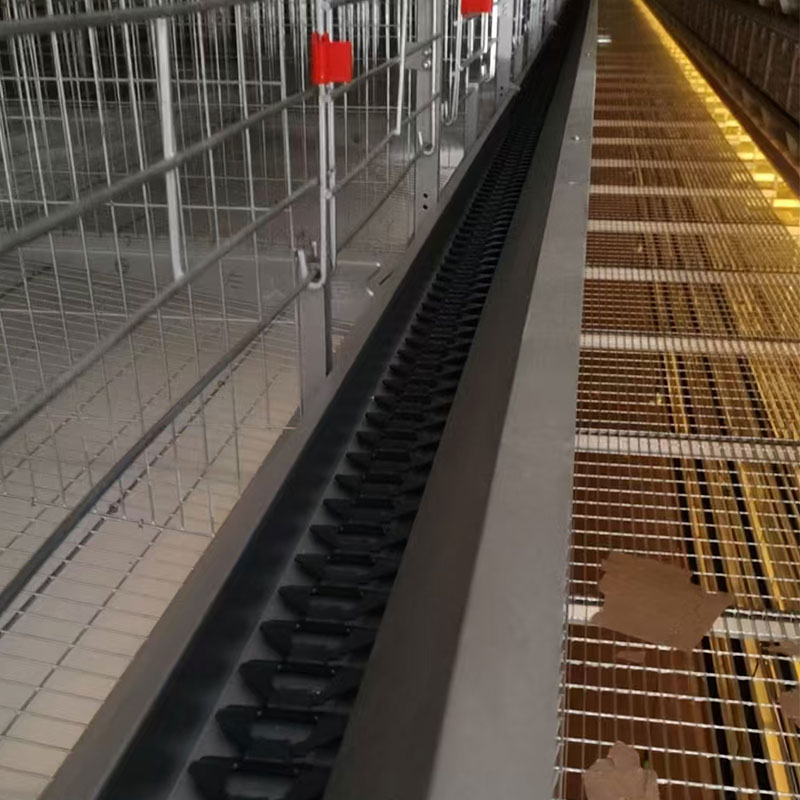
The manure belt is the unsung hero of the system. Typically made of a durable plastic polymer, this belt runs the length of the cage tier and is positioned several inches below the wire floor. As droppings fall through, they land on this dry, solid surface. Because they are not mixed with litter or water, they begin to desiccate (dry out) immediately. This process locks in ammonia and significantly reduces odors and flies. You can run the belt once daily or even less frequently, depending on stocking density, to remove the waste from the barn without disturbing the birds. This results in a drier environment, which is the primary defense against coccidia, which requires moisture to sporulate and become infectious.
3. Feeding and Watering: Easy Access for Day-One Chicks
The first 24 hours are about encouraging consumption. Brooder cages are equipped with specially designed feeding and drinking systems for tiny chicks. Instead of a single trough, you’ll often find “paper on wire” systems. Farmers place sheets of paper or specially formulated disposable feed pads on the cage floor directly over the permanent feeder pans. A small amount of crumble feed is scattered on this paper. The bright, flat surface attracts the chicks’ attention, and their natural pecking instinct kicks in, teaching them where to find food from the moment they are placed in the cage.
Watering is equally critical. Small, low-pressure nipple drinkers with catch cups are placed at the perfect height for day-old chicks. The catch cups ensure a visible droplet of water is always present, showing the chick where to peck. This system minimizes water spillage to near zero, keeping the environment dry and conserving water. The ease of access means chicks are hydrated and fed faster after the stress of transport, leading to better yolk sac absorption and stronger early vitality.
4. Bird Density and Stocking Rates
A common miscalculation is assuming cage stocking density is the same as floor density. It is not. The intensive nature of the system allows for a higher density during the brooding phase because the environment is so precisely controlled. Where you might stock a floor pen at 0.7 sq. ft. per bird, a brooder cage can often run at 0.5 sq. ft. per bird for the first week without any negative consequences. This is because the resources are perfectly distributed; no bird is more than a few inches from feed and water, and the temperature is uniform, eliminating competition. This efficient use of space allows you to brood more chicks in a smaller footprint of your barn, conserving heat and reducing energy costs.
Operational Workflow: From Placement to Move-Out
Integrating a brooder cage system changes your weekly workflow, primarily by adding a "move-day" but simplifying every other day.
Pre-Placement Preparation: The day before chick arrival, the system is powered on. Heating is activated to bring the cage environment to the precise target temperature (typically 90-95°F, depending on breed). Feed lines are run to fill the pans, and water lines are flushed to ensure fresh, clean water is at every nipple. The manure belts are set to stationary mode. This entire process can often be done from a single control panel in minutes, a task far simpler than setting up and adjusting dozens of brooder rings and heat lamps.
Chick Placement: Upon arrival, chicks are placed directly into the cages. The even distribution of heat means they settle down quickly without piling. The paper feed system immediately engages their curiosity. You will observe chicks feeding and drinking within the first hour, a sign of a low-stress transition.
Daily Management: Daily checks become remarkably efficient. Instead of walking through litter, you walk along a clear alleyway between cage banks. You can observe every chick clearly from this vantage point. Checking for mortality is a simple visual scan of each tier; dead birds are easily seen and removed through external access doors without ever entering the bird space. This makes daily mortality counts accurate and helps you identify health trends quickly. Feed and water systems are checked at the end of the aisle. Adjusting temperature is a button press on the controller, not a physical raising or lowering of a heat lamp.
The Move-Out Process: After 7-10 days (for broilers) or up to 14-16 days (for pullets), the chicks are ready to be moved to the grow-out floor or into pullet cages. This is a defined labor event. The process typically involves turning off the heat several hours beforehand to allow the birds to acclimatize to grow-out room temperature. Workers then carefully transfer the birds from the brooder cages to carts or directly onto the floor. While this requires labor, it is a single, concentrated effort. The benefit is that you are moving a uniform, healthy, and fully feathered bird that is well-prepared for the next stage of growth. The brooder cages are then completely emptied, allowing for a thorough cleaning and disinfection cycle before the next flock arrives.
Economic and Health Implications
The decision to invest in a brooder cage system is an economic one, justified by tangible returns.
Improved Feed Conversion Ratio (FCR): A chick that spends its first week warm, comfortable, and eating consistently will develop a more robust digestive system and skeletal structure. This early advantage compounds throughout its life. It’s common for farmers using brooder cages to see a 2-5 point improvement in overall FCR at processing. For a 50,000-bird house, this can translate to saving thousands of pounds of feed per flock.
Reduced Mortality and Morbidity: The combination of a cleaner environment, uniform temperature, and easy access to resources drastically reduces early mortality. Losses from piling, smothering, and starvation are virtually eliminated. The reduced pathogen load means fewer birds require antibiotic treatment, a significant cost saving and a major benefit for antibiotic-free production programs. The result is more saleable birds per chick placed.
Labor and Utility Savings: While the initial move-out requires labor, the daily labor savings are substantial. Time spent adjusting heat lamps, filling waterers, and walking through pens is drastically reduced. Energy savings are also significant. Heating a single, well-insulated bank of cages is far more efficient than trying to heat the entire volume of a barn to keep one corner of the floor warm for the chicks. You are only heating the precise space the chicks occupy.
Barn Utilization: This system enables a practice called multiple-age rearing or all-in-all-out by section. Since the brooder cage is a isolated environment, you can have a new flock starting in the cage system while the previous flock is finishing on the grow-out floor in the same barn. This maximizes the use of your capital asset (the barn) and can increase the number of turns you get per year.
The modern chick brooder cage is a tool of precision. It replaces the unpredictable and variable nature of floor brooding with a standardized, repeatable process. It allows the farmer to exert maximum control during the most vulnerable period of a bird’s life, ensuring each chick gets the best possible start. The result is not just healthier, happier birds, but a more resilient, profitable, and efficient operation. In an industry where margins are measured in pennies per pound, the cumulative advantages of a superior start can define a farm’s competitive edge.
1. Drinking system include the water pipes, water pressure adjuster, drinking nipples, Waterline front-end device, dosing system etc, choose them according to customer's needs.
2. High-quality water drinking pipes, pressure regulating valves and water drinking nipples can effectively prevent the water leakage. Drinking system adopt the closed piping system, which can minimize the water pollution.
3. 360-degree drinking nipples provide adequate drinking water for poultry at all stages.
4. The automatic drinking water system mainly adopts the steel ball drinking nipple. lt uses imported high-grad stainless steel, POM resin, and APS engineering material, which is wearing resistant, and the durability can be used for long time.



1. Automatic feeding machine can be chosen between gantry and ladder feeding machine. Gantry type feeding machine is a relatively economical and practical machine with simple operation, remote control walking character, easy to manage.
2. Mechanical transmission device running smoothly, low noise, long service life.
3. With the use of automatic control, the feeding system can adjust the amount of material.
4. Feeding with arched structure, high carrying capacity, not easily deformed.
5. Saving man power, saving feed, greatly improving the efficiency of Large-scale farming.
6. The walking speed of gantry feeding machine is 9--12 m/min.




1. Manure removing system included scraper type and conveyor belt type, Which can reduce the labor intensity and labor cost, keep the chicken shed dry and clean.
2. A type chicken cage can use scraper type or conveyor belt type.


3. The scraper type is suitable for A type cages, which can clean two or three rows. For the starters, this type is a good choice. lt can not only save some labor cost, but also save some investment in the whole project. The cleaning speed is 6-10 meters per minute.
4. Conveyor belt type is more suitable for large scale farming. The manure removing belt we use is high quality PP material (polypropylene). The walking speed is 2-4 meters per minute.



High Quality Pellets Made by Mobile Pellet Machine
1. It has professional designed angle of the blade. After the dynamic balance test one by one, the blade can operate smoothly.
2. The air volume is consistent in the whole life of the fan. Bearings has advantage of high strength, low noise, durable and so on.
1. The cooling pads uses high-quality wet curtain paper and adopts space cross-linking technology, which has the advantages of high water absorption, high water resistance, anti-toxicity and long service life.
2. The cooling efficiency is over 80%, without surfactant, natural water absorption, fast diffusion speed and long-lasting effect.
3. The product does not contain phenol and other chemical substances that are easy to cause skin allergies. It is non-toxic and harmless to the human body and chicken when installed and used. It is green, safe, energy-saving, environmentally friendly, economical, and easy to install.
4. The frame aluminum alloy has high strength, good corrosion resistance, durability and beautiful appearance.
5. Use a special filter for the cooling pad at the upper water to ensure clean water quality and support efficient water circulation components.
6. Combined with a negative pressure fan, it can effectively lower the indoor temperature.
The window is made of special selected high-quality engineering plastic, with high strength and long service life, together with superior anti-aging and anti-UV performance.
Function: Ventilation of the chicken house, usually used in the winter.
This system can adjust the wind speed and direction, thus the cold air will not reach chicken directly , which can effectively prevent the phenomenon of cold stress in chicken.
Environmental control system equipment is suitable for large-scale and intensive farming. According to customer requirements, we can provide various types of smart poultry equipment.
1. Our poultry management system is a modular system that manages all aspects of the chicken house, such as climate, temperature, humidity, ammonia, feeding, feed weighing, lighting and ventilation systems, and can monitor the situation of the chicken house in real time through a computer and mobile phone.
2. The management computer is the heart of the poultry farm, allowing you to easily monitor the entire poultry farm.

 WeChat:+8617838608255