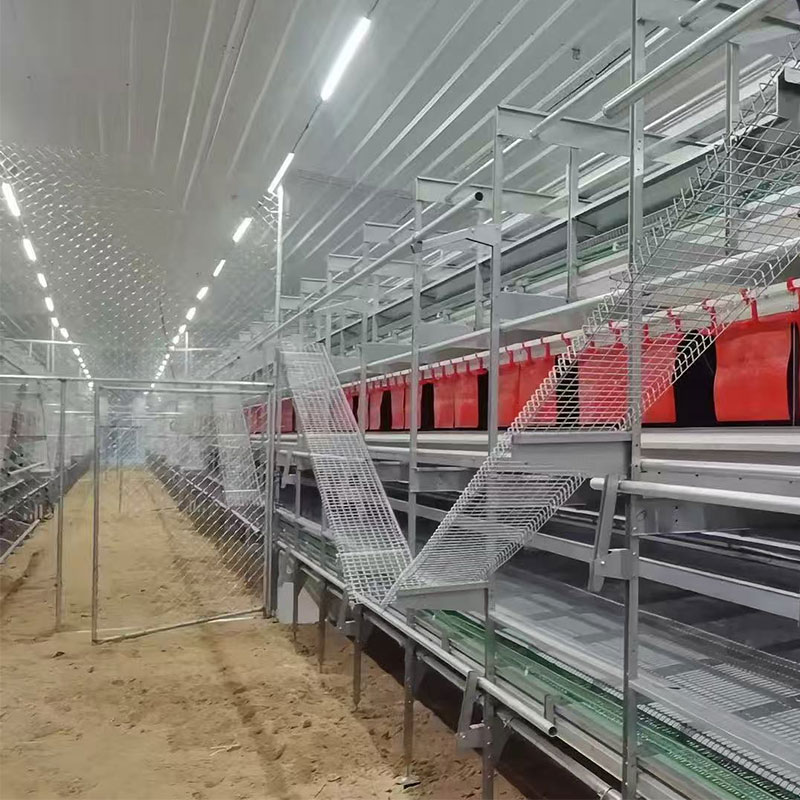
The first weeks of a chick’s life are the most critical in its entire production cycle. Success or failure during this brooding period doesn't just set the pace; it fundamentally determines the final outcome for both meat birds and layers. The environment you provide is the single greatest variable under your control, and the design of your brooder cage system is the primary tool for creating that environment. Moving beyond the basic heat lamp in a corner of a barn, modern brooder cage designs offer an integrated approach to managing temperature, air quality, feed, and water with a precision that directly translates to improved flock uniformity, health metrics, and bottom-line profitability.
The core objective of any brooder is to replicate the key conditions a chick would experience under a hen: consistent warmth, easy access to nourishment, and protection from drafts and threats. The modern cage system elevates this concept by engineering those conditions for maximum efficiency and scalability.
Core Components of an Engineered Brooder Cage
A well-designed system is more than a box with heaters. It is a synergistic assembly of several key components, each playing a specific role in chick development.
The Flooring System: The First Contact Point
The surface your chicks walk on is their first and most constant environmental interaction. It dictates comfort, leg health, and manure management. The choice is typically between plastic slats and wire mesh floors, each with distinct advantages.
Plastic slat floors, often made from durable polyethylene, provide a warmer, more forgiving surface. For day-old chicks, their feet are soft and undeveloped. A smooth, slightly textured plastic slat offers secure footing without the risk of splayed legs or breast blisters that can occur on abrasive surfaces. The closed nature of many plastic slats also helps contain the litter and feed within the brooder area, reducing waste. A farmer might notice that chicks on a high-quality plastic floor spend less time huddled and more time actively feeding and drinking in those crucial first 48 hours.
Wire mesh floors, usually fabricated from galvanized or powder-coated steel, excel in manure management. The open design allows droppings to fall through onto a manure belt or into a pit below, immediately separating the chicks from their waste. This dramatically reduces ammonia exposure and moisture levels at the bird level, creating a drier, healthier environment. The gauge and spacing of the wires are critical; the gaps must be small enough to prevent tiny feet from slipping through yet large enough to allow manure to pass cleanly. A producer battling past issues with wet litter and footpad dermatitis might find that a well-designed wire mesh system delivers significantly drier conditions and improved foot health scores at processing.
Many advanced systems now incorporate a hybrid approach for the initial stage. They may use a solid plastic floor plate or a paper liner on top of the wire for the first 4-7 days. This gives chicks the warmth and stability they need immediately after placement. Once the chicks are stronger and more mobile, the temporary floor is removed, revealing the wire mesh beneath for superior long-term manure management. This simple design feature acknowledges that a chick’s needs change rapidly during the brooding phase.
The Heating System: Beyond the Heat Lamp
Radiant heat has largely replaced forced-air furnaces and heat lamps in modern commercial brooders for one primary reason: it heats the chicks and the floor, not the air. Think of a heat lamp as a campfire—it heats the air around it, which then rises, creating hot spots and cold drafts. A chick that wanders a few feet away can become chilled.
Radiant brooders, often gas-fired, work like the sun. They emit infrared energy that travels through the air without heating it and only releases heat when it strikes a solid object—like the floor, the feeders, or the chicks themselves. This creates a precise, localized zone of warmth directly under the heater. The floor temperature is consistent, and the air temperature in the house can be maintained at a lower, more comfortable level, saving significant fuel costs. A farmer using radiant heat can set the house thermostat to 85°F (29°C) while the floor under the brooder remains at a perfect 95°F (35°C). The chicks are warm where they need to be, and the lower ambient temperature encourages better air quality and ventilation.
These systems are typically mounted overhead and can be adjusted in height. The rule of thumb is simple: observe the chicks. If they are huddled directly under the heater, it is too cold or too high. If they are pressed against the brooder guard walls trying to escape the heat, it is too low or the temperature is too high. Perfect conditions are indicated by chicks spread evenly throughout the available space, actively eating, drinking, and sleeping comfortably.
Ventilation and Air Quality: The Unseen Management Challenge
While heating keeps chicks warm, proper ventilation keeps them alive. The goal is not simply to exchange air, but to manage moisture, remove harmful gases like ammonia and carbon dioxide, and provide a consistent supply of fresh oxygen without creating drafts.
Brooder cages present a unique ventilation challenge because they create a micro-environment within the larger poultry house. Stale, warm, moist air exhaled by the chicks can become trapped inside the cage module if not actively managed. Advanced designs incorporate their own low-volume ventilation systems or are engineered to work in concert with the house’s minimum ventilation system.
This is where negative pressure ventilation in the main house becomes crucial. By having fans pulling air out of the building, fresh air is drawn in through inlets along the walls. These inlets are designed to direct the incoming air upward toward the peak of the ceiling, where it mixes with the warmer house air and gently descends, already tempered, to the bird level. This prevents a blast of cold outside air from hitting the chicks directly.
A common mistake is to reduce ventilation to conserve heat. This is a false economy. The moisture from chick respiration and manure must be removed. One gallon of water produced by 1000 chicks every hour will quickly saturate the environment if not ventilated out, leading to wet litter, soaring ammonia levels, and respiratory disease. The smell of ammonia shouldn’t be your guide; by the time you can smell it strongly at bird level, it is already at a level that damages the chicks’ respiratory tracts and eyes, compromising their immune systems. Using a digital ammonia meter to keep levels below 25 ppm is a non-negotiable best practice.
Feed and Water Systems: Designing for Access and Availability
A chick’s first meal is perhaps the most important. Modern brooder cages are designed to make that meal impossible to miss.
Feeding Systems: For the first days, supplemental feeding is essential. This often takes the form of paper spread on the floor and sprinkled with feed, or small, shallow tray feeders placed throughout the brooder. The principle is maximum access. A chick should never have to walk more than a few inches to find food. As the chicks grow, these are phased out in favor of the main system, which is typically a chain or pan feeder running the length of the cage.
The height and fill level of these feeders must be meticulously managed. The lip of the feeder pan should be level with the height of the chicks’ backs. This allows them to eat comfortably without straining upward or spilling feed out by scratching. An adjustable feed system is therefore mandatory. A farmer will adjust the feeder height weekly, observing that the feed line in the pan is consistently about ⅓ full—enough to always be available but not so full that it is wasted.
Watering Systems: Hydration is even more critical than feed in the first 24 hours. Nipple drinker systems have become the industry standard for their hygiene and water conservation benefits. However, for day-old chicks, the nipples must be activated. This means using a trigger cup or a small pin at the base of the nipple that the chick must peck. It can be a learned behavior.
To facilitate this, systems are designed with additional primer mechanisms. Placing small, circular supplemental drinkers (like bell drinkers) within the brooder for the first three days ensures every chick finds water immediately. Another highly effective method is to hang the nipple line low so the chicks can easily see the shiny stainless steel nipple and, crucially, adjust the water pressure so a small droplet hangs from the nipple after activation. A chick pecking at that droplet quickly learns to activate the nipple itself. The water pressure is then gradually increased as the birds grow to eliminate dripping and waste. The key is to provide multiple, obvious water sources and then train the birds onto the most efficient permanent system.
Brooder Guards: Defining the Micro-Climate
A brooder guard is a simple but vital piece of equipment, typically a solid curved panel of plastic or cardboard, 12 to 18 inches high, that encircles the brooding area for the first 7-10 days. Its purpose is twofold: to contain the chicks within the optimal heat zone and to block drafts along the floor.

Without a guard, chicks will naturally wander away from the heat source and become chilled. They may also be exposed to drafts that flow across the floor from ventilation inlets or doorways. The guard creates a still-air environment where the heat from the radiant brooder can create a stable gradient. The temperature will be warmest directly under the heater and gradually cooler toward the guard wall, allowing the chicks to self-regulate their comfort. The guard is usually removed once the chicks are fully feathered and can regulate their own body temperature, and the heat source is raised or turned off.
Sizing, Density, and Zonal Management
The amount of space allocated per chick is not arbitrary. It is calculated based on the type of bird and the duration in the brooder. Overcrowding is a primary driver of stress, competition, and diminished uniformity.
For broiler chicks, a common starting space is around 100 square inches per chick (about 0.07 sq m). This allows enough room for all chicks to access feeders and drinkers simultaneously and to lie down without piling. As they grow, this space requirement increases. A well-designed system has a clear plan for expansion. This might involve removing internal partitions within a larger cage module or physically moving chicks to a different part of the house in an all-in-all-out system.
The concept of zoning within the brooder is also important. The area directly under the heater is the warm resting zone. The perimeter, especially along the feeder and drinker lines, is the activity zone. The design must ensure a clear path between these zones. Obstructions or poor layout can lead to chicks becoming "trapped" away from food or water, or conversely, reluctant to leave the heat to go and eat. The placement of feeders and drinkers should encourage movement between the center and the edges, promoting activity and development.
Automation and Control: The Nerve Center
The most advanced brooder designs are integrated with environmental controllers. These computers are the brains of the operation, constantly receiving data from sensors placed at bird level throughout the house.
A temperature probe does not just control the heaters; it works in tandem with the ventilation system. If the temperature rises slightly above the set point, the controller may first activate a fan or open a vent before signaling the heaters to modulate down. Humidity sensors can trigger additional minimum ventilation cycles to combat moisture buildup. This integrated approach prevents the systems from working against each other—a common problem when heating and ventilation are on separate, manual controls.
For larger operations, these controllers can be accessed remotely via smartphone or computer, providing alerts for power failures, temperature drops, or other malfunctions. This 24/7 monitoring allows for immediate intervention, potentially saving thousands of chicks from a catastrophic environmental failure.
Material Selection and Durability
A brooder cage is a long-term investment subjected to a highly corrosive environment of moisture, ammonia, and constant cleaning. Material choice dictates longevity and hygiene.
Galvanized steel is a traditional choice, but the quality of the galvanization is key. A low-grade coating will quickly rust. Powder coating over galvanized steel provides an extra layer of protection and allows for color-coding different systems or zones. High-density plastics and polymers are increasingly used for components like slats, feeder pans, and drinker lines due to their inherent corrosion resistance and lighter weight.
All surfaces should be non-porous, smooth, and easy to clean. The design should avoid sharp corners, crevices, and hard-to-reach areas where organic material can build up and harbor pathogens like Salmonella or E. coli. Between flocks, the entire system must withstand high-pressure washing and disinfecting. The ability to easily remove and reassemble parts for cleaning or repair is a hallmark of a superior design.

Designing for Bird Welfare and Behavioral Outcomes
Ultimately, the success of a brooder is measured in the health and behavior of the chicks. The system should encourage natural behaviors like feeding, drinking, preening, and resting. A well-brooded chick is active and alert, with a full crop and clean, bright eyes.
Signs of a poorly designed or managed environment are evident in the birds: huddling indicates cold; panting and wing spreading indicate heat stress; high-pitched, constant chirping often signals distress or hunger; pasty vents point to dehydration. The design of the cage system is your first and most powerful tool in preventing these issues. It allows you to create a stable, predictable world for the chicks, reducing stress and allowing their energy to be directed toward growth and immune function rather than simply maintaining body temperature.
Investing in a thoughtfully engineered chick brooder cage system is not an expense; it is a foundational investment in the productivity of every flock that will cycle through your facility. It provides the control necessary to navigate the vulnerabilities of the brooding period and produce a uniform, robust chick ready for the next phase of growth. The data is clear: superior starts yield superior finishes.
1. Drinking system include the water pipes, water pressure adjuster, drinking nipples, Waterline front-end device, dosing system etc, choose them according to customer's needs.
2. High-quality water drinking pipes, pressure regulating valves and water drinking nipples can effectively prevent the water leakage. Drinking system adopt the closed piping system, which can minimize the water pollution.
3. 360-degree drinking nipples provide adequate drinking water for poultry at all stages.
4. The automatic drinking water system mainly adopts the steel ball drinking nipple. lt uses imported high-grad stainless steel, POM resin, and APS engineering material, which is wearing resistant, and the durability can be used for long time.



1. Automatic feeding machine can be chosen between gantry and ladder feeding machine. Gantry type feeding machine is a relatively economical and practical machine with simple operation, remote control walking character, easy to manage.
2. Mechanical transmission device running smoothly, low noise, long service life.
3. With the use of automatic control, the feeding system can adjust the amount of material.
4. Feeding with arched structure, high carrying capacity, not easily deformed.
5. Saving man power, saving feed, greatly improving the efficiency of Large-scale farming.
6. The walking speed of gantry feeding machine is 9--12 m/min.




1. Manure removing system included scraper type and conveyor belt type, Which can reduce the labor intensity and labor cost, keep the chicken shed dry and clean.
2. A type chicken cage can use scraper type or conveyor belt type.


3. The scraper type is suitable for A type cages, which can clean two or three rows. For the starters, this type is a good choice. lt can not only save some labor cost, but also save some investment in the whole project. The cleaning speed is 6-10 meters per minute.
4. Conveyor belt type is more suitable for large scale farming. The manure removing belt we use is high quality PP material (polypropylene). The walking speed is 2-4 meters per minute.



High Quality Pellets Made by Mobile Pellet Machine
1. It has professional designed angle of the blade. After the dynamic balance test one by one, the blade can operate smoothly.
2. The air volume is consistent in the whole life of the fan. Bearings has advantage of high strength, low noise, durable and so on.
1. The cooling pads uses high-quality wet curtain paper and adopts space cross-linking technology, which has the advantages of high water absorption, high water resistance, anti-toxicity and long service life.
2. The cooling efficiency is over 80%, without surfactant, natural water absorption, fast diffusion speed and long-lasting effect.
3. The product does not contain phenol and other chemical substances that are easy to cause skin allergies. It is non-toxic and harmless to the human body and chicken when installed and used. It is green, safe, energy-saving, environmentally friendly, economical, and easy to install.
4. The frame aluminum alloy has high strength, good corrosion resistance, durability and beautiful appearance.
5. Use a special filter for the cooling pad at the upper water to ensure clean water quality and support efficient water circulation components.
6. Combined with a negative pressure fan, it can effectively lower the indoor temperature.
The window is made of special selected high-quality engineering plastic, with high strength and long service life, together with superior anti-aging and anti-UV performance.
Function: Ventilation of the chicken house, usually used in the winter.
This system can adjust the wind speed and direction, thus the cold air will not reach chicken directly , which can effectively prevent the phenomenon of cold stress in chicken.
Environmental control system equipment is suitable for large-scale and intensive farming. According to customer requirements, we can provide various types of smart poultry equipment.
1. Our poultry management system is a modular system that manages all aspects of the chicken house, such as climate, temperature, humidity, ammonia, feeding, feed weighing, lighting and ventilation systems, and can monitor the situation of the chicken house in real time through a computer and mobile phone.
2. The management computer is the heart of the poultry farm, allowing you to easily monitor the entire poultry farm.

 WeChat:+8617838608255